The 4L60E is the four-speed behind an enormous slice of GM's rear-drive lineup — Silverado and Sierra 1500, Tahoe, Yukon, Suburban, Express and Savana vans, S-10, Camaro, Firebird, Corvette, and the GMT800 trucks that never seem to leave the road. When one of these units comes in slipping, running hot, or dropping the torque converter clutch, a lot of shops start swapping frictions and solenoids. But the part that quietly sets the ceiling for the whole transmission sits at the very front of the case: the variable-displacement vane oil pump. When its rotor, vanes, slide, pressure regulator bore, or rear stator support bushing wear out, every clutch downstream is being fed short.
This is how 4L60E pump wear actually shows up, why it fools people into replacing the wrong parts, and what a real pump rebuild has to address before you close the case.
The short version: The 4L60E pump is a variable-vane pump, and it wears in four places that all cost you line pressure: the rotor and vanes, the pump slide and its pivot pin, the pressure regulator (PR) valve bore, and the rear stator support bushing. Low or erratic line pressure burns the 3-4 clutch and starves the torque converter clutch — and per Sonnax, a worn PR valve bore or a binding slide can be the whole reason for unexplained low pressure. Diagnose the pump before you condemn clutches or a converter.
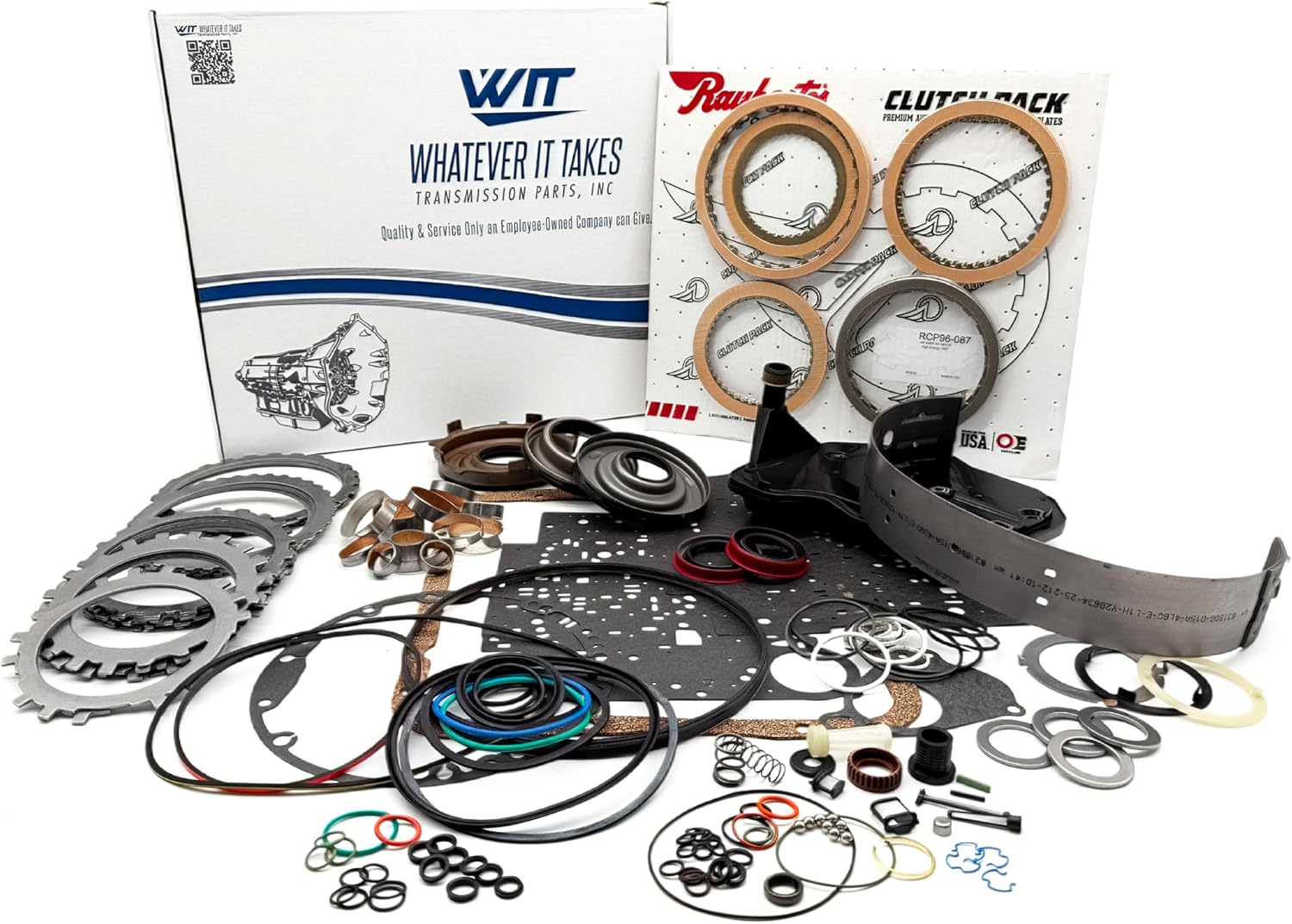
How the 4L60E Pump Feeds the Whole Transmission
The 4L60E uses a variable-displacement vane pump bolted to the front of the case. A rotor spins inside a moveable slide; as the slide pivots on its pin, the pumping chamber changes volume, so the pump can make the flow the transmission needs without dragging horsepower making pressure it doesn't. The pressure regulator valve reads line pressure and moves the slide to hold the target, and a boost valve raises pressure in Reverse and under throttle. Sitting behind all of it, the rear stator support bushing supports the turbine/converter hub and seals the passages that carry converter and TCC oil.
Because this one assembly makes and regulates every drop of pressure the unit uses, pump wear is never a local problem. A worn pump doesn't just fail by itself — it slowly starves the clutches and the converter, and those parts fail in a way that looks like their fault. That is the trap.
The Four Places a 4L60E Pump Wears Out
Nearly every pump-related pressure complaint on a 4L60E traces to one or more of these four wear points. They overlap in symptoms, so you inspect all of them rather than betting on one.
1. The rotor, vanes, and vane rings
Inside the pump, the rotor, vanes, vane rings, and vane guide are the actual pumping elements, and they wear as a set. Any scoring on the pump faces or worn vane rings lets internal pressure bleed off instead of reaching the circuit. Sonnax's high-line build notes make the point that when a unit is run at higher average pressures, the entire hydraulic system has to be in top condition to protect the pump vane rings, because pressure pulsation from poor regulator control is what tears them up. On a worn core, replacing the pump guts — rotor, slide, vanes, rings, and vane guide — is part of doing the pump correctly, not an upgrade.
2. The pump slide and pivot pin
The slide has to pivot freely for the pump to regulate. When the slide binds in the pocket, or the slide pivot pin wears, the pump can no longer move to the right displacement, and Sonnax specifically flags a worn pump slide pivot pin as a cause of both low and high line pressure on 4L60, 4L60E and 200-4R units. A binding slide is one of the most common reasons for otherwise-unexplained low line pressure. The bench check is simple: assemble clean, dry pump halves with just the slide inside, shake the pump, and you should hear the slide move freely.
3. The pressure regulator valve bore
The aluminum bore that houses the PR valve wears over time, and once it does, the valve no longer seals — regulated pressure leaks past it. Per Sonnax, a worn OE pressure regulator valve shows up as low line pressure during boost conditions, on the order of 50–100 psi less than spec in Reverse, and drives symptoms like clutch slippage, reverse chatter, and 3-4 clutch failure. The repair is to ream the bore true and install an oversized PR valve, rather than dropping an OE-diameter valve back into a wallowed bore where it will leak again.
4. The rear stator support bushing
The rear stator support bushing is a genuine known-failure part on this family. Sonnax notes the original GM 4L60, 4L60E, 4L65E and 4L70E rear stator bushing came in several materials and versions, and all of them commonly wear out or fail prematurely — and many aftermarket replacements fit poorly and wear just as fast. When that bushing wears, the converter hub isn't supported concentrically, the pump is loaded unevenly, and the converter-feed and TCC passages it seals start to cross-leak. That is a direct path to a torque converter clutch that won't hold and a converter that overheats.
What Pump Wear Feels Like From the Driver's Seat
Pump wear rarely announces itself as "the pump." It shows up as the parts it starves failing. The classic 4L60E complaints that should send you to the pump first are:
- Low or erratic line pressure, especially pressure that won't build under load or in Reverse.
- 3-4 clutch slip and burnup — the signature 4L60E clutch failure, and one that low line pressure feeds directly.
- Reverse chatter or a soft, slipping reverse engagement.
- Torque converter clutch slip and overheating, often with a stored TCC slip code such as P1870, tied to lost converter-circuit pressure.
- Delayed engagement and general heat, because a weak pump can't fill and hold circuits quickly.
Notice that three of those — 3-4 burnup, reverse chatter, and TCC slip — are the exact symptoms a worn PR valve produces. When you see them together, the pump is the common denominator, not a coincidence.
| Wear point | What it causes | The fix |
|---|---|---|
| Rotor / vanes / rings | Internal pressure bleed, low flow | Replace pump guts as a set |
| Slide / pivot pin | Low or high line pressure, no regulation | Free the slide, replace pivot pin |
| PR valve bore | Low boost pressure, 3-4 burnup, reverse chatter | Ream bore, oversized PR valve |
| Rear stator bushing | TCC slip, converter overheat, uneven pump load | Replace with wear-resistant bushing |
The Torque Converter Clutch Connection
It is worth being explicit about why pump wear kills converters, because it's the most expensive thing to miss. The TCC is applied and regulated hydraulically, and that circuit relies on clean pressure and sealed passages through the stator support. Sonnax's work on the 4L60E series shows how wear in the converter-clutch hydraulics — a worn TCC regulator valve bore that lets regulated apply pressure exhaust — is a primary cause of TCC slip code P1870 and overheated converters. A worn stator support bushing that lets those passages cross-leak stacks right on top of that. Put a fresh converter behind a worn pump and worn TCC circuit and you will cook the new converter too. The circuit has to be corrected, not just the converter replaced.
Diagnose the Pump Before You Rebuild It
The order matters, because the difference between a pump repair and a full teardown with a new converter is a lot of money:
- Read line pressure, don't guess it. Tap the case and read Drive and Reverse pressure at idle and under load. Low pressure that gets worse in Reverse or under throttle points at the PR valve and boost circuit; low everywhere points at the pump elements or a leak.
- Check the fluid and the 3-4 clutch. Dark, burnt fluid with debris and a burnt 3-4 clutch is the downstream evidence of chronic low pressure — treat it as a symptom of the pump, not just a clutch to replace.
- Bench-test the slide. Clean, dry pump halves with only the slide installed should let the slide shake freely. A slide that hangs up is your low-pressure cause.
- Inspect the PR valve bore and pivot pin. Look for a worn, egg-shaped PR valve bore and a worn slide pivot pin. Reaming and an oversized PR valve fix the bore; a new pivot pin fixes the slide's pivot.
- Replace the rear stator support bushing. On a unit with any TCC or converter complaint, treat this bushing as a wear item and install a better-fitting, wear-resistant replacement rather than reusing the old one.
Do it in that order and the 4L60E's quietest failure stops hiding behind the clutches it burns. A large share of "slipping 4L60E" and "bad converter" jobs are really a worn pump feeding everything short — and a pump that gets the rotor set, the slide, the PR valve bore, and the stator bushing all corrected together holds pressure the way a rebuild is supposed to. Skip one of the four and the fresh clutches and converter you just installed pay for it.
Doing the job? Our line pressure testing walkthrough covers the exact readings referenced above, and the 4L60E 3-4 clutch failure guide connects the burnup you'll often find to the pressure loss the pump caused.
Sources
- Sonnax — GM 4L60-E Transmission (unit overview), reference for the 4L60E variable-vane pump architecture and pressure control. sonnax.com/units/455-4l60-e
- Sonnax — Pump Slide Pivot Pin 65797, on how a worn pump slide pivot pin causes low or high line pressure on 4L60, 4L60E and 200-4R units. sonnax.com/parts/1657-pump-slide-pivot-pin
- Sonnax — Oversized Pressure Regulator Valve 77917-06, on PR valve bore wear producing low boost/Reverse line pressure (50–100 psi low), clutch slippage, reverse chatter and 3-4 clutch failure. sonnax.com/parts/2492-oversized-pressure-regulator-valve
- Sonnax — Rear Stator Support Bushing 77002BT-01, on the OE 4L60/4L60E/4L65E/4L70E rear stator bushing commonly wearing out and the wear-resistant PTFE-lined replacement. sonnax.com/parts/2423-rear-stator-support-bushing
- Sonnax — Understanding 4L60-E Series Isolator Bore Wear and How to Address It, on TCC regulator valve bore wear exhausting converter apply pressure, code P1870 and overheated converters. sonnax.com/tech_resources/1440
- Sonnax — Building the Killer 4L60E: Top Tips for Optimizing Your Transmission Upgrades, on protecting pump vane rings, controlling regulator pulsation, and the boost/PR/AFL valve upgrades for pump pressure problems. sonnax.com/tech_resources/293