A harsh-shifting 4L60E usually gets a new EPC solenoid first. Sometimes that works. Just as often the truck comes back banging into 2nd, because the real cause was a TCC slip code holding the unit in high line pressure, a missing checkball, or a servo that was never right for the vehicle. The way to beat it is to separate too much pressure from too little cushion before you order parts.
The short version: Pull codes first. Per Transmission Digest, many harsh 1-2 complaints come from P1870 or P0894 TCC slip codes that put the unit into high line pressure mode, and GM PIP5340A documents exactly that after converter or transmission replacement on 1998-2004 trucks and vans. With no codes, verify the electrical side with an amp clamp and a pressure gauge, not the scan tool PID: GM service information says zero duty cycle on the pressure control solenoid means maximum line pressure. If pressure is correct, the harsh shift is mechanical: accumulator valve, 1-2 accumulator, the #8 checkball and its .067-.086 in. orifice, servo size, the servo cushion spring, or a stuck 4-3 sequence valve.

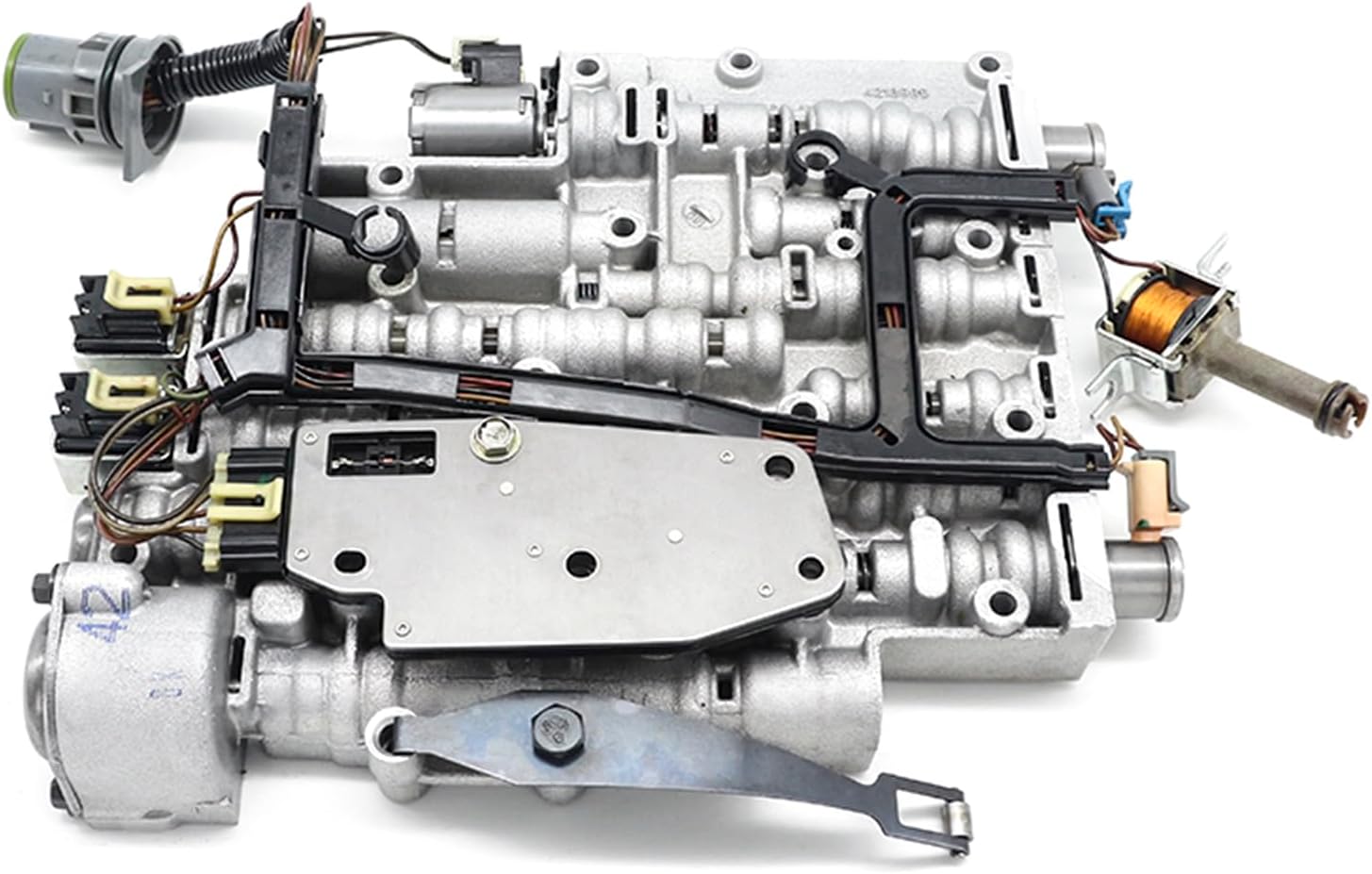
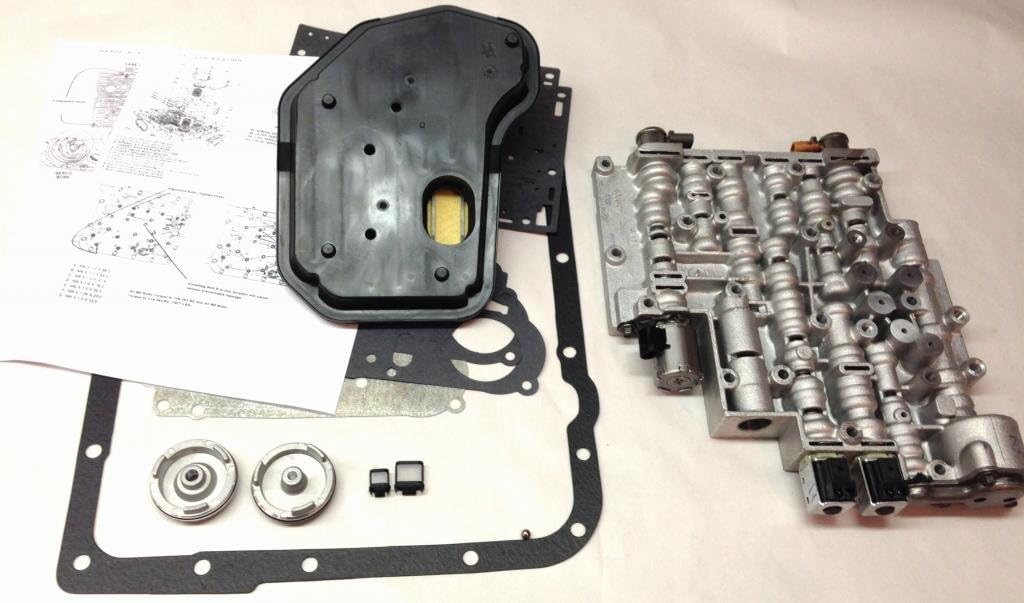
Two Kinds of Harsh: Pressure vs. Cushion
Every 4L60E upshift is a band or clutch applying under line pressure, softened by an accumulator. A shift gets harsh when pressure is too high or the apply is not cushioned as designed.
| What you feel | Most likely category | First checks |
|---|---|---|
| Every shift firm, engagement into Drive and Reverse firm too, often with a check engine light | High line pressure | DTCs (P1870, P0894, P0748), EPC amps with a clamp, gauge on line tap, MAF and misfire data |
| Only the 1-2 shift bangs; 2-3 and 3-4 feel normal | 1-2 cushion | 1-2 accumulator piston and springs, #8 checkball, orifice size, servo size and cushion spring |
| Harsh 1-2 plus odd 2-3 and 3-2 behavior | Valve body | 4-3 sequence valve stuck inboard |
| 1-2 bangs at light throttle but feels fine at heavy throttle | Accumulator pressure curve | Accumulator valve code, sticking valve, cocked or aftermarket spring |
| Harsh shifts right after a rebuild or new converter | Adapts or TCC calibration | Reset TAP values, check for P0894/P1870 per PIP5340A |
Step 1: Codes First, Because the PCM May Be Doing It on Purpose
Transmission Digest calls line pressure boost control the Achilles heel of the 4L60E, and says many harsh 1-2 problems are really TCC slippage complaints. A P1870 or P0894 puts the transmission into high line pressure mode, and the shifts get harsh as a side effect. A new EPC solenoid changes nothing there, because the PCM is commanding the pressure.
On 1998-and-later units the root of those codes is often in the valve body. Sonnax's Tory Royce explains that the EC3 converter controls added in 1998 rarely allow full lockup and normally run 20-40 RPM of TCC slip, and that the constant valve oscillation wears the TCC regulator and isolator bores until apply oil leaks to exhaust. Sonnax lists codes 894 and 1870, low TCC apply pressure, low line pressure, and a harsh 1-2 among the results, and vacuum testing the bore is how you confirm it (per Sonnax, "Understanding 4L60-E Series Isolator Bore Wear"). The fix is the 77754-04K valve kit, plus the 77754-ISO sleeve when the isolator end is worn.
GM documented this directly in Preliminary Information PIP5340A (February 2016). It covers 1998-2004 Astro, Blazer, S-10, Jimmy, Safari, and Sonoma, 1999-2002 Express and Savana, and 1998-2000 Silverado and Sierra with the 4L60E (M30) or 4L65E (M32). The condition: MIL on, a harsh 1-2 upshift, and P0894 or P1870 setting after a torque converter or service replacement transmission was installed. If a truck you just put a unit in comes back with that combination, start there instead of pulling the pan.
To confirm a P1870 repair, GM service information for the 4L60-E calls for a road test in D4 with the TCC on and throttle angle at 8-35 percent, watching for TCC slip speed of -20 to 60 RPM held for at least 7 seconds. It also lists a failed TFP manual valve position switch and a final drive ratio that does not match the calibration as things that can set P1870. Our P1870 guide covers the valve body and converter side of that code.
After TCC codes, look at the engine. Transmission Digest lists lean misfire conditions and MAF sensor problems as line pressure causes. The PCM builds its pressure command from engine load, so a bad load signal gives a bad pressure command on a healthy transmission.
Step 2: Prove the EPC Command With a Clamp and a Gauge
The 4L60E pressure control solenoid is a force motor working against the pressure regulator valve, and the relationship is backward from what most people expect. Per GM service information, at zero duty cycle the solenoid draws zero amps and line pressure is at maximum. At 60 percent duty cycle, line pressure is at minimum and the solenoid draws 1.1 amps at 4.5 volts. The same manual gives the normal commanded range as 0.1-1.0 amp. Anything that kills current to that solenoid, an open circuit, a failed driver, a bad connection, produces full line pressure and harsh shifts. An open or short to ground in the circuit sets P0748.
What normal looks like
Rob Faucett's GEARS magazine (ATRA) article on GM pressure control gives the field numbers I use:
- Idle: around 10 percent engine load, pressure control solenoid command 0.9-1.1 amps.
- Wide open throttle just before the 1-2 shift: engine load 90-100 percent, solenoid command 0.2-0 amps.
- As load comes up, amperage should drop and line pressure should rise.
Why the scan tool can lie
Transmission Digest warns against trusting the commanded EPC amperage PID. Far too often it shows the correct command while the real current is wrong, which happens when the PCM's EPC driver has failed, especially on 1993-1997 models. Faucett describes a rebuilt 4L60E whose line pressure jumped between 150, 90, and 130 psi at stall while the scan tool showed steady amperage; an amp clamp showed current as erratic as the gauge. The problem was the computer.
So put a clamp on the EPC circuit and a gauge on the line tap at the same time. If current follows the command and pressure follows current, the electrical side is good. If current is wrong, check the wiring and the PCM. If current is right and pressure is not, the problem is hydraulic.
Bench check on the solenoid
GM's resistance spec for the PC solenoid is 3-5 ohms at 68°F and 4-7 ohms at 212°F, and each solenoid circuit should read more than 250 kilohms to ground at the 20-pin connector. A solenoid can pass resistance and still stick mechanically, so a clean ohm reading does not clear a solenoid that has debris in it.
Hydraulic side of line rise
Faucett points out that the EPC solenoid is fed by the actuator feed limit (AFL) valve, and AFL problems can either starve or flood the solenoids and cause shift and line pressure problems. On the four-speeds, wear in the boost valve sleeve can leak off boost pressure or cause the valve to stick and create line rise issues. Our line pressure testing guide has the gauge hookup and published pressure ranges.
GM 24248893 EPC Pressure Control Solenoid for 4L60E
If your clamp shows correct current but pressure will not follow it, or the solenoid fails the 3-5 ohm check, this is the OE-number replacement. Confirm the command electrically first so you are not replacing a good part on a truck with a TCC code or a failed driver.
Shop the 24248893 EPC solenoid →Need a different part? Browse the full 4L60E parts collection.
Step 3: Pressure Is Right, 1-2 Still Bangs. Check the Cushion.
Transmission Digest lists the 1-2 shift control parts in order: the accumulator valve system, the servo apply area, the 1-2 accumulator piston and spring, the #8 checkball and 2nd gear feed orifice, the servo cushion spring, and the 4-3 sequence valve. Work through them in that order.
Accumulator valve and its letter code
The 1-2 and 3-4 accumulator pistons use accumulator pressure from the accumulator valve to help their springs cushion the band apply. Sonnax explains that this pressure is regulated in relation to engine torque: heavy throttle gets higher pressure and a quicker apply, light throttle gets lower pressure and a slower apply. The letter stamped on the accumulator sleeve tells you which pressure curve you have. On 700-R4 and very early 4L60-E valves, the lower curves (K, N, A) give a lighter shift and the higher curves (B, M, L) give a firmer one. Later 4L60-E codes are C, YZ, CX, and DX, and per Sonnax those are close to the firm 700-R4 codes at light throttle but noticeably firmer at heavy throttle.
Two things go wrong here. The valve sticks or the spring cocks in the bore, which Transmission Digest says to inspect for specifically. Or a previous rebuilder installed a heavier spring, which Sonnax notes pushes the curve higher. A worn accumulator valve train is a known cause of a 1-2 bang at light throttle; Sonnax lists its 77754-10K kit for CX, DX, and YZ sleeves for that complaint.
1-2 accumulator piston and spring orientation
This one catches builders who work on mixed-year cores. Per Transmission Digest, early units installed the piston in the housing first with the spring on top, so a heavier spring gave a firmer shift. Later units put the springs in first with the piston on top, which reverses the effect: more spring tension gives a softer shift. Mix up the parts or the order and the shift feel changes. Also check the piston pin bore for wear and make sure the pin does not interfere with the piston. Our 1-2 accumulator guide goes deeper on this assembly.
The #8 checkball and 2nd gear orifice
The #8 checkball forces 2-4 band apply oil through a .067-.086 in. orifice in the separator plate during the 1-2 upshift. If that ball is left out or put in the wrong pocket, Transmission Digest says the result is a harsh 1-2 shift. Measure that feed orifice too, because a lot of techs drill it out for a firmer shift and then forget they did. See our separator plate and checkball locations page before you reassemble.
Servo size
Transmission Digest lists four OE servo sizes, and says the wrong apply area for the application gives either a soft slide-bang 1-2 or a harsh 1-2. The 093 piston is primarily a Corvette and high-performance Camaro piece. Most trucks and cars you will see should have the 553 or 159 piston, and the 554 was intended only for the four-cylinder and 2.8L V6. Ask what servo was installed before you chase a valve body problem.
Servo cushion spring and band pin bind
The heavy spring between the servo piston and the steel retainer plate is part of 1-2 accumulation and the 2-3 accumulator system. If the band pin binds in the servo piston, the cushion spring cannot do its job. Transmission Digest recommends pulling the pin out of the servo during repairs to verify it moves freely. Pin length matters too; see our servo pin selection guide.
The 4-3 sequence valve
The 4-3 sequence valve does not control 1-2 feel, but if it sticks inboard it routes 2-4 band apply oil to the 4th gear servo piston. Per Transmission Digest, that piston's apply area is 6.108, close to the Corvette piston's 6.356, and the oil arrives at full flow instead of through the metered orifice. The cushion spring is bypassed and the 1-2 accumulator acts too late. A stuck 4-3 sequence valve also causes 2-3 and 3-2 shift problems, which is your clue.
Step 4: After the Repair, Reset the Adapts
GM service information describes the PCM comparing each upshift time to a calibrated target and raising or lowering line pressure to match. A unit that learned to compensate for a slipping band keeps commanding extra pressure after you fix it. GM says the Transmission Adaptive Pressure (TAP) values may need resetting after a transmission overhaul or replacement, after repair or replacement of a band, clutch, piston, or servo, or after repair of anything that directly affects line pressure. Clear them with a scan tool, then drive it so the PCM can relearn. Our adaptive relearn guide walks through the drive cycle.
Preventing a Repeat
Fix engine codes before judging shift quality, keep checkballs and orifices stock unless the customer wants a firm build, match the servo to the vehicle, and check for P0894 or P1870 before a unit with a new converter leaves the shop.
FAQ
What causes a 4L60E to shift hard from 1st to 2nd?
The most common causes are high line pressure and lost 1-2 cushioning. Transmission Digest notes many harsh 1-2 complaints come from P1870 or P0894 TCC slip codes that put the unit into high line pressure mode. Without codes, check the EPC solenoid circuit, then the accumulator valve, 1-2 accumulator, #8 checkball, servo size, and 4-3 sequence valve.
Can a bad EPC solenoid cause harsh shifting?
Yes. GM service information says the pressure control solenoid draws zero amps at zero duty cycle, and that is the maximum line pressure condition. An open circuit, failed PCM driver, or stuck solenoid can give full pressure and harsh shifts. Verify with an amp clamp and gauge, since Transmission Digest warns the scan tool PID can show the correct command when current is wrong.
Why does my 4L60E shift hard after a new torque converter?
GM PIP5340A covers this on 1998-2004 GM trucks and vans: MIL on, harsh 1-2 upshift, and P0894 or P1870 setting after a converter or replacement transmission is installed. The PCM sees TCC slip and raises line pressure. Diagnose the TCC slip code and reset the adaptive pressure values.
Will resetting the adapts fix a harsh-shifting 4L60E?
It fixes harsh shifts caused by old learned values after a rebuild or a servo or clutch repair, which GM lists as reasons to reset TAP values. It will not fix a missing checkball, a stuck valve, a wrong servo, or an active TCC slip code.
Keep the numbers at the bench. Our free transmission fluid spec chart lists the correct ATF type for the 4L60E and dozens of other units, so you never top off with the wrong fluid.
Sources
- Transmission Digest — Wayne Colonna, "4L60E Harsh 1-2 Shift" (April 30, 2021). Backs: P1870/P0894 high line pressure mode, EPC driver failure on 1993-1997 models and the unreliable commanded-amperage PID, lean misfire and MAF causes, the accumulator valve check, the four OE servo sizes (093, 553, 159, 554), 1-2 accumulator spring orientation, the #8 checkball and .067-.086 in. orifice, the servo cushion spring, and the stuck 4-3 sequence valve (6.108 vs 6.356 apply area). transmissiondigest.com/4l60e-harsh-1-2-shift
- General Motors Preliminary Information PIP5340A (via NHTSA). Backs: MIL on, harsh 1-2 upshift, and P0894 or P1870 after torque converter or replacement transmission installation on the listed 1998-2004 4L60E (M30) and 4L65E (M32) vehicles. static.nhtsa.gov/odi/tsbs/2016/SB-10096073-2280.pdf
- Sonnax — Maura Stafford, "GM 4L60 (700-R4), 4L60-E Accumulator Valve Codes: Deciphering the Alphabet Soup of Shift Feel." Backs: accumulator pressure varying with engine torque, the lighter (K, N, A) and firmer (B, M, L) codes, later 4L60-E codes C, YZ, CX, DX, the effect of a heavier accumulator valve spring, and the 77754-10K kit for 1-2 bang at light throttle. sonnax.com/tech_resources/1061
- ATRA / GEARS Magazine — Rob Faucett, "Controlling Pressure: General Motors" (August 2023). Backs: 0.9-1.1 amps at idle and 0.2-0 amps at wide open throttle before the 1-2 shift, the amp clamp and gauge method, AFL valve and boost sleeve effects on line rise, and the erratic-pressure case caused by the computer. gearsmagazine.com/magazine/controlling-pressure-general-motors
- GM Hydra-Matic 4L60-E Electronic Controls service information (Mitchell Repair Information, 2000 model year). Backs: zero duty cycle equals maximum line pressure, 1.1 amps at 60 percent duty cycle, the 0.1-1.0 amp range, P0748, PC solenoid resistance (3-5 ohms at 68°F, 4-7 ohms at 212°F), the P1870 verification drive, adaptive shift-time learning, and when to reset TAP values. Hydra-Matic 4L60-E Electronic Controls (PDF)
- Sonnax — Tory Royce, "Understanding 4L60-E Series Isolator Bore Wear & How to Address It" (January 2025). Backs: EC3 controls on 1998-and-later units, the normal 20-40 RPM TCC slip, regulator and isolator bore wear, and the codes 894/1870, low line pressure, and harsh 1-2 it causes, plus the 77754-04K and 77754-ISO fixes. sonnax.com/tech_resources/1440