The 4L60E's 1-2 shift is the one customers feel the most, and it's the one that generates the most confusion on the bench. A truck comes in with a 1-2 that bangs hard enough to chirp the tires, or one so mushy it feels like the clutch is slipping, and the temptation is to reach straight for a shift kit or a new valve body. Sometimes that's right. Often it isn't. The 1-2 shift feel on a 4L60E is governed by a small group of parts working together — the 1-2 accumulator piston, its spring or springs, and the accumulator valve — and if you don't know which one is out of line, you're guessing.
This is how the 1-2 accumulator circuit actually shapes shift feel, what a harsh or soft 1-2 is really telling you, and how to work through it in order so you fix the cause instead of masking it.
The short version: On a 4L60E, the 1-2 accumulator piston and spring cushion the 2nd clutch apply, while the accumulator valve varies that cushion with throttle. A harsh 1-2 is usually a cracked or worn plastic accumulator piston, a broken/cocked spring, a sticking accumulator valve, or the transmission running in high line-pressure mode because of a slipping TCC code — not the solenoids. Confirm which one before you throw a shift kit at it. Replacing a cracked plastic piston with a sealed aluminum or pinless piston is frequently the whole fix.
How the 1-2 Accumulator Shapes Shift Feel
An accumulator is a shock absorber for hydraulic pressure. When a clutch or band applies, raw apply pressure would slam it on and rattle the whole driveline; the accumulator lets that pressure build against a piston and spring so the apply component engages gradually instead of hammering home. Per Sonnax, cushioning that high pressure is exactly what lets the apply "engage gradually, instead of slamming on and rattling parts and bones alike." [2]
On the 4L60E the 1-2 shift applies the 2-4 band using 2nd clutch (line) pressure on the 2nd apply piston of the servo. The 1-2 accumulator piston sits in that circuit and absorbs the 2nd clutch apply pressure, softening the band apply rate. Working alongside it, the accumulator valve regulates a separate accumulator pressure that is fed to the piston to aid the spring, and — this is the important part — that accumulator pressure varies with engine torque. Under heavy throttle, more apply pressure is needed, so the circuit gives a quicker, firmer apply; at light throttle it gives a lower pressure and a slower, softer apply. [1]
So three things set your 1-2 feel: the piston (is it sealing and stroking correctly), the spring (how much it resists), and the accumulator valve and its letter-coded spring (how much throttle-sensitive pressure backs up the piston). Change any one and the shift changes. That's why a good 1-2 diagnosis is about finding which of the three has drifted, not about "the transmission shifts hard."
Spring orientation matters — and it flipped over the years. On early builds the accumulator piston went in first with the spring on top, so heavier spring tension meant a firmer shift. On later builds the springs went in first with the piston on top, which reverses the effect — more spring tension yields a softer shift. If someone before you mixed pistons, springs, and housings across generations, the feel can be backwards from what the parts count suggests. [1]
What a Bad 1-2 Shift Is Telling You
The complaints fall into two buckets, and they point in different directions:
- Harsh, banging 1-2 — a shift that jolts the vehicle, chirps a tire, or "clunks" on the 1-2. This is lost cushioning: the accumulator isn't absorbing the apply the way it should, or line pressure is elevated.
- Mushy, soft, or slipping-feeling 1-2 — a long, flaring 1-2 that feels like it's slipping before it takes hold. This is usually lost apply pressure: the piston or a seal is leaking off the pressure that's supposed to fill and apply.
The trap is that both can come from the same physical part. A cracked or worn 1-2 accumulator piston can leak apply pressure (giving you the soft/slipping feel) or hang up in its bore and kill the cushion (giving you the bang), depending on how it's failing. That's why you diagnose the parts rather than the symptom word the customer used.
The Real Root Causes of a 4L60E 1-2 Shift Complaint
When a 4L60E rolls in with a 1-2 feel problem, the cause is almost always one of the following. They overlap in how they drive, so you inspect to tell them apart.
1. A cracked or worn accumulator piston (the cheap, common one)
The factory accumulator pistons on these units are a well-known weak point. The plastic pistons crack, and the aluminum ones wear at the pin bore. Sonnax notes that on GM 4L60-E, 4L65-E and 4L70-E units "it is common for the plastic…accumulator piston to wear or crack," which "causes a loss of fluid, resulting in delayed engagement, slips, burnt clutches and/or bands," and that repeated reciprocation wears the piston pin bore until fluid leaks past it. [4] A leaking piston bleeds off the very pressure it's supposed to accumulate, so you get a soft, slipping-feeling shift — and eventually burnt frictions if you keep driving it. This is the failure most often missed because the piston lives inside the accumulator housing and looks fine until it's out. The fix is a sealed replacement piston, not a full valve-body overhaul.
2. A sticking accumulator valve or a broken/cocked spring
The accumulator valve regulates the throttle-sensitive pressure that backs the piston, so a valve that sticks in its bore — or a spring that's broken, collapsed, or cocked — throws the whole shift-feel curve off. The 4L60E is notorious for breaking 1-2 accumulator springs. Inspect the valve so it strokes freely and confirm the spring is seated straight and not cocked in the bore. [1] Bore wear at the accumulator valve is also common enough that Sonnax sells an oversized 1-2 accumulator valve (84754-57K) specifically to recondition a worn bore and re-center the valve to reduce future side-load wear. [3] If the valve or spring is the problem, no amount of piston swapping will make the shift right.
3. Elevated line pressure from a TCC/other code (the one that fakes you out)
A large share of "harsh 1-2" 4L60E complaints aren't an accumulator fault at all — the transmission is deliberately running maximum line pressure because it has set a torque-converter-clutch slip code such as P1870/P0894 and gone into a pressure-boost / limp behavior. Everything shifts hard because commanded pressure is pinned high, and the 1-2 just happens to be the shift you feel most. Pull codes first: if there's a TCC slip code, chase that before you touch the accumulator. [1] Servo, 2-4 band apply-pin length, and pin-to-case wear round out the mechanical influences on 1-2/2-1 feel and are worth a look when the accumulator and valve check out. [5]
Diagnose Before You Condemn Anything
Work it in this order and the price stays proportional to the actual fault — a piston is a fraction of a valve body, and a valve body is a fraction of an unnecessary teardown:
- Pull codes first. A stored TCC slip code (P1870/P0894) or other pressure-boosting fault can make every shift harsh by forcing high line pressure. Fix that before diagnosing shift feel, or you'll misread everything downstream. [1]
- Check the fluid. Dark, burnt fluid with debris points toward a leaking accumulator piston that has already cost you clutch or band life. Clean fluid with a soft or harsh 1-2 leans toward a hydraulic/valve cause rather than mechanical damage. [4]
- Verify line pressure. Put a gauge on it and confirm base and full-throttle line pressure are in spec. High everywhere confirms a pressure-boost condition; low points at the pump/regulator side rather than the accumulator.
- Inspect the accumulator piston and bore. Pull the piston. Look for cracks in a plastic piston, wear at the pin bore on an aluminum one, missing or hardened seals, and scoring in the housing. A scored housing gets replaced; a worn or cracked piston gets a sealed aluminum or pinless replacement. [4]
- Inspect the accumulator valve and spring. Confirm the valve strokes freely with no bore wear and the spring is straight and intact. Recondition a worn bore rather than living with it. Match the accumulator valve letter code and spring to the shift feel you actually want — lighter codes (K, N, A) soften the shift, firmer codes (B, M, L) firm it up. [1] [3]
Follow that sequence and the 4L60E's most-felt shift stops being a mystery. A big share of these complaints come down to a cracked or worn accumulator piston or a tired spring — parts you can hold in your hand — not a wholesale valve-body or solenoid problem. And when the piston is the culprit, replacing the failure-prone factory piston with a properly sealed one is often the entire repair. For the deeper valve-body work, our 4L60E valve body wear guide and line pressure testing walkthrough cover the checks that apply directly here, and the P1870 TCC slippage breakdown covers the high-line-pressure trap in detail.
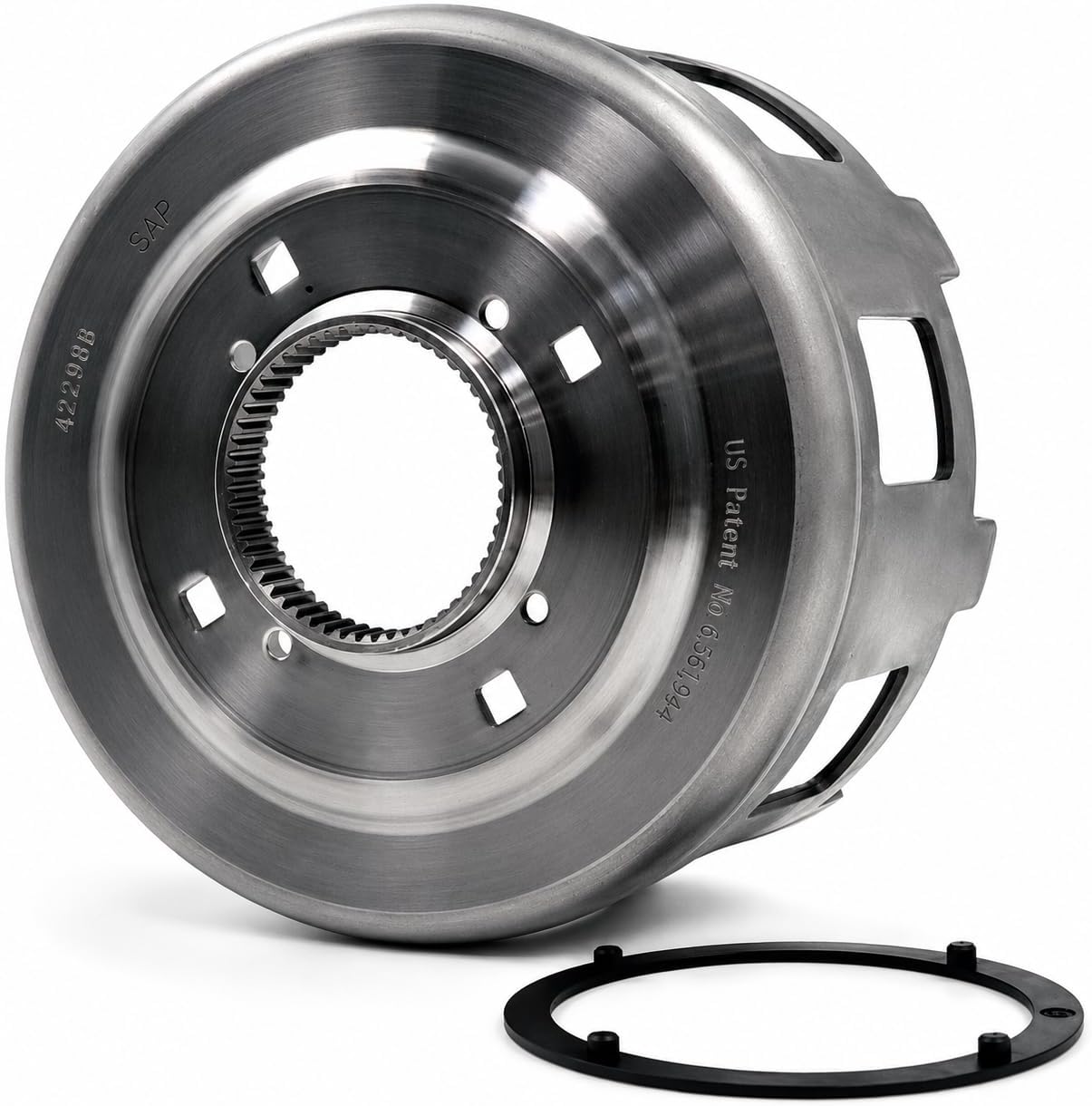
4L60E Accumulator Piston (1993-2015)
The factory plastic accumulator pistons crack and the aluminum ones wear at the pin bore, bleeding off apply pressure and giving you a soft, slipping, or eventually harsh shift. This sealed replacement piston restores the cushion and stops the fluid loss — the common, low-cost fix before any teardown. Shipped fast from the USA.
Shop the 4L60E Accumulator Piston →Sources
- Sonnax — GM 4L60 (700-R4), 4L60-E Accumulator Valve Codes: Deciphering the Alphabet Soup of Shift Feel, on how the 1-2 accumulator piston and accumulator valve control shift feel, throttle-sensitive accumulator pressure, spring orientation across generations, and the letter codes that firm or soften the shift. sonnax.com/tech_resources/1061
- Sonnax — Hydraulics Fundamentals Part II: Accumulators & Shift Feel, on how accumulators cushion apply pressure to control shift quality and the 4L60 accumulator circuitry. sonnax.com/tech_resources/675
- Sonnax — Oversized 1-2 Accumulator Valve (84754-57K), on reconditioning a worn 1-2 accumulator valve bore and re-centering the valve to reduce side-load wear that affects apply pressure. sonnax.com/parts/2575-oversized-1-2-accumulator-valve
- Sonnax — Pinless Forward Accumulator Piston Kit (77987-01K), on the plastic accumulator pistons cracking and pistons wearing at the pin bore in 4L60-E/4L65-E/4L70-E units, causing fluid loss, delayed engagement, slips, and burnt clutches/bands. sonnax.com/parts/2518-pinless-forward-accumulator-piston-kit
- Sonnax — GM 4L60-E Transmission (unit overview), reference for the 4L60-E servo, 2-4 band and accumulator hardware behind 1-2 shift-feel complaints. sonnax.com/units/455-4l60-e