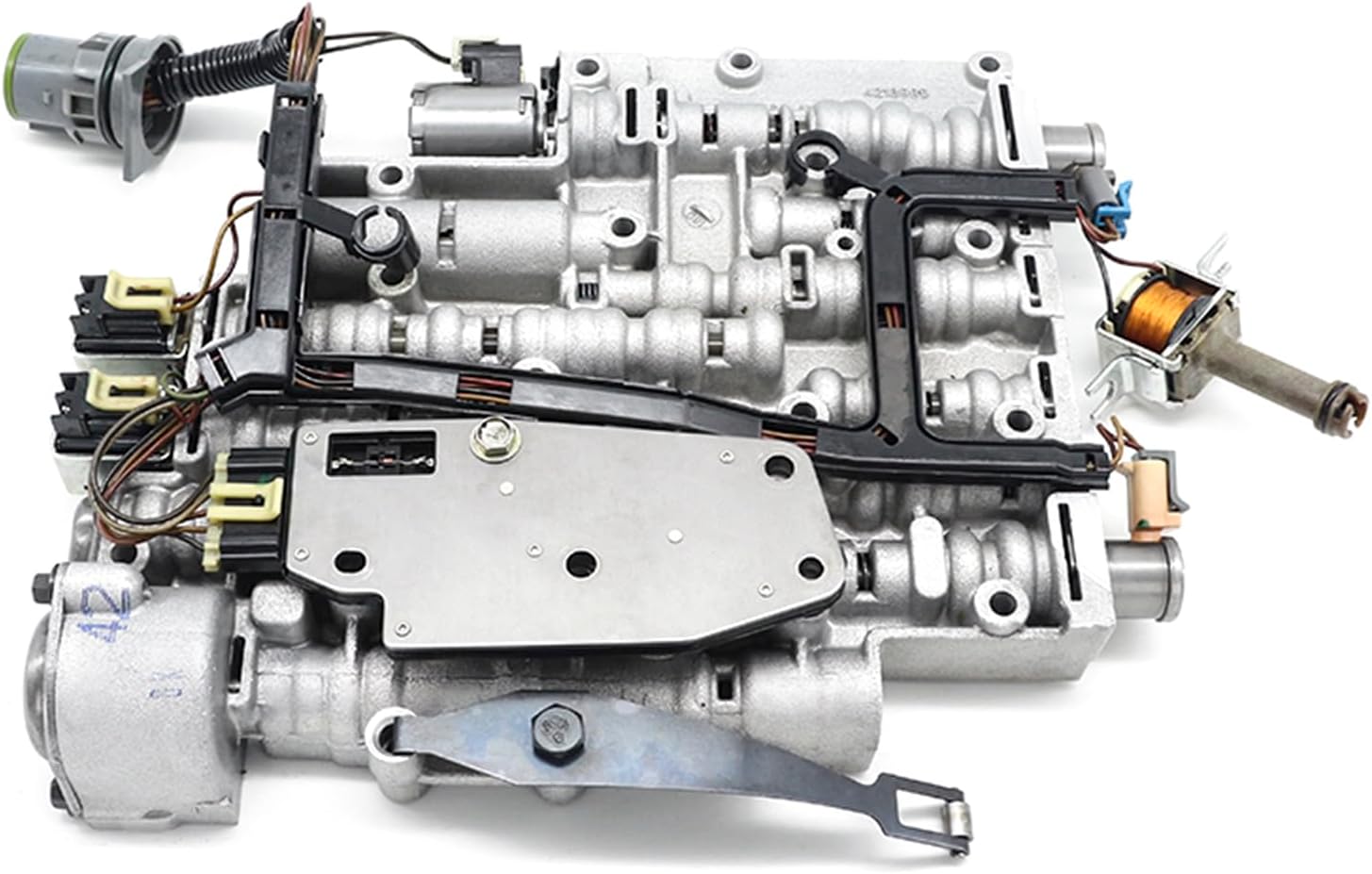
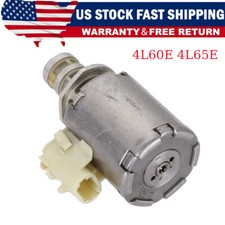
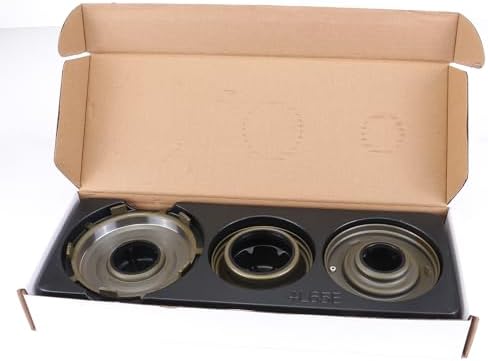
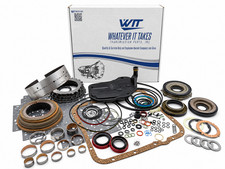
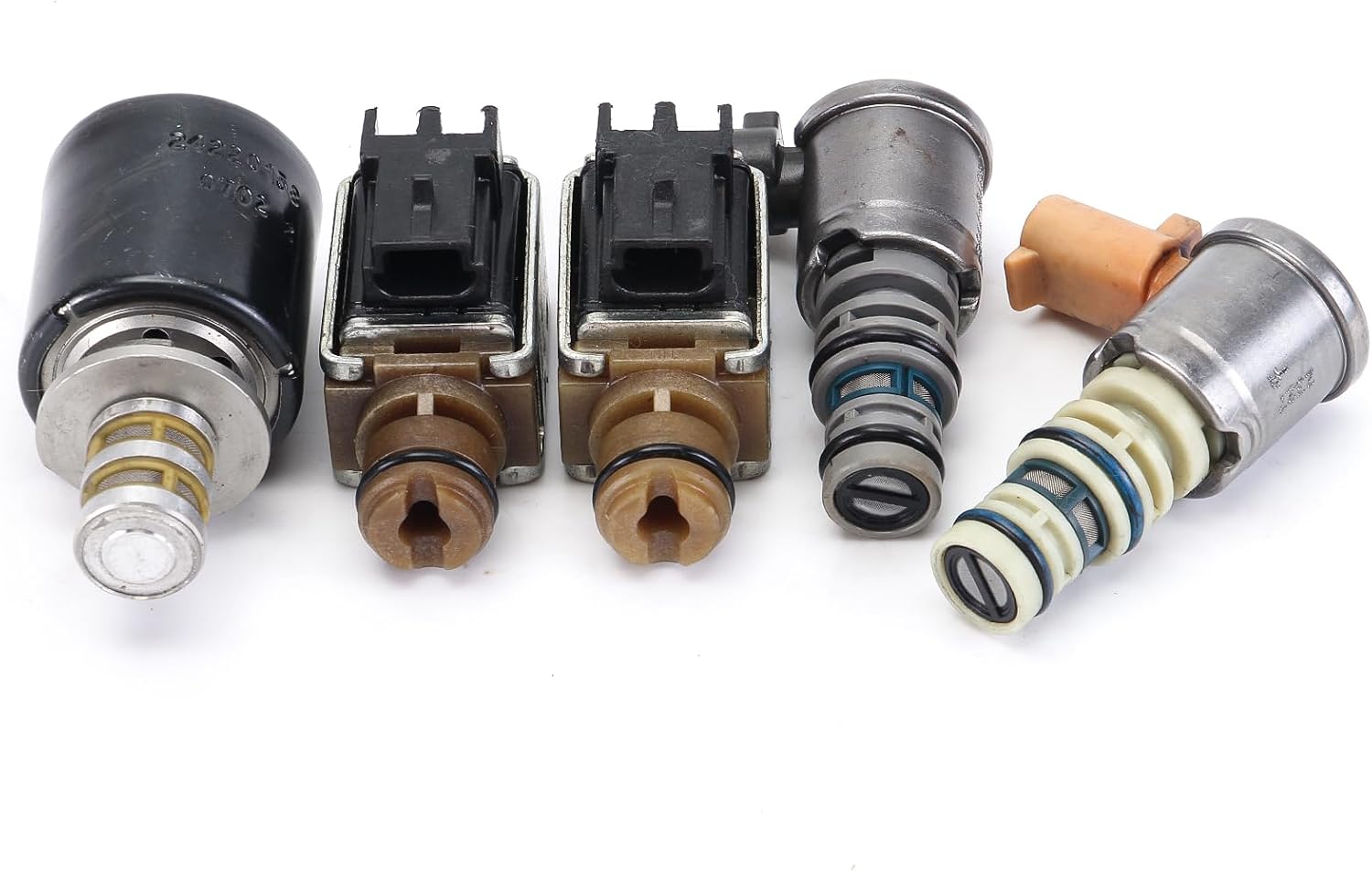
A 4L60E that shifts harsh, flares between gears, or sets code P0748 for the EPC solenoid or P0741 and P1870 for torque converter clutch slip is usually telling you the valve body and its solenoids wore out together, not separately. This is a remanufactured 4L60E valve body assembly that ships complete with the EPC solenoid and shift solenoids already installed, built for 1993-2008 applications, so a single part number covers the hydraulics and the electronics behind the shift.
What the valve body and its solenoids do in a 4L60E
The 4L60E is GM's 4-speed rear-wheel-drive electronic automatic used behind most half-ton Chevrolet and GMC trucks, SUVs, and cars built from 1993 into the 2000s. The valve body is the hydraulic side of shift control: its pressure regulator sets line pressure, and the 1-2, 2-3, and 3-4 shift valves route that pressure to each clutch and band. The EPC (electronic pressure control) solenoid is what the computer pulses to raise or lower line pressure on the fly, and the shift solenoids are what the computer fires to move those shift valves at the right moment. All of it lives on the same casting, which is why worn bores in the valve body often damage the solenoids seated against them through heat and debris.
Symptoms that point to this part
- Code P0748 for the EPC solenoid circuit, with shifts that go harsh or soft as the fluid warms up
- Code P0741 or P1870 for torque converter clutch slip, or a shudder around 40-60 mph
- Harsh, late, or flared 1-2 or 2-3 shifts, or no 3rd or 4th gear
- Starting out in 2nd gear (limp mode) with a solenoid or ratio code stored
- Shifts that stayed wrong after replacing the solenoids alone, because the bores feeding those solenoids were also worn
Our 4L60E common problems guide walks through how these symptoms overlap.
How to confirm it before you buy
Scan for codes first. If you already replaced the EPC or shift solenoids on their own and the symptoms came right back within a few thousand miles, that points to worn bores feeding those solenoids rather than the solenoids themselves. Our shift solenoid symptoms and testing guide covers how to tell a bad solenoid from a bad bore before spending money twice on the same problem.
Fitment: 1993-2008
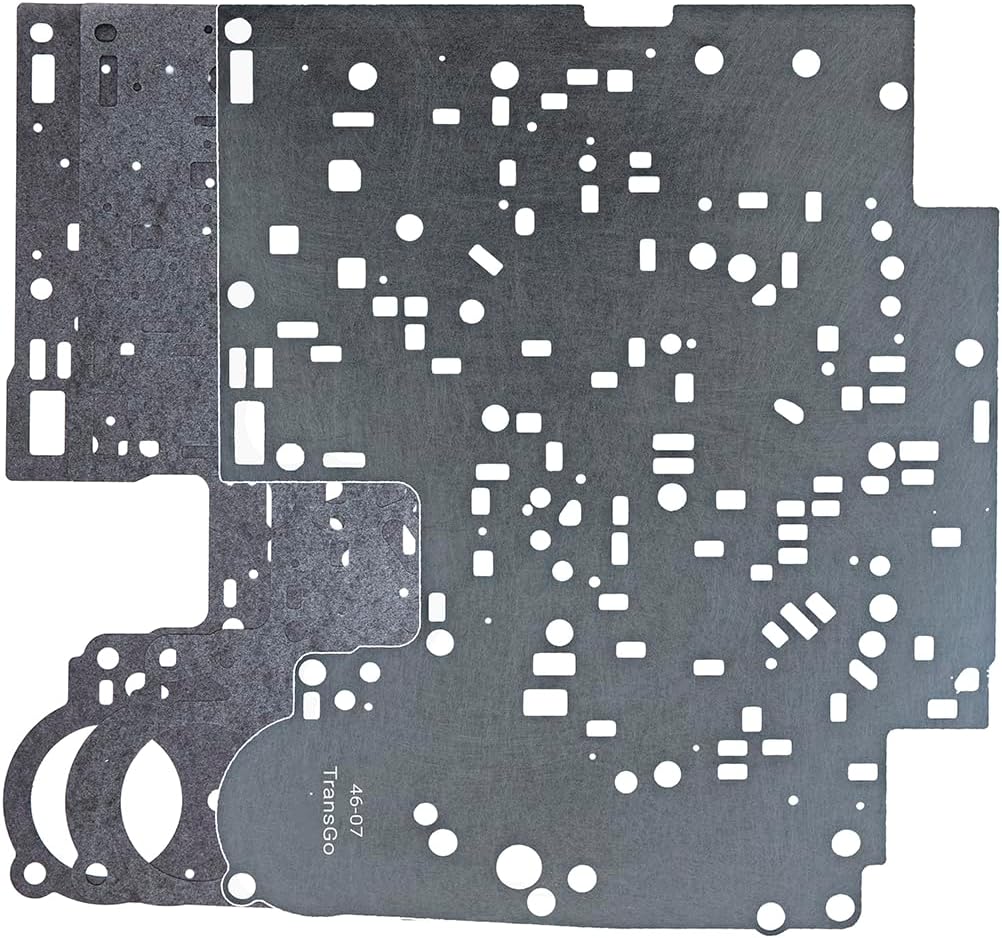
This assembly spans the full 4L60E production run, but GM changed the casting, connector count, and solenoid pack more than once over those years: 1993-1994 units ran without PWM torque converter control, PWM TCC control arrived in 1995, and later years brought revised separator plates and solenoid layouts. Match your old unit's connector count and casting number against this listing before ordering, or send us your year, vehicle, and VIN and we will confirm the right version. The full lineup of 4L60E valve bodies we carry by year is on the 4L60E parts page.
Install notes
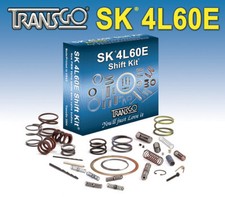
Drop the pan, unplug the internal wiring harness, and remove the valve body bolts in the sequence GM specifies so the check balls stay seated. Install a new filter and pan gasket at the same time so debris from the old unit does not circulate into the new solenoids, and refill with Dexron VI. Because this is a complete solenoid assembly, you do not need to source EPC or shift solenoids separately, but a 4L60E shift kit is worth adding if you want firmer shift feel, and a bonded piston set is the next thing to check if the clutches themselves have been slipping. Let the computer relearn its shift adapts over the first several drives, or reset adapts with a scan tool.