The unit came in slipping. You pulled it, found a burned 3-4 pack and a grooved boost sleeve, fixed both, buttoned it up, and drove it out of the bay into a 1-2 shift hard enough to chirp the tires. Now the customer thinks you built it wrong.
You did not. You left the old transmission's memory in the truck.
Before the rebuild, that PCM spent thirty thousand miles teaching itself to compensate for a slipping clutch pack by shoving line pressure up. The clutches are new now. The pressure command is not. Until somebody tells the computer the transmission changed, it keeps commanding pressure for a transmission that no longer exists.
This is the most common self-inflicted comeback on an electronically controlled GM rear-wheel-drive unit, and it is avoidable. Here is what is actually stored in that computer, which parts you can reset, which parts you cannot, and where reprogramming fits in — because reprogramming and resetting adapts are two different jobs that get talked about as if they were one.
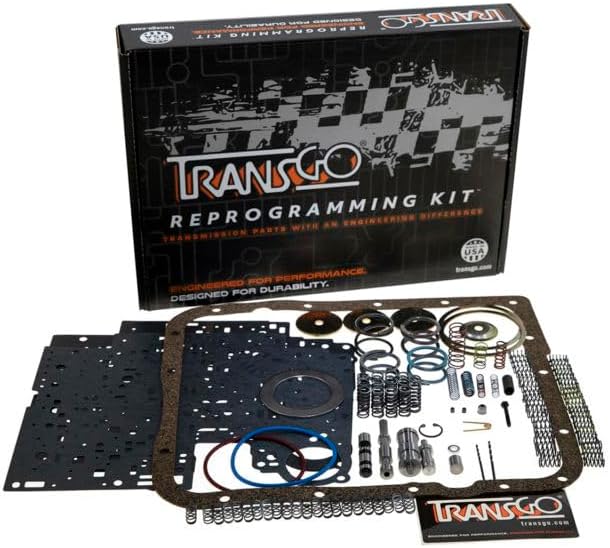
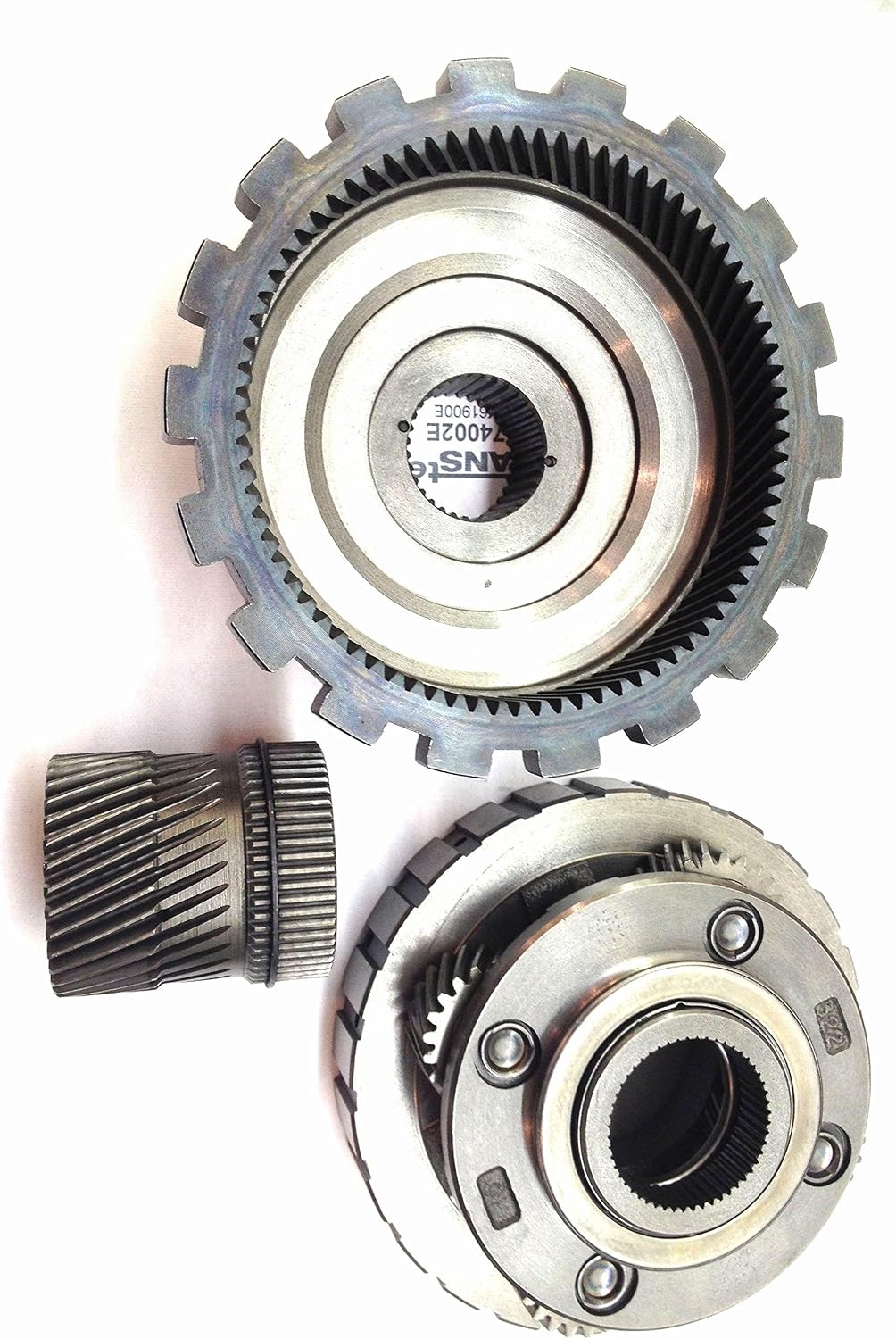
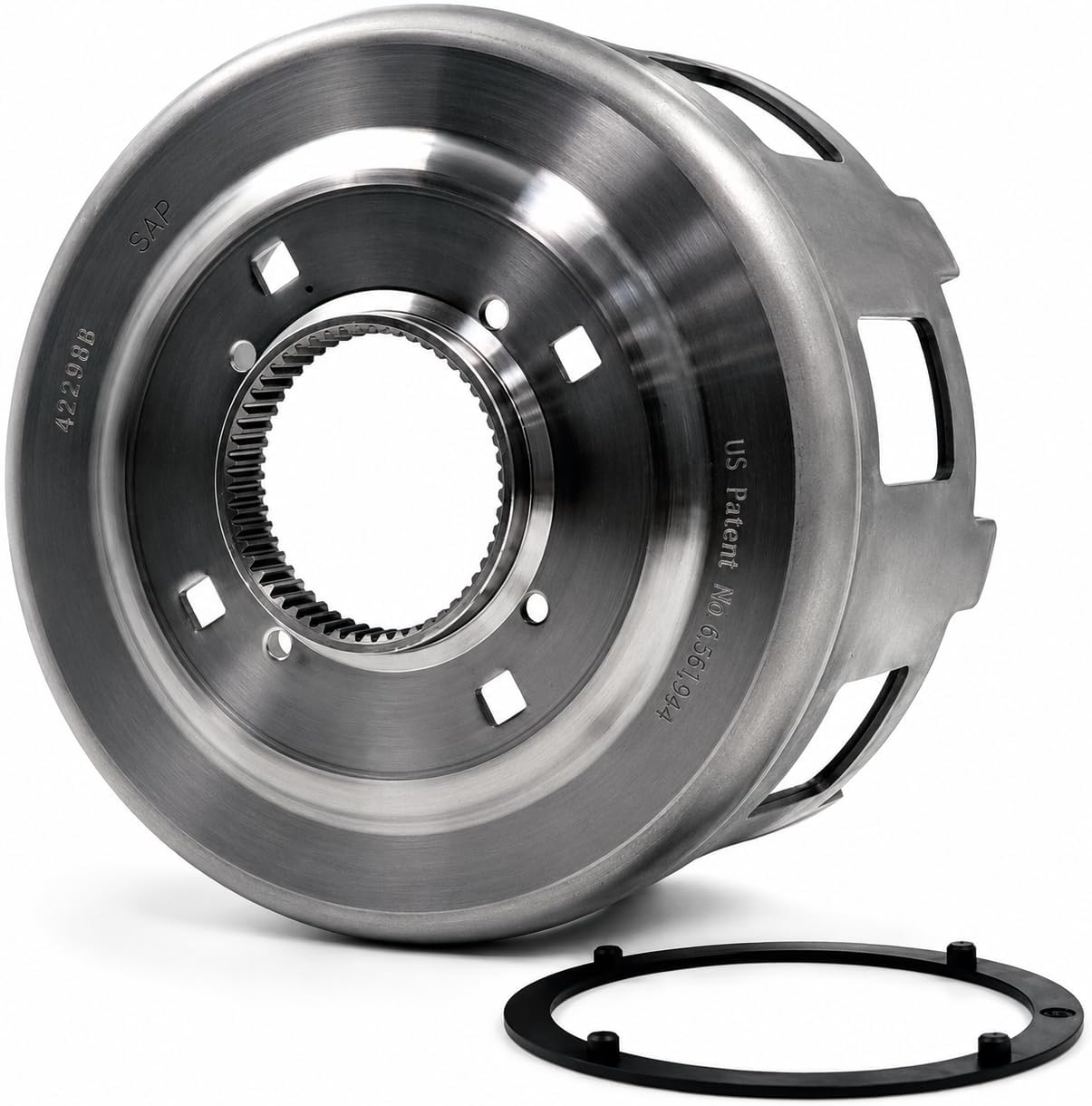
Three separate things live in that computer
Techs use "reflash," "reset," and "relearn" interchangeably, and that is where the confusion starts. On a 4L60-E these are three distinct layers, stored differently and cleared differently:
| Layer | What it is | How it changes |
|---|---|---|
| Calibration | The base software: shift points, base line pressure tables, TCC strategy, diagnostic thresholds. | Only by reprogramming (reflashing) the module. Does not drift on its own. |
| Shift adapts (TAP) | Learned pressure corrections applied during each upshift, stored per shift and per load level. | Continuously, every time the unit shifts. Resettable with a bidirectional scan tool. |
| Steady-state adapts | Learned pressure corrections applied after the shift, holding a gear against slip. | Continuously. On most GM applications there is no scan-tool reset for these. |
Sonnax technical writer Brian Wing put the distinction plainly: reflashing changes the control software that instructs the module how to operate the transmission, while resetting adaptations simply returns the module to its baseline control setting so adaptation begins fresh for the newly installed parts. No software changes hands. A dealer telling you "it doesn't need a reflash" has not answered the question of whether the adapts need resetting.
How TAP actually works on a GM unit
TAP stands for transmission adaptive pressure. The PCM adds or subtracts pressure from a calibrated base value to compensate for build variation and normal wear. It measures every commanded upshift, compares actual shift time against the calibrated target, and adjusts the current it sends the pressure control solenoid for the next occurrence of that same shift.
The direction trips people up, because the EPC solenoid on a 4L60-E is inverse-acting: more current means less pressure. So when a shift takes too long, the PCM decreases current to the PC solenoid, which raises line pressure. Shift too fast and harsh, and it does the opposite.
The corrections are not stored as one number. They are binned into cells by how hard the driver was asking. In the TASC Force writeup on adaptive pressure systems, Dan Tucker describes cells running from TAP cell 4 up to TAP cell 16, where cell 4 is a light-load easy takeoff and cell 16 is near wide-open throttle. The computer reads load, vacuum and throttle position to decide which cell it is in, then adapts that cell independently. Two trucks with identical hardware can carry very different adapt tables purely because one gets driven by a commuter and one gets driven by a contractor.
That adapt authority is not unlimited. Per the same source, the average maximum and minimum adjustments the PCM can make normally fall between -29.75 psi and +29.75 psi either side of the programmed pressure. Roughly 60 psi of total swing is a lot of pressure to hide a mechanical problem behind — and it is exactly why a worn unit can drive acceptably right up until it does not.
Read the adapts before you pull the pan
This is the part most shops skip, and it is free diagnostic information sitting in the module.
On a healthy unit, the shift-adapt cells sit close to their base pressure and stay consistent from one cell to the next. Tucker's example of a properly working unit shows most TAP cells within about 3 psi of base with sensible cell-to-cell progression. His example of a bad one shows 1-2 cell 6 at 12.50 psi, cell 7 at -19.50 and cell 8 at -7.50 — a 32 psi swing between adjacent cells. There is no mechanical reason for the computer to want that much more pressure at cell 6 and that much less at cell 7. That pattern is the signature of a pressure control problem, and in that case it was called before the unit came apart, on a vehicle that had no stored codes and drove fine.
What to look for:
- Large positive adapts across a given shift: the computer has been adding pressure for a long time to make that shift happen. Something in that shift's apply circuit is slow — a leaking circuit, a worn bore, a tired clutch pack.
- Erratic cell-to-cell values with big swings between neighbors: pressure control itself is suspect. Look hard at the EPC solenoid and the pressure regulator and boost circuit.
- Adapts pinned near the limit with no code yet: you are close to setting P1811 and the truck is on borrowed time.
Steady-state adapts: the ones nobody checks
Shift adapts cover the transition between gears. Steady-state adapts cover everything else — holding a gear once the shift is finished. On a healthy unit they should read 0 psi, because a healthy unit is not slipping and the computer has nothing to correct.
The moment the module calculates a ratio error in a gear, it raises steady-state pressure for that gear to stop the slip. And here is why this matters more than it sounds: steady-state adapts are capable of raising line pressure by 200 psi or more, far beyond the roughly 30 psi of shift-adapt authority.
Tucker documents a case where a customer's complaint was a harsh 3-4 shift. Third-gear steady-state adapt read 59.99 psi. The unit was slipping in third, the computer had already corrected it, and the driver never felt the slip — only the harsh 3-4 that resulted from entering the shift with line pressure 59 psi above normal. The repair was a third-clutch piston with the rubber blown off it. Chasing that harsh 3-4 as a shift problem would have been wasted work.
He also flags a reading worth memorizing before a road test: 1st gear and Reverse both sitting near 229.94 psi usually means a restricted filter. Drive that one and you may be walking back.
Two practical notes on steady-state adapts. First, most GM applications have no scan-tool reset for them. Second, they tend to walk back toward zero on their own once the slip is gone — often within a complete shift cycle on the road. So after an overhaul, do not go chasing pump whine or a harsh shift until the steady states have had a chance to normalize. A long battery disconnect will usually move them, and a PCM reflash tends to return them to zero as a side effect.
EPC solenoid: the part that holds the adapts hostage
Runaway adapts usually trace back to pressure control. If the EPC solenoid is drifting, the module compensates until it runs out of authority, and no amount of resetting sticks — it just re-learns the same correction within a few dozen shifts. Replace the solenoid, then reset. CoreTransmissionParts stocks the 4L60E EPC pressure control solenoid in both the 1993-2002 and 2003-up styles, so match it to your year and case.
4L60E EPC Pressure Control Solenoid (2003-Up) →TCC duty cycle is an adapt gauge too
The lockup side of a PWM or EC3 4L60-E adapts the same way, and it is easy to read. Under EC3 control the module is not trying to fully lock the converter under most conditions — it targets a consistent slip of roughly 20 to 40 RPM, raising duty cycle in steps to around 50% to get there, and pushing to 98% only under high torque or freeway load to eliminate slip entirely.
Because the module constantly trims pulse width to hold that slip window, the duty cycle it settles on tells you about circuit condition. Sonnax makes the point directly: on a vehicle with low miles showing an average TCC duty cycle around 79%, the module is compensating for circuit wear, most likely in the TCC regulator valve bore. You have found the problem before it sets P1870 or P0894.
Clearing codes does not clear adapts
Say it twice, because it is the most common wrong assumption in the shop. Adaptations are not reset when trouble codes are cleared. Neither is a code-clear the same as a battery disconnect, and on GM units a battery disconnect is not always enough either — plenty of remanufactured-unit installation sheets specify resetting adaptive memory with a scan tool before the new unit is operated for the first time, precisely because pulling the battery does not reliably do it.
The order of operations after a rebuild
Do these in sequence. Getting the order wrong wastes the reset.
- Fix the mechanical problem first. Resetting adapts on a unit that still has a leaking circuit or a worn bore accomplishes nothing — the module re-learns the same correction within a few dozen shifts. Sonnax recommends vacuum testing all circuits on a 4L60/E during the build, since bore wear is common and some repairs require reaming.
- Clear all codes in every module, not just the PCM. Codes elsewhere in the vehicle can stop the transmission controller from adapting at all.
- Check for a calibration update, and do it before the reset. This is GM's own stated order. In bulletin 16-NA-019, GM instructs technicians to check module software against what is in the vehicle and perform any relevant update prior to the learn procedures, noting that completing the calibration update clears the clutch adapts and therefore requires the learn procedures afterward. Reflash first, reset second, or you throw your reset away.
- Reset the adapts with a bidirectional scan tool before the first drive. A Tech 2 or an equivalent GM-capable tool with the transmission adaptive reset function is what you want.
- Get the fluid to temperature before you judge anything. GM gates adaptive learning on transmission fluid temperature — on the eight-speed units the bulletin specifies a 35°C (95°F) to 95°C (203°F) window and states outright that outside that range the clutches will not be learned. The 4L60-E is a simpler system, but the principle carries: a stone-cold unit on the first drive out of the bay is not a fair test of your work.
- Drive it, then read the adapts again. Tucker's post-repair recheck was done after about 10 to 15 upshift cycles, and the cells had already moved substantially back toward zero. That is your confirmation that the repair took.
If your scan tool has no reset function, the fallback is disconnecting the battery for an extended period — usually more than 30 minutes. Treat that as a compromise, not as equivalent to the scan tool reset.
Why skipping the reset can actually hurt the unit
The argument for skipping is that the module adapts anyway, so why bother. The answer is in the timescale. Adaptation is built for small incremental corrections tracking gradual wear over tens of thousands of miles, and a rebuild eliminates that wear instantly. During the miles it takes to walk the correction back down, the unit runs pressures and apply timings that do not match the parts inside it. Sonnax frames the reset as preventing a post-build failure inside the case, not as a comfort item.
The specific comebacks that trace to a skipped reset are recognizable: a flare that was present before the build is gone but now everything is harsh and there is a bind; solenoids were replaced and the temperature-related complaint went away but shift timing is now off; there was no lockup before and now lockup is abrupt. In every one of those the instinct is to suspect your own workmanship or a missed part. Check the adapts first.
P1811 and what it is really telling you
P1811, Maximum Adapt and Long Shift, sets when the module reaches the end of its adaptation window. The important reframe is that P1811 is not a fault in the computer — it is the computer reporting that it has run out of room to hide a mechanical problem. Wing describes it exactly that way: adaptation can buy thousands of extra miles, but eventually wear overcomes the module's ability to compensate and the code triggers.
So treat P1811 as a pressure-control and wear diagnosis, not a reset job. Reset it without repairing anything and it will come back, because the conditions that drove the adapts to the limit have not changed. Read the adapt cells, pressure test, and find out what the module was compensating for.
What reprogramming will and will not fix
Reflashing is a real tool when there is a real calibration update that addresses the complaint. GM releases updated transmission calibrations for shift quality concerns, and if the update description matches what the customer is describing, install it — and then relearn, because you just cleared the adapts.
What reprogramming will not do is fix a worn bore, a leaking circuit, a burned pack or a drifting EPC solenoid. The calibration sets targets. The hydraulics have to be capable of hitting them. A reflash applied to a mechanically tired unit produces the same complaint with a different date on the repair order.
Same caution on aftermarket tunes: a tune that raises line pressure and shortens shift times moves the base that adapts work from. If you inherit a truck with a performance calibration and odd shift behavior, find out what is in the module before you condemn parts.
EPC and shift solenoids, TCC solenoids, TFP pressure switch manifolds, internal harnesses, filters, pan gaskets and valve body components for the 4L60E — shipped fast from the USA.
Shop 4L60E parts →The short version
A 4L60-E carries three layers of stored behavior: the calibration, the shift adapts, and the steady-state adapts. Clearing codes touches none of them. Reflashing changes the calibration and clears the shift adapts as a side effect. A bidirectional scan tool reset clears the shift adapts and nothing else. Steady-state adapts mostly have to be driven back to zero.
Read the adapt cells before you disassemble anything — they will frequently name the failing circuit for you on a vehicle with no stored codes. Fix the mechanical fault, clear codes everywhere, check calibration and flash if there is a relevant update, then reset adapts, then drive it warm for 10 to 15 upshift cycles and read them again. Do it in that order and the truck leaves shifting like you built it, instead of shifting like the transmission you threw away.
Sources
- Sonnax TASC Force / Transmission Digest — "Playing TAPS on Pressure Systems," Dan Tucker (Sonnax TASC Force member; owner, Tucker's Transmission), May 1, 2005. Backs the definition of TAP as transmission adaptive pressure covering both shift adapts and steady-state control; the TAP cell structure running from cell 4 (light-load easy takeoff) to cell 16 (near wide-open throttle), selected by load, vacuum and throttle position; the average maximum and minimum adapt authority of -29.75 psi to +29.75 psi either side of the programmed pressure; the healthy-unit example with cells within about 3 psi of base and the failing example at 12.50, -19.50 and -7.50 psi on adjacent 1-2 cells; DTC P1811 as Maximum Shift Adapts Exceeded; the requirement to reset TAPs after major repair or the module will command raised pressure for a fault that no longer exists; the scan tool as the fastest reset with a battery disconnect of more than 30 minutes as the fallback; and the post-repair recheck after 10 to 15 upshift cycles. transmissiondigest.com
- Sonnax TASC Force / Transmission Digest — "GM's Steady-State Adapts," Dan Tucker, June 1, 2005. Backs the distinction between shift adapts and steady-state adapts; that steady-state adapts should read 0 psi on an ideal unit and that any reading above 0 indicates slip in that gear; the harsh 3-4 case study with third-gear steady-state adapt at 59.99 psi caused by a third-clutch piston with the rubber blown off; the 1st gear and Reverse readings near 229.94 psi indicating a restricted filter; that steady-state adapts are capable of raising line pressure by 200 psi or more and can cause pump whine; that most vehicles have no scan-tool reset for steady-state adapts; that a PCM reflash appears to return them to zero and a long battery disconnect usually moves them; and that they typically return to zero after a complete shift cycle on the road. transmissiondigest.com
- Sonnax TASC Force / Transmission Digest — "Adapt & Overcome," Brian Wing (Sonnax product development manager, driveline and transmission components; TASC Force member), April 1, 2015. Backs the explanation of module adaptation compensating for wear by modifying the pulse-width signal to the pressure control solenoid; that GM's P1811 Maximum Shift Adapt code triggers when the module reaches the limit of its adaptation window; that adaptations are not reset when trouble codes are cleared; the distinction that reflashing changes control software while resetting adaptations returns the module to baseline with no software change; the three characteristic post-build comebacks (flare gone but harsh with a bind, solenoid complaint gone but shift timing off, no lockup now harsh lockup) traced to skipped adaptation resets; and the reasoning that adaptation handles gradual wear, so the abrupt change of a rebuild can inflict damage before the module catches up. transmissiondigest.com
- General Motors service bulletin 16-NA-019, "Information on Transmission Adaptive Functions and Correcting Low Mileage Harsh Shifts, Slips, or Flares," August 2016, hosted by NHTSA (PDF). GM's own description of adaptive learning: that the module adjusts pressure commands to the pressure control solenoids to maintain originally calibrated shift timing, monitoring the input speed sensor and output speed sensor during commanded shifts to determine whether a shift is occurring too fast or too slow; that adaptation is a continuous process compensating for both new-build variation and normal wear; the instruction to check module software against the vehicle and perform any relevant calibration update prior to the learn procedures; the statement that completing a software/calibration update clears the clutch adapts and therefore requires a Service Fast Learn and adaptive learning afterward; and the transmission fluid temperature window of 35°C (95°F) to 95°C (203°F), outside of which the clutches will not be learned. Note: this bulletin covers the 8L45 and 8L90 eight-speed units, and is cited here for GM's statement of adaptive-learning principle and reflash-clears-adapts sequencing, not as 4L60-E-specific procedure. static.nhtsa.gov (PDF)
- Sonnax — "20 Years Later: What's New with 4L60-E PWM Modifications." Backs the 4L60-E lockup control detail: PWM duty cycle progression from 0% unlocked to 90% full lockup; the EC3 strategy targeting a consistent 20 to 40 RPM converter slip with duty cycle raised in steps to around 50% at apply and up to 98% for full lock under high torque or freeway load; the diagnostic use of average TCC duty cycle, where roughly 79% on a low-mileage vehicle indicates the module compensating for regulator bore wear ahead of codes P1870 and P0894. sonnax.com
- Sonnax — "Building the Killer 4L60E: Top Tips for Optimizing Your Transmission Upgrades." Backs the build-stage guidance that bore wear is common in the 4L60/E, that all circuits should be vacuum tested to identify leaks, and that some of those repairs require reaming — the mechanical prerequisite before any adapt reset is meaningful. sonnax.com