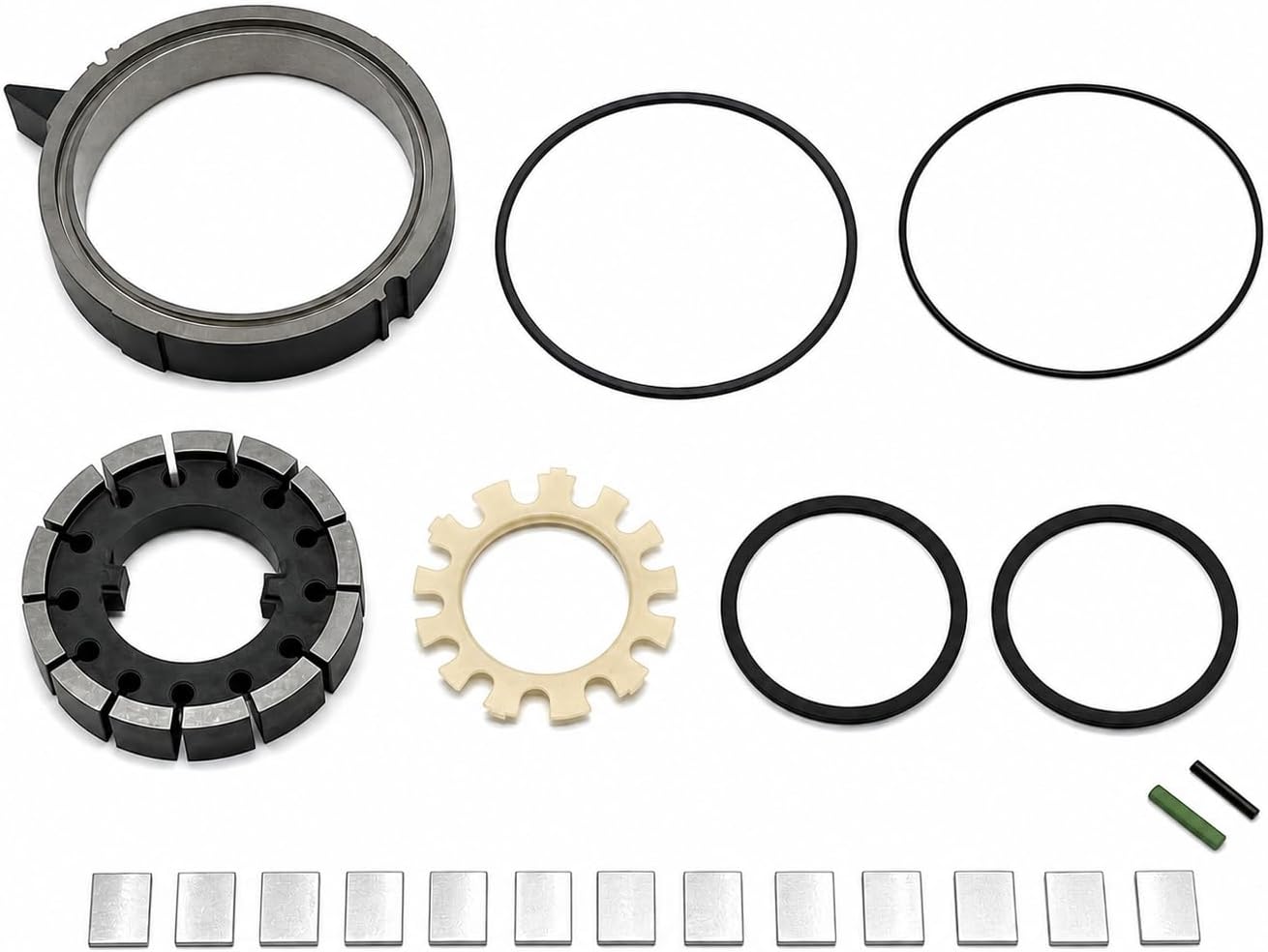
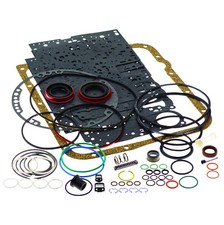
A tired 4L60E pump rarely fails all at once. Line pressure sags at idle, falls away when you get on it at higher RPM, and the shifts start flaring once the fluid is hot. On towing trucks and high-mile Silverado, Sierra, Tahoe and Yukon units that wear is almost guaranteed. The K65927B kit replaces the whole moving core of the pump in one go: the 13-vane rotor, rotor guide, pump slide, 13 vanes, two hardened vane rings, the slide seal and an O-ring. That is the difference from buying a single rotor. If the slide and vanes are worn along with the rotor, this kit replaces all of them so you start from fresh parts.
What the rotor, slide and vanes do in a 4L60E pump
The 4L60E uses a variable-displacement vane pump, which GM's service information describes as a 13-vane design. The rotor is driven by the converter hub, and the vanes slide outward against the bore of the slide. The vane rings sit on each side of the rotor and hold the vanes out at low speed so the pump primes. The slide pivots on a pin; the slide spring pushes it toward maximum output, and the pressure regulator moves it back toward center as pressure rises. Every one of those surfaces wears. Sonnax points out that even a worn slide pivot pin can push line pressure low or high, so the pump only does its job when the slide, vanes and rotor are all in good shape.
Symptoms this kit is meant to fix
- Low line pressure at idle, and pressure that drops further as RPM climbs
- Slow or flaring shifts once the fluid is up to temperature
- Delayed engagement into drive or reverse
- Converter clutch shudder, because converter feed oil also comes from the pump
- Repeat 3-4 clutch burn-ups after a rebuild that reused the old pump internals
How to confirm the pump internals are worn
Start with a line pressure gauge rather than the scan tool. Transmission Digest notes that 4L60E pressure complaints should be checked with a gauge, not the commanded pressure control solenoid reading, because the solenoid can be commanding the right value while the pump cannot deliver it. Pressure that is low in every range and gets worse as RPM rises points straight at the pump. On the bench, look for scoring on the slide bore, the rotor faces and the pocket, and check vane tips for wear. Our guide to 4L60E pump rotor and bushing wear covers what to measure. If the pump body or cover themselves are scored past saving, a complete 4L60E pump assembly is the better route.
Fitment
The listing covers 13-vane pumps in the GM 200-4R, 700R4 / 4L60, 4L60E, 4L65E, 4L70E, 4L75E, 4L40E, 5L40E and 5L50E from 1981 on, as a direct replacement with no machining. For the 4L60E that means 1993-2013 trucks, SUVs and cars. The one thing to check is vane count: some early pumps used a 10-vane rotor, and this kit will not convert them. Count the vanes on your old rotor, or send us your year and VIN before ordering. Rotor thickness in this kit is .7060-.7065 in, so measure your pocket and compare. See more pump parts on our 4L60E parts page.
Install notes
- Split the pump, remove the old slide, rotor guide, rotor and vanes, and clean the body and cover completely.
- Fit the new slide seal and the slide spring. The slide spring is strong and awkward; a pump slide spring installer makes it a one-person job.
- Drop in the rotor guide and rotor, load all 13 vanes, and set a hardened vane ring on each side of the rotor.
- Check rotor-to-body clearance before you close the pump, then bolt the halves together inside a pump alignment band and torque the bolts.
- Use the supplied O-ring on the pump body, fit a new front seal, and prime the pump with Dexron VI before the first start.