If you are putting a GM front pump back together on a 4L60E out of a Silverado, Sierra, Tahoe or Camaro, or on an older 700-R4, TH350 or TH400, this is the band that replaces the factory SST-1097 / T-1097 alignment tool. It is the step people skip on a first rebuild and then chase for weeks afterward as a converter clutch that will not lock, a shudder at cruise, or a pump bushing that is already scored when the unit comes back apart.
What the alignment band does in a 4L60E pump
The 4L60E pump is a two-piece assembly: a body that holds the rotor, vanes and slide, and a cover with the stator support pressed into it. The stator support is the shaft the converter stator rides on and the surface the input drum spins around. When the cover bolts are run down, the cover can creep sideways on the body by a few thousandths. That is enough to put the stator support off center from the bushing in the pump body, so the drum and the converter hub are both loaded to one side from the first mile.
The band wraps the outer wall of the pump with both halves together. Hand-tightening the wing nut pulls the outside diameters of cover and body into line, and they stay there while you torque the bolts. On a 4L60E the pump body also carries the converter clutch valve and the TCC solenoid bore, so a body that gets pulled out of shape does more than wear a bushing. GM's own 4L60-E diagnosis tables list "high or uneven bolt torque (pump body to cover)" as a cause under both no converter clutch apply and converter clutch shudder.
Symptoms of a pump assembled off center
- Converter clutch that never applies or shudders after the rebuild, sometimes with a P0741 slip code
- Whine that rises and falls with engine RPM, not road speed
- Front seal leak soon after the rebuild because the converter hub is running off center in the bushing
- Converter that will not drop fully into the pump on the bench, or that turns with a tight spot
- Delayed engagement and low line pressure from a pump that is binding or leaking across the halves
How to confirm the pump needs to come apart
Before you blame the pump, measure line pressure with a gauge and look at what the TCC is doing on a scan tool. A 4L60E with a worn pressure regulator bore or a sticking EPC solenoid can look a lot like a weak pump. Our 4L60E pump rotor and bushing wear guide covers what to measure once the pump is out, and the 4L60E common problems guide helps rule out the valve body and solenoid faults first.
Fitment
This band is listed for the GM TH250, TH250C, TH350, TH350-C, TH375, TH400 (3L80 and 3L80-HD), TH425, TH475, 700-R4, 4L60, 4L60E and Powerglide, the family of GM automatics built around the same pump outer diameter. It is a bench tool, so there is no vehicle year to match, but it is not meant for later GM 6-speed and 8-speed pumps or for 4L80E units. If you are not sure what you have, check the transmission ID tag or send us the year and VIN. Browse everything we carry for this unit on the 4L60E parts page.
Install notes
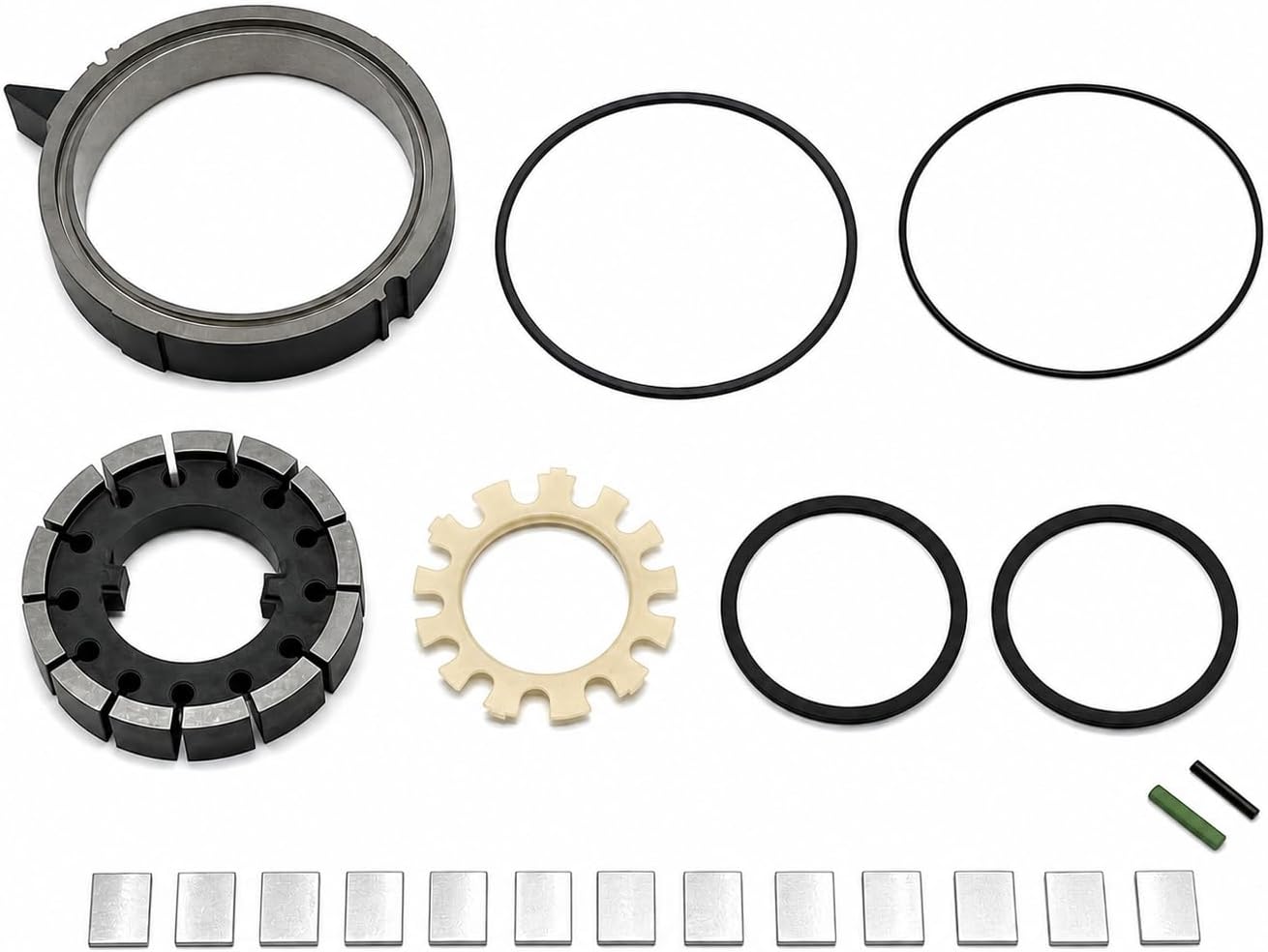
- Finish all pump work first: rotor, vanes, slide, slide springs and the stator support bushings. If you are replacing internals, the heavy duty 13 vane pump rotor kit goes in before the cover.
- Set the cover on the body, start every bolt by hand, then put the band over the outside wall of the pump.
- Snug the wing nut by hand until both halves are flush all the way around. Do not crank it.
- Torque the cover bolts in a crossing pattern to the spec in your service manual while the band holds alignment.
- Loosen the wing nut, lift the band off and spin the rotor through the converter drive tangs to check for any drag.
- Fit a new front seal and pump to case gasket, and lube the pump with Dexron VI before it goes in the case. When the pump has to come out of a case it is seized in, the SST-1055 pump remover and end play tool pulls it evenly and checks end play on reassembly.
The band is stainless steel, so it does not rust sitting in the drawer between jobs, and at 6.3 oz it is easy to keep with your pump tools.