The overrun clutch is the smallest clutch pack in a 4L60E and the one most rebuilders think about last. Two friction plates. It never holds a gear ratio by itself, sets no code when it burns, and a customer can drive for months without noticing it is gone. Then the input sprag lets go on a hard 1-2 shift, the whole input section comes apart, and the two burnt tan plates in the bottom of the pan turn out to have been the warning nobody read.
This is what the overrun clutch does in a 4L60E (and the 700-R4, 4L65E and 4L70E that share the input section), when it applies, how the oil gets to it, how to separate a burned pack from a lost feed circuit on the road test, and what to change so it does not come back.
The short version: The overrun clutch mechanically bypasses the input sprag so torque can flow backward through the input section — that is your engine braking. It applies only in the manual ranges, never in Overdrive. On a stock 4L60E with the normal PRND321 quadrant, D3 does not apply it until the unit is actually in 3rd gear, which is why the input sprag in these units lives a harder life than it did in a 700-R4. Two frictions,.080" thick, 36 splines — that is the entire pack, and it has almost no thermal mass to survive a leak.
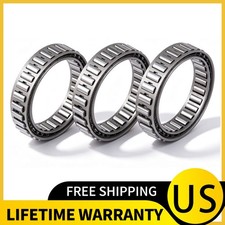
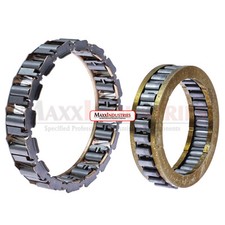
What the Overrun Clutch Holds
Input torque in a 4L60E goes through the forward clutch, and from there through a one-way sprag assembly — the input sprag, also called the forward sprag. A one-way clutch drives in one direction only: on the power side it locks and carries the load, but the moment the wheels start driving the engine instead — you lift off going downhill — the sprag overruns, freewheels, and the driveline effectively disconnects itself. That is why a stock truck in Overdrive coasts like it is in neutral.
The overrun clutch is the answer to that. It is a separate small pack inside the same input housing assembly, with its own piston, and its hub splines into the inner race of the input sprag. When the overrun clutch applies, it ties that inner race to the drum so the sprag is bypassed and the input section transmits torque in both directions. Sonnax describes its heavy-duty replacement hub in exactly those terms — the failure areas are the ones "that engage the input sprag inner race," and the whole point of the part is surviving "deceleration engine braking in D3, D2 or D1 ranges."
That gives you two things, and the second one matters more than most people realize:
- Engine braking on coast. The obvious one. Pull the lever back, lift off, and the engine slows the vehicle.
- Extra torque capacity on the drive side. With the overrun clutch applied, a clutch pack is carrying load in parallel with the sprag instead of leaving the sprag to do it alone. Sonnax puts it plainly: applying the overrun clutch in more gears gives "greatly improved input sprag and Forward clutch durability."
Exactly When It Applies (This Surprises People)
When the 4L60E evolved out of the 700-R4, GM changed the overrun clutch schedule. Per Sonnax, on the 4L60E "the overrun clutch is no longer applied in 1st and 2nd when accelerating from a stop in D3 shifter position. This change was made to improve coastdown drivability in D3 but had the side effect of reducing the torque capacity of the input section."
Here is the stock apply schedule for a 4L60E/4L65E/4L70E with the OE 2-3 shift valve:
| Range | Gear | Overrun clutch (OE 2-3 valve) |
|---|---|---|
| OD (D4) | 1st, 2nd, 3rd, 4th | OFF in every gear |
| D3 | 1st | OFF |
| D3 | 2nd | OFF |
| D3 | 3rd | APPLIED |
| D2 | 1st, 2nd | APPLIED |
| D1 | 1st, 2nd | APPLIED |
Read that table before you condemn a unit. A customer complaining of "no engine braking when I pull it back one notch" on a stock truck may be describing normal operation — in D3 the clutch does not come on until the unit has actually shifted into 3rd. The widely-circulated older chart showing overrun applied in all D3 gears is one of the things the industry has since corrected.
One exception worth knowing. On the paddle-shift Corvette units with the PRNDS quadrant, GM revised the spacer plate, blocked the D2 circuit to the 2-3 shift valve, and deleted the #5 checkball so that D3 oil charges the overrun circuit immediately. On those, per Wayne Colonna's teardown of the change, "the elimination of the #5 checkball will now allow the overrun clutch to apply in first, second and third gears." If you are working on a 2005 Corvette with the 1MX separator plate, the standard aftermarket 2-3 valve upgrade discussed below does not apply to it.
How the Oil Gets There
Unlike a Jatco JR403E, which uses a dedicated overrun clutch solenoid, the 4L60E has no electronic control over this circuit at all. As ATRA's Gears put it when comparing the two units: "The 4L60E uses the manual valve and 4-3 sequence valve to route the oil to the overrun clutch." It is purely a function of where the driver put the lever and which shift valves have stroked.
The path runs from the manual valve through the checkball circuits in the spacer plate, is metered past the #6 checkball, and passes through the 4-3 sequence valve to reach the clutch. When the unit shifts to 4th, overrun clutch pressure exhausts at that same 4-3 sequence valve.
That routing is why a leak has such a specific fingerprint. The 4-3 sequence valve shares a bore with the 3-4 shift valve in the 4L60E valve body (position 205 in the OE exploded view, 4-3 sequence inboard, 3-4 relay outboard). Sonnax's vacuum test guide lists the symptoms of wear in that bore as loss of D3 oil, no 4th, low 4th gear pressure, drops out of 4th, and burnt 3-4 clutches. If a customer has no engine braking in D3 and a 4th-gear complaint, stop looking at the clutch pack — you have a bore problem.
What the Pack Looks Like on the Bench
Pull an input housing apart and the overrun pack is unmistakable because it is so small. Raybestos Powertrain's published specs for the 4L60E friction module list the pieces:
| Clutch | Frictions | Thickness | OD | Splines |
|---|---|---|---|---|
| Overrun (1982-on) | 2 | .080" / 2.03 mm | 5.03" | 36 teeth |
| Forward (1985-on) | 5 | .070" / 1.78 mm | 5.313" | 41 teeth |
| 3rd/4th (1982-on) | 6 | .080" / 2.03 mm | 5.75" | 20 teeth |
| Low/Reverse (1980-on) | 5 | .087" / 2.21 mm | 6.468" | 25 teeth |
| Reverse input, 2nd design | 4 | .070" / 1.78 mm | 6.03" | 41 teeth |
Two plates — the smallest friction area and the least steel mass of anything in the unit. Steel in a pack is what absorbs and sheds heat, and this pack barely has any, which is exactly why it cooks first when it gets applied at a time it should not be.
That spline count is a useful diagnostic in itself. When you find friction fragments in the pan, count the teeth on the tab ring. Thirty-six teeth on a 5.03" plate is overrun material and nothing else in the box.
Three Complaints, Three Different Causes
1. No engine braking in the manual ranges
The straightforward one. Road test it by range, not by feel-in-general: coast down in D2 and D1 (should engine brake in 1st and 2nd), then coast down in D3 with the unit confirmed in 3rd (should engine brake), then OD (should freewheel — that is correct, not a fault).
- Missing in D2 and D1 as well as D3 — the pack, the piston, or the hub. Burned frictions, a cut or hardened overrun piston lip seal, or a cracked hub.
- Missing only in D3, present in D2 and D1 — feed circuit. D3 oil is being lost somewhere between the manual valve and the 4-3 sequence valve. Vacuum test that bore and its end plugs before you split the case.
2. Drag, bind or noise in 4th gear
The dangerous one. If the overrun clutch applies when it is not supposed to — a cracked or leaking forward clutch piston cross-feeding the overrun apply area, or a bore leak charging the circuit in 4th — the sprag is being asked to carry load in a direction the geartrain is not asking for. It feels like the brakes are dragging and it makes noise. Two thin frictions with no steel mass behind them do not survive that; the pack can be gone in under a minute of driving. If a customer describes a sudden bind and noise in 4th on a unit that was previously fine, do not put it back on the road to "confirm" it.
3. No forward movement, broken input sprag
Usually the end of the story rather than the start of it. The overrun clutch is the part that shares load with the sprag; take it away, add a heavy trailer or a big-cam LS, and the sprag eventually gives up. The classic signature is no movement in OD or D while Reverse and Manual 1st still work, because those ranges do not carry torque through the sprag the same way.
Scan Tool Reality Check
There is no overrun clutch PID, no overrun pressure switch, and no DTC for a burned overrun pack. Nothing in the 4L60E strategy monitors this circuit. What a scanner is good for here is bounding the problem:
- ISS and OSS (input and output shaft speed) PIDs — watch calculated gear ratio during a closed-throttle coast. If the ratio holds exactly where it should and the vehicle still freewheels, you are looking at the overrun circuit and not at a shift-valve or solenoid problem.
- Commanded gear — confirm the unit is actually in 3rd before you judge D3 coast behavior. A good share of "no engine braking in D3" complaints on stock units are just the schedule in the table above.
- TFT (transmission fluid temperature) — a unit running hot on a steady highway cruise with a suspected overrun leak is telling you the pack is dragging.
- Ratio and slip codes such as P0894 and P1870 — these show up later, once the debris and the sprag damage catch up. Treat them as a symptom of the input section, not as the diagnosis.
The real test is mechanical: air check the input housing on the bench. Feed the overrun apply passage and the forward apply passage separately and listen for each piston to move and seat. A pack that will not hold air is a pack that will not hold torque.
Fixing It So It Stays Fixed
- Inspect the hub before you order plates. The OE overrun clutch hub in the 700-R4, 4L60E, 4L65E and 4L70E is, in Sonnax's words, "highly susceptible to cracking and breaking" in hard-use applications. Look hard at the splines and at the area that engages the sprag inner race. A hairline crack there will finish off your fresh frictions.
- Replace the input sprag as an assembly, with new inner and outer races. Used races are frequently worn or out of spec, and reusing them is a common cause of a repeat failure.
- Use the correct bonded piston set. The forward, 3-4 and overrun pistons go in together, and a hardened or nicked overrun lip is often what put you here in the first place.
- Vacuum test the valve body before it goes back on. The 3-4 shift valve and 4-3 sequence valve bore, its end plugs, and the low overrun valve are all known wear points and all testable on the bench with no road test required to find them.
- Set clutch clearance with a selective plate, not by hope. Measure the pack against the service spec for the housing you are building, and air check again after the snap ring is seated.
- Clean fluid and every magnet in the pan. Micron-sized debris is what undermines sprag engagement in the first place. Sonnax recommends a pan drain plug and extra magnets on any hard-worked build.
The Upgrade That Actually Changes the Outcome
If the truck tows, plows, or makes more power than it left the plant with, the cheapest real durability gain in the input section is putting the overrun clutch back to work in D3. The Sonnax heavy duty 2-3 shift valve 77754-41 is a drop-in valve that changes the schedule so the overrun clutch applies in D3 1st, 2nd and 3rd instead of 3rd only. It does not touch Overdrive — the clutch stays off in all four OD gears, which is what you want for coastdown drivability on the highway.
That gives you a second load path alongside the input sprag any time the driver selects D3 — towing grades, hauling, stop-and-go with a load, which is exactly where sprags break. Sonnax calls it a critical upgrade for heavy-duty and performance vehicles for that reason. Fitment note again: not compatible with 2005 Corvettes using the 1MX separator plate.
Pair it with a heavy-duty overrun clutch hub if the vehicle sees real abuse. The Sonnax 74574-HD is 4140 chromoly and twice as thick as OE in the areas that engage the sprag inner race, and it is a direct replacement for 1995-later 4L60E, 4L65E and 4L70E hubs.
Sonnax Heavy Duty Overrun Clutch Hub 74574-HD
The OE hub cracks where it engages the input sprag inner race. This one is 4140 chromoly and twice as thick in that area — the right part if you are already inside the input housing and the vehicle tows or gets driven hard. Available at our sister store CoreTransmissionParts, along with the matching Sonnax 77754-41 heavy duty 2-3 shift valve and the rest of the 4L60E parts collection.
Shop the Sonnax 74574-HD overrun clutch hub →The Takeaway
The overrun clutch is not an engine-braking convenience part. It is the input sprag's backup, and GM traded some of that backup away for smoother D3 coastdown when the 4L60E replaced the 700-R4. Know the apply schedule cold, use the range-by-range road test to separate a burned pack from a lost D3 feed, count the splines on whatever you find in the pan, and if the unit works for a living, put the D3 apply back where the 700-R4 had it.
Overrun and forward frictions, bonded piston sets, input sprag assemblies, valve body kits, rebuild kits and the tools to install them — shipped fast from the USA.
Shop 4L60E parts →Sources
- Sonnax — Heavy Duty 2-3 Shift Valve 77754-41. Backs the full overrun clutch apply table by range and gear, the statement that the 4L60E no longer applies the overrun clutch in D3 1st and 2nd the way the 700-R4 did, the resulting loss of input-section torque capacity, and the 2005 Corvette 1MX separator plate fitment exclusion. sonnax.com/parts/2464-heavy-duty-2-3-shift-valve
- Sonnax — Heavy Duty Overrun Clutch Hub 74574-HD. Backs the hub's engagement with the input sprag inner race, its susceptibility to cracking and breaking, the deceleration engine-braking function in D3, D2 and D1, and the 4140 chromoly and double-thickness specification. sonnax.com/parts/4652-heavy-duty-overrun-clutch-hub
- Sonnax — GM 4L60-E, 4L65-E, 4L70-E Vacuum Test Guide. Backs the valve body layout positions, the 3-4 shift valve and 4-3 sequence valve bore pairing, and that bore's wear symptoms: loss of D3 oil, no 4th, low 4th gear pressure, drops out of 4th, and burnt 3-4 clutches. sonnax.com/tech_resources/441-gm-4l60-e-4l65-e-4l70-e-vacuum-test-guide
- Transmission Digest — "GM 4L65E: The Purpose of Omitting the #5 Ball," Wayne Colonna (ATSG), April 9, 2020. Backs the D3 overrun behavior with the PRND321 quadrant, the PRNDS paddle-shift spacer plate change, the blocked D2 circuit to the 2-3 shift valve, and the overrun feed being metered past the #6 ball through the 4-3 sequence valve and exhausted there on the shift into 4th. transmissiondigest.com/gm-4l65e-the-purpose-of-omitting-the-5-ball
- Gears Magazine (ATRA) — "JR40-E With No 4th Gear," Steve Garrett. Backs the statement that the 4L60E uses the manual valve and 4-3 sequence valve to route oil to the overrun clutch, with no overrun clutch solenoid, unlike the Jatco JR403E. gearsmagazine.com/magazine/jr40-e-with-no-4th-gear
- Raybestos Powertrain — GM 4L60E GPZ Friction Clutch Pack RGPZ-001. Backs the friction plate counts and dimensions in the bench table: overrun 2 plates at.080" / 2.03 mm, 5.03" OD, 36 teeth, alongside the forward, 3rd/4th, low/reverse and reverse input specifications. raybestospowertrain.com/friction-clutch-packs/rgpz-001
- Sonnax — "Building the Killer 4L60E: Top Tips for Optimizing Your Transmission Upgrades." Backs the input sprag service advice: replace the sprag assembly with new inner and outer races, install the heavy duty 2-3 shift valve to reinforce the sprag, and keep the fluid clean with a pan drain plug and extra magnets. sonnax.com/tech_resources/293