The 4L60E is behind a huge slice of GM's rear-drive fleet — Silverado and Sierra 1500, Tahoe, Yukon, Suburban, Express vans, Camaro, Corvette, and the Trailblazer/Envoy inline-six trucks. Two of its most common bench findings live in the same neighborhood at the front of the unit: the input housing (which carries the 3-4 clutch) and the input sprag (the one-way clutch that ties the forward clutch drum to the input housing). When either one fails, the transmission behaves in a way that looks alarming but actually narrows the diagnosis down fast — if you know what you're looking at.
This is how those two failures happen, how to tell them apart from each other and from a valve-body or apply-pressure problem, and exactly what to check on the bench before you spend money on parts.
The short version: If a 4L60E has no forward movement in D or Overdrive but drives in manual Low and works in Reverse, suspect a broken input sprag first. If instead the unit drives everywhere but slips or burns going into 3rd and 4th, suspect the 3-4 clutch cooking inside a flexing OE input housing. Both usually mean the transmission comes out — but they are different parts, different root causes, and different money.
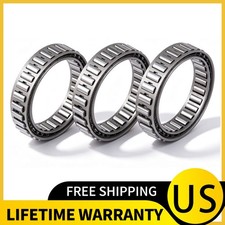
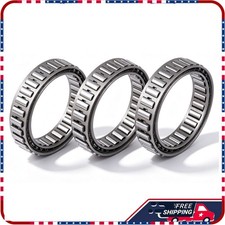
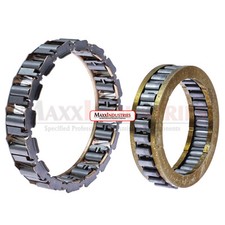
What the Input Housing and Input Sprag Actually Do
The 4L60E is a clutch-and-band unit built around a Simpson-style planetary set. At the front, engine torque comes in through the torque converter to the input shaft, then into the input housing. That housing holds the 3-4 clutch pack, and it also carries the outer race of the input sprag — a one-way (overrunning) clutch. The forward clutch drum drives through that sprag.
Here's why the sprag matters so much: in Drive and Overdrive, the input sprag is what lets the forward clutch transmit torque to pull the vehicle away from a stop. Per Sonnax's unit reference, the 4L60E family relies on the input sprag and forward clutch as the load path off the line (1). When you're rolling in D or OD, those forward elements carry the vehicle; the sprag holds in one direction and overruns in the other. That single job is why sprag failure has such a distinctive fingerprint.
The 3-4 clutch, meanwhile, is applied in 3rd and 4th gear only. It lives inside the input housing and is squeezed against a backing plate at the end of the housing. That backing plate is the part that gets the 4L60E into trouble.
Input Sprag Failure: The Signature Symptom
A broken or flipped input sprag produces one of the most recognizable complaints in the whole 4L60E world: no drive in D or Overdrive, but the vehicle still moves in manual first (L1) and works in Reverse. Some units will also creep or move in manual second. The reason is straightforward — when you select a manual lower gear, a different apply element (the low/reverse clutch or the lo-roller path) carries the load and bypasses the failed sprag, so the vehicle limps along in the low ranges while D and OD do nothing off the line.
Two things make this failure worse than it looks:
- It rarely fails clean. When a sprag lets go, it tends to shed material. That debris circulates and, as shop references consistently warn, can contaminate the entire transmission, the torque converter, and the cooler with metal. Continuing to drive the vehicle spreads that contamination and can turn a sprag job into a full rebuild plus a converter and cooler flush.
- The factory sprag is a known weak point. GM moved to a lighter "single-cage" sprag that builders widely consider weaker than the earlier dual-cage design. That's why the common upgrade is a BorgWarner-style 29-element dual-cage sprag, installed with new inner and outer races rather than reusing worn ones.
One more thing worth knowing: Sonnax notes that certain valve-body and shift-valve upgrades reduce the load the input sprag has to absorb. Keeping the overrun clutch engaged in the D3 range, for example, takes some of the shock off the sprag and helps protect it and the forward clutch in '96–'08 4L60E and 4L65E units (2). If you're already inside the unit, addressing the apply/overrun side is cheap insurance against a repeat failure.
Input Housing and the 3-4 Clutch Burnup
The other classic front-of-unit failure is the burnt 3-4 clutch, and it is directly tied to the input housing that holds it. Transmission Digest has called burnt 3-4 packs one of the most persistent complaints in the entire 4L60/E family — the kind of thing that jams up tech hotlines (3). The complaint is usually slipping, flaring, or an outright loss of 3rd and 4th while the lower gears and reverse still work.
The root cause in a lot of these is mechanical, not electronic. According to Sonnax, the limitations of the OE input housing are the underlying reason 3-4 clutches burn up in higher-load and performance use: the factory backing plate is relatively weak and flexes during clutch apply. That flex keeps the clutch pack from clamping evenly, heat builds, and the frictions cook (4). You can install a fresh 3-4 pack, but if it goes back into the same flexing housing, you've reset the clock rather than fixed the cause.
That's the logic behind Sonnax's Smart-Tech input housing: it's designed to make room for a taller clutch pack and anchor it with a stronger backing plate, which increases clutch capacity and controls the heat that destroys the OE setup (5). For a stock, gently driven grocery-getter a quality OE-style rebuild is often fine; for a tow rig, a modified engine, or any unit that has already eaten a 3-4 pack once, the housing itself is the part to scrutinize.
| Symptom | Gears affected | First suspect |
|---|---|---|
| No drive in D/OD, moves in manual Low, Reverse OK | Loses off-the-line drive in D and OD | Input sprag (broken/flipped) |
| Slips or burns entering 3rd and 4th | 3rd and 4th only | 3-4 clutch / input housing flex |
| Slips everywhere, delayed engagement | All ranges | Line pressure / pump / valve body |
What to Check, in Order
The point of a good diagnosis here is to separate a sprag job from a 3-4 clutch job from a hydraulic problem before the unit comes apart — and to catch contamination before it spreads. Work it in this order:
- Map the symptom against the gear chart. Drive it (briefly) or interview the customer. No movement in D/OD but it moves in manual Low and Reverse points hard at the input sprag. Drives everywhere but slips/burns in 3rd–4th points at the 3-4 clutch and its housing.
- Pull the pan and read the debris. Fine metal, sprag rollers, or shiny flake in the pan means a sprag or hard-part failure and mandatory converter and cooler service. Dark, varnished friction material and a burnt smell point to a cooked 3-4 pack. Clean fluid with a slipping complaint pushes you back toward pressure and the valve body.
- Check line pressure before condemning clutches. A global slip that mimics clutch failure can be low line pressure from a worn pump, a leaking boost valve, or a worn valve body. Verify pressure so you don't tear down a unit whose clutches are actually fine — our line pressure testing walkthrough covers the procedure.
- Inspect the input sprag and its races. With the unit apart, check the sprag for flipped or broken elements and inspect both the inner and outer races for wear, scoring, or out-of-round. Reusing marginal races is a top cause of comebacks — replace the sprag as an assembly and step up to a dual-cage unit on anything that works for a living.
- Inspect the input housing and 3-4 backing plate. Look for burnt 3-4 frictions, a heat-blued or worn backing plate, and any sign of flex or cracking. If this unit has burnt a 3-4 pack before, or it lives behind a modified engine or a trailer, this is where a stronger input housing earns its keep.
- Address the apply/overrun side while you're in there. A valve-body or shift-valve correction that keeps the overrun clutch engaged in D3 reduces sprag load and helps prevent the repeat failure that sends these units back a second time.
Follow that order and the two front-of-unit failures stop being a mystery. The sprag failure announces itself with the D/OD-versus-manual-Low pattern; the 3-4 burnup announces itself with burnt frictions and a flexing housing. What ties them together is that both are worth fixing correctly the first time — a dual-cage sprag with fresh races and a housing that doesn't flex — because the cost of doing it twice on a 4L60E is the whole unit coming back out.
Doing the job? Our 3-4 clutch pack diagnosis and upgrade guide and 4L60E common problems roundup go deeper on the parts you'll be touching, and the valve body wear guide covers the apply-side corrections that protect the sprag.
4L60E High-Performance Friction Clutch Kit (1987-Up)
Doing an input housing or sprag job means the 3-4 and forward frictions come out anyway. This high-performance friction clutch kit gives you fresh, higher-capacity frictions to reload the input housing right the first time — the smart move when you already have the unit apart.
View the 4L60E HP Friction Clutch Kit →Sources
- Sonnax — GM 4L60-E Transmission (unit overview), reference for the 4L60E architecture and the input sprag / forward clutch load path off the line. sonnax.com/units/455-4l60-e
- Sonnax — Building the Killer 4L60E: Top Tips for Optimizing Your Transmission Upgrades, on input sprag replacement with new races, dual-cage sprag upgrades, and valve-body corrections that protect the sprag and forward clutch. sonnax.com/tech_resources/293
- Transmission Digest — All Over the Map (attacking 4L60/E burnt 3-4 clutches), on how common the burnt 3-4 clutch complaint is and how varied its causes are. transmissiondigest.com/all-over-the-map
- Sonnax — All Over the Map: Attacking 4L60-E Burnt 3-4 Clutches With Confidence, on the OE input housing limitations and weak backing plate flex as the root cause of 3-4 burnup. sonnax.com/tech_resources/659
- Sonnax — Eliminate 3-4 Clutch Failure With the Smart-Tech Input Housing, on the taller clutch pack, stronger backing plate, and added clutch capacity that address OE housing flex and heat. sonnax.com/tech_resources/554