The 4L60E — the four-speed behind a huge chunk of GM's rear-drive fleet: Silverado and Sierra 1500, Tahoe, Yukon, Suburban, Express and Savana vans, Camaro, Firebird, Corvette, S-10, and more — has a failure that walks into shops looking far worse than it is. The truck drives forward completely normally, but it has no reverse, and when you drop it into manual low it slips or freewheels with no engine braking. That combination is the calling card of the low-reverse clutch and its apply circuit. The trap is that the same symptoms can come from a burnt clutch pack, a broken sun shell, or a two-dollar leak in the valve body — and only one of those needs a teardown.
This is how the low-reverse failure actually works, why the truck still drives forward with the clutch stone dead, and how to separate the cheap fix from the expensive one before you split the case.
The short version: The 4L60E low-reverse clutch is applied only in Park, Reverse, and Manual Low. It is not what holds you in Drive first gear — a one-way roller clutch does that. So a dead low-reverse clutch gives you the signature "drives fine, no reverse, no engine braking in low" set. Before you condemn the clutch pack, rule out the hydraulics: a worn low overrun valve bore, a leaking reverse apply circuit, or a missing case checkball can starve the exact same clutch and mimic burnt frictions. Air-check the circuit before you tear it down.
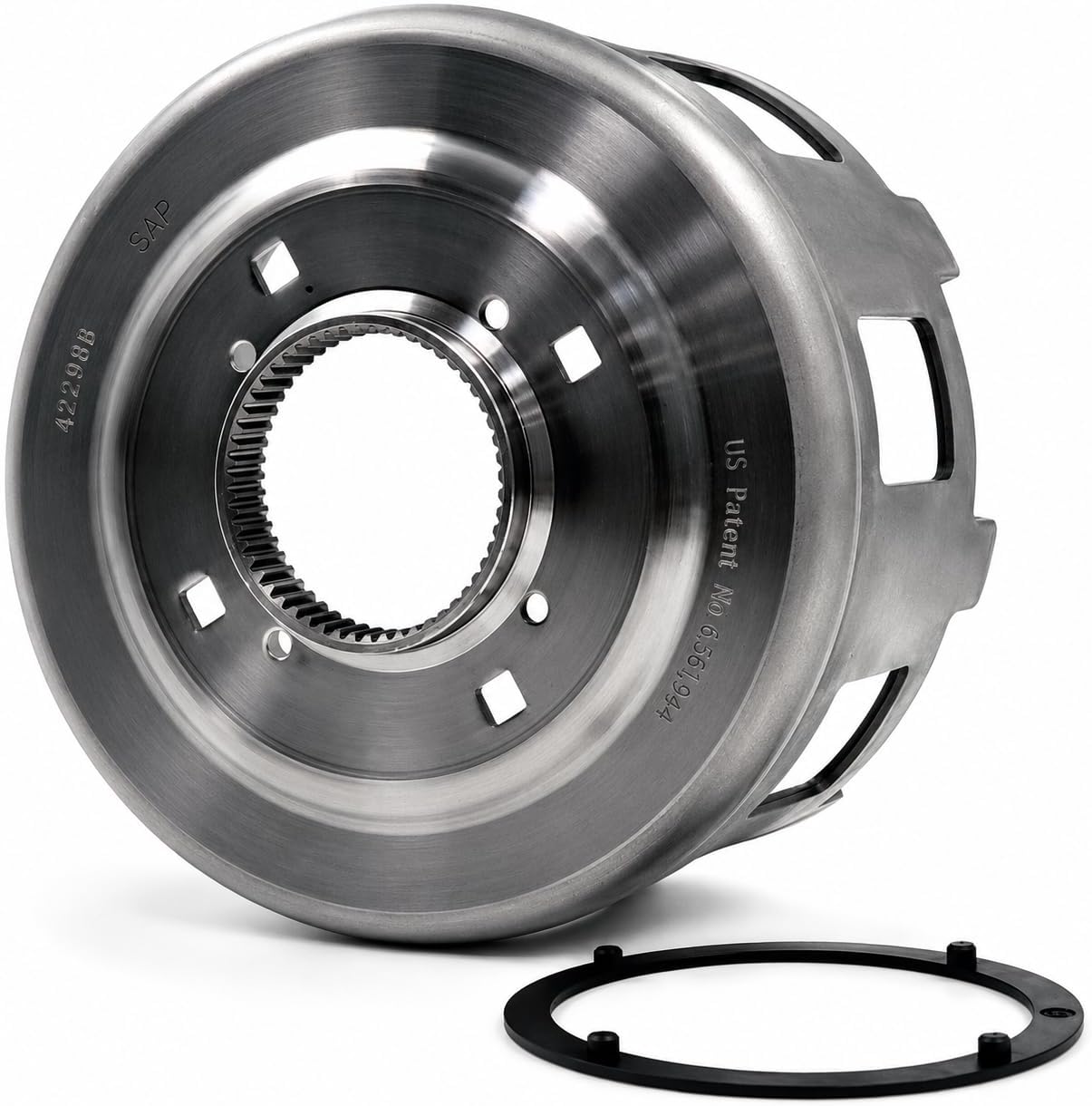
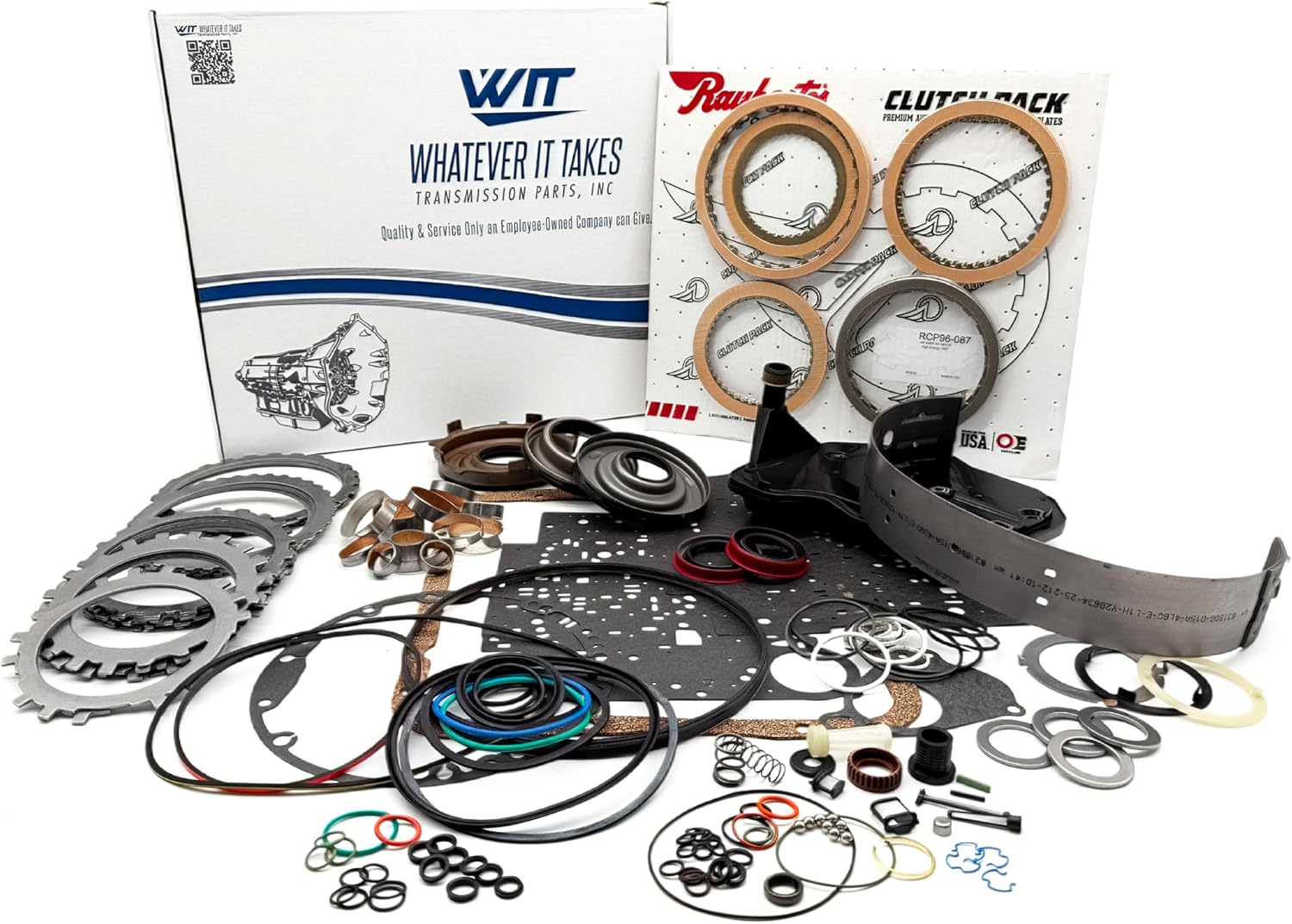
How the 4L60E Holds First and Reverse (and Why the Low-Reverse Clutch Matters)
The 4L60E is a clutch-and-band automatic with a Simpson-style gearset and a set of one-way clutches. To understand this failure you only need to track one reaction member: the rear planetary carrier, which has to be held still to get both reverse and full first-gear engine braking.
In normal Drive first gear, that carrier is held by the low roller clutch — a mechanical one-way sprag that locks in one direction and freewheels in the other. It needs no oil pressure and no clutch apply to do its job. That is the single most important fact in this whole diagnosis: the low-reverse clutch is not involved in Drive first gear at all. That is why a truck with a completely failed low-reverse clutch still pulls away from a stop and drives through all four gears like nothing is wrong.
The low-reverse clutch pack earns its keep in exactly three places. Per Sonnax's teaching on planetary transmission operation, it is applied to hold that rear carrier when the one-way clutch cannot — that is, when the carrier needs to be held against rotation in the other direction:
- Reverse. The low-reverse clutch holds the carrier while the reverse input clutch drives the sun gear — both packs must apply or you get no reverse.
- Manual Low (the "1" or "L" position). Here the low-reverse clutch is applied to hold the carrier so the transmission can deliver engine braking in first — the roller clutch alone would just freewheel on a closed throttle.
- Park, where it is also applied.
So the failure signature falls right out of the design. Lose the low-reverse clutch and you lose reverse and you lose manual-low engine braking — but Drive is untouched because the roller clutch is carrying first. "No reverse but drives forward, and no compression braking in low" on a 4L60E should point you at this clutch and its apply circuit first, not at a global pump or pressure problem.
What the Transmission Is Actually Telling You
Unlike a modern six-speed, the 4L60E rarely throws a tidy trouble code for this. The low-reverse clutch has no dedicated pressure-control solenoid, so the diagnosis is done by symptom and by hydraulic test, not by reading a "clutch stuck off" code off a scanner. Sort the complaints by what still works and the picture gets clear fast:
| What you observe | What it points to |
|---|---|
| Drives normally in D, no reverse, no engine braking in Manual Low | Low-reverse clutch or its apply circuit |
| Reverse present but weak/slipping, delayed engagement | Worn low-reverse frictions or low apply pressure |
| No reverse and a slipping/whining forward problem in 2nd/3rd/4th | Broken sun shell (affects reverse and forward) |
| Dark, burnt fluid with clutch debris | Cooked low-reverse or reverse-input frictions |
Here is the part that saves money: slipping or missing reverse does not prove the clutch pack is worn out. Sonnax documents that wear in the bore of the low overrun valve can cause critical oil loss and reduced apply pressure at the reverse input and low-and-reverse clutches. That is a hydraulic leak reading exactly like a burnt clutch — same no-reverse, same manual-low slip — but the pack itself may be perfectly serviceable. Same symptom, completely different (and much cheaper) fix.
It also helps to know what a healthy pack is supposed to be, so you can measure instead of eyeball. Raybestos Powertrain's component listing for the 1993-on 4L60E steel module (part 000596) spells out the low-reverse stack: five low-reverse turbulated steel plates at .069 in. (1.75 mm) thick, 6.892 in. outside diameter, 17 teeth, plate number 511589. The reverse input pack that has to apply alongside it runs four turbulated steels at .077 in. (1.96 mm), 6.384 in. OD, 36 teeth, plate number 511590. Mic your steels against those numbers. Plates that are coned, blued or measurably thin are a real finding. Plates that check to spec with a clean pan push you back toward the apply circuit.
The Real Root Causes of a Low-Reverse Failure
When a 4L60E comes in with the pattern above, the cause is almost always one of three things. They produce nearly identical driving complaints, so you diagnose to tell them apart rather than guessing.
1. A low overrun valve leak or lost case checkball (hydraulic)
This is the cheap one, and the one most often missed. The low overrun valve directs line pressure to the reverse input and low-and-reverse clutches; when its bore wears, oil bleeds off and apply pressure at those clutches drops — giving you slipping or no reverse and a weak, freewheeling manual low. Sonnax's fix is an oversized low overrun valve kit (part 77754-62K) that restores the bore and recovers that apply pressure without a full teardown. A missing, misplaced, or damaged case checkball in the low-reverse feed circuit does the same thing: it lets apply oil vent where it should be sealed. Both are valve-body-and-case repairs, not a rebuild.
2. A broken sun shell (hard part)
The 4L60E sun shell — the "reaction" shell that ties the sun gear to the input drum — is a notorious weak point, especially behind a V8 or a truck that tows. When the shell cracks or strips its splines, reverse disappears because the reverse power path runs through it, and you typically lose one or more forward gears too. If a no-reverse complaint comes in with a forward slip or a loss of drive in a specific gear, suspect the shell before the low-reverse pack. This requires the unit to come apart, and a hardened replacement shell is the standard upgrade on any serious rebuild.
3. A worn or burnt low-reverse clutch pack (hard part)
Yes, the frictions themselves genuinely wear and burn — but confirm it, do not assume it, because the hydraulic causes above set the same symptoms. Burnt low-reverse or reverse-input frictions show up as dark fluid, a burned smell, and clutch material in the pan. A cross-leak that lets the low-reverse piston partially apply while the truck is driving forward can even cook the pack by dragging it against rotation. If the fluid is clean and the pack looks serviceable on teardown, the real fault was almost certainly hydraulic — which is exactly why you check the circuit first.
Diagnose Before You Condemn Anything
The order matters because the price swings from a valve-body part to a full teardown:
- Confirm the symptom set. Drives fine in D, no reverse, no engine braking in Manual Low = low-reverse circuit. If a forward gear also slips or drops out, put the sun shell at the top of the list.
- Check the fluid. The 4L60E uses Dexron VI. Dark, burnt fluid with debris points toward cooked low-reverse or reverse-input frictions — a mechanical cause. Clean fluid with no reverse leans toward the hydraulic causes: the low overrun valve or a case checkball.
- Air-check the apply circuit. With the pan and valve body accessible, air-check the low-reverse and reverse-input apply passages. A piston that holds air but a clutch that won't apply on the road indicts the hydraulic feed, not the pack.
- Inspect the valve body and low overrun valve. Check the low overrun valve bore for wear and verify the case checkballs are present and seated before you pull the unit. This is where the cheap fix lives.
- If it's mechanical, the unit comes apart — inspect the sun shell for cracks and spline wear and the low-reverse and reverse-input packs for burnt frictions, and upgrade the shell on reassembly.
Follow that order and the 4L60E's scariest-looking complaint stops being a guessing game. A meaningful share of "no reverse" jobs are a worn low overrun valve or a lost checkball — a fraction of the cost of a rebuild that a shotgun approach would have charged for. The units that genuinely have a broken sun shell or a burnt pack reveal themselves clearly once the hydraulic causes are ruled out.
Doing the job? Our 4L60E valve body wear guide and line pressure testing walkthrough cover the diagnostic steps that apply directly here, and the 4L60E common problems guide covers the rest of the unit.
The No-Reverse That Shows Up Right After a Rebuild
One more failure mode is worth knowing, because it looks like a botched clutch job and is not. Writing in Transmission Digest, Sonnax TASC Force member Ed Lee documented a 2006 Suburban C1500 that came back from a full 4L60E rebuild with no cooler flow and no engagement in any range, reverse included. The shop assumed a broken pump. A gauge in the line-pressure port said otherwise: line pressure was normal, which proved both that the pump was intact and that the pressure regulator valve was not stuck open.
The actual fault was a charge-oil blockage. The replacement stator support's charge-oil port did not line up with the charge-oil passage in the pump cover. GM relocated that converter-charge and TCC-release feed hole during the staged pump changes that led to the input speed sensor, and the rebuilder had matched the wrong-generation stator support to his cover by assuming that no ISS hole meant an early pump. Per that same write-up, you can identify a pump that needs the late-style support by its short boost-valve-assembly bore — early-style boost bores ran all the way out to the pump's outer diameter — and ATSG published a seven-page bulletin in 2010 covering the whole non-ISS to ISS transition.
The practical takeaway for this article: if reverse disappeared immediately after a rebuild rather than gradually in service, check cooler flow and line pressure together before anything comes apart again. Normal pressure with no flow and no engagement is a charge-oil routing problem, not a burnt low-reverse clutch.
Sources
- Sonnax — Oversized Low Overrun Valve Kit (77754-62K), documenting that low overrun valve bore wear causes critical oil loss and reduced apply pressure at the reverse input and low-and-reverse clutches. sonnax.com/parts/5621-oversized-low-overrun-valve-kit
- Sonnax — The Evolution of Automatic Transmissions, Part 2: Inner Workings of Hydraulic Planetary Transmissions, on reaction members, one-way (roller) clutches, and holding clutches in reverse and manual low. sonnax.com/tech_resources/983
- Sonnax — Building the Killer 4L60E: Top Tips for Optimizing Your Transmission Upgrades, on the sun shell and low-reverse-related weak points and their upgrades. sonnax.com/tech_resources/293
- Sonnax — Rebuild Tips for 4L60/E 3-4 Clutch Burnup, on diagnosing burnt clutch packs versus hydraulic apply-circuit faults in the 4L60E. sonnax.com/tech_resources/659
- Sonnax — GM 4L60-E Transmission (unit overview), reference for the 4L60E clutch-and-band architecture, low roller clutch, and apply components. sonnax.com/units/455-4l60-e
- Raybestos Powertrain — GM 4L60E Steel Clutch Pack, part 000596 (1993-ON) component listing. Backs the low-reverse stack specification used here: five low-reverse turbulated steel plates at .069 in. / 1.75 mm, 6.892 in. OD, 17 teeth, plate 511589; and the reverse input pack of four turbulated steels at .077 in. / 1.96 mm, 6.384 in. OD, 36 teeth, plate 511590. raybestospowertrain.com/steel-clutch-packs/596
- Transmission Digest — “4L60-E No move after rebuild,” Ed Lee, Sonnax TASC Force (July 2012). Backs the post-rebuild case study: a 2006 Suburban C1500 with no cooler flow and no engagement in any range but normal line pressure, proving the pump and pressure regulator valve were good; the replacement stator support whose charge-oil port did not align with the pump cover passage; the relocation of the converter-charge / TCC-release feed hole during the staged pump changes leading to the input speed sensor; the short boost-valve bore as the late-style pump identifier; and the 2010 ATSG seven-page bulletin on the non-ISS to ISS transition. transmissiondigest.com/4l60-e-no-move-after-rebuild