"The pump is dead" is one of the most overused diagnoses on a 4L65E. Most of the time the pump is still turning and still moving fluid -- it just can't hold pressure anymore, because the aluminum bore around the pressure regulator valve has worn out from thousands of hours of the valve oscillating back and forth. That's a very different repair than a seized or broken pump, and it's worth separating the two before you order the wrong part or pull a transmission that didn't need to come out.
The short version: A true mechanical pump failure (broken rotor, sheared drive tangs, no output at all) causes total loss of movement in every gear. The far more common problem -- wear in the pressure regulator valve bore inside the pump cover -- causes low or erratic line pressure that shows up as slipping, soft or harsh shifts, reverse chatter, pump noise, or burnt 3-4 clutches, often while the vehicle still drives. Confirm which one you have with a line pressure gauge before you decide whether you need a full pump or a bore repair.
What the Front Pump Actually Controls
The 4L65E's front pump, driven directly off the torque converter's hub, does two jobs at once: it fills and pressurizes the torque converter so the engine can transmit power, and it generates line pressure -- the hydraulic muscle that applies every clutch pack and band in the gearbox. Line pressure isn't a fixed number; it's actively regulated by a pressure regulator valve riding in a bore machined into the aluminum pump cover, with the PCM-controlled EPC (electronic pressure control) solenoid biasing that regulation up or down based on throttle and gear.
That regulator valve oscillates constantly as EPC duty cycle changes, and the aluminum bore it rides in wears from that motion over tens of thousands of cycles -- the same wear mechanism that affects the TCC regulator valve bore on this case. Once the bore wears enough, pressure escapes past the valve instead of staying in the circuit the PCM is trying to control, and the pump starts behaving like it's "failing" even though the rotor, vanes, and slide underneath it are still perfectly functional.
The 4L65E asks more of that circuit than the 4L60-E it grew out of. Chevrolet Performance rates its SuperMatic 4L65-E at a 430 lb-ft torque limit, and the 4L70-E built on the same family at 495 lb-ft, with the same 3.06 / 1.62 / 1.00 / 0.70 ratios. More torque on the same size clutch packs means the clutches need more line pressure to hold, so a regulator bore that leaks a little shows up sooner on a 4L65E behind a 6.0L than on a light-duty 4L60-E.
Two Failure Modes, Two Different Repairs
Lumping every pump complaint into "replace the pump" wastes money in both directions -- sometimes you don't need a full pump, and sometimes a bore repair won't fix a mechanically broken one. The two failure modes look different on a scan tool and under the pan:
| Failure mode | What's actually broken | Typical symptoms | Repair |
|---|---|---|---|
| Pressure regulator bore wear | The aluminum bore around the regulator valve in the pump cover is worn, letting line pressure leak past the valve | Erratic or low line pressure, 3-4 clutch failure, excess pump noise, reverse chatter, soft or harsh shifts | Ream and install an oversized regulator valve, or a drop-in replacement valve sized for the unworn part of the bore |
| Mechanical pump failure | Broken rotor, sheared converter drive tangs, snapped pivot pin, or a pump that never primed | Total loss of movement in every gear, metal in the pan, zero flow at the pressure tap when cranked | Full pump replacement |
Per Sonnax's own technical notes on the 4L60-E/4L65-E/4L70-E pump family, where the regulator bore wears matters too: wear concentrated at the spring end of the bore causes low line pressure as pressure leaks off, while wear at the balance end instead makes pressure unstable and, in severe cases, can let line pressure run unregulated and high. That's why two vehicles with "a pump problem" can show opposite pressure gauge readings and still have the same root cause.
Confirming It on the Bench: Line Pressure, Not Guesswork
Sonnax's diagnostic approach for this failure is a dynamometer line-pressure test: with the vehicle loaded on a dyno, Reverse line pressure that reads roughly 50 to 100 psi below specification points directly at a worn pressure regulator bore. You don't need a dyno to use the same logic on the road or in the bay -- tap the line pressure port with a mechanical gauge, load the engine in Reverse and under boost in Drive, and compare the reading against the factory spec in your service information. A reading that consistently falls short under load, paired with clutch slippage, reverse chatter, or a repeat 3-4 clutch failure, is the same pattern Sonnax describes.
If the pump produces no pressure at all -- not low pressure, but nothing -- stop chasing the regulator valve and go straight to the mechanical checks: confirm the torque converter is fully seated with its drive tangs engaged in the pump's input slide, confirm fluid is reaching the filter and pickup, and check for metal in the pan, which points at a broken rotor or gear set rather than a worn valve bore.
The Delayed-Engagement Pattern: What GM's Bulletin Actually Covers
A specific complaint pattern -- the vehicle sits for more than 48 hours, then has a noticeable delay before it moves when you put it in gear -- has an actual GM paper trail behind it, though not one written for the 4L65E by name. GM's Dealer Service Bulletin 67-71-48 covers 1995-96 model-year vehicles built on the 4L60-E case (RPO M30) with a production date before April 29, 1996, including Caprice, Camaro, Corvette, Roadmaster, Fleetwood, Firebird, and GM C/K, M/L, S/T, and G-body trucks. The bulletin attributes the delay to torque converter fluid draining back into the pan during extended parking, and the fix was a revised pump cover assembly (part 24209049 for most models, 24209050 for a specific list of transmission codes) carrying an updated TCC signal valve.
Why this matters on a 4L65E even though the bulletin predates it: the 4L65E wasn't introduced as its own five-pinion RPO until around 2001, years after this bulletin was issued, so it was never named in it. But the 4L65E shares the same case casting and the same front pump cover design lineage as the 4L60-E it was issued for. If you're chasing a delayed-engagement complaint after long parking intervals on a 4L65E, the prime circuit and pump cover check path described in this bulletin is the right place to start -- just don't expect the specific 1996-era part numbers to apply directly to a later build.
Repairing the Regulator Bore Instead of Replacing the Pump
Two aftermarket repair paths exist once you've confirmed the regulator bore is the problem, and neither requires buying a whole new pump assembly:
- Ream and oversize. Sonnax's 77917-07 oversized pressure regulator valve is sized for GM 4L60-E, 4L65-E, and 4L70-E pump covers. Installing it means reaming the worn bore with a dedicated tool kit (Sonnax recommends its carbide reamer, part 77917-TLC, over the standard high-speed steel kit, because the hardness of this pump casting is hard on reamers) and fitting the oversized valve to restore a proper seal. Sonnax also recommends checking the boost valve for leakage at the same time, since it rides in a related circuit, and moving up one boost ratio when the regulator valve is oversized. Check the boost sleeve before you order anything for that circuit. Sonnax points out that GM changed the pump design more than once: earlier covers use a long 1.907 in. boost sleeve and later ones a short 1.810 in. sleeve, its line pressure booster kits are split the same way (4L60E-LB1 long, 4L60E-LB2 short), and the transmission will not work properly with the wrong sleeve length installed.
- Drop-in replacement valve. TransGo sells a steel drop-in valve sized for the 1993-2015 4L60-E/4L65-E/4L70-E pump bore as an alternative that uses longer spool lands to seat and spread load in the unworn section of the bore, restoring hydraulic integrity without reaming or special tools. One install note worth knowing before you quote the job: TransGo specifies that transmission removal is required only on units built with an input speed sensor (ISS), a feature that started appearing in the 2006-2007 model years. On an earlier unit without an ISS, the valve can go in without pulling the transmission.
Either repair assumes the rest of the pump checks out -- rotor, slide, and vane clearances within spec, no scoring on the pump body deck, and a rear stator support bushing that isn't already worn out. That last one is easy to miss: the stator support bushing carries the weight of the transmission's input housing, and Sonnax notes the factory bronze and aluminum versions of this bushing commonly wear out prematurely regardless of which generation you're working on. If you're already in the pump for a regulator repair, check that bushing before you button it back up.
If the whole pump cover needs attention: the Sonnax Sure Cure parts
When the regulator bore is not the only worn spot, Sonnax's SC-4L60E Sure Cure kit groups the pump-side fixes in one box: an oversized pressure regulator valve (the bore still has to be reamed with Sonnax tool kit 77917-TL, which is not included), an oversized .490 in. boost valve with its own sleeve and spacer, a new pump bushing, a pump slide pivot pin, and a TCC apply valve kit that installs in the pump. Check the case connector before you order. Per the Sonnax SC-4L60E installation guide, the kit is fully compatible with 1995-later 4L60-E, 4L65-E and 4L70-E units with PWM/EC3 converter control, identified by the 13-pin case connector and five solenoids. On 1993-1994 non-PWM units (12-pin connector, four solenoids) everything fits except the TCC apply valve kit, 77805E-K, that goes in the pump. Every 4L65-E is late enough to be a 13-pin unit, but the same pump cover family shows up on early 4L60-E cores, so the connector check saves a wrong part.
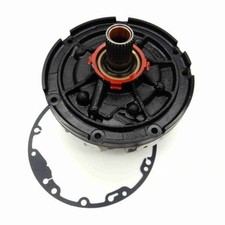
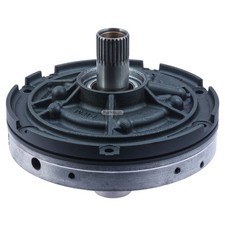
CTP 4L65E High Performance Remanufactured Pump Assembly (2001-2003, 300mm)
If the mechanical checks point at a full pump replacement rather than a bore repair, this is the specific remanufactured assembly for the 300mm 2001-2003 4L65E case.
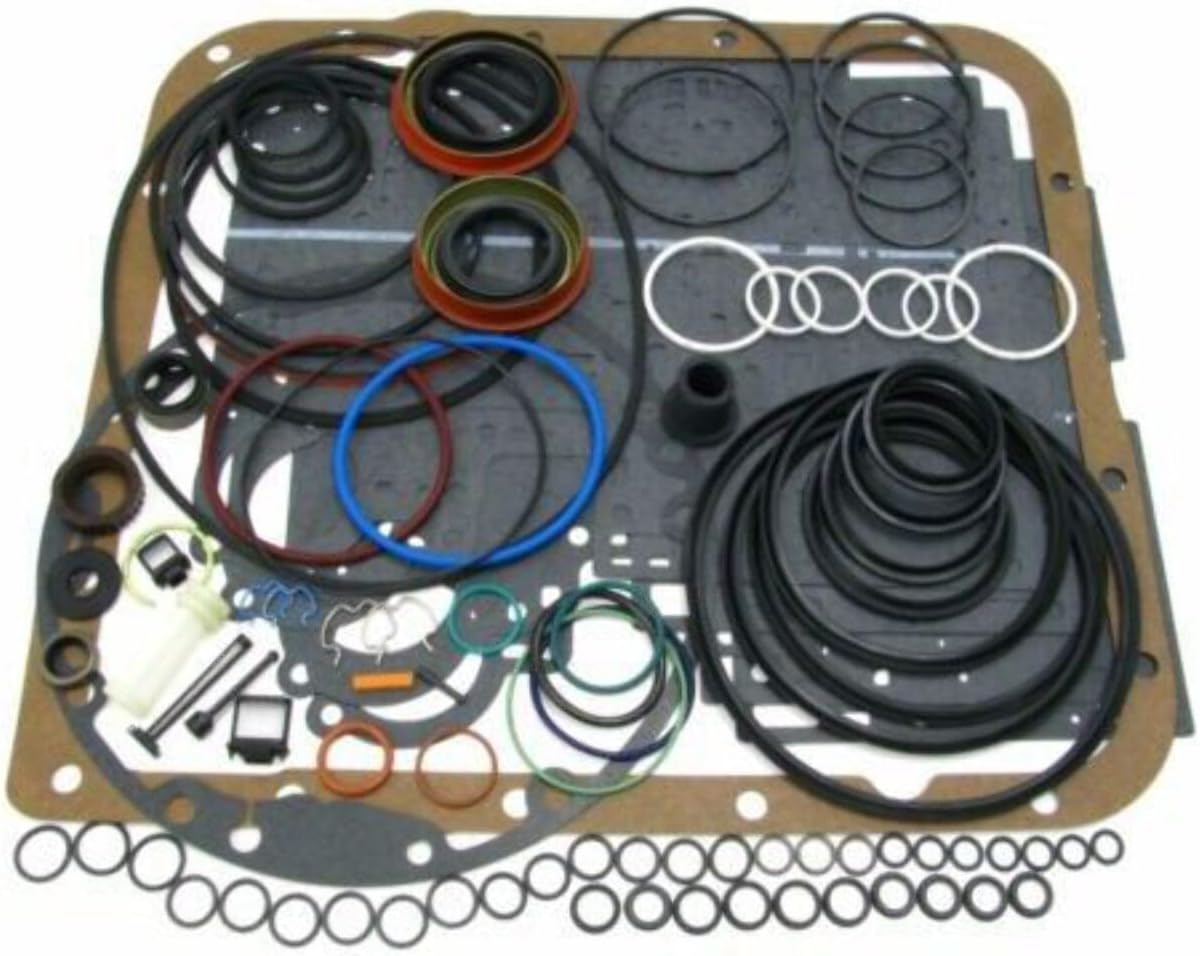
Shop the 4L65E remanufactured pump assembly →Need a different year, a seal kit, or a bushing instead? Browse the full 4L65E parts collection.
Step-by-Step: Diagnosing a Suspected Pump Problem
- Check fluid level and condition first. Low fluid or a badly burnt smell can mimic pump symptoms and costs nothing to rule out.
- Test for flow and pressure, not just "does it move." Tap the line pressure port with a gauge. Compare readings at idle, in Reverse, and under load against factory spec rather than relying on feel alone.
- Separate total failure from low pressure. Zero flow at the pressure tap with the engine cranking means a mechanical problem -- broken rotor, unseated converter, or a pump that never primed. Low but present pressure, especially one that reads 50-100 psi short in Reverse, points at the regulator bore.
- Pull the pan and check for metal. Metal in the pan or on the magnet confirms a mechanical failure and means the transmission is coming out regardless of what the gauge said.
- If the mechanical side is clean, pull the pump and inspect the regulator bore. Look for scoring, discoloration, or a visibly worn bore wall around the regulator valve.
- Repair or replace based on what you find. A clean mechanical pump with a worn bore gets the ream-and-oversize or drop-in valve repair. A pump with physical damage -- broken rotor, cracked slide, chewed gears -- gets replaced outright.
Prevention and What to Check at Every Service
- Don't replace a whole pump for a pressure complaint without a gauge reading first. A regulator bore repair costs a fraction of a full pump assembly.
- If you're already in the pump for any reason, check the rear stator support bushing. It's a known wear point on this case family and is cheap insurance against a comeback.
- Treat an intermittent delayed-engagement complaint as a real symptom, not a fluke -- especially on a vehicle that sits for extended periods, where the prime-circuit pattern GM documented in 67-71-48 is worth checking.
- Confirm the torque converter is fully seated on reinstall. An unseated converter can shear the pump's drive tangs and produce a brand-new "pump failure" on a pump that was fine going in.
- Keep fluid current and correct. Degraded or wrong-spec ATF changes the pressures the regulating circuit was calibrated around and can mimic a mechanical pump complaint.
Keep the numbers at the bench. Our free transmission fluid spec chart lists the correct ATF for the 4L65E and dozens of other units.
FAQ
What are the first symptoms of a failing 4L65E pump?
The earliest and most common symptom is not a dead pump at all -- it's a whine that rises and falls with engine speed combined with soft or inconsistent shifts, reverse chatter, or an occasional 3-4 clutch complaint. That pattern points at pressure-regulator bore wear inside the pump cover, which lets line pressure leak past the valve rather than hold spec. A pump that has actually failed mechanically (broken rotor, sheared drive tangs, snapped pivot pin) shows up as a sudden, total loss of drive in every gear, usually with metal in the pan.
Does a 4L65E pump failure always mean the transmission won't move?
No. A total loss of pump output -- a broken rotor, a torque converter that never engaged the drive tangs, or a snapped input shaft -- will leave you with no movement in any gear. But the far more common failure, wear in the pressure-regulator valve bore, usually leaves the vehicle driveable with low or erratic line pressure, which shows up as slipping, soft shifts, or burnt 3-4 clutches long before it leaves you stranded.
Can a worn pressure regulator valve be repaired without replacing the whole pump?
Yes, in many cases. Sonnax sells an oversized pressure regulator valve (77917-07) sized for the worn bore in GM 4L60-E, 4L65-E and 4L70-E pump covers, which is installed after the bore is reamed with a dedicated tool kit. A drop-in replacement valve for the same bore is also sold that uses longer sealing lands to work in the unworn section of the bore without reaming. Either approach restores the pump cover rather than replacing the full pump assembly, provided the rest of the pump -- rotor, slide, bushings -- checks out within spec.
Why did my 4L65E set a delayed-engagement complaint after sitting overnight?
GM documented this exact complaint in Dealer Service Bulletin 67-71-48, covering 1995-96 model-year vehicles built on the 4L60-E case before April 29, 1996. The cause was torque converter fluid draining back into the pan after the vehicle sat for more than 48 hours, causing a delay before the converter refilled and the vehicle could move. The fix was a revised pump cover assembly carrying an updated TCC signal valve. That bulletin predates the 4L65E by several years, but the pump cover and prime circuit design it addresses is shared across the case family, so a late-arriving engagement delay after extended parking is worth checking against the same pump-cover wear pattern before condemning the full pump.
Sources
- Sonnax — Oversized Pressure Regulator Valve 77917-07, product page. Backs: the pressure regulator bore wear mechanism in GM 4L60-E/4L65-E/4L70-E pump covers, the symptoms it causes (erratic line pressure, low line rise, 3-4 clutch failure, excess pump noise, reverse chatter), the dynamometer test showing 50-100 psi low in Reverse, and the ream-and-oversize repair. sonnax.com/parts/2493-oversized-pressure-regulator-valve
- Sonnax — Reamer Tool Kit for Oversized Pressure Regulator Valves, product page. Backs: the application split between 77917-06 (200-4R/4L60) and 77917-07 (4L60-E/4L65-E/4L70-E), and the carbide reamer recommendation for this pump casting. sonnax.com/parts/2499-tool-kit
- Sonnax — Rear Stator Support Bushing 77002BT-01, product page. Backs: the rear stator support bushing as a known wear point across the 4L60/4L60-E/4L65-E/4L70-E case family and its role supporting the transmission's input housing. sonnax.com/parts/2423-rear-stator-support-bushing
- General Motors — Chevrolet Dealer Service Bulletin 67-71-48, "Delayed Engagement" (1996), reproduced in full. Backs: the exact bulletin number, covered models and model years, the Julian production-date cutoff (before 6120 / April 29, 1996), the torque-converter-drain-back cause, and the revised pump cover part numbers (24209049, 24209050). This 1996 dealer bulletin predates NHTSA's online TSB database, so no government-hosted copy exists; cite it by bulletin number (67-71-48) when asking a GM dealer service department for a copy.
- Sonnax — SC-4L60E Sure Cure Kit installation guide (rev. H, 2024). Backs: the pump-side contents (oversized pressure regulator valve requiring tool kit 77917-TL, .490 in. oversized boost valve, sleeve and spacer, pump bushing, slide pivot pin, TCC apply valve kit installed in the pump), the 1995-later PWM/EC3 13-pin five-solenoid compatibility, and the 1993-1994 12-pin exception for TCC apply valve kit 77805E-K. sonnax.com (PDF)
- Chevrolet Performance (General Motors) — SuperMatic automatic transmissions catalog page. Backs: the 4L65-E 430 lb-ft torque limit, the 4L70-E 495 lb-ft limit, and the shared 3.06 / 1.62 / 1.00 / 0.70 gear ratios. chevrolet.com
- Sonnax — Line Pressure Booster Kit 4L60E-LB2, product page. Backs: application to late-style 4L60-E/4L65-E/4L70-E pumps, the short 1.810 in. vs long 1.907 in. boost sleeve split (LB2 vs LB1), the OE pump design changes, the warning that the transmission will not function properly with the wrong sleeve length, and regulator springs about 10% stronger than OE. sonnax.com
- TransGo — 4L60E/4L65E/4L70E Drop-In Pressure Regulator Valve, product page. Backs: the 1993-2015 fitment range, the longer spool lands that seat and spread load in the unworn section of the bore without reaming or special tools, and the installation note that transmission removal is required only on units built with an input speed sensor (ISS), a feature introduced in the 2006-2007 model years. transgo.com/product-details/4l60e-pressure-regulator-valve