
No movement in any gear is the complaint that makes the fewest people happy to take the job, because it reads like a guessing game. It is not. On a 4L65-E, the list of things that actually produce a true no-movement-in-every-range condition is short, and the order you check them in is the same order GM, ATSG and the Sonnax TASC Force all land on: fluid, pump, converter charge, input shaft. Work it in that order and you stop pulling the unit on a hunch.
The 4L65-E (RPO M32) ran from 2001 through 2013 behind the 6.0-liter V8 in the Escalade, Suburban, Tahoe, Yukon, Silverado/Sierra 1500HD-class trucks, the Hummer H2 and the TrailBlazer SS. It shares its case, pump, valve body and hydraulic circuits with the 4L60-E, so every diagnostic step below is identical to its more common sibling — the only difference is the stronger five-pinion gear set and input components underneath.
Start with the gauge, not the pan
Before anything else, check fluid level and condition hot and in gear. A pump that is starving on a low fill, or fluid that has aerated from being overfilled, behaves exactly like a mechanical no-movement complaint and costs nothing to rule out.
Once the fluid is confirmed correct, the fastest way to split this complaint in two is a line-pressure gauge, exactly the way ATSG field technicians work a no-move condition on GM's electronically controlled automatics. As Transmission Digest laid out in a documented GM no-move teardown: if the gauge shows no line pressure, the problem is upstream of the clutches entirely — fluid level, the filter, the pressure regulator valve, or the pump itself. If line pressure reads normal but the cooler lines show no flow, the fault is isolated to the converter charge circuit, and the clutches and gear train are very likely fine.
That one gauge reading tells you whether you are chasing a pump problem or a converter-charge problem, and it is the difference between a bench teardown that takes an hour and one that takes a day.
No line pressure: pump, filter, PR valve
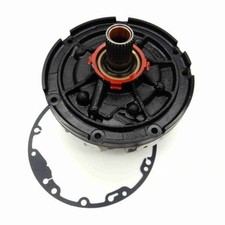
With zero or very low line pressure confirmed, the pump itself is the prime suspect. Pump rotor breakup is the most common mechanical cause of a true no-movement condition on this family, and it is usually preceded by a period of whine or shudder that gets ignored. A clogged filter from accumulated clutch material, or a pressure regulator valve stuck in an abnormal position, can produce the identical symptom without any rotor damage at all, which is why the pump should be pulled and inspected rather than replaced on assumption.
If the fluid shows metal or friction material in the pan, stop and plan for a full rebuild rather than a pump swap. Debris from a failed pump circulates through the entire hydraulic circuit, including the valve body, and a new pump bolted onto a contaminated system is a comeback waiting to happen.
Line pressure present, no cooler flow: the converter charge circuit
This is the pattern that gets missed, especially right after a rebuild, because normal line pressure makes it look like the unit is fine. Transmission Digest documented a textbook case: a 4L60-E came back from a complete rebuild with no engagement in any range, including reverse, and no cooler flow at all, while line pressure read completely normal. The rebuild had replaced the reverse drum and the stator support, and the replacement stator support's charge-oil port did not line up with the charge-oil passage in the pump cover. With the converter charge path blocked, the torque converter never filled with fluid, so there was nothing to transmit engine power to the input shaft — the unit was mechanically sound and still would not move.
The root cause was a design transition GM phased in between February 2005 and early 2006, moving the converter-charge/TCC-release feed hole to a new position to make room for an input speed sensor. Early and late pump covers, stators and stator supports are not interchangeable, and mixing an early-style support with a late-style cover (or the reverse) blocks the charge-oil path outright. Transmission Digest's companion piece on stator and pump cover compatibility gives three checks any bench tech can run before final assembly: confirm the sealing-ring location and shaft type, check whether the converter feed hole sits left or right of the pump bolt-hole centerline, and confirm whether the stator's converter feed and lube holes line up or are offset. Running those three checks before the pump goes back in prevents exactly the failure described above.
If the complaint showed up immediately after a transmission or torque converter replacement, this circuit is where to look first — not the clutch pack.
The input shaft: a defect GM put its own name on
GM issued a bulletin covering a specific manufacturing defect in service-replacement input housings (component 621) for the 4L60-E, 4L65-E and 4L70-E family. A batch of service input housings, part number 17803687, were drilled with the 3-4 clutch apply feed hole and the forward clutch apply feed hole crossing into one another internally. The result is exactly a no-engagement-to-any-forward-gear complaint: apply oil meant for one clutch bleeds into the other feed passage, so neither clutch ever builds full apply pressure, and the vehicle sits in Drive without moving.
GM's bulletin gives the exact test: with the input housing fully assembled, including seals and clutches, apply regulated shop air to the forward clutch feed hole and watch the 3-4 clutch feed hole for leakage, then reverse the test. No air should cross between the two holes. A small amount of air bleeding between the shaft and the housing itself is normal and not a defect — the press fit is designed to hold transmission fluid under pressure, not shop air — but any air crossing between the two feed holes confirms the drilling defect, and the bulletin's remedy is a replacement input housing and turbine shaft assembly, part number 19125752.
| Symptom pattern | Where it points | How to confirm |
|---|---|---|
| No line pressure at all | Fluid level, filter, PR valve, pump | Gauge at the line-pressure tap |
| Normal line pressure, no cooler flow | Converter charge circuit (stator support/pump cover mismatch) | Disconnect cooler line, verify flow; inspect stator support fitment |
| Slip or no engagement right after an input housing replacement | Cross-drilled input shaft feed holes (GM service part 17803687) | Air check between 3-4 and forward clutch feed holes, assembled |
| No movement only in Drive; 1st, 2nd, Reverse work | Forward sprag or forward clutch | Teardown and sprag rotation check |
What the forward sprag is actually responsible for
It is worth being precise about what the forward sprag does and does not explain. The forward sprag only carries load in the forward/coast direction used by the forward clutch in Drive, so a bad sprag or a burnt forward clutch typically shows up as no movement specifically in Drive while 1st (manual low), 2nd, and Reverse still work, since those ranges use different clutches and the sprag is not in their path. A true no-movement condition across every range — Drive, every manual range, and Reverse — almost never comes down to the sprag alone, which is exactly why fluid, pump and converter charge get checked first.
Fluid and refill
Use GM's licensed DEXRON-VI specification for any fluid service on this family. DEXRON-VI is the current global service-fill specification GM established for its electronically controlled automatics, documented in SAE's own technical paper on the spec, and it has superseded the DEXRON-III fluid this transmission was originally filled with. Set the level hot and in the correct gear per the dipstick or fill-plug procedure for your specific application, since an overfull or underfull 4L65-E aerates fluid and can mimic several of the symptoms above on its own.
Putting the diagnosis together
Work this complaint in order: fluid level and condition first, line pressure gauge second, cooler flow third if pressure is normal, and the input shaft air check if the symptom appeared right after an input housing replacement. Three of the four most common causes — low fluid, a misaligned stator support, and a cross-drilled input shaft — are hydraulic and do not require replacing a single friction or steel. The fourth, pump rotor failure, does require a teardown, but only because of the debris it leaves behind, not because the diagnosis was unclear. A no-movement complaint diagnosed in this order rarely needs a second trip into the pan.
FAQ
Where do I start if a 4L65E will not move in any gear?
Fluid level and condition, checked hot and in gear, before anything else. A low or aerated fill will not build line pressure or charge the converter, and it is a five-minute check against a multi-hour teardown. If the level and condition are correct, move straight to a line-pressure gauge rather than guessing at a clutch.
What does it mean if I have line pressure but no cooler flow?
It points at the converter charge circuit, not the pump or the pressure regulator. On this family that circuit runs through the stator support and pump cover, and a mismatched or misaligned support after a rebuild blocks the charge-oil port so the converter never fills. Transmission Digest has documented this exact failure on a 4L60-E that lost movement in every range after a stator support swap.
Can a bad input shaft cause no movement on a 4L65E?
Yes, through a specific defect GM documented in its own bulletin. Some service-replacement input housings were drilled with the 3-4 clutch feed hole and forward clutch feed hole crossing into each other, so apply oil meant for one clutch leaks into the other and neither gets full pressure. The fix is an air check between the two feed holes with the housing assembled, and GM's bulletin names the replacement part.
Is a damaged forward sprag a common cause of no movement?
It shows up more as no-movement-in-Drive-only with 1st, 2nd and Reverse still working, since the sprag only carries the forward-gear coast/drive load path. True no-movement-in-every-range points first at fluid, pump, converter charge or the input shaft, and the sprag gets checked once the unit is apart if those come back clean.
Is it worth rebuilding a 4L65E with a no-movement complaint?
Usually, yes, because the common causes are a worn pump, a misaligned stator support or a defective input housing, all of which are parts-and-labor fixes rather than case damage. The exception is a pump rotor that broke up and sent debris through the whole unit, where a full rebuild with a new pump, filter and valve body inspection is the only way to stop a repeat failure.
Sources
- General Motors, Bulletin PIP5072 (October 2012), "Slip In Forward Ranges Immediately After Replacing The Input Housing" — the cross-drilled 3-4 clutch and forward clutch feed holes in service Input Housing part 17803687, the assembled air-check procedure between the two feed holes, and the replacement Input Housing and Turbine Shaft Assembly part 19125752 for GM vehicles equipped with 4L60E, 4L65E or 4L70E (RPO M30, M32, M70). static.nhtsa.gov
- Transmission Digest, "4L60-E No Move After Rebuild" (Ed Lee, Sonnax, July 1, 2012) — the documented case of a 4L60-E with no engagement in any range and no cooler flow despite normal line pressure, traced to a replacement stator support whose charge-oil port did not align with the pump cover, and the February 2005 to early 2006 design transition that moved the converter-charge feed hole to accommodate the input speed sensor. www.transmissiondigest.com
- Transmission Digest, "4L60-E Series Input Shaft, Stator and Pump Cover Compatibility: Three Easy Checks" (Caleb Perham, Sonnax TASC Force, July 26, 2024) — stator misalignment or an incorrect stator causing no-movement, converter charge concerns, input shaft failure and converter damage on 4L60-E, 4L65-E and 4L70-E units, and the three-point check (shaft/sealing ring type, pump cover feed-hole position, stator feed/lube hole alignment) that confirms correct fitment. www.transmissiondigest.com
- Transmission Digest, "Sherlock Holmes Approach to an AB60 No-Move Situation" (Wayne Colonna, July 22, 2021) — the field-diagnostic principle, used across GM's electronically controlled automatic transmissions, that a no-line-pressure reading points to fluid level, the filter, the pressure regulator valve or the pump, while normal line pressure with no cooler flow isolates the fault to the converter charge circuit. www.transmissiondigest.com
- SAE International, "General Motors DEXRON(R)-VI Global Service-Fill Specification" (SAE Technical Paper 2006-01-3242) — GM's DEXRON-VI service-fill specification for its electronically controlled automatic transmissions and its role superseding the earlier DEXRON fluid grades. saemobilus.sae.org
Need parts for this job?
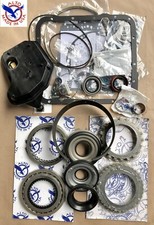
Pumps, master rebuild kits, input housings, stator support hardware and pump/turbine seal tools for the 4L65E, all in one place with secure on-site checkout.
Shop 4L65E parts →