The 4L70E is the heavy-duty member of GM's 4L60E family — the four-speed you'll find behind higher-torque applications like the Trailblazer SS, later half-ton trucks and SUVs, and the LS-powered rear-drive cars. It shares its hydraulic layout with the 4L60E and 4L65E, which is good news and bad news. Good, because the valve body is well understood after decades of production. Bad, because it inherits the same handful of valve-bore wear problems that send a shop chasing burnt clutches when the real fault is a leaking valve that costs a fraction to fix.
This guide walks through the valve body problems that actually show up on a 4L70E, the symptoms each one produces, a numbered procedure to test the valve body on the vehicle and the bench, and how to decide between a targeted repair and a full replacement.
The short version: Most 4L70E valve body complaints trace back to bore wear at three spots — the actuator feed limit (AFL) valve, the TCC regulator/isolator valves, and the pressure regulator/boost valve in the pump. Worn bores leak pressure and mimic slipping clutches, harsh shifts, and TCC codes. Confirm the leak with a line-pressure gauge and a vacuum test before you tear the unit down or swap the whole valve body. The Sonnax GM 4L60E/4L65E/4L70E valve body layout is the map that tells you which valve does what.
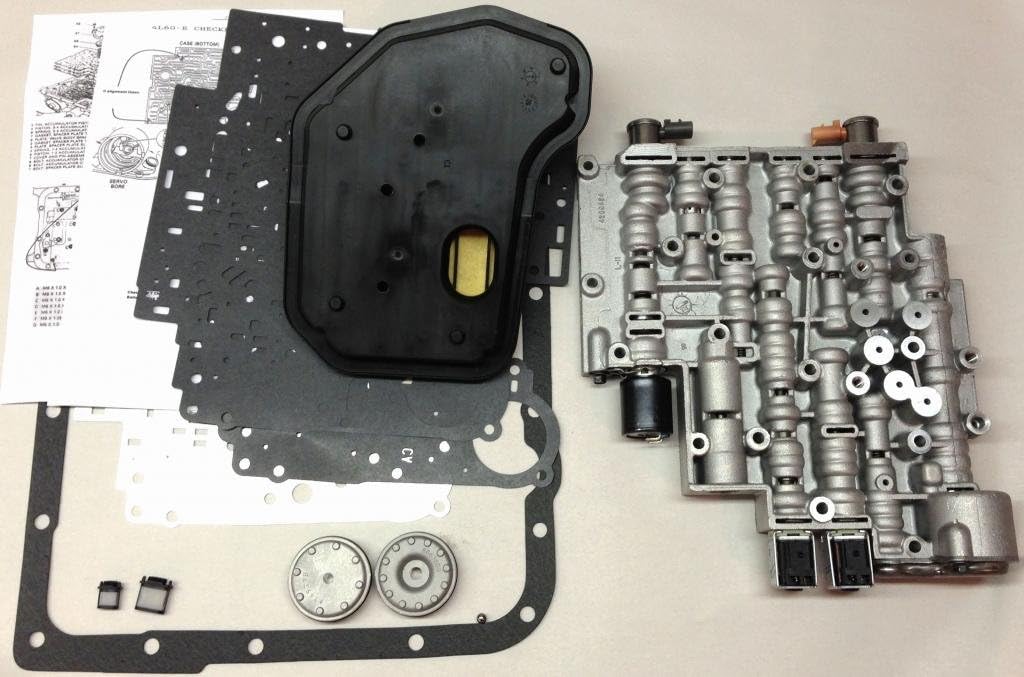
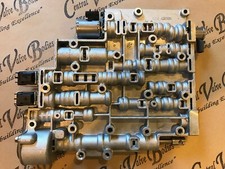
How the 4L70E Valve Body Controls the Transmission
The 4L70E is an electronically controlled four-speed. Instead of a governor and throttle cable, the TCM commands a set of solenoids that route and regulate hydraulic pressure through the valve body. Shift solenoids A and B (on/off) select which shift valves move; PWM shift solenoids control shift feel; the electronic pressure control (EPC) solenoid sets line pressure by acting on the pressure regulator circuit; and the TCC PWM solenoid controls torque converter clutch apply.
All of that command pressure has to pass through precision valves riding in aluminum bores. The valves that matter most for reliability — and the ones the Sonnax GM 4L60E/4L65E/4L70E valve body layout calls out as common repair points — are the actuator feed limit valve, the TCC regulator and isolator valves, and the pressure regulator/boost valve assembly in the pump. When those bores wear, pressure leaks past the valve where it shouldn't, and the transmission behaves as if a clutch or band is failing.
The Three Valve Body Problems That Actually Fail
1. Actuator Feed Limit (AFL) valve bore wear
The AFL valve is a solenoid feed regulator: it supplies a controlled feed to the EPC solenoid and the shift solenoids. Per Sonnax, the OE valve has a large reaction area and is highly affected by side-loading, and the constant oscillation of the EPC solenoid on the torque signal and AFL oil accelerates wear of the aluminum bore. As the bore wears, pressure to the shift and EPC solenoids drops. It is worth knowing what that feed is supposed to be: writing in Transmission Digest, the Sonnax TASC Force puts regulated actuator feed pressure in the GM 4L60-E family at approximately 115 psi, supplying the shift solenoids, the pressure control solenoid, the TCC solenoid, the 3-2 control solenoid and the 2-3 shift valve lineup. That same article notes that a worn AFL bore drops both actuator feed and line pressure, and that the resulting loss of line pressure overworks the pump and can set 1870 or TCC codes. The result is a long list of complaints that look like everything but a valve: 2nd-gear starts, harsh shifts, no 4th gear, reduced 3-4 clutch life, band and clutch failure, wrong-gear starts, and solenoid or ratio codes. This is the single most common 4L70E valve body problem, and it fools people because the symptoms are all over the map.
2. TCC regulator and isolator valve bore wear
The TCC regulator and isolator valves control converter clutch apply pressure. Sonnax notes that the constant oscillation of these valves in the aluminum valve body wears the casting, and once the bore is worn, TCC apply pressure exhausts where it should be held. The signature complaints are a TCC slip code (P1870), a harsh 1-2 shift, a burnt 3-4 clutch, low line pressure, low TCC apply pressure, and an overheated converter. A shudder that a fluid change won't fix, plus P1870, should always put the TCC regulator/isolator bore on your list. This is not a fringe diagnosis: writing in Transmission Digest, ATSG senior technical consultant Jim Dial states plainly that the 4L60-E P1870 TCC slip code and the converter shudder complaints tied to it are usually wear-out of the torque converter regulator valve bore causing a loss of converter apply pressure and letting the TCC slip.
3. Pressure regulator and boost valve wear (pump)
The pressure regulator (PR) valve and the boost valve assembly live in the pump body, not the main valve body, but they set line pressure and belong in any valve body diagnosis. The duty cycle of the EPC solenoid causes the boost sleeve to wear, and oil entering the torque signal circuit leaks past the boost valve and exhausts, producing poor line rise. Sonnax ties that poor line rise to 3-4 clutch failure, 2-4 band failure, clutch slippage, reverse chatter, and poor shift quality. If line pressure won't climb with EPC command, look here and at the AFL valve.
| Worn valve | What leaks | Typical symptoms / codes |
|---|---|---|
| Actuator feed limit (AFL) | Feed to EPC & shift solenoids | 2nd-gear starts, harsh shifts, no 4th, solenoid/ratio codes |
| TCC regulator / isolator | TCC apply pressure | P1870, TCC shudder, burnt 3-4 clutch, hot converter |
| Pressure regulator / boost | Line pressure rise | Slipping, reverse chatter, 2-4 band / 3-4 clutch failure |
How to Test Your 4L70E Valve Body
The point of testing is to prove a hydraulic leak before you condemn clutches or buy a valve body. Work through these in order — the first four are on the vehicle, the last three are on the bench once the pan or unit is out.
- Scan and record the codes and freeze frame. Note whether you have shift solenoid performance codes, ratio codes, or the TCC slip code (P1870). Read them as clues to a pressure loss, not as a parts list — a "solenoid performance" code is frequently a worn bore starving that solenoid, not a bad solenoid.
- Check fluid level and condition. The 4L70E uses Dexron VI. Dark, burnt fluid with clutch material points toward a mechanical failure that has already happened; clean fluid with pressure or TCC complaints leans toward a valve-body leak. Correct the level first — a low or aerated charge produces its own false symptoms.
- Run a line-pressure test. Install a gauge on the line pressure tap and watch pressure in park, reverse, and drive against the factory spec. Then command EPC amperage with the scan tool and confirm pressure rises and falls proportionally. Pressure that will not build, or that lags the command, indicts the PR/boost valve or the AFL feed — not the clutches.
- Watch TCC slip in live data. Command the converter clutch and compare commanded versus actual slip RPM. Slip that won't pull to near zero, paired with P1870, points squarely at the TCC regulator/isolator bore leaking apply pressure.
- Drop the pan and inspect the valve body. With the pan off, check the valve body for debris, aerated fluid signs, and loose bore plugs or retainers. Remove the valve body for bench work if the on-car tests pointed to a hydraulic leak.
- Inspect and free the suspect valves. Using the Sonnax valve body layout as your map, remove the AFL valve and the TCC regulator/isolator valves. Look for scored valves and polished, bell-mouthed bores. A valve that drops through its bore with visible side clearance is worn; a valve that sticks is varnished or scored.
- Vacuum-test the bores. This is the definitive check. Apply about 18–25 in-Hg of vacuum to each critical bore (AFL, TCC regulator, TCC isolator) with the valve installed. A good bore holds vacuum; a worn bore bleeds down quickly. Vacuum testing is how you separate a valve body that needs targeted valve kits from one that's fine, without guessing.
Follow that order and you stop paying for teardowns that a $60 valve kit would have fixed — and you stop reusing a leaking valve body that will cook the next set of clutches.
Shop 4L70E valve body kits, AFL and TCC regulator valve kits, boost valve kits, reman valve bodies, Dexron VI, and the vacuum-test tooling to verify the bores — shipped fast from the USA.
Shop 4L70E parts →Repair or Replace the Valve Body?
Once you've confirmed which bores are worn, you have three routes, in rising order of cost:
- Targeted valve kits. If only one or two bores are worn, Sonnax oversized and hardcoat-anodized valve kits let you ream the worn bore and drop in a corrected valve that resists side-loading. This is the cheapest, most durable fix for AFL and TCC regulator/isolator wear, and it's the route most independent shops take because it addresses the root cause rather than the symptom.
- Full valve body rebuild. If multiple bores are worn or the casting is damaged, rebuild the whole valve body with a kit and fresh valves. Combine it with a boost valve kit in the pump if line rise was part of the complaint.
- Reman or replacement valve body. When the casting is beyond saving, or you need the truck back fast, a corrected reman valve body drops the diagnosis-and-machining time. Confirm the identification matches your unit — the 4L60E/4L65E/4L70E family has casting and calibration differences between years.
Whichever route you pick, don't reuse the old pump boost valve if the line-pressure test showed poor rise. Sending a rebuilt valve body back into service behind a leaking boost valve just moves the failure downstream.
Doing the job? Our line pressure testing walkthrough covers the gauge test in step 3 in detail, and the sidebar links go straight to the 4L70E parts you'll need for the repair.
Sources
- Sonnax — GM 4L60-E, 4L65-E, 4L70-E Valve Body Layout, the diagram identifying the AFL, TCC regulator/isolator, and other valves and bore plugs whose wear affects apply and line pressure. sonnax.com/tech_resources/1059
- Sonnax — Uncovering the Root Cause of Pressure Complaints: The Critical Role of Solenoid Modulator & AFL Valves, on how AFL bore wear starves the EPC and shift solenoids and produces 2nd-gear starts, harsh shifts, no 4th, and solenoid/ratio codes. sonnax.com/tech_resources/1208
- Sonnax — Understanding 4L60-E Series Isolator Bore Wear and How to Address It, on TCC regulator/isolator bore wear exhausting apply pressure (P1870, burnt 3-4 clutch, overheated converter). sonnax.com/tech_resources/1440
- Sonnax — Boost Valve Kit 77898E-14K (GM 4L60-E/4L65-E/4L70-E), on boost sleeve wear causing poor line rise and the resulting slipping, reverse chatter, and 3-4 clutch / 2-4 band complaints. sonnax.com/parts/4417-boost-valve-kit
- Sonnax — Actuator Feed Limit Valve Kit 77754-09K, the hardcoat-anodized AFL valve and sleeve that restores feed pressure to the EPC and shift solenoids. sonnax.com/parts/2459-actuator-feed-limit-valve-kit
- Sonnax — TCC Regulator & Isolator Valve Kit 77754-04K, the corrected valve/sleeve set that restores TCC apply pressure in a worn bore. sonnax.com/parts/2458-tcc-regulator-isolator-valve-kit
- Transmission Digest / Sonnax TASC Force — "Hydraulic Fundamentals: AFL/Solenoid Modulator Valves," backing the approximately 115 psi regulated actuator feed pressure in the GM 4L60-E family, the circuits it supplies (shift solenoids, pressure control solenoid, TCC solenoid, 3-2 control solenoid and the 2-3 shift valve lineup), the large reaction area and side-loading that wears the bore, and the loss of line pressure that overworks the pump and sets 1870 or TCC codes. transmissiondigest.com
- Transmission Digest — Jim Dial, ATSG senior technical consultant, "P1870 Revisited," backing the statement that the 4L60-E family P1870 TCC slip code and the related converter shudder complaints are usually caused by wear-out of the torque converter regulator valve bore, which loses converter apply pressure and allows the TCC to slip. transmissiondigest.com