The 4L80E shares its case and much of its planetary gearset with the TH400, which is a big part of why it has a reputation for outliving the trucks it's bolted into. That reputation is exactly why a new noise rattles people. The assumption is that anything coming out of a unit this tough must mean real trouble. Sometimes it does. More often, the sound itself tells you which of three different problems you're facing, as long as you stop lumping "it's making a noise" into one bucket and actually separate a whine from a buzz from a clunk.
Each of the three has a documented cause, and two of them have a paper trail straight back to GM and Sonnax instead of forum guesswork. Here's how to tell them apart before you pull a pan or, worse, throw a whole transmission at a noise a ten-dollar part would have fixed.
Whine in First and Second Gear: GM Says This Can Be Normal
Start here because it's the easiest one to over-repair. GM's preliminary information bulletin PIP3259J, titled "Whine Noise In First And Second Gear," covers 2002-2007 Chevrolet Avalanche, 1999-2008 Chevrolet Express, 1999-2007 Chevrolet Silverado and Suburban, 1999-2008 GMC Savana, and 1999-2007 GMC Sierra and Yukon XL, all with the 4L80E (RPO MT1) or 4L85E (RPO MN8). The condition described is exactly what it sounds like: the transmission develops a planetary gear whine in first and second gear, typically louder in first than in second.
GM's own position is blunt: this planetary gear whine can be characteristic of the 4L80E/4L85E. The bulletin's first instruction is not a repair step at all, it's a comparison. Put the complaint vehicle next to an identically built truck of the same GVWR and listen to both before you touch anything.
If the noise is confirmed abnormal against that comparison, and the transmission was built after September 1, 2003, the bulletin calls for a Rear Unit End Play Check (GM SI Document ID #52027):
- Correct end play is 0.127-0.508 mm (0.005-0.020 in).
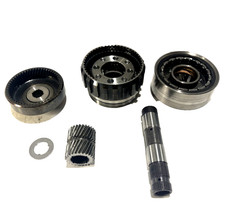
- If end play is out of spec, inspect and replace the output planetary gear set as necessary: the 661 Output Carrier Assembly and 650 Sun Gear.
- Set rear end play between .005" and .020" using the correct selective thrust washer (part 674), targeting .010"-.015".
- If end play is already within spec, GM's bulletin points to replacing the transmission assembly, and tells techs to check bulletin 02-07-30-029A before ordering one.
The practical takeaway: a 4L80E that whines a little in 1st and 2nd and shifts, holds, and runs cool otherwise is not automatically a tear-down. Confirm it's actually abnormal first. If it is, the fix lives at the output planetary and a selective thrust washer, not at the clutches or the valve body.
Buzzing From the Front of the Case: It's the Pump, Not the Valve Body
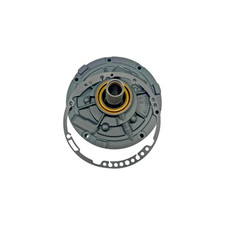
This is the noise that sends people hunting through the valve body for a solenoid problem, and they come up empty because the part that's actually worn lives in the front pump cover, not the separator plate. Sonnax's own critical wear area diagram for the 4L80E/4L85E labels the Boost Valve Assembly as an outboard component of the pump, right alongside the Pressure Regulator Valve, the Converter Limit Valve, and the TCC Valve and TCC Enable Valve. None of those live in the valve body.
Per Sonnax, the common problem set on these units is uncontrollable line rise upward of 500-600 psi, high line pressure in Reverse, a buzzing noise, and broken direct clutch drums or cases. The documented cause: reverse boost oil enters the torque signal circuit through a wear-created cross leak at the boost valve sleeve, and the buzz and high line pressure specifically come from oil leaking past the aluminum balance plug. A worn end plug causes the pressure regulator valve to go out of balance, which is what turns a quiet pump into a buzzing one under load.
Sonnax sells two kits for this, and which one you need depends on where the wear actually is:
| Kit | Design | Use When |
|---|---|---|
| 34200-03K | Factory-style sleeve, no O-rings. Fits '91-later, retrofits to '89-91. | Standard boost valve/balance plug wear. |
| 34200-01K | O-ring style sleeve, retrofits back to '89. | Leakage detected between the sleeve and the pump bore itself — the O-ringed sleeve compensates for pump bore wear and prevents pump scrappage. |
Both kits include a hardened steel boost valve with over 20% wider spools for better sealing contact, spools with annular grooves to reduce the side-loading that causes the wear in the first place, and a replacement aluminum balance plug with an O-ring to restore proper back pressure on the regulator valve.
There's a reason the boost valve lives in the pump at all. Sonnax's own diagnostic writeup on 4L80E no-reverse complaints notes that in 1995, GM changed both the Low/Reverse band and drum design and the boost valve used for Reverse line pressure boost, located in the front pump. A buzzing, high-pressure complaint on a pre-'95 unit and a post-'95 unit can trace back to parts that were never meant to mix.
If a line pressure test confirms Reverse pressure well above spec, or a customer describes a buzz that gets worse under load, check the boost valve and balance plug before you condemn anything downstream. It is a drop-in repair, not a pump-out job, unless the pump bore itself has worn — which is exactly what the 01K kit exists to catch.
Clunk on Engagement or Shift: Check the Driveline Before the Internals
A clunk is the noise most likely to have nothing to do with the transmission's internals, and the cheapest checks should come first.
- Loose torque converter-to-flexplate bolts. These back off over time, especially after any prior transmission removal where they weren't torqued back to spec. The inspection cover gives access to check and retorque them without dropping the pan.
- A cracked flexplate. Cracks typically start around the converter bolt holes or the crank bolt circle. A cracked plate tends to produce a more erratic, chaotic noise than a steady knock, but sound alone is not reliable — pull the inspection cover and look.
- Worn engine or transmission mounts. Lets the whole driveline rock under load or on a shift, producing a clunk that has nothing to do with gear engagement at all.
- U-joint and driveshaft slop, especially on 4x4 trucks where a worn transfer case or front driveline adds its own play into the mix.
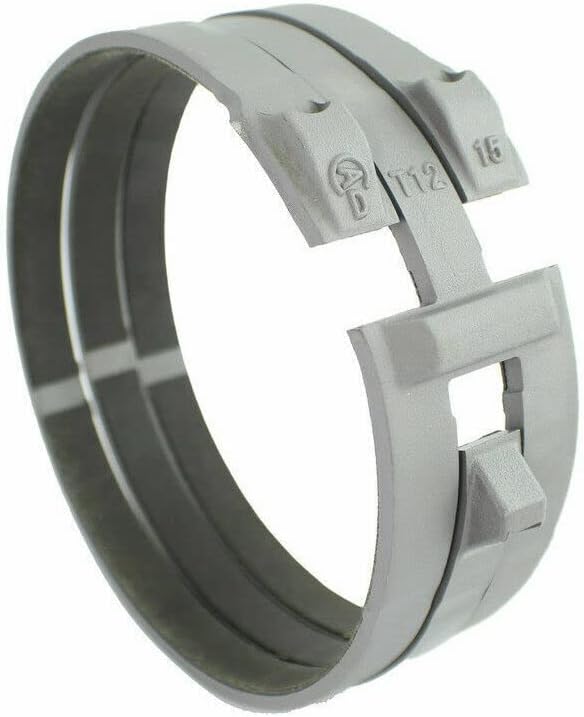
If none of that pans out and the clunk is specific to shifting into Reverse, or shows up right before Reverse is lost entirely, the problem may be inside after all. Sonnax documented a real shop's repeat-failure case on a late-model (smooth band) 4L80-E out of an overloaded utility truck: the Low/Reverse band kept coming out burnt, and the shop replaced it twice without fixing the complaint, because the worn drum looked fine on a quick visual. On the bench with a tool that mechanically compresses the band, they found the real problem — the band ends were hitting each other, which physically prevented the band from clamping onto the drum. The drum itself was undersized from wear and had to be replaced along with the band.
The design detail that makes this easy to miss: early 4L80-E units used a grooved-lining band that leaves visible "railroad track" marks on the drum as it wears, which is obvious at a glance. The smooth-lined band used on later units wears the drum evenly instead, so the wear is much easier to miss during a routine rebuild unless you're specifically measuring the drum's O.D. or checking band-end clearance with the servo mechanically applied. Band travel on these units runs around 3/16", checked with GM's go/no-go gauge or a homemade version made from an old servo cover with a bolt welded through the center.
Quick Reference
| Noise | Where / When | Likely Cause | What To Check First |
|---|---|---|---|
| Whine | 1st and 2nd gear, output area | Planetary gear noise — can be characteristic per GM | Compare to an identical vehicle, then rear unit end play (.005"-.020") |
| Buzz | Front of case, worse under load or in Reverse | Worn boost valve sleeve / balance plug in the pump | Line pressure test in Reverse; look for uncontrolled rise toward 500-600 psi |
| Clunk | On engagement or shift | Loose converter bolts, cracked flexplate, worn mounts, U-joints — or band/drum if Reverse-specific | Inspection cover first; band-end clearance on the bench if it's Reverse-only |
Diagnose in Order, Not by Guesswork
Sonnax's own diagnostic approach for 4L80E shift complaints applies just as well to noise complaints: split the circuits into hydraulic, electrical, and mechanical, and test each in order instead of guessing and swapping parts. A pressure gauge tells you whether the hydraulic side is in spec. Unplugging the case connector and forcing a fail-safe pattern tells you whether the electrical side is involved. Only after both of those are ruled out does it make sense to pull the pan and start looking at band, drum, and planetary wear by hand. Skipping straight to "pull the transmission" on a noise complaint is how a ten-dollar boost valve kit turns into an unnecessary full rebuild.
Common Mistakes
- Condemning the pump for a buzz that's actually the boost valve sleeve. A drop-in Sonnax kit fixes the documented cause; a whole pump swap is overkill if the pump bore itself isn't worn.
- Replacing a burnt Low/Reverse band without checking the drum's wear pattern. The documented repeat-failure case cost a shop three teardowns because the smooth-worn drum looked fine at a glance.
- Assuming every noise means internal damage. GM's own bulletin says 1st/2nd gear planetary whine can be characteristic; chasing it as a defect wastes labor on a transmission that isn't broken.
- Skipping the cheap checks on a clunk. Converter bolts and flexplate condition take minutes to check through the inspection cover and rule out an entire category of noise before the pan ever comes off.
Keep the fluid right during any of these jobs. Our free transmission fluid spec chart lists the correct ATF and capacities for the 4L80E and dozens of other units, so a pump or band job doesn't end with the wrong fluid going back in.
FAQ
Is 4L80E whine in first and second gear always something to repair?
Not necessarily. GM's own bulletin PIP3259J, covering 1999-2008 trucks and vans with the 4L80E or 4L85E, states that planetary gear whine in first and second gear, louder in first, can be characteristic of these transmissions. GM's first recommended step is comparing the vehicle to an identically built one of the same GVWR before attempting any repair. Only if the noise is confirmed abnormal, and the transmission was built after September 1, 2003, does the bulletin call for a Rear Unit End Play Check.
What does a buzzing noise from the front of a 4L80E mean?
Sonnax documentation ties a buzzing noise on the 4L80E and 4L85E to wear inside the front pump, specifically a worn boost valve sleeve that lets reverse boost oil leak into the torque signal circuit, and oil leaking past the aluminum balance plug. The same wear pattern also produces uncontrollable line rise upward of 500-600 psi, high line pressure in Reverse, and broken direct clutch drums or cases. It is a pump-cover problem, not a valve body problem, which is why a scan tool and a visual check of the valve body alone will not find it.
Why does my 4L80E clunk when I shift into Reverse?
Rule out the cheap causes first: loose torque converter-to-flexplate bolts, a cracked flexplate, worn engine or transmission mounts, and U-joint slop on 4x4 trucks all produce a clunk that has nothing to do with the transmission's internals. If the clunk is specific to Reverse engagement, or shows up right before Reverse is lost entirely, Sonnax has documented a real case where a worn Low/Reverse drum let the band ends strike each other before the band could clamp down, which can produce noise and slip before the band finally burns.
Can a cracked flexplate cause a noise that sounds like it is coming from inside the transmission?
Yes. A flexplate crack usually starts around the converter bolt holes or the crank bolt circle, and both a crack and simply loose converter bolts can produce a clunk or knock that is easy to mistake for an internal transmission problem. The inspection cover gives access to check and retorque the converter bolts without dropping the transmission, which makes it the cheapest check to rule out first.
What is the correct end play spec for the 4L80E output planetary?
Per GM bulletin PIP3259J, the correct rear unit end play is between 0.127 and 0.508 mm (0.005 to 0.020 in). If a transmission built after September 1, 2003 is out of that range, GM calls for inspecting and replacing the output carrier assembly and sun gear as needed, then setting end play between .010 and .015 in using the correct selective thrust washer.
Sources
- General Motors — Service Bulletin PIP3259J, "Whine Noise In First And Second Gear," December 2012 (NHTSA-hosted document). Backs the affected models (2002-2007 Chevrolet Avalanche, 1999-2008 Chevrolet Express, 1999-2007 Chevrolet Silverado/Suburban, 1999-2008 GMC Savana, 1999-2007 GMC Sierra/Yukon XL with 4L80E RPO MT1 or 4L85E RPO MN8), the planetary gear whine condition being louder in 1st than 2nd, GM's "can be characteristic" position and identical-vehicle comparison step, the Rear Unit End Play Check (SI Document ID #52027) for units built after 9-1-03, the 0.127-0.508 mm (0.005-0.020 in) end play spec, the output carrier assembly (661) and sun gear (650) replacement, the selective thrust washer (674) target of .010"-.015", and the reference to bulletin 02-07-30-029A before ordering a replacement transmission. static.nhtsa.gov (PDF)
- Sonnax — Boost Valve Kit 34200-01K product page (GM 4L80-E, 4L85-E pump). Backs the symptom set (uncontrollable line rise 500-600 psi, high line pressure in Reverse, buzzing noise, broken direct clutch drums/cases), the cause (worn boost valve sleeve allowing reverse oil leakage, worn balance plug causing pressure regulator imbalance), the O-ring sleeve design that compensates for pump bore wear and prevents pump scrappage, and the retrofit back to '89 units. sonnax.com
- Sonnax — Boost Valve Kit 34200-03K product page (GM 4L80-E, 4L85-E pump). Backs the factory-style sleeve design for '91-later units (retrofittable to '89-91), the same symptom and cause statements, the over-20%-wider spools and annular grooves, and the explicit note to use 34200-01K instead when leakage is detected between the sleeve and the pump bore. sonnax.com
- Sonnax — GM 4L80-E, 4L85-E Vacuum Test Guide, February 21, 2013. Backs the pump-housed location of the Boost Valve Assembly, Pressure Regulator Valve, Converter Limit Valve, and TCC Valve/TCC Enable Valve as distinct from the valve body's shift and checkball circuits, and the symptom-to-component mapping used for vacuum testing these wear points. sonnax.com
- Sonnax — "Diagnosing the Elusive No Reverse with the 4L80-E," Randall Schroeder, January 22, 2012. Backs the hydraulic/electrical/mechanical circuit-splitting diagnostic method, and the 1995 GM design change to both the Low/Reverse band and drum and the boost valve used for Reverse line pressure boost in the front pump. sonnax.com
- Sonnax — "Reverse Drum Wear: A 4L80-E True Story," Randall Schroeder, January 22, 2012. Backs the documented repeat-failure case on a late-model (smooth band) 4L80-E where band ends striking each other prevented clamping onto a worn drum, the distinction between early grooved-band drum wear ("railroad track" marks) versus late smooth-band drum wear being harder to spot, and the roughly 3/16" band travel spec checked with a go/no-go gauge or servo-cover tool. sonnax.com