A generic scan tool prints P0756 as Shift Solenoid B Performance or Stuck Off. GM's service information for the 4L80-E is narrower and far more useful: 2-3 (B) Shift Solenoid Performance. The operative word is performance. This is not a circuit code. The module commanded a gear, did arithmetic on input and output shaft speed, and got back a ratio belonging to a different gear.
That distinction decides the whole job. A large share of the trucks that arrive with P0756 leave with a solenoid pack that was never bad, because the part that actually failed to move was a valve, not a coil.
Related reading: our 4L80E P0751 writeup on the 1-2 solenoid, which is the mirror image of this code, and 4L80E valve body problems and testing.
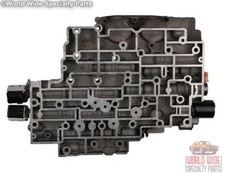
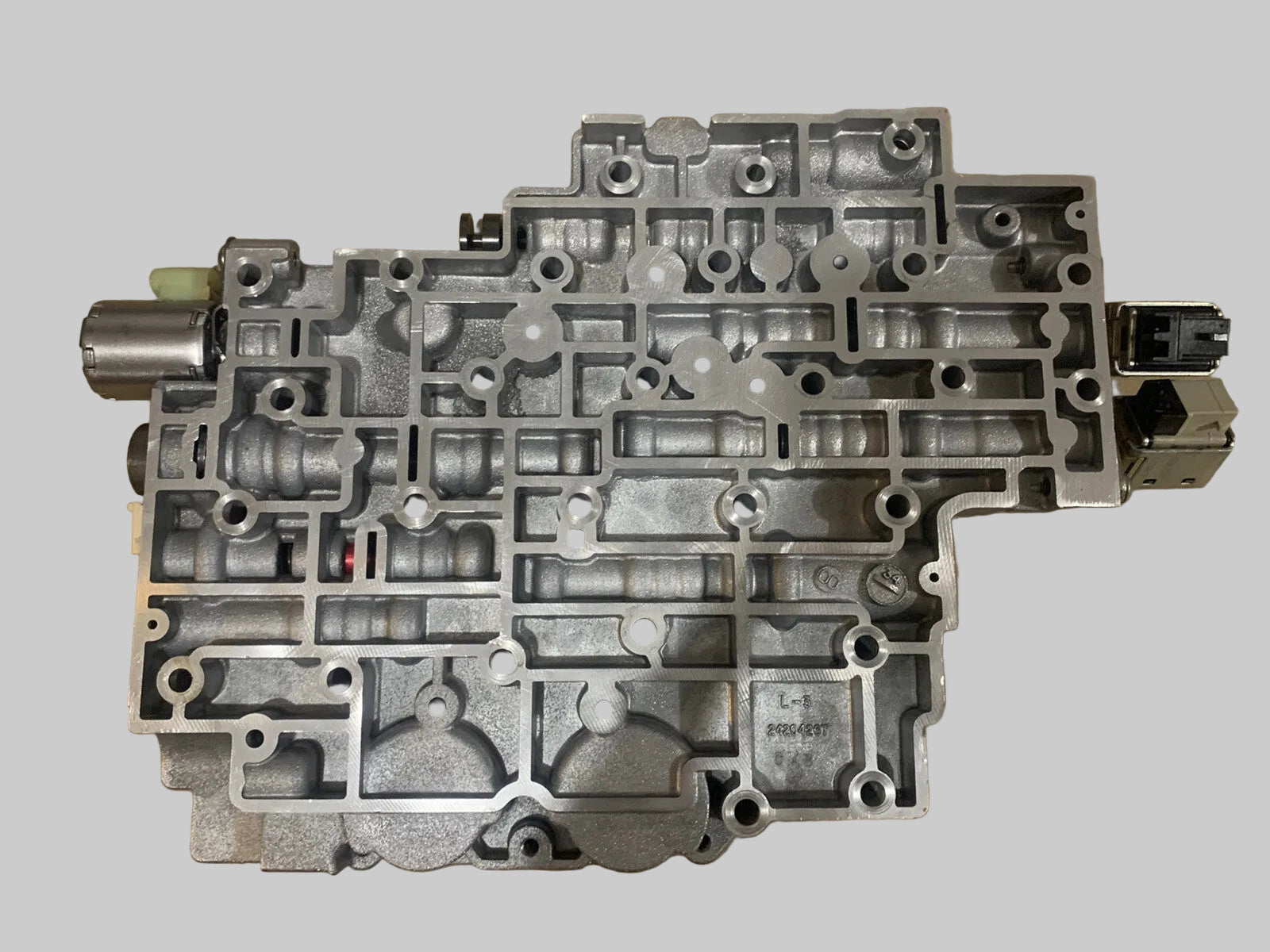
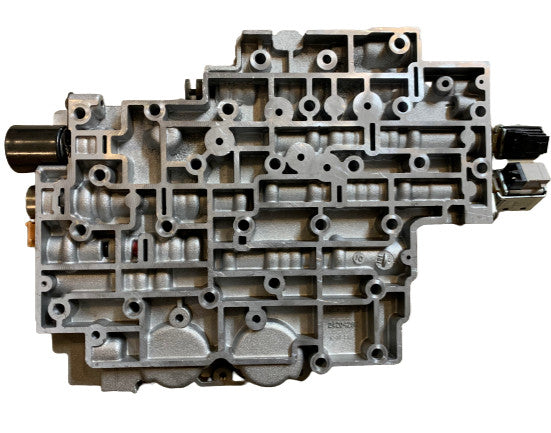
What the 2-3 solenoid actually does
The 4L80E makes four speeds from two on/off shift solenoids. Per GM's service information, the 2-3 Shift Solenoid Valve is a normally-open exhaust valve that controls fluid flow acting on the 2-3 shift valves, and it works with the 1-2 Shift Solenoid Valve to allow four different shift combinations.
Here is GM's Shift Solenoid Valve State and Gear Ratio table for the 4L80-E. Memorize it or tape it inside the toolbox lid, because every other step in this article is derived from it:
| Gear | 1-2 SS Valve | 2-3 SS Valve | Gear Ratio |
|---|---|---|---|
| 1st | ON | OFF | 2.48:1 |
| 2nd | OFF | OFF | 1.48:1 |
| 3rd | OFF | ON | 1.00:1 |
| 4th | ON | ON | 0.75:1 |
Two things jump out. Both solenoids off is 2nd gear, not 1st, which is why a 4L80E with no solenoid feed at all starts in second. And solenoid B is on for both 3rd and 4th, so losing it costs you the top two gears rather than one.
The hydraulic reason runs deeper than the table shows. Frank Biolsi of the Sonnax TASC Force lays out the valve geometry: solenoid B does double duty, stroking the 2-3 shift valve to the left while also helping the spring push the 1-2 valve back to the right, even when solenoid A is on. That single detail explains GM's set criteria. Solenoid B is not just a 2-3 switch. It is part of what defines 1st gear.
Exactly what has to happen for P0756 to set
GM states the trigger plainly: the code sets when the module detects a non first gear ratio while first gear is commanded, or a first gear ratio while fourth gear is commanded. On the 6.5L diesel calibration P0756 is a type A DTC. On 5.7L and 7.4L gas trucks it is a type D, except on California emissions vehicles where it is type A. On a non-California gas truck, that means the code can sit in memory with no warning light. Plenty get found during an unrelated scan.
The module will not run the test at all unless every one of these is true:
- No engine speed DTC P0219, no output speed sensor DTCs P0722 or P0723, no input speed sensor DTCs P0716 or P0717.
- No fluid temperature DTCs P0712 or P0713, no TFP valve position switch DTC P1810, no 4WD Low DTC P1875.
- No shift solenoid electrical DTCs P0753 or P0758.
- Engine running, not in four wheel drive low.
- Vehicle speed greater than 6 km/h (4 mph).
- Throttle position greater than 12 percent.
- Transmission fluid temperature 20 to 130°C (68 to 266°F).
- Engine torque 100 to 565 N·m (80 to 450 lb-ft).
- Engine speed 475 to 3750 RPM for at least 7 seconds.
With all of that satisfied, one of two patterns has to repeat:
- Stuck on — commanded gear equals 1st and the ratio equals 4th for more than 2 seconds, and commanded gear equals 2nd and the ratio equals 3rd for more than 2 seconds. 2 occurrences.
- Stuck off — commanded gear equals 3rd and the ratio equals 2nd for more than 3 seconds. 7 occurrences with a continual rolling counter.
Note the asymmetry, because it changes how you interview the customer. Stuck on needs two events. Stuck off needs seven, on a rolling counter. A solenoid B that will not turn on can therefore drive around for a long while — no 3rd, no 4th, screaming on the highway — before it finally stores a code. If the complaint has been going on for weeks and the code is fresh, that is consistent, not contradictory.
What the module does about it
When P0756 sets, GM's documented failsafe is aggressive. The transmission immediately lands in 2nd gear. The PCM commands maximum line pressure and freezes shift adapts, and the MIL comes on. History clears itself after 40 warm-up cycles without a failure if you do not clear it with a tool. GM's own diagnostic aid for this code notes that the customer may complain of an engine over-rev condition or a neutral condition in 4th gear — which lines up exactly with a commanded 4th coming out as a 1st gear ratio.
The command test that splits the job in half
GM's diagnostic table gets useful at step 3: raise and support the drive wheels, start the engine, select D4, and use the scan tool to command 1st, 2nd, 3rd and 4th while accelerating. Then count what you actually get. Run it against the state table above and the answer is unambiguous:
| Commanded | Solenoid B stuck ON | Solenoid B stuck OFF |
|---|---|---|
| 1st | 4th (0.75) | 1st (2.48) |
| 2nd | 3rd (1.00) | 2nd (1.48) |
| 3rd | 3rd (1.00) | 2nd (1.48) |
| 4th | 4th (0.75) | 1st (2.48) |
- 4-3-3-4 — solenoid B or its valve is stuck on. With B permanently applied, the only states available are 3rd and 4th. That is a 4th gear launch, and it is why these come in as "no power off the line."
- 1-2-2-1 — stuck off. Only 1st and 2nd are reachable. Commanding 4th hands you a 2.48 ratio, which is the over-rev GM warns about.
- All four correct — the solenoid and valve are responding, and you are chasing an intermittent or something upstream. Go to the pressure work below, not to a parts counter.
Before any of that, do GM's step 2. With the engine running and the brake applied, select each range — D1, D2, D3, D4, N, R and P — and confirm the scan tool TFP Switch A/B/C display matches every time. A lying pressure switch makes the module command the wrong gear in the first place. If they disagree, you are diagnosing P1810, not P0756.
If the command test says the solenoid is at fault
A 4L80E shift solenoid kit covering both the A and B solenoids, so you replace the pair while the pan is down rather than going back in for the other one six months later.
4L80E Shift Solenoid Kit at CoreTransmissionParts →Ohming solenoid B, and where
P0758 is the electrical code, but rule the circuit out anyway: a marginal connection that has not yet crossed the P0758 threshold will still fail to stroke a valve, and P0758 being stored blocks P0756 from running at all. GM's Component Resistance table for the 4L80-E, measured at 20°C (68°F):
| Component | Resistance | Pass-thru pins | Wire / circuit |
|---|---|---|---|
| 2-3 Shift Solenoid Valve | 20-40 ohms | B and E | Yellow 1223, Red 839B |
| 1-2 Shift Solenoid Valve | 20-40 ohms | A and E | Lt Green 1222, Red 839A |
| Pressure Control Solenoid | 3.5-8 ohms | C and D | Purple 1228, Lt Blue 1229 |
| TCC Solenoid Valve | 10-15 ohms | S and E | Black 418, Red 839C |
| Input / output speed sensors | 1042-2088 ohms | own harness | 1230/1231, 821/822 |
Pin E is the red common feed, and GM notes it is spliced internally on circuit 839 — one feed shared by both shift solenoids and the TCC solenoid. That matters. A corroded or fluid-wicked pin E can drag down A, B and TCC together, which is why multiple solenoid codes so often show up as a set. Check each leg to the case for a short to ground while you are in there.
GM's own preliminary information for the sister Allison unit, bulletin PIP5060, is worth reading even though it covers RPO MW7 rather than the 4L80E. It attributes P0756 and its siblings to a binding shift solenoid armature, and it orders the work the same way this article does: verify fluid level, then verify the internal harness, then replace the solenoid, and if the condition returns, pull the valve body and clean the debris out of it. GM does not lead with a parts swap either.
Why a good solenoid still sets this code
Here is where the money gets wasted. The solenoid only sends or exhausts actuator feed limit oil. The 2-3 shift valve is what actually moves, and it moves only if AFL pressure is high enough to overcome its spring.
Sonnax is direct about the 4L80-E AFL valve: it has a large reaction area and is greatly affected by side loading, which wears the valve body bore, and the EPC solenoid oscillates the torque signal and AFL oil, increasing valve action and accelerating that wear. As the bore wears, oil pressure at the shift solenoids drops, and Sonnax names the result outright: solenoid and ratio codes. The same leak also drags line pressure down with it.
The numbers give you a target. AFL is regulated to a maximum of about 115 psi and is always below line pressure. Biolsi puts the point where trouble begins at the 45 to 48 psi range, and notes AFL problems show first at light throttle or on coast, when line pressure is already low. Sonnax's shift valve spring kit documentation adds a second threshold: when AFL oil drops and signal A falls below 58 psi, the 1-2 valve stalls or floats, giving a 3-1 or a 3rd gear neutral complaint in OD or D while the scanner still reads 4th commanded.
Read that last sentence again next to GM's P0756 criteria. "Ratio does not match commanded gear, at low throttle, intermittently" is precisely what a worn AFL bore produces, and there is nothing wrong with the solenoid. ATRA makes the same point from the diagnostic side in Gears: a performance code is the module comparing calculated ratio against the shift schedule, low line pressure keeps the shift from happening inside the programmed window, and the module reads that as a performance problem — which is why the line pressure test comes before the parts.
So before condemning anything, check pressure. GM publishes a line pressure table indexed to pressure control solenoid current for the 4L80-E: roughly 157-177 psi at 0.02 amp falling to 35-55 psi at 0.98 amp. Gauge the line tap, command PC solenoid current with the scan tool, and confirm you can walk pressure across that range. If you cannot, you have a pressure problem, and P0756 is a symptom of it rather than the fault.
On the bench
Vacuum testing is how you find the wear without guessing. Sonnax publishes a 4L80-E and 4L85-E vacuum test guide that marks the actuator feed limit valve and sleeve, the 2-3 shift valve, and the solenoid filter and end plug as critical wear areas, with the failing symptoms listed at each location — wrong gear starts, solenoid codes, gear ratio codes, 2nd gear starts and no 4th. Low vacuum at a bore means wear. The repairs are the AFL valve kit 34200-16K (which needs reaming tool 77754-TL, and whose sleeve gives the valve 54 percent more support), the 1-2 and 2-3 shift valve spring kit 34994-02K, and the AFL filter end plug and O-ring kit 34994-17K.
Order of operations that keeps you out of trouble: check and correct fluid level first, scan and record freeze frame, verify the range switch, run the four-gear command test, ohm the solenoids at the case connector, then gauge line pressure. Only then does the pan come down. Once it is down and the body is on the bench, do the AFL bore while you are there. It is the most common wear point on the unit, it sits upstream of every solenoid, and it is cheap now and expensive after you have already bought solenoids that were fine.
Fluid, capacity and the reassembly numbers
GM's fluid capacity specifications for the 4L80-E are 7.3 liters (7.7 quarts) for a pan removal and 12.8 liters (13.5 quarts) for an overhaul. The original type recommended was DEXRON III; that spec is long discontinued and DEXRON VI is the current backward-compatible service fill. Check the level hot and on level ground — a low level on its own can produce exactly the intermittent ratio errors this code is looking for, which is why GM's diagnostics for solenoid performance codes across its transmission families start there.
Need parts for this job?
Shift solenoid kits, internal wire harnesses, valve bodies, AFL and shift valve kits, filters and DEXRON VI for the 4L80E, all in one place.
Shop 4L80E parts →Shop the part for this fix
If the command test pointed at the valve body rather than the solenoid, a shift correction kit addresses the 2-3 circuit and shift feel at the same time you are in there for the AFL bore.
4L80E Shift Correction Kit / Valve Body Upgrade
Recalibrates the shift circuits while the body is already on the bench. Pair it with the AFL bore repair rather than instead of it.
View at CoreTransmissionParts →Browsing the rest of the unit: the full 4L80E transmission parts collection at CoreTransmissionParts carries the solenoids, harnesses, valve bodies and rebuild kits for this job.
FAQ
What does P0756 actually mean on a 4L80E?
GM's service information for the 4L80-E calls it 2-3 (B) Shift Solenoid Performance, and it is a ratio complaint rather than a circuit complaint. The module sets it when it detects a non first gear ratio while first gear is commanded, or a first gear ratio while fourth gear is commanded. The electrical side of the same solenoid has its own separate code, P0758, and the module will not even run the P0756 test if P0753 or P0758 is already stored. So P0756 means the 2-3 solenoid was told to move oil and the transmission did not end up in the gear that oil should have produced.
What shift pattern tells you whether solenoid B is stuck on or stuck off?
Support the drive wheels, put it in D4, and command 1st, 2nd, 3rd and 4th with a scan tool while accelerating. A 2-3 solenoid stuck on gives you 4th, 3rd, 3rd, 4th, because with solenoid B permanently applied the only states left are 3rd and 4th. A 2-3 solenoid stuck off gives you 1st, 2nd, 2nd, 1st, because the only states left are 1st and 2nd. Both patterns fall straight out of GM's Shift Solenoid Valve State and Gear Ratio table, and they match GM's own set criteria for the code.
What should the 4L80E 2-3 shift solenoid read on a meter?
GM's Component Resistance table for the 4L80-E lists the 2-3 Shift Solenoid Valve at 20 to 40 ohms measured at 20 degrees C, which is 68 degrees F. Measure it at the transmission case pass-through connector between pin B, the yellow wire on circuit 1223, and pin E, the red common feed on circuit 839B that is spliced internally and shared with the 1-2 shift solenoid and the TCC solenoid. Check each leg to the case for a short to ground as well. A coil inside that window with no ground fault is electrically fine.
Can a good solenoid still set P0756 on a 4L80E?
Yes, and this is the failure most people pay for twice. The solenoid only sends or exhausts actuator feed oil. The 2-3 shift valve is what actually moves. Sonnax documents that the 4L80-E actuator feed limit valve has a large reaction area and is heavily side loaded, that the EPC solenoid constantly oscillates the torque signal and AFL oil, and that the resulting bore wear reduces oil pressure to the shift solenoids and causes solenoid and ratio codes. Vacuum test the AFL bore and the 2-3 shift valve before you condemn a solenoid that ohmed correctly.
Is it safe to drive a 4L80E with P0756 set?
Long enough to get it home or to a shop, and no longer. GM's documented failsafe for P0756 lands the transmission in 2nd gear immediately, commands maximum line pressure and freezes the shift adapts, so the truck bangs and runs on stale adaptive data. GM also warns that the customer may report an engine over-rev or a neutral condition in 4th gear. The usual root cause is either a stuck valve or low actuator feed pressure, and the same low pressure that will not stroke a shift valve is also the pressure holding the clutches and band.
Related guides
- 4L80E P0751: 1-2 Shift Solenoid Valve Performance — the mirror image of this code, on solenoid A.
- 4L80E P0748: Pressure Control Solenoid Circuit — the EPC code that outranks this one and can cause it.
- 4L80E Low Line Pressure Diagnosis — the pressure work referenced above, in full.
- 4L80E Valve Body Problems and Testing — the AFL bore and shift valve repairs on the bench.
- 4L60E vs 4L80E Differences — the two units share this AFL failure mode.
Sources
- GM Service Information — DTC P0756 2-3 (B) Shift Solenoid Performance, 4L80-E — Backs the definition of the 2-3 SS Valve as a normally-open exhaust valve, the trigger (non first gear ratio while 1st is commanded, or a first gear ratio while 4th is commanded), the type A / type D and California classification, the full enable criteria (no P0219/P0722/P0723/P0712/P0713/P1810/P1875/P0753/P0758/P0716/P0717, speed above 4 mph, throttle above 12 percent, TFT 68-266°F, engine torque 80-450 lb-ft, 475-3750 RPM for 7 seconds), the stuck-on and stuck-off set conditions with their 2 and 7 occurrence counts, the failsafe (lands in 2nd, maximum line pressure, frozen adapts, MIL), the 40 warm-up cycle history clear, the engine over-rev and 4th gear neutral diagnostic aid, the TFP switch range check and the four-gear command test. https://gm.saturn.team/GMC_Truck/GMC_Suburban___4WD/1997/3/5/453/7105
- GM Service Information — Shift Solenoid Valve State and Gear Ratio table, 4L80-E — Backs the solenoid state chart and published ratios: 1st (1-2 SS ON, 2-3 SS OFF, 2.48:1), 2nd (OFF, OFF, 1.48:1), 3rd (OFF, ON, 1.00:1), 4th (ON, ON, 0.75:1), and therefore the 4-3-3-4 versus 1-2-2-1 command-test table. https://gm.saturn.team/GMC_Truck/GMC_Suburban___4WD/1997/3/5/453/7492
- GM Service Information — Line Pressure specification table, 4L80-E — Backs the pressure control solenoid current versus approximate line pressure figures used for the gauge test, from 157-177 psi at 0.02 amp down to 35-55 psi at 0.98 amp. https://gm.saturn.team/GMC_Truck/GMC_Suburban___4WD/1997/3/5/453/7162
- GM Service Information — Fluid Capacity Specifications, 4L80-E — Backs the 7.3 liter (7.7 quart) pan removal and 12.8 liter (13.5 quart) overhaul capacities and the original DEXRON III fluid recommendation. https://gm.saturn.team/GMC_Truck/GMC_Suburban___4WD/1997/3/5/453/7164
- Sonnax TASC Force — "AFL and AFL" by Frank Biolsi — Backs the statement that the AFL valve regulates actuator feed pressure to all three shift valves plus the pressure control and the 1-2 and 2-3 shift solenoids while feeding no clutches directly, that solenoid B strokes the 2-3 shift valve while also helping the spring return the 1-2 valve even with solenoid A on, the maximum regulated AFL pressure of 115 psi, the 45 to 48 psi range at which problems begin, and that AFL faults appear first at light throttle or on coast. https://www.sonnax.com/tech_resources/118-afl-and-afl
- Sonnax — Actuator Feed Limit Valve Kit 34200-16K (GM 4L80-E, 4L85-E) — Backs the AFL wear mechanism (large reaction area, side loading, EPC solenoid oscillating the torque signal and AFL oil to accelerate bore wear), the stated consequence that reduced pressure at the shift solenoids causes solenoid and ratio codes plus lower line pressure, the listed symptoms including solenoid performance codes, wrong gear starts, 2nd gear starts and no 4th, the 54 percent additional valve support from the sleeve, and the 77754-TL tooling requirement. https://www.sonnax.com/parts/1990-actuator-feed-limit-valve-kit
- Sonnax — 1-2 & 2-3 Shift Valve Spring Kit 34994-02K (GM 4L80-E, 4L85-E) — Backs the stated cause of low signal pressure to shift solenoids A and B, the 58 psi signal A threshold below which the 1-2 valve stalls or floats producing a 3-1 or 3rd gear neutral complaint while the scanner indicates 4th commanded, and the note that worn AFL limit bores, leaking O-rings and leaking solenoids compound 2nd gear start, 2-3 neutral and no 4th complaints. https://www.sonnax.com/parts/2026-1-2-2-3-shift-valve-spring-kit
- Sonnax — GM 4L80-E, 4L85-E Vacuum Test Guide (Critical Wear Areas & Vacuum Test Locations) — Backs the actuator feed limit valve and sleeve, the 2-3 shift valve and the solenoid filter and end plug as documented critical wear areas with vacuum test locations, the symptom lists at each (wrong gear starts, solenoid codes, gear ratio codes, 2nd gear starts, no 4th, 2-3 shift complaints) and the corrective part numbers 34200-16K, 34994-02K and 34994-17K. https://www.sonnax.com/tech_resources/434-gm-4l80-e-4l85-e-vacuum-test-guide
- Transmission Digest — "Hydraulic Fundamentals: AFL/Solenoid Modulator Valves" (Sonnax) — Backs the general AFL function and the specific statement that in GM 4L60-E and 4L80-E transmissions line pressure is regulated at approximately 115 psi and fed to the shift solenoids, pressure control solenoid, TCC solenoid, 3-2 control solenoid and the 2-3 shift valve lineup, and that worn AFL bores result in low actuator feed and line pressures. https://www.transmissiondigest.com/tasc-force-tips-3/
- ATRA — Gears Magazine, "Performance Codes: Knowing Where to Start" by Mike Brown — Backs the principle that a performance code is set by comparing the actual gear ratio calculated from the input and output speed sensors against the commanded shift schedule, that low line pressure keeps a shift from occurring inside the programmed timeframe and reads to the module as a performance problem, and the instruction to perform a line pressure test before replacing solenoids that may be reporting a pressure fault rather than their own. https://gearsmagazine.com/magazine/performance-codes-knowing-where-to-start/
- General Motors — Preliminary Information bulletin PIP5060 (via NHTSA) — Cited for the sister Allison unit (RPO MW7), not the 4L80E: backs GM's attribution of P0756 and related shift solenoid performance codes to a binding shift solenoid armature, and GM's own repair order of verifying fluid level and the internal harness before replacing a solenoid, then removing and cleaning the valve body if the condition returns. https://static.nhtsa.gov/odi/tsbs/2012/SB-10073932-0699.pdf