This question comes across the bench every week from swap guys: I have an LS (or an LT) going into something, do I put a 4L80E or a 6L80 behind it? Both are GM, both bolt to the same engines, both will live behind serious power when they are built right. But they are different tools. One is an old-school hard-parts four-speed that you can beat on and fix in your sleep. The other is a modern clutch-to-clutch six-speed with tighter gearing and a much fussier brain. Picking the wrong one for your combination costs you either driveability or a weekend of wiring you did not sign up for.
Here is the honest builder-to-builder rundown: the numbers that actually matter, where each unit is strong, where each one bites you, and which one I steer people toward depending on what they are building.
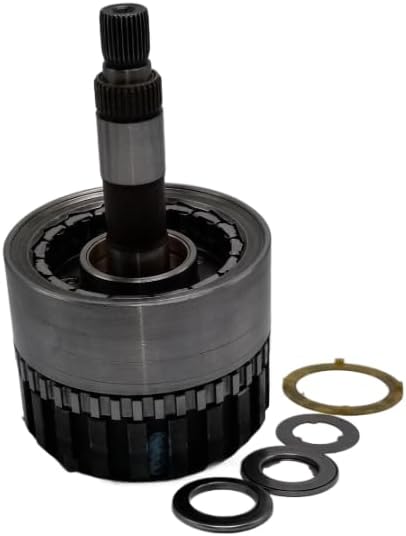
The Head-to-Head Numbers
Start with the specs, because half of the arguments online ignore them. Both units carry the same factory maximum engine input torque rating of 440 lb-ft. What changes is gearing, overdrive count, and physical size.
| Spec | 4L80E | 6L80 |
|---|---|---|
| Speeds | 4-speed, one overdrive | 6-speed, two overdrives |
| 1st gear | 2.48 | 4.02 |
| 2nd gear | 1.48 | 2.36 |
| 3rd gear | 1.00 | 1.53 |
| 4th gear | 0.75 (OD) | 1.15 |
| 5th gear | — | 0.85 (OD) |
| 6th gear | — | 0.67 (OD) |
| Reverse | 2.07 | 3.06 |
| Ratio spread | 3.31 | 6.04 |
| Max input torque (GM) | 440 lb-ft | 440 lb-ft |
| Max output torque (GM) | 885 lb-ft | 664 lb-ft |
| Construction | Bands + clutches, cast aluminum | Clutch-to-clutch, no bands |
| RPO code | MT1 | MYC |
| Fluid | Dexron VI | Dexron VI (~10–12.6 qt) |
Two things jump out. First, the 6L80 has a much deeper first gear (4.02 versus 2.48) and a 6.04 ratio spread against the 4L80E's 3.31, so it launches harder and cruises lower. Second, note the output torque ratings: GM rates the 4L80E at 885 lb-ft of output against the 6L80's 664. That gap tells you which unit was designed to shrug off the most load at the driveshaft, even though both share the same input rating.
Gearing and Highway RPM
The 4L80E's overdrive is a 0.75:1. The 6L80's top gear is a 0.67:1, with a 0.85 fifth in between. In real numbers, take a truck on 3.73 gears and a 30-inch tire at 70 mph: you are turning roughly 2,200 rpm in the 4L80E's overdrive, versus roughly 1,950 rpm in the 6L80's sixth. That 250-rpm drop is real money at the pump on a daily driver and noticeably quieter on a long haul.
But the 6L80's advantage is not just the tall top gear, it is the steps between gears. Six ratios across a 6.04 spread means the engine stays in its powerband on acceleration and does not fall on its face between shifts. A 4L80E jumps from a 1.48 second to a 1.00 third to a 0.75 overdrive; those are big holes. Behind a peaky small-displacement combination, the 6L80's tight steps make the car feel considerably faster even when the two make the same power. Behind a big torque monster, the 4L80E's wide steps matter less because the engine pulls anywhere.
Strength: Hard Parts vs. Clutch-to-Clutch
The 4L80E is essentially a TH400 that grew an overdrive and electronic controls. That heritage is the point: the internals are big, the parts network is enormous, and the 4L85E shares a hard-parts upgrade path. When people build 4L80Es for 1,000-plus horsepower, they are leaning on that mass. The unit's one real Achilles' heel in stock form is the overdrive section, which I will get to below, but everything forward of it is stout.
The 6L80 makes its power differently. It is a clutch-to-clutch design with no bands, using stacked clutch packs (the 1-2-3-4, the 3-5-reverse, and the 4-5-6) that apply and release against each other. When it is healthy and cool, it shifts beautifully and holds well. The problem is that there is less room inside to over-build, and the clutch packs are sensitive to heat and to any hydraulic leak that drops their apply pressure. It is a strong transmission, but it is harder to make it a bulletproof one.
The Control Side: This Is Where Swaps Live or Die
If you take one thing from this article, take this. The 4L80E and the 6L80 are controlled in completely different ways, and that difference matters more to a swapper than any gear ratio.
4L80E: simple external control
The 4L80E is a straightforward electronically controlled unit. It uses a handful of shift solenoids, a pressure control solenoid, and a TCC solenoid, all driven by an external controller. That means an aftermarket standalone box will run it happily with no engine ECM in the loop at all. For a hot rod, a kit car, or any non-GM engine, this is enormous: you wire the transmission, set your shift points and pressures, and drive. It is about as plug-and-play as a modern overdrive automatic gets.
6L80: internal TEHCM that wants a GM brain
The 6L80 is controlled by an internal TEHCM, the transmission electro-hydraulic control module that lives inside the pan and integrates the solenoids and the shift logic. Per Sonnax, that module has to be correctly programmed to the vehicle; an incorrect part number or a mismatched program will produce a no-move or no-upshift condition, and a line-pressure solenoid stuck in exhaust will hang line pressure at roughly 60 to 68 psi with no rise. In other words, the 6L80 expects to be talked to by a matching GM engine controller. To run one behind a non-GM combination you either use a GM controller such as the T43 with a proper tune, or an aftermarket standalone made specifically for the 6-speed, plus custom tuning. Those solutions exist and work, but they add cost and complexity that the 4L80E swap simply does not have.
Weak Points You Need to Know Before You Build Either One
4L80E: the overdrive roller clutch
The classic 4L80E failure is the overdrive roller clutch, and Sonnax's write-up on it is worth reading before any build. In the overdrive range's 1st through 3rd gears, that roller clutch carries the load by itself; the overrun clutch only applies in the manual ranges (D, 2 and 1). Lean on the unit hard in overdrive, and when the roller clutch lets go it takes a stack of expensive parts with it: the overrun clutch drum is the inner race for the roller clutch, the OD planetary carries the outer race, and the planet gears and forward-drum ring gear often go too. The fix builders reach for is a valve kit that applies the overrun clutch in every range except 4th, so the overrun clutch shares the load the roller clutch otherwise fights alone. Address that section and add a good cooler, and a 4L80E is very hard to kill.
6L80: the clutch packs, the drum welds, and the TCC circuit
The 6L80's trouble spots are documented in the ATRA/Gears Magazine teardown of the unit. The 1-2-3-4, 3-5-reverse, and 4-5-6 clutches are the most common apply components to fail. On the 1-2-3-4, the piston itself cracks, and the piston housing can crack at the inner diameter and break away. On the 3-5-reverse, early drums crack at the weld, which is why updated drums carry a dot-matrix identification label. On the 4-5-6, the dampener shaft can fracture and mimic a clutch-apply failure, snapping off the drum in bad cases. Behind all of that sits the torque converter and the TCC lining: when the lining wears, you get metal-to-metal contact that sends debris upstream and wears the pressure regulator valve until, as the article puts it, the lands look more like camshaft lobes. Stator support gasket leaks between clutch circuits and a heat-sensitive cooler bypass round out the list. None of it is a deal-breaker, but it tells you the 6L80 rewards clean fluid, a real cooler, and updated hard parts on a rebuild.
Shop 4L80E parts →
Cost to Build and Swap
Money usually settles the argument. Cores are the first variable: healthy 4L80E cores are common and cheap because millions went into trucks and vans, while good 6L80 cores tend to cost more and the ones in junkyards have often been run hot. On the rebuild side, a solid 4L80E with a shift kit, an upgraded overdrive section, and a decent converter is a well-trodden, predictable job. A 6L80 rebuild is more parts-sensitive, needs the updated clutch and drum components to be done right, and the TEHCM adds a variable that a 4L80E never has.
Then there is control. A 4L80E standalone controller is inexpensive and the tuning is basically a solved problem. A 6L80 needs either a GM controller and a tune or an aftermarket standalone, and the tuning takes more effort to get the shift quality dialed. Add it all up and the 4L80E swap is almost always the cheaper and faster path to a car that drives right. You pay the 6L80 premium to get two extra gears, a lower cruise RPM, and modern shift feel.
Which One Should You Build?
Here is how I actually advise people:
- Build the 4L80E if you are behind a non-GM engine, chasing big power, towing heavy, running a dedicated race or off-road rig, or you just want the simplest, cheapest, most fixable combination. It is the default answer for a reason.
- Build the 6L80 if you are doing a modern GM-based swap (especially with a factory-matched ECM), you daily the vehicle and want the lower highway RPM and tight gearing, and you are willing to invest in the control side and keep the fluid and cooling honest.
Neither is a mistake. The 4L80E is the hammer: crude, tough, and always the right tool for brute-force jobs. The 6L80 is the modern multi-tool: more capable in more situations, but it demands you read the instructions. Match the transmission to the build and the engine controller you already have, not to whichever core showed up first.
FAQ
Is the 6L80 stronger than the 4L80E?
Both units carry a factory maximum engine input torque rating of 440 lb-ft, so on paper they start even. The difference is in how they hold power. The 4L80E is a hard-parts transmission with a proven 4L85E parts path and decades of aftermarket support, and it takes abuse and heat better once the overdrive section is addressed. The 6L80 is a clutch-to-clutch six-speed with tighter internal packaging; it is strong when healthy but less forgiving of heat and harder to over-build. For a high-power street or race build, the 4L80E is the easier unit to make bulletproof.
Can you run a 6L80 standalone behind an LS without the factory ECM?
Not cleanly with the factory setup. The 6L80 is controlled by an internal TEHCM (transmission electro-hydraulic control module) that expects data from a GM engine controller, so it does not behave like a self-contained transmission the way a 4L80E does. Running one behind a non-GM combination means using a GM controller such as the T43 with the right tune, or an aftermarket standalone controller built for the 6-speed. A 4L80E, by contrast, uses a simple external controller and is far more plug-and-play for a swap.
Which is better for towing, the 4L80E or the 6L80?
For heavy, repeated towing the 4L80E is the safer long-term choice because of its heavier hard parts, larger service network, and how easy it is to add a good cooler and a built overdrive section. The 6L80 tows well from the factory and its deep 4.02 first gear and two overdrives help both launch and highway economy, but its 3-5-R and 1-2-3-4 clutch packs and the TCC circuit are heat-sensitive. If you tow hard with a 6L80, an upgraded cooler and disciplined fluid service are not optional.
Will a 6L80 bolt up where a 4L80E was?
They share the GM small/big-block and LS/LT bellhousing pattern, so both bolt to the same engines, but they are not interchangeable in the tunnel. The 6L80 is physically shorter overall than the 4L80E despite having two more gears, so driveshaft length, crossmember location, and shifter or electronic-shift provisions all change. Plan the wiring and control strategy before you plan the mounts, because the control side is where most 6L80 swaps stall.
Building a 4L80E this week?
Overhaul kits, overdrive roller clutch upgrades, shift kits, converters, coolers, and the tools to set clearance right — all in one place, shipped from the USA.
Shop 4L80E parts →Related guides
Sources
- Novak Conversions — "The Novak Guide to the GM 4L80E Automatic Transmission." Backs the 4L80E gear ratios (2.48 / 1.48 / 1.00 / 0.75 OD, reverse 2.07), the RPO code MT1, the 310 mm converter, the 26-1/4-inch case length, and Dexron VI fill. novak-adapt.com
- Novak Conversions — "The Novak Guide to the GM 6L80 & 6L90 Automatic Transmissions." Backs the 6L80 gear ratios (4.02 / 2.36 / 1.53 / 1.15 / 0.85 / 0.67, reverse 3.06), the 6.04 ratio spread, the 440 lb-ft input and 664 lb-ft output ratings, RPO MYC, clutch-to-clutch no-band construction, ~195 lb dry weight, and the 10–12.6 quart Dexron VI fill. novak-adapt.com
- Sonnax — "Outsmarting 4L80-E Overdrive Roller Clutch Failure," June 22, 2017. Backs the overdrive roller clutch holding load by itself in the OD range 1st–3rd gears while the overrun clutch only applies in manual ranges, the collateral damage to the overrun clutch drum, OD planetary, planet gears and forward-drum ring gear when it fails, and the overrun clutch valve kit fix that applies the overrun clutch in all ranges except 4th. sonnax.com
- Gears Magazine (ATRA) — "Tackling Clutch Failure in the GM 6L80/90." Backs the 1-2-3-4, 3-5-reverse and 4-5-6 clutches as the most common apply-component failures, the 1234 piston/housing cracking, the 35R drum weld cracks and updated dot-matrix-labeled drums, the 456 dampener shaft fracture, TCC lining wear causing metal-to-metal contact, pressure regulator valve wear, and stator support gasket leaks. gearsmagazine.com
- Sonnax — "GM 6L45/50, 6L80/90 No Movement Conditions: Analysis & Repair Tips," Jim Mobley, March 8, 2023. Backs the internal TEHCM control architecture, the requirement that the TEHCM part number and program file match the VIN, the no-move/no-upshift conditions from a mismatched or misprogrammed module, and the ~60–68 psi hung line pressure when the line-pressure solenoid sticks in exhaust. sonnax.com