The 4L85E is the heavy-duty cousin of the 4L80E, built on the same die-cast aluminum case and, per multiple Sonnax fitment listings, the same pump housing. GM used it behind higher-torque applications like the 8.1L L18 Vortec V8 in 2500/3500 trucks and vans, rated to roughly 460 lb-ft of input torque versus the 4L80E's 440. When someone searches "4L85E pump failure," they're usually dealing with one of three very different things: a genuinely worn pump, a worn boost valve sleeve that lives in the pump's valve bore, or a worn checkball sleeve in the valve body that just mimics pump trouble. Sorting out which one you actually have before you order parts saves a comeback.
What the Pump Actually Does, and What It Shares With the 4L80E
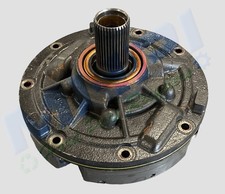
The pump is a vane-type assembly bolted to the front of the case, driven directly off the torque converter hub whenever the engine is running, converter lockup status aside. It's the sole source of pressurized fluid for every clutch apply, every shift, and converter charge and cooling. Multiple Sonnax fitment listings for the boost valve kit, the checkball sleeve kit, and the Performance Pack name both the 4L80-E and 4L85-E as shared applications, which lines up with forum reports that the two units use the same case and differ mainly in the output and reaction carriers, 4 pinions on the 80E versus 5 on the 85E. Practically, that means almost every pump wear point and pump fix that applies to a 4L80E applies directly to a 4L85E.
GM revised internal pump hardware across the production run, which is why aftermarket pump listings split into 1991-1996, 1997-2003, and 2004-up groups. Match your casting and year range before ordering a reman pump assembly, not just the transmission model name.
Symptom Set One: A Genuinely Worn Pump
A pump that's actually worn, scored rotor pockets, worn gear-to-cover clearance, or a cracked pump slide, produces a fairly blunt symptom set: delayed engagement into gear, slipping across multiple gears at once rather than one specific gear, a whine that climbs and falls directly with engine RPM (not road speed), and in a fully failed pump, no movement in any gear because there's no pressure to apply anything. If the fluid filter comes out cracked or split on teardown, treat that as a pump symptom, not a filter defect; a scored pump rotor, scored pump cover, or cracked pump slide is what cracks the filter in the first place, and replacing the filter alone without inspecting the pump just brings the comeback back faster.
Symptom Set Two: Boost Valve Sleeve Wear (Looks Like a Pump Problem, Lives in the Pump)
This is the single most common "pump failure" complaint on the 4L80E/4L85E family, and it's a specific, well-documented wear point rather than generic pump wear. Sonnax's own boost valve kit documentation describes the failure directly: a worn boost valve sleeve lets Reverse boost oil cross-leak into the torque signal circuit, and a worn aluminum end plug unbalances the pressure regulator valve. The result is uncontrollable line pressure rise, upward of 500 to 600 psi, abnormally high line pressure specifically in Reverse, an audible buzzing noise, and, if it runs long enough, broken direct clutch drums or a cracked case from that excess pressure. Because the boost valve, sleeve, and balance plug all sit in the pump's valve bore, this presents to the driver and even to a tech doing a quick look as "the pump is bad," when the fix is a sleeve and valve kit rather than a full pump swap.
Sonnax sells two kit variants for this: 34200-03K for units with the factory-style sleeve ('91-and-later, retrofittable to '89-'91), and an O-ring style kit, 34200-01K, specifically for units where you find leakage between the sleeve and a worn pump bore, since the O-ringed sleeve compensates for that bore wear and avoids scrapping the pump casting outright.
There is a third cause of the same high-pressure complaint, and it is not wear in the sleeve at all. Sonnax's documentation for its self-regulating 34200-10K boost valve kit lists uncontrollable line rise, high line pressure, and broken parts caused by unregulated EPC pressure forcing the pressure regulator into the high line position. Its fix limits EPC signal pressure with a relief valve that exhausts above 95-105 psi. If the boost valve sleeve checks good on a wet air test and line pressure still climbs, look at the EPC signal side before blaming the pump. Sonnax's own boost valve primer explains why: the pressure regulator spring sets base line pressure, and EPC signal oil acting on the end of the boost valve adds force on top of it, so any excess signal pressure goes straight into line pressure.
Symptom Set Three: Checkball Sleeve Wear (Valve Body, Not the Pump, But Easy to Confuse)
The third pattern isn't pump wear at all, it's wear in the valve body bolted directly to the pump, but it produces symptoms owners describe the same way. Sonnax documents that 1995-and-later 4L80-E and 4L85-E units commonly wear the 3rd and Reverse checkball sleeve, located in the 3-4 shift valve bore, from ordinary checkball movement over miles. As that sleeve wears, the checkball can no longer seal, and apply pressure to the direct clutches leaks off. The listed symptom set is 3rd slip, 4th slip, gear ratio codes, a burnt direct clutch, and Reverse slip. None of that is a pump fault in the strict sense, but it sits right next to the pump, shows up during the same inspection, and gets lumped into "pump problems" in almost every forum thread on the subject. The fix is the checkball sleeve kit (Sonnax 34200-47K), not a pump replacement.
4L85E Pump, Matched to Your Year Range
If the diagnosis below points to an actually worn pump rather than a boost valve sleeve or checkball sleeve, GBI stocks the 4L85E pump in all three production groupings above, in stock and shipped same day. For the specific remanufactured pump assembly plus the full boost valve and checkball sleeve component catalog, CoreTransmissionParts carries the broader 4L80E/4L85E parts line.
Shop the remanufactured pump assembly at CoreTransmissionParts →Don't Mistake Planetary Gear Whine for a Pump Whine
Before you condemn the pump on noise alone, rule out a documented, non-pump cause of whine on this exact transmission family. GM's Preliminary Information Bulletin PIP3259J covers a planetary gear whine in first and second gear, louder in first than second, on 1999-2008 trucks and vans equipped with the 4L80E (RPO MT1) or 4L85E (RPO MN8). GM's own language is direct: "This planetary gear whine noise can be characteristic of the 4L80E/4L85E." The bulletin's diagnostic order is to compare the vehicle against an identically built truck first (same GVWR) before doing any repair. If the noise is genuinely abnormal and the unit was built after September 1, 2003, GM calls for a rear unit end play check (SI Document ID #52027), with a spec of 0.127-0.508 mm (0.005-0.020 in), targeting 0.010-0.015 in using the correct selective thrust washer. Out-of-spec end play gets the output planetary gear set (carrier and sun gear) inspected and replaced; in-spec end play with abnormal noise means the whole transmission assembly gets replaced per a separate bulletin, 02-07-30-029A.
The practical takeaway: a pump whine tracks engine RPM through the torque converter and almost always comes with a pressure symptom (slip, delayed engagement, harsh or soft shifts). A planetary whine is louder in 1st than 2nd, doesn't necessarily come with any pressure complaint at all, and has its own documented GM diagnostic path that has nothing to do with the pump.
Diagnostic Order That Doesn't Waste a Pump Swap
- Confirm the noise type first. Does it track engine RPM (pump/converter) or does it sound like gear whine that's worse in 1st than 2nd with no pressure complaint (check PIP3259J before touching the pump)?
- Pull a line pressure test. Uncontrollable rise toward 500-600 psi, or specifically high pressure in Reverse with a buzz, points straight at the boost valve sleeve, not the pump body.
- Pull codes and note which gears slip. 3rd/4th slip with ratio codes and a burnt direct clutch points at the checkball sleeve in the valve body, not the pump.
- Drop the pan and inspect the filter. A cracked or split filter means inspect the pump for a scored rotor, scored cover, or cracked pump slide before you replace anything else.
- Only replace the full pump assembly once scoring, wear, or damage is confirmed in the pump body itself, matched to your 1991-1996, 1997-2003, or 2004-up casting.
- If it's the boost valve or checkball sleeve instead, the targeted Sonnax kit fixes the actual wear point without the cost of a full pump or valve body swap.
FAQ
How do I tell a real pump whine from 4L85E planetary gear whine?
Compare the truck to an identically built one first, since GM's own Preliminary Information Bulletin PIP3259J says the 4L80E/4L85E can produce a characteristic planetary gear whine in first and second gear, louder in first, that is not a defect by itself. If the noise is abnormal and the transmission was built after September 1, 2003, GM's procedure calls for a rear unit end play check with a spec of 0.127 to 0.508 mm (0.005 to 0.020 in), targeting 0.010 to 0.015 in with the correct selective thrust washer. A pump whine, by contrast, tracks engine RPM through the torque converter and is usually accompanied by pressure symptoms, not just noise.
What causes uncontrollable line pressure rise or a buzzing noise on a 4L85E?
Sonnax's boost valve kit documentation for the 4L80-E/4L85-E ties uncontrollable line rise of 500 to 600 psi, high pressure in Reverse, a buzzing noise, and broken direct clutch drums or cases to a worn boost valve sleeve that lets Reverse boost oil cross-leak into the torque signal circuit, plus a worn end plug that unbalances the pressure regulator valve. This lives in the pump's boost valve bore, so it looks and sounds like a pump failure even though the pump body itself may be fine.
Can a worn valve body part mimic a failed 4L85E pump?
Yes. Sonnax documents a separate wear point, the 3rd and Reverse checkball sleeve in the 3-4 shift valve bore on 1995-and-later 4L80E/4L85E units, that wears from normal checkball movement and lets apply oil cross-leak, producing 3rd slip, 4th slip, gear ratio codes, a burnt direct clutch, and Reverse slip. Those symptoms overlap heavily with what a weak pump produces, which is why a line pressure test matters more than guessing from symptoms alone.
Will a new pump alone fix high line pressure or a buzzing noise?
Not if the actual wear is in the boost valve sleeve or checkball sleeve, which both live in bores the stock pump and valve body share. Sonnax sells the boost valve kit and checkball sleeve kit specifically because a reman pump assembly does not automatically include fresh sleeves in those bores. Diagnose the specific bore before buying, or you can swap a full pump and still have the same complaint afterward.
Is the 4L85E pump the same part as the 4L80E pump?
They share the same pump housing and most pump-related service parts. Sonnax lists its boost valve kits, checkball sleeve kits, and Performance Pack as common fitment across both 4L80-E and 4L85-E, and the two transmissions differ mainly in their output and reaction carriers rather than the pump assembly. Confirm your casting and year range before ordering, since GM revised internal pump components across the 1991-1996, 1997-2003, and 2004-up production runs.
Sources
- General Motors — Preliminary Information Bulletin PIP3259J, "Whine Noise In First And Second Gear," Dec. 2012 (hosted via NHTSA). Backs the affected models (1999-2008 trucks/vans with 4L80E RPO MT1 or 4L85E RPO MN8), the characteristic planetary gear whine description, the rear unit end play spec of 0.127-0.508 mm (0.005-0.020 in) with a 0.010-0.015 in target, and the diagnostic/repair path including bulletin 02-07-30-029A. static.nhtsa.gov
- Sonnax — 34200-03K / 34200-01K Boost Valve Kit product documentation, GM 4L80-E/4L85-E. Backs the boost valve sleeve failure mechanism, the 500-600 psi uncontrollable line rise, high Reverse pressure, buzzing noise, broken direct clutch drums/cases, and the two kit variants for factory-style versus worn pump bore applications. sonnax.com
- Sonnax — 34200-47K 3rd & Reverse Checkball Sleeve Kit product documentation, GM 4L80-E/4L85-E (1995-up). Backs the checkball sleeve wear mechanism in the 3-4 shift valve bore and the listed symptom set: 3rd slip, 4th slip, gear ratio codes, burnt direct clutch, Reverse slip. sonnax.com
- Sonnax — Performance Pack HP-4L80E-01 (part 5460), GM 4L80-E/4L85-E. Backs the shared fitment across both transmissions and the pump/valve body wear-item upgrade path (line pressure booster kit, lube regulated pressure regulator valve, heavy-duty case bushing and bearing kit). sonnax.com
- Sonnax — 34200-10K Self-Regulating Boost Valve Kit product documentation, GM 4L80-E/4L85-E. Backs unregulated EPC pressure forcing the pressure regulator into high line position, the uncontrollable line rise and broken-parts symptom set, and the 95-105 psi EPC relief setting. sonnax.com
- Sonnax — The Prescription for Optimum Pressure (tech article). Backs how the pressure regulator spring sets base line pressure and how EPC signal oil acting on the boost valve raises it, including the separate Reverse reaction area. sonnax.com/tech_resources/100