Somebody always asks for this number right before they reach for an impact driver, and it is worth the ten seconds to look it up instead. The factory spec for the 4R100 pan bolts is light: 14-16 N·m (10-12 ft-lb) across all twenty bolts. That is a small enough number that guessing by feel almost always goes the wrong direction, and the wrong direction on this pan means a leak that gets worse the more you tighten it, not better.
This is a reference page, not a full service walkthrough. Every number below is pulled directly from the ATSG 4R100 technical service manual's final assembly section, with the page-level detail (bolt count, pattern, what else is on the same page) so you can see it is not a rounded-off rule of thumb. The over-torque discussion pulls from Sonnax and Transmission Digest material on this specific transmission's failure patterns. All four sources are listed at the bottom with working links.

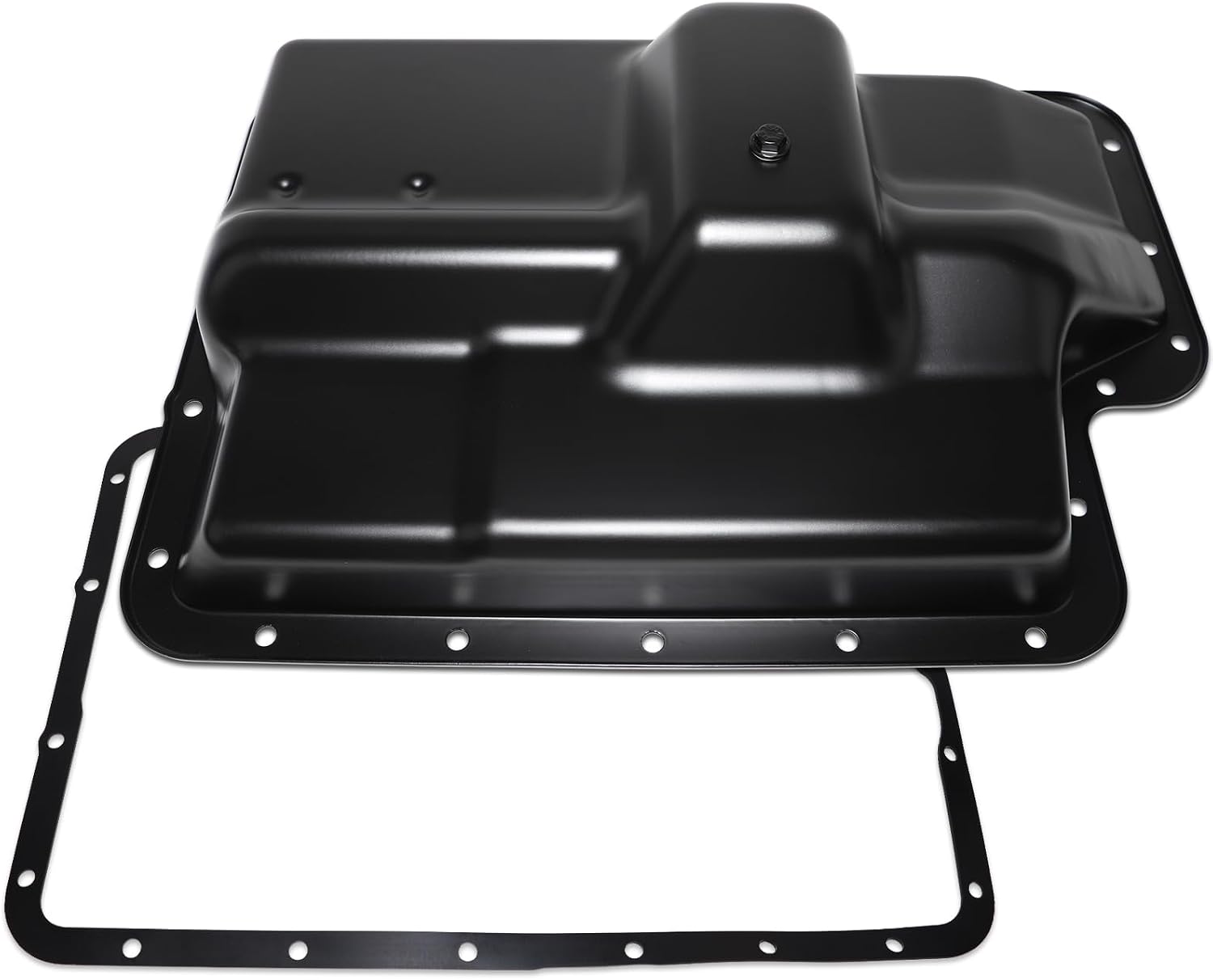

The spec, straight from ATSG
Final assembly, bottom pan components: install a new pan gasket on the case surface, set the pan on top of it, install all twenty (20) pan bolts, and torque all bottom pan bolts to 14-16 N·m (10-12 ft-lb). That is the complete instruction as written. No sealant is called for, no re-torque step, no break-in period. The gasket does the sealing; the bolts just hold even, light clamp load across the flange.
Converted to the units most torque wrenches actually print, 14-16 N·m works out to about 124-142 in-lb. If your wrench only reads in ft-lb and clicks in whole-number increments, set it to 11 ft-lb and call it centered. A 3/8-inch drive click-type wrench is the right tool for this; a 1/2-inch wrench calibrated for suspension and engine work is harder to read accurately this low on its scale, and a cordless impact driver has no place anywhere near this bolt pattern.
Independent confirmation on the same 20-bolt pattern: BD Diesel's install sheet for its heavy-duty replacement E4OD/4R100/5R110 pan (P/N 1061716) specs the pan bolts at 9 ft-lb, the drain plug at 20 ft-lb, and the sensor plug at 12-15 ft-lb, torqued in the same criss-cross pattern. That is a hair under ATSG's 10-12 ft-lb window, which is normal spread between an OE-style stamped pan and a thicker aftermarket aluminum one — the clamp target is the same light load either way, not a harder spec for the heavier pan.
Everything else you'll torque on the same job
The pan rarely comes off by itself. Here is every other fastener ATSG specifies that you are likely to touch during a pan service, a filter change, a cooler bypass valve job, or a deeper teardown on the same unit, with the bolt count and the manual's own wording for each:
| Fastener | Qty | Torque |
|---|---|---|
| Pan-to-case bolts | 20 | 14-16 N·m (10-12 ft-lb) |
| Transmission Range (DTR) sensor retaining bolts | 2 | 8-10 N·m (71-88 in-lb) |
| Turbine shaft speed sensor bolt | 1 | 8-10 N·m (71-88 in-lb) |
| Output shaft speed sensor bolt | 1 | 8-10 N·m (71-81 in-lb) |
| Cooler line case fitting, front ("to cooler") | 1 | 30 N·m (22 ft-lb) |
| Cooler line case fitting, rear ("from cooler") | 1 | 36 N·m (27 ft-lb) |
| Valve body and solenoid body bolts and nuts (all) | 26 total | 9-11 N·m (80-100 in-lb) |
| Oil pump cover-to-body bolts | 12 | 24-31 N·m (18-23 ft-lb) |
| Extension housing-to-case bolts | 9 | 41-54 N·m (30-40 ft-lb) |
| Center support feed bolts (new bolts required) | 2 | 11-16 N·m (8-12 ft-lb) |
| Overdrive clutch cylinder feed bolt (new bolt required) | 1 | 8-14 N·m (6-10 ft-lb) |
| Parking rod guide plate retaining bolts | 2 | 16-27 N·m (12-20 ft-lb) |
The valve body figure covers all three sections at once: the eleven accumulator body bolts and two nuts, the fourteen main valve body bolts and two nuts, and the nine solenoid body bolts and one nut all get the same 9-11 N·m. If you pull the valve body while the pan is down to inspect or swap a solenoid pack, that is the number for every bolt you touch, not just the big ones.
The filter has no torque spec, because it has no screws
People look for a filter screw torque and never find one, because the 4R100's internal filter is not bolted on. ATSG's instruction is to lubricate the seal on the new filter with a small amount of Trans-Jel and push it into the bore in the oil pump. It is a seated push-fit, not a fastened part. The thing to check is that the old seal actually came out of the bore with the old filter; if it stays behind and the new filter seats on top of it, the filter does not fully engage and the pump can draw air, which shows up later as noise or delayed engagement that looks unrelated to the pan job you just did.
Why over-torquing is the real risk, not under-torquing
14-16 N·m is light enough that it is almost impossible to leave a pan bolt dangerously loose with a torque wrench in hand. The failure mode that actually happens in the field is the opposite one: a bolt gets run past spec, usually with an impact driver or a beam wrench nobody zeroed, and the stamped pan flange bows inward around that hole instead of clamping flat against the gasket. Do that to three or four bolts around the pan and you get a gasket that is crushed flat in some spots and barely touched in others — and a leak that shows up exactly at the barely-touched spots.
ATSG does not spell out a warping warning on the pan bolts specifically, but it gives the identical warning for the case's feed bolts a few pages later in the same final-assembly section: overtightening the feed bolts will cause the case to warp, and result in transmission failure. That is a caution about aluminum case material reacting to excess clamp load, and a stamped steel pan flange fails the same way at a smaller scale — it just bends instead of cracking. The fix for a bowed pan flange is not more torque. It is pulling the pan, checking the flange against a straightedge, tapping out the bow or replacing the pan outright, and starting over with a new gasket at the correct spec.
This matters more on the 4R100 than on a lot of other transmissions because of what sits downstream of a sloppy pan reseal. Sonnax's technical literature on this platform notes that the 4R100 runs a modulated torque converter clutch, which makes the cooler and lube circuit more sensitive to restriction and contamination than the older on-off E4OD. Transmission Digest's reporting on the cooler bypass valve on this same unit ties a restricted or leaking circuit to TCC slip, soft apply, and overheating complaints. None of that is caused directly by a pan bolt, but a shop that treats a $0 torque wrench setting as optional is usually the same shop skipping the rest of the fine print on this unit too. Get the easy number right.
The install sequence that actually prevents the comeback
- Clean both surfaces fully. Old gasket material or RTV residue left on the case or pan rail is the single biggest reason a correctly-torqued pan still leaks. Scrape it to bare metal, not just the high spots.
- Check the pan flange flat before it goes back on, especially if the old one has been off before or the truck has any history of running the pan into a rock, curb, or trail obstacle. A bowed flange will never seal evenly no matter what you torque it to.
- Seat the new filter first, lubricated per ATSG, confirming the old seal came out with the old filter.
- Set the new gasket dry on the case surface unless the gasket manufacturer specifically calls for an adhesive, and hold it in place with two or three bolts started by hand before the pan goes up.
- Install all twenty bolts finger-tight first, then bring them up in a criss-cross pattern — opposite corners, not around the perimeter — so the gasket compresses evenly instead of squeezing toward whichever bolt was tightened last. ATSG specifies this exact pattern for the pump cover bolts elsewhere in the same manual, and it is standard practice on any multi-bolt flange this size.
- Torque to 14-16 N·m (10-12 ft-lb) on the final pass, then run the pattern a second time at the same setting. Bolts near ones you just tightened will have lost a small amount of preload; the second pass catches that.
- Fill and set the level hot on the dipstick, not by counting quarts, before you call the job done. Our 4R100 fluid change cost guide covers capacity and the MERCON V fluid call-out in detail.
Need parts for this job?
Our parts shop has the 4R100 deep-pan filter and gasket kit, Motorcraft MERCON V by the case, and replacement 4WD pans for flanges too bent to save, plus valve bodies and solenoid packs for the jobs that go deeper than a pan service. Checkout is on site.
Shop the part for this fix: 4R100 filter and pan gasket kit
The 4R100 4WD transmission filter and pan gasket kit (OEM F6TZ-7A098-BB style), the exact kit this torque spec applies to every time the pan comes off. More 4R100 hard parts, including replacement pans, are at CoreTransmissionParts.
See the filter and gasket kit at CoreTransmissionPartsFAQ
What is the torque spec for the 4R100 pan bolts?
The ATSG 4R100 manual specifies 14-16 N·m (10-12 ft-lb) for all 20 pan-to-case bolts. That is roughly 120-190 in-lb, light enough that most 3/8-inch click or beam torque wrenches read the low end of their scale. Use a crisscross pattern and do not substitute a cordless impact driver.
How many bolts hold on the 4R100 pan?
Twenty. The ATSG manual's final assembly section lists the bottom pan as retained by twenty pan bolts installed over a new pan gasket, torqued as a set to 14-16 N·m (10-12 ft-lb) in a criss-cross pattern.
What happens if you over-torque the 4R100 pan bolts?
The stamped pan flange bows between the bolt holes and the gasket crushes unevenly, so the pan leaks at the low points even though every bolt is tight. ATSG gives the same warning for the case's feed bolts elsewhere in the manual: overtightening warps aluminum components and causes failure. Retorquing an already-warped pan does not fix it; the pan has to come off and be checked flat, or replaced.
What torque pattern does the 4R100 pan use?
ATSG calls for a criss-cross pattern on every multi-bolt flange in this transmission, including the oil pump cover bolts, and the same practice applies to the pan: snug all 20 bolts by hand first, then bring them to 14-16 N·m working corner-to-corner rather than around the perimeter, so the gasket compresses evenly instead of bowing toward whichever bolt went in last.
Do you need new bolts when reinstalling the 4R100 pan?
No, the pan bolts themselves are reusable if they are not stretched, corroded or stripped. ATSG does call out two unrelated fasteners in the same final-assembly sequence that must be new every time: the center support feed bolts and the overdrive clutch cylinder feed bolt. Those are a different job than a routine pan service, but if you are doing both at once, do not reuse those two.
Related guides
- 4R100 Fluid Change Cost: What a Real Service Takes
- 4R100 Valve Body Problems: Symptoms and Testing
- 4R100 Valve Body Wear: Symptoms and the Bench Fix
- Ford 4R100 Common Problems, Service Tips and Rebuild Considerations
- 4R100 Identification Guide
Sources
- ATSG (Automatic Transmission Service Group), Ford 4R100 technical service manual (2003). Backs the 20 pan-to-case bolts torqued to 14-16 N·m (10-12 ft-lb) in a criss-cross pattern, the push-fit filter with no attaching screws, the valve body/solenoid body bolt and nut spec of 9-11 N·m (80-100 in-lb), the oil pump cover bolts at 24-31 N·m (18-23 ft-lb), the extension housing bolts at 41-54 N·m (30-40 ft-lb), the DTR and speed sensor bolts at 8-10 N·m, the cooler line fitting torques of 30 N·m front and 36 N·m rear, the center support and overdrive clutch cylinder feed bolts with their new-bolt requirement, and the case-warping caution on overtightened feed bolts. ATSG manual (PDF)
- Sonnax, "4R100: Repeated Converter Failure." Backs the 4R100's modulated torque converter clutch design making the cooler and lube circuit more sensitive to restriction than the on-off E4OD, and the related converter overheat and high line pressure complaints on this platform. sonnax.com
- Sonnax, "Cooler Bypass Valve Kit 36605-02K." Backs the 4R100/E4OD cooler bypass valve's failure pattern and its tie to TCC slip, soft apply and overheating when the circuit is restricted or the bypass opens early. sonnax.com
- Mike Steen, Transmission Digest, "Cooler Bypass." Backs the cooler bypass valve's role in the 4R100's cooler circuit and the overheating and TCC symptoms tied to a restricted or malfunctioning bypass. transmissiondigest.com
- BD Diesel, Installation Instructions for P/N 1061716 Ford E4OD/4R100/5R110 Heavy Duty Transmission Pan (I-00244), May 2024. Backs the independent 9 ft-lb pan bolt, 20 ft-lb drain plug and 12-15 ft-lb sensor plug torque figures on the same 20-bolt criss-cross pattern, used here to cross-check the ATSG spec. BD Diesel install sheet (PDF)