From 1996 through the end of the 2004 model year, the 4R70W was the automatic in the SN95 and New Edge Mustang, behind the V6 (3.8L, then 3.9L in 2004) and the 4.6L V8 in the GT and the 2003-2004 Mach 1. The 2005 S197 moved to a five-speed. That makes every 4R70W Mustang at least 22 years old now. A lot of them have had gears, converters, tunes or power adders added, and some have been through two or three transmissions already. If you have read our F-150 4R70W problems guide, the hardware is the same. What changes in a Mustang is how the car is driven and modified, and that changes which failures show up first and which "transmission problems" are really something else.
This guide runs in the order I would check a Mustang that comes in with a shift complaint. Sensor and wiring faults that feel like slipping come first, then the valve body wear that burns clutches, then the hard parts that break when a car makes more power than the unit was built for. Every bulletin and tech article referenced here is linked in the Sources section at the bottom.
Quick map: Mustang 4R70W problems by symptom
| Symptom | Most likely cause | Where to look first |
|---|---|---|
| Drops to 1st or "neutral" on the 2-3 shift, only when hot, no codes | Intermittent output shaft speed (OSS) signal | OSS sensor, pigtail and connector, scope the signal hot |
| No speedometer or slow speedometer after a swap or rebuild, P0720-P0722 | 2003-and-earlier vs 2004-up OSS ring gear and sensor mismatch | Rear ring gear style and OSS sensor part number |
| Starts in a high gear, several solenoid codes after a rebuild | Bad aftermarket case connector or internal harness | Case connector terminals, hard wire frame |
| Slips at medium to full throttle, slides shifts, no line rise | Pressure regulator valve and bore wear | Gauge on line pressure, compressed air test |
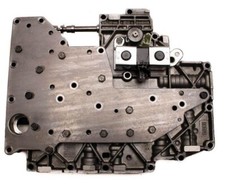
| Bind-up feel, burned direct clutch, cracked separator plate | 2001-up forward-to-direct cross leak | Separator plate under the 2-3 accumulator |
| 4-3-neutral, no 4th, burned overdrive band | Worn overdrive servo regulator sleeve | Valve body, servo pin bore |
| Shudder on lockup, lugging, converter codes | Bypass clutch control valve and sleeve wear | Valve body, converter |
| No forward or no 3rd after hard launches or a power adder | Broken forward drum, stripped direct drum or stub shaft | Teardown |
The hot-car "slip" that is really a speed sensor
When a Mustang comes in with an intermittent shift complaint and no codes, the speed sensor circuit is the first thing I suspect. Transmission Digest ran a case from L J Porter at Certified Transmission on a 1994 Mustang GT with the AODE, the 4R70W's direct predecessor with the same electronic shift logic. After a reman unit went in, the car lost 3rd gear once it got hot: it would shift 1-2, then drop back to first on the 2-3 command. The warranty teardown found nothing. The shop checked the MLPS and TPS and even replaced the PCM. A scope on the OSS circuit during a long hot drive finally caught the signal going open at the exact moment the shift was lost. The sensor had been damaged during teardown and the replacement was not a genuine Ford part.
The PCM calculates vehicle speed from the OSS signal and schedules shifts from that number. If the signal drops out, the PCM thinks the car slowed down and commands a downshift that feels like a slip. Scope the OSS signal under the conditions that cause the complaint, check the pigtail and conduit for oil-soaked or chafed wiring, and use a quality sensor.
No speedometer or slow speedometer after a swap
Swapping transmissions between Mustang years is common, and the 2004 model year is a trap. Per the March 2010 Transmission Digest bulletin summary, Ford changed how this family triggers the OSS sensor at the start of 2004 production. The 2004-up rear ring gear uses extended parking lugs. The 2003-and-earlier ring gear has holes. The PCM strategy changed with it. If a pre-2004 transmission, or a 2004-up unit with an early ring gear, goes into a 2004-up car, the PCM cannot calculate vehicle speed correctly. You get no speedometer or a slow one, and P0720-P0722 may set.
The sensors are different too. The 2004-up sensor has a white body and black connector and is 0.083 in. shorter than the all-black 2003-and-earlier sensor. The bulletin lists 1L3Z-7H103-AB for 2001-2003 and 3L3Z-7H103-AA for 2004. On a 2004 Mustang, make sure the ring gear and sensor match the car, not the core the unit came from. Our 4R70W P0720 guide covers the rest of the OSS circuit diagnosis.
One more Mustang-specific note. If the car has a rear gear swap, the PCM also needs the new axle ratio and tire size. With the factory numbers still in the calibration, both the speedometer and the shift points will be off. That gets blamed on the transmission all the time, and it is a programming job, not a rebuild.
Solenoid codes and a high-gear start after a rebuild
Transmission Digest's Wayne Colonna documented a 4R70W that started in a higher gear and set several solenoid codes right after an overhaul that replaced the hard wire frame and case connector. Two terminals in the aftermarket connector were pushed back, one of them the 12-volt solenoid supply. Ford hard wire frame F8AZ-7G276-BA and connector F8AZ-7G276-A fixed it. New solenoid codes after a rebuild mean check the connector first.
Pressure regulator bore wear: slipping under throttle
A Mustang that slides its shifts and slips at medium to full throttle, especially hot, often has low line pressure, not worn-out clutches. Transmission Digest explained why: EPC pressure reaches the pressure regulator valve right next to a boost circuit that returns to the pump inlet. When the bore wears between them, the pump sucks EPC pressure away and there is little or no line rise. Replacing the EPC solenoid does not fix it.
The quick check: pan and filter off, blow compressed air into the TV pressure port. Air and fluid around the EPC solenoid is normal. Air and fluid out of the filter opening means bore wear. Mild wear can go unnoticed while it quietly wears out the forward clutch. Sonnax's Brian Wing notes the valve commonly scores on the EPC end, so the bore gets vacuum tested and reamed for an oversize valve, or the valve body gets replaced.
In the car, put a gauge on the line pressure tap and watch the scan tool's commanded EPC next to actual line pressure while you load the engine. If EPC commands a rise and the gauge does not follow, fix the regulator circuit before you condemn clutches.
2001-2004 Mustangs: the forward-to-direct cross leak
If your Mustang is a 2001 through 2004 and it has a burned direct clutch, this is the section that matters most. Sonnax's Gregg Nader documented that starting with the 2001 models, Ford deleted the two-bolt stiffener plate that clamped the separator plate under the 2-3 accumulator. Without it, forward clutch oil pushes the separator plate up. Nader measured up to .011 in. of bow under normal forward pressure. Forward oil then leaks into the direct clutch circuit and drags the direct clutch in 1st and 2nd.
On the bench you find a cracked separator plate near the 2-3 accumulator and a burned direct pack. In the car it feels like a bind-up. The fix is to clamp the plate again, either by drilling and tapping the valve body for an early-style plate or with the Sonnax retainer plate kit, 76507F-01K. On a 2001-2004 car that is open for clutch work, I do not put the valve body back without it. A Mustang driver who launches hard puts more apply pressure on that forward circuit than a commuter car, which only makes the leak worse.
Overdrive trouble: 4-3-neutral, no 4th, burned band
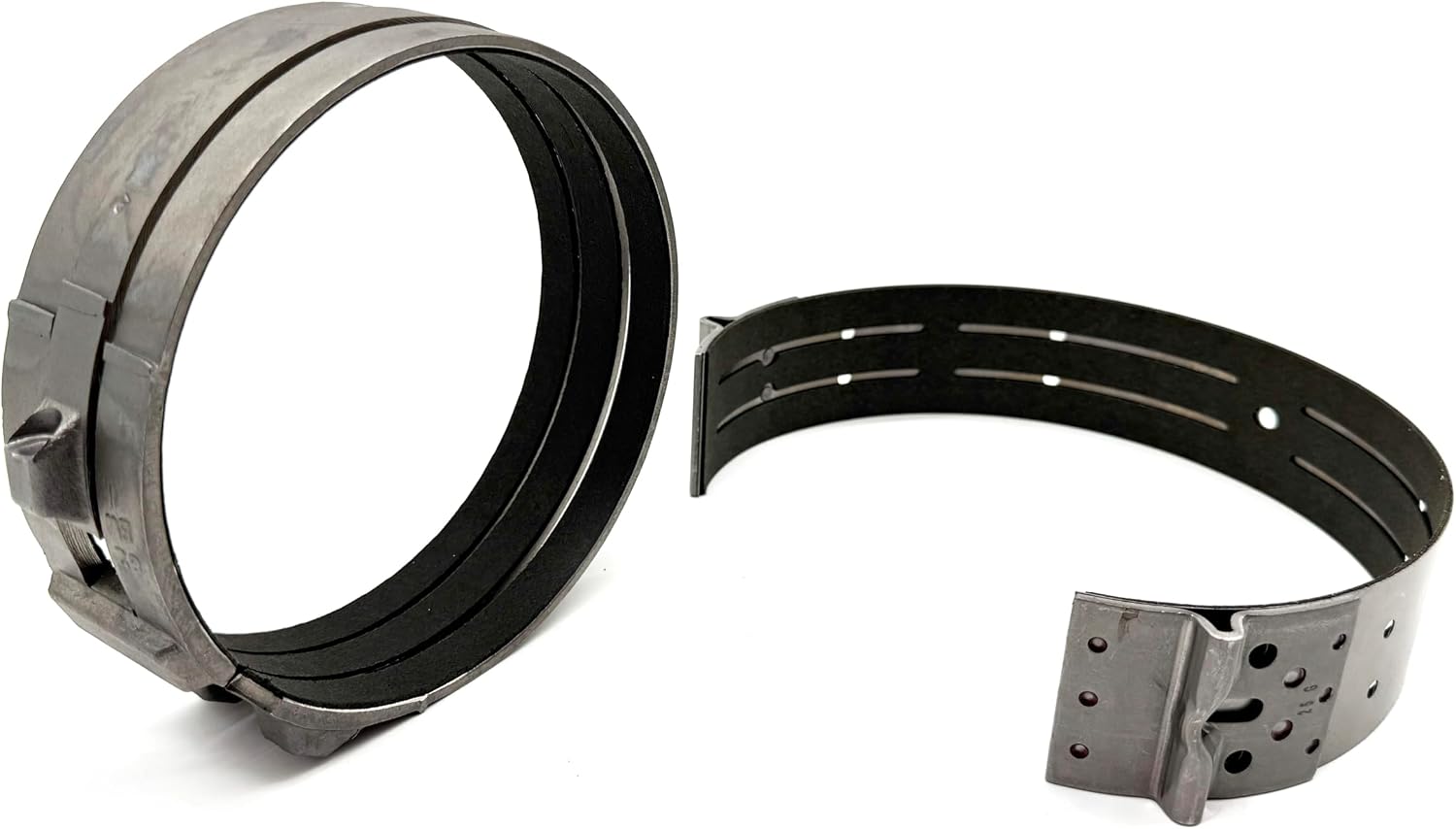
Sonnax lists three symptoms for its overdrive servo regulator kit, 76948-29K: a 4-3-neutral shift pattern, loss of 4th gear, and a burned overdrive band. The cause is wear inside the overdrive servo regulator boost valve sleeve. The valve oscillates constantly, wears its sleeve, and the leak lets servo apply oil escape so the band is not held properly. A new band alone buys time. If the sleeve still leaks, the replacement band burns the same way. While the unit is apart, also check the overdrive servo pin bore in the case for wear. If your car will not go into 4th at all, our no-overdrive guide walks through the electrical side too.
Converter clutch shudder and lugging
Sonnax's Tory Royce writes that TCC shudder, delayed lockup, no lockup and converter codes are common across the AODE and 4R70W family, and often trace to wear at the bypass clutch control plunger valve and sleeve. Kit 76948-04K uses a single .030 in. orifice for firmer lockup. Kit 76948-64K uses four .063 in. orifices to match the OE sleeve, because on '96-later units engine lugging and harsh TCC apply can occur if the OE calibration is not kept. On a stock-converter street Mustang I use the OE-matching kit. More on diagnosis in our 4R70W converter shudder guide.
When the power goes up: drums and the stub shaft
The hard-part failures are where Mustangs really differ from trucks. A modified GT or Mach 1 that sees drag launches or a supercharger puts torque spikes through the forward and direct drums that the stock parts were never sized for. Sonnax describes chronic forward clutch drum breakage in the AOD, AODE and 4R70W, and makes its Smart-Tech forward drum 76654-01K, plus a high-capacity version, 76655-01K, with about 20% more clutch capacity.
On the direct side, Sonnax says the OE direct drum and intermediate stub shaft have two weak points: drum splines that strip and shafts that break. Its one-piece drum and shaft kit for 2.84/1.55 ratio 4R70W gear sets, 76656-01K, has a shaft 50% thicker than the best 300M shafts and room for one extra friction. If you are rebuilding a stock-power car, a careful stock build is fine. If the car makes real power, budget for these parts before the first failure, not after.
How I triage a Mustang 4R70W
- Ask what has been changed: gears, tires, converter, tune, power adder, and whether the transmission is original. On a 2004, find out what year the unit came from.
- Codes: P0720-P0722 or a speedometer fault points at OSS or a ring gear mismatch. Several solenoid codes at once points at power feed or the case connector.
- Fluid, hot and level: Mercon V only. Motorcraft says not to use MERCON V where LV, ULV, SP or Type F is specified, and the reverse holds too. Ford's 2002 Mustang owner guide lists about 13.1 L (13.9 qt) dry fill behind the 3.8L and 12.0 L (12.8 qt) behind the 4.6L, and says to read the stick at 150-170 F after roughly 20 miles, because an overfill can cause shift and engagement concerns of its own.
- Road test with data: log TSS, OSS, commanded gear, EPC and TFT. A ratio that does not match the commanded gear shows which element slips. An OSS value that drops out while moving is a sensor or wiring fault.
- Gauge on line pressure: confirm line rise follows EPC before blaming clutches.
- If it comes apart: retainer plate on 2001-2004, overdrive servo regulator sleeve, vacuum test the PR and bypass bores, inspect drums and stub shaft, match the OSS ring gear and sensor to the car.
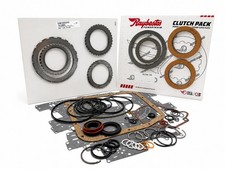
4R70W master rebuild kit, 1998-2003 with filter
When the direct clutch or overdrive band is already burned in a 1998-2003 Mustang, this kit covers the frictions, steels, seals, gaskets and filter for the rebuild. Pair it with the valve body fixes above so the new clutches last. Sold by our sister store, CoreTransmissionParts.
Shop the part for this fix →Need a 2004 kit, Sonnax valve body parts, drums or a Mustang filter? The 4R70W parts collection has the full range.
Need parts for this job?
4R70W master rebuild kits, valve bodies, the Sonnax retainer plate kit, band sets, solenoid kits and filter kits are all on our 4R70W parts page, with checkout on site.
FAQ
What are the most common 4R70W problems in a Mustang?
On 2001-2004 cars the biggest internal problem is the forward-to-direct clutch cross leak under the 2-3 accumulator, which burns the direct clutch. Close behind are overdrive servo regulator wear (4-3-neutral, no 4th, burned band), pressure regulator bore wear that causes slipping under throttle, and converter clutch shudder. Modified cars also break forward drums, direct drums and stub shafts, and a lot of Mustangs come in with speed sensor faults that only feel like slipping.
Why does my Mustang lose a gear or feel like it slips only when it gets hot?
Check the output shaft speed sensor circuit before condemning the transmission. The PCM calculates vehicle speed from the OSS signal, so a signal that drops out when hot makes the PCM command a downshift that feels like a slip. Transmission Digest documented a Mustang GT that lost its 2-3 shift only when hot, and a scope finally caught the OSS signal going open.
Why is my speedometer dead or slow after swapping a 4R70W into my 2004 Mustang?
Starting with 2004 production, Ford switched to a rear ring gear with extended parking lugs to trigger the OSS sensor, plus a shorter sensor and a new PCM strategy. A pre-2004 transmission, or one with an early ring gear, in a 2004-up car gives no or slow speedometer readings and may set P0720-P0722. Match the ring gear and sensor to the car.
What fluid does a 4R70W Mustang take?
Mercon V. Ford's Motorcraft data recommends MERCON V for vehicles that call for MERCON V or MERCON, and says not to use it where MERCON LV, ULV, SP or Type F is specified. Use a fluid that actually carries Ford's Mercon V approval.
Related guides
- Ford 4R70W and 4R75W Problems: Cross-Leaks, Servo Bore Wear and Fixes
- 4R70W F150 Common Problems and Fixes
- 4R70W P0720 Fix
- 4R70W Slipping: Causes and Fix
- AODE vs 4R70W Differences
Sources
- Transmission Digest — L J Porter, "Transmission Slipping: Inconsistent Third Gear Issues," R&R Tech, September 2026. Backs the 1994 Mustang GT AODE case: loss of the 2-3 shift and fallback to first only when hot, no codes, the PCM replacement, and the scoped OSS signal dropout traced to a damaged sensor and a non-Ford replacement. transmissiondigest.com
- Transmission Digest — March 2010 issue summary, 4R70W/4R70E/4R75E no or slow speedometer after overhaul or exchange. Backs the 2004 change to extended parking lugs on the rear ring gear, the PCM strategy change, DTCs P0720-P0722, the PCM calculating vehicle speed from OSS, the 0.083 in. sensor length difference, and parts 1L3Z-7H103-AB and 3L3Z-7H103-AA. transmissiondigest.com
- Transmission Digest — Wayne Colonna, "Ford 4R70W solenoid codes set" (January 2023) and "I Lost My EPC!" (April 2004). Back the aftermarket case connector with pushed-back terminals, the high-gear start, Ford parts F8AZ-7G276-BA and F8AZ-7G276-A, the pressure regulator bore wear that bleeds EPC pressure to the pump inlet, and the compressed air test at the TV port. solenoid codes · I Lost My EPC
- Sonnax — Gregg Nader, "4R70W, 4R75W 2001-Later Forward & Direct Clutch Problems: The Easy Valve Body Fix"; Overdrive Servo Regulator Kit 76948-29K; Brian Wing, "Watch Out for 4R70W Pressure Regulator Valve & Casting Wear." Back the deleted stiffener plate, the .011 in. separator plate bow and retainer plate kit 76507F-01K, the 4-3-neutral, no 4th and burned band symptoms of sleeve wear, and the EPC-end PR valve scoring and oversize valve repair. cross leak · 76948-29K · PR valve wear
- Sonnax — Tory Royce, "AODE, 4R70W Series Bypass Clutch Control Valve Repair Options" (December 2023); "Stop 4R70W Forward Drum Failure with a Sonnax Smart-Tech Drum"; "Stop Chasing AODE, 4R70W Direct Clutch Drum Problems." Back the TCC shudder and lugging causes, kits 76948-04K and 76948-64K and their orifice sizes, forward drum breakage and drums 76654-01K and 76655-01K, and the direct drum and stub shaft kit 76656-01K for 2.84/1.55 gear sets. TCC valve · forward drum · direct drum
- Ford Customer Service Division (Motorcraft) — MERCON V Automatic Transmission and Power Steering Fluid product details. Backs Ford's recommendation of MERCON V for vehicles that require MERCON V or MERCON, and the warning not to use it where MERCON SP, LV, ULV or Type F is specified. fcsdchemicalsandlubricants.com
- Ford Motor Company — 2002 Mustang Owner Guide, Maintenance and Specifications. Backs Motorcraft MERCON V for the automatic, approximate dry-fill capacities of 13.1 L (13.9 qt) with the 3.8L and 12.0 L (12.8 qt) with the 4.6L, the 150-170 F hot check after about 20 miles, and the overfill warning. Ford's host blocks direct access, so this links the Internet Archive copy. web.archive.org (PDF)