The 4R75W gets treated like a slightly beefier 4R70W and left at that, which is fair as far as it goes but not far enough for a high-mileage inspection. Ford built the 4R75W specifically to handle more torque than the 4R70W it sits alongside, which means the wear patterns that show up on a tired unit aren't identical to its lighter sibling's. Some failure points are shared across the whole 4R70W/4R75W/AODE family because they share a valve body design. Others are specific to how hard the 4R75W gets worked in the trucks and vans it was built for.
This checklist pulls from Sonnax's own technical documentation on the shared valve body wear points, and from a real teardown ATRA's trade publication documented on a high-mileage 4R75W-era unit, all cited at the bottom. It's written for the inspection you do when a unit has real miles on it: a pre-purchase check, a comeback diagnosis, or a teardown you're deciding whether to rebuild.
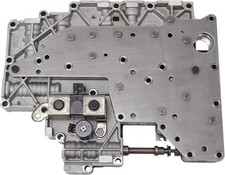
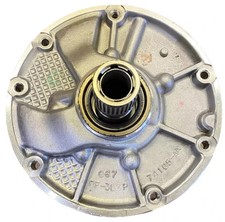
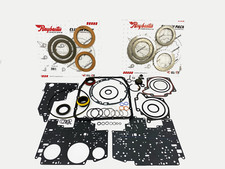
What makes the 4R75W different from the 4R70W it sits next to
Ford introduced the 4R75W for 2003 as a stronger alternative to the 4R70W, not a different gearset. Gear ratios are identical between the two units. What changed, per F150Hub's technical reference on the unit, is a strengthened planetary ring gear, a revised front pump design, and a stronger torque converter. From the 2004 model year, Ford ran the 4R75W exclusively behind the 5.4L V8 in F-Series trucks while the lighter 4.6L V8 continued with the 4R70W. Third-party spec sites put the 4R75W's torque capacity at roughly 553 lb-ft versus about 516 lb-ft for the 4R70W — Ford doesn't publish a single clean figure for either, and the "75" in the name is a nominal rating tied to its design torque in Newton-meters, not a measured number you'll find on a dyno sheet.
The practical takeaway for an inspection: the 4R75W's case, valve body, and clutch pack design are close enough to the 4R70W's that most Sonnax wear-point documentation for the family applies directly. But because the 4R75W spent its life behind higher-torque trucks and vans that tow and haul, the clutch and shaft wear you find on a high-mileage unit tends to run harder than what shows up on a 4R70W that spent its life in a Mustang or Crown Victoria.
The main pressure regulator valve and bore
This is the complaint I see most across the whole 4R70W/4R75W/AODE family: soft shifts, low line rise, a throttle-sensitive buzz, and clutches or bands that fail early because they're not getting full apply pressure. Sonnax's own write-up on this wear point is specific — the EPC end of the pressure regulator (PR) valve scores badly enough to be visible, and once the valve shows that kind of wear, the bore underneath it has usually been compromised too. A worn casting won't seal against a new valve, so dropping in a fresh PR valve by itself is often a wasted part.
Sonnax lists part 76948-09 as the main PR valve for '96-and-later 4R70E/4R70W/4R75E/4R75W/AODE units. If the bore is worn, the fix is the oversized kit 76948-17K, which pairs a reamed bore with an oversized valve rather than a straight swap. Vacuum test the bore first to confirm wear before you commit to reaming — Sonnax's own instructions describe building a simple test fixture from an old reverse boost sleeve and a vacuum gauge for exactly this check.
The solenoid regulator bore: the one that gets missed
The solenoid regulator valve has one job: keep the shift solenoids from seeing more pressure than they can exhaust. It's a different bore from the main PR valve, and it wears for the same reason most valve body bores wear — the valve oscillates against the casting every time the transmission shifts, for hundreds of thousands of cycles. Sonnax's instruction sheet for its solenoid regulator valve kit describes this bore wear as a common problem that lets working pressure drop too low, and the symptoms it lists are worth memorizing: no 2nd gear, no 3rd gear, erratic shifting, a shift to neutral after 4th, or a 2-3 neutral.
If a 4R75W comes in missing a gear or two with no other obvious cause, this bore is worth checking before you assume a solenoid is bad. Sonnax's standard fix is kit 76948-14K, a hardcoat-anodized valve, spring, end plug and O-rings, installed with the companion 76948-BST2 bore sizing tool to get the fit tight. If the bore is worn past what the standard valve can correct, Sonnax's oversized kit 76948-47K reconditions the bore itself rather than just swapping the valve. Either way, don't skip the bore sizing tool — fitting this valve to a worn bore without resizing it just buys you a few thousand more miles before the same complaint comes back.
The overdrive servo regulator boost valve sleeve
If the complaint is a burnt overdrive band, loss of 4th gear, or a 4-3-neutral shift pattern, check the overdrive servo regulator circuit before you touch the band. Sonnax's product documentation on this wear point points to the inside diameter of the overdrive servo regulator boost valve sleeve, worn by the constant oscillation the valve sees in normal operation. Once that sleeve wears, overdrive oil leaks past it, the servo can't hold the pressure it's supposed to, and the band takes damage every time the transmission tries to make or hold 4th gear.
Sonnax's kit for this is 76948-29K, listed for 2001-and-later 4R70E/4R70W/4R75E/4R75W units. This is a wear point that's easy to miss on a visual inspection because the sleeve looks fine until you check it against spec — which is exactly why a burnt OD band on a unit with otherwise clean fluid deserves a second look at this circuit instead of a reflex band replacement.
What heavy use actually does to this unit: a real case study
ATRA's trade publication, GEARS, ran a case study that's a useful stand-in for what happens when a 4R70W/4R75W-family unit runs well past a reasonable service interval under sustained load. The vehicle was a 2014 Ford Econoline E-250 bus in fleet service on a 50,000-mile service interval, running "nearly around the clock." When it finally came in, the pan held a significant amount of metal.
Teardown found the intermediate shaft worn and damaged, the snub shaft on the output shaft damaged, the direct drum burnt, and the direct clutch assembly destroyed by heat. The valve body showed the same pressure regulator valve bore wear covered above, plus flooding solenoids, weakened shift valve springs, and leaking plugs. The article notes some technicians shorten the intermediate and snub shafts on a lathe to work around the wear, but flags that approach as a potential source of its own clearance problems rather than a real fix.
The lesson for a 4R75W inspection isn't that this specific failure is common on a normally driven truck — it's what sustained high-load use looks like once it outruns the service interval. If you're inspecting a 4R75W that's spent its life towing, in commercial service, or on a long interval between fluid changes, pull the pan and check the magnet for exactly this kind of metal before you assume a simple fluid service will fix a shift complaint.
The rear planetary carrier bearing
On any high-mileage 4R75W that is open, the main Ravigneaux carrier gets inspected before it goes back in. Beau Hansen of ETE Reman, writing in Transmission Digest, notes this carrier has a long failure history that is worst on 2004 to 2008 vehicles. The small bushing in the carrier snout wears under the weight of the gear set, which overloads the captured needle bearing until its collar retainer splits or the top race cracks. Once the pieces get into the pinions, the gear set is scrap. Check the collar for splits, spin every long and short pinion for drag, and look for a wallowed-out bearing pocket. On 1993-2008 carriers with good gears, Hansen points to the .199 in. Sonnax 77747-01 bearing as a preventive replacement.
Ford treats the same failure as a known issue. Its bulletin for 2008-2010 F-150 and E-Series 4R75E units (summarized by Mitchell 1 via Vehicle Service Pros) ties grinding or whine, vibration, slipping and loss of reverse to planetary failure, has you confirm it with a magnet on the pan, and supplies planetary upgrade kit AL3Z-7A398-C. It also calls for a cooler back-flush, and a converter replacement if TCC codes P0741, P1741, P1742 or P1743 were set. If you see bearing needles on the magnet during a "service," the service is over.
Putting the checklist together
- Fluid and filter, and the magnet. Pull the pan and check the magnet for metal, not just the fluid color. Heavy metal on the magnet points toward shaft, drum, or clutch wear, not a simple service. See our 4R75W fluid type and capacity guide for the correct fluid and fill procedure.
- Main pressure regulator valve and bore. Soft shifts, low line rise, or throttle buzz point here. Vacuum test the bore before replacing just the valve.
- Solenoid regulator bore. Missing 2nd or 3rd, erratic shifting, or neutral after 4th points to this bore, not necessarily a bad solenoid.
- Overdrive servo regulator sleeve. A burnt OD band or 4-3-neutral pattern points here, not automatically at the band itself.
- Intermediate shaft, output shaft snub, and direct clutch/drum. On units with heavy-duty or fleet history, pull these and check for wear and heat damage, especially if the pan showed metal.
- Converter and front pump. Check the converter hub for scoring where the front pump seal rides. A worn hub and a worn pump bushing tend to show up together as delayed engagement and slipping.
When a service stops being enough
None of the wear points above get fixed by another bottle of fluid. If a pan-and-filter service doesn't resolve a shift complaint, or if you find scoring, bore wear, or heat damage on inspection, you're past maintenance and into rebuild territory — reaming and sleeving the valve body where needed, replacing damaged shafts and clutch hardware, and rebuilding with updated parts rather than chasing one symptom at a time. A master rebuild kit that covers the valve body and clutch pack is the more honest fix at that point than a parts-cannon approach.
Quick reference
| Wear point | Symptom | Sonnax fix |
|---|---|---|
| Main pressure regulator valve/bore | Low line rise, soft shifts, throttle buzz | 76948-09 valve, oversized 76948-17K if bore is worn |
| Solenoid regulator bore | No 2nd/3rd, erratic shifting, neutral after 4th | 76948-14K with 76948-BST2 tool, oversized 76948-47K if bore is worn |
| Overdrive servo regulator sleeve | Burnt OD band, no 4th, 4-3-neutral | 76948-29K ('01+) |
| Intermediate/output shaft, direct clutch/drum | Heavy metal on magnet, burnt drum, heat-damaged clutch | Inspect and replace on teardown; common on sustained heavy-duty use |
4R75W Case Bushing Repair Kit
Addresses worn case bores and bushings on a high-mileage unit. Sold by our sister store, CoreTransmissionParts.
Shop the part for this fix →Need something else? The 4R75W parts collection has pumps, valve bodies, drums and full rebuild kits.
Need parts for this job?
Our 4R75W parts page has valve bodies, pumps, clutch drums and full rebuild kits, all with on-site checkout.
FAQ
What is actually different inside a 4R75W compared to a 4R70W?
Ford introduced the 4R75W in 2003 as a stronger version of the 4R70W, with a strengthened planetary ring gear, a revised front pump design, and a stronger torque converter. Gear ratios are identical between the two units. Third-party spec sites put the 4R75W's torque capacity at roughly 553 lb-ft versus about 516 lb-ft for the 4R70W, and from the 2004 model year the 5.4L V8 trucks used the 4R75W exclusively while the 4.6L V8 continued with the lighter 4R70W.
What causes low line pressure or soft shifts on a high-mileage 4R75W?
The most common cause Sonnax documents is wear on the EPC end of the main pressure regulator valve, which usually means the valve bore is worn too. A worn casting will not seal against a new valve, so the fix is a vacuum test of the bore followed by reaming and an oversized valve kit if the bore shows wear, not a straight valve swap.
What does a worn solenoid regulator bore do to a 4R75W?
The solenoid regulator valve keeps the shift solenoids from being flooded with more pressure than they can exhaust. When its bore wears, working pressure drops too low, and that can show up as no 2nd gear, no 3rd gear, erratic shifting, or a shift to neutral on a 3-4 or 4-3 change. Sonnax's fix is a standard-size valve kit with a bore sizing tool, or an oversized kit if the bore is worn beyond the standard valve's range.
Can a 4R75W burn up its direct clutch and drum from normal driving?
Not under normal conditions. ATRA's trade publication documented a 2014 Ford Econoline van run on a 50,000-mile service interval nearly around the clock that came in with a pan full of metal, a worn intermediate shaft, a damaged output shaft snub shaft, a burnt direct drum, and a direct clutch assembly destroyed by heat. That pattern points to sustained heavy-duty or fleet use outrunning the service interval, not a design flaw that shows up on a typically driven vehicle.
How do I know if my 4R75W needs a rebuild instead of another service?
If a fluid and filter service does not resolve soft shifts, low line rise, missing gears, or a burnt overdrive band, the wear is almost certainly inside the valve body bores or the clutch and shaft assemblies, none of which a fluid change touches. At that point you are looking at reaming and sleeving the valve body, replacing the direct clutch hardware, or a full rebuild kit with updated parts rather than another bottle of fluid.
Related guides
- 4R75W Fluid Type and Capacity
- 4R75W Pump Failure Symptoms and Replacement
- 4R75W Valve Body Problems: Symptoms, How to Test, and Replacement
- 4R75W TCC Lockup Explained and Diagnosis
- 4R75W vs 5R55W: Differences, Interchange & Which Is Stronger
Sources
- Sonnax, "Watch Out for 4R70W Pressure Regulator Valve & Casting Wear." Backs the EPC-end valve scoring, the bore-wear-follows-valve-wear point, the 76948-09 valve part number, the 76948-17K oversized kit, and the vacuum-test-then-ream recommendation for the 4R70E/4R70W/4R75E/4R75W/AODE family. sonnax.com
- Sonnax, Overdrive Servo Regulator Kit (76948-29K) product page. Backs the boost valve sleeve wear mechanism from constant oscillation, the burnt OD band/no 4th/4-3-neutral symptoms, and the 2001-and-later fitment across 4R70W, 4R70E, 4R75W and 4R75E. sonnax.com
- Sonnax, Installation Instructions for Solenoid Regulator Valve Kit 76948-14K. Backs the solenoid regulator bore wear mechanism, the no-2nd/no-3rd/erratic-shifting/neutral-after-4th symptoms, the 76948-BST2 bore sizing tool requirement, and the 76948-47K oversized alternative. Sonnax installation sheet (PDF, hosted via transend.us)
- GEARS Magazine (ATRA), "Heavy Metal!" (May 2021). Backs the 2014 Ford Econoline E-250 case study, the 50,000-mile fleet service interval, the pan metal, the intermediate shaft and output shaft snub shaft damage, the burnt direct drum and heat-destroyed direct clutch assembly, and the valve body findings of PR valve bore wear, flooding solenoids, weakened shift valve springs and leaking plugs. gearsmagazine.com
- F150Hub, Ford 4R75W / 4R75E Automatic Transmission reference page. Backs the 2003 introduction, the strengthened ring gear/revised pump/stronger torque converter changes from the 4R70W, the identical gear ratios, and the 2004-model-year exclusive use of the 4R75W behind the 5.4L V8. f150hub.com
- Transmission Digest — Beau Hansen (ETE Reman), "An Inexpensive Fix for the 4R70W," December 2019. Backs the carrier snout bushing wear, the split captured needle bearing failure, the 2004-2008 failure cluster, the inspection points, and Sonnax 77747-01 (.199 in.) for 1993-2008 carriers. transmissiondigest.com
- Ford service bulletin for 2008-2010 F-150 and E-Series 4R75E, via Mitchell 1 / Vehicle Service Pros, "Noisy Ford Transmission, Including F-150, Gets Service Kit." Backs the planetary failure symptoms, the pan magnet check, planetary upgrade kit AL3Z-7A398-C, the cooler back-flush and the converter rule for P0741/P1741/P1742/P1743. vehicleservicepros.com