The 4R75W is Ford's heavier-duty version of the 4R70W, built into F-150s, Expeditions, E-series vans and the Panther-platform cars (Crown Victoria, Grand Marquis, Town Car) starting in the mid-2000s. It shares the 4R70W's bypass-type converter clutch and most of the same valve body, so when one of these shudders under light acceleration, the list of suspects is short and well documented. The trick isn't finding a cause, it's finding the right one without replacing parts that were never broken.
This is a ranked causes list, cheapest and most common first, with the test that confirms or clears each one before you spend money on it.
The short version: Shudder on light acceleration between roughly 35 and 55 mph, in 3rd or 4th gear, that disappears the instant you tap the brake, is almost always the converter clutch slipping instead of locking cleanly [2]. Rule out misfire and driveline first [4], then do a full MERCON V exchange [5]. If it comes back, gauge the unit: low pressure during the shudder points at the bypass clutch control valve or pump wear [3], the single most common hydraulic cause on this family [1]. Normal pressure with fresh fluid and the shudder persists means the converter clutch itself.
First, Confirm It's Really the Converter Clutch
Before you chase the transmission, rule out the two impostors that feel almost identical from the driver's seat.
The brake tap test
Drive into the shudder, then touch the brake pedal just enough to light the brake lamps without slowing down. The brake switch tells the PCM to release the torque converter clutch. If the shudder stops the instant the clutch releases and returns when it reapplies, you're dealing with lockup, not something else [2].
Rule out misfire and mounts
A light-load misfire at 40-something mph with the converter locked feels close enough to converter shudder to fool an experienced tech, because a locked converter stops absorbing the engine's power pulses the way a slipping one would. Gears Magazine's shudder diagnosis guide recommends pulling Mode 6 misfire counts per cylinder while reproducing the complaint; climbing counts during the event mean fix the ignition or compression problem first [4]. The same article flags worn engine and transmission mounts, and corroded driveshaft slip splines on Ford trucks specifically, as common look-alikes worth a physical check before you touch the valve body [4].
Cause 1: Degraded or Wrong Fluid (Most Common)
The 4R75W runs MERCON V. Ford's Motorcraft Automatic Transmission Fluid Quick Reference chart lists MERCON V for the 4R70W/4R70E and 4R75W/E family specifically [5], and Ford's own fluid division confirms MERCON V is the correct replacement spec for Ford, Lincoln and Mercury transmissions that previously called for MERCON [6]. If the fluid in the pan is old, dark, or was topped off with a generic multi-vehicle or MERCON LV product from a newer truck in the same shop, this is where to start. It's also the cheapest thing to rule out.
A pan drop alone will not get you there. Most of a 4R75W's roughly 13.9-quart dry fill lives in the converter, cooler and lines, and a pan drop only recovers a fraction of that. Do a full exchange through the cooler line, replace the filter, and set the final level by the dipstick's hot range, not by a quart count. Our 4R75W fluid type and capacity guide has the exact Ford-published numbers by vehicle.
Skip the bottle of friction-modifier shudder fixer as a repair. Ford's own fluid chart specifically warns against supplemental transmission additives and treatments, stating they can affect operation and damage internal parts [5]. If a full MERCON V exchange quiets the shudder for good, the fluid was the problem. If it comes back within a few hundred miles, the fluid was masking something hydraulic or mechanical, and you need to keep going down this list.
Cause 2: The Bypass Clutch Control Valve and Sleeve
This is the single most documented hydraulic cause of converter shudder on this entire family. Sonnax states plainly that TCC shudder, delayed lockup, no lockup, and converter-related trouble codes on the AODE, 4R70E, 4R70W, 4R75E and 4R75W can often be traced to wear at the bypass clutch control plunger valve and sleeve in the valve body [1].
Here's why it matters on this unit specifically: Ford's bypass-style converter clutch doesn't apply with a dedicated apply circuit the way most converters do. It uses three circuits, CI, CT and CBY, and clamps the clutch using converter charge pressure once the bypass valve bleeds off the release-side (CBY) oil [2]. A worn bypass sleeve bore leaks that charge oil instead of holding it, which lowers the clamping force on the clutch and lets it chatter instead of locking cleanly. Low CT pressure is functionally the same as low apply pressure, and it shows up as slip and shudder [2].
Two kits exist for this valve, and using the wrong one on the wrong year creates its own complaint: a single .030 in. orifice sleeve suits earlier units with firmer lockup, while a four .063 in. orifice version matches the factory hydraulic design on 1996-and-later units without the harsh apply the single-orifice kit can cause on later calibrations [1]. Both are drop-in valve and sleeve repairs that don't require reaming the bore [1].
You confirm this cause with a gauge, not a guess. See Cause 3 below for the test, since the same pressure check separates a bypass valve problem from plain pump wear.
Cause 3: Low Converter Charge Pressure (Pump, Regulator, or Restriction)
If the bypass valve isn't the culprit, or you want to confirm it is before buying the kit, Sonnax's troubleshooting guide for lockup issues lays out the test: tee a pressure gauge into the line pressure tap, put a flow meter in the cooler return line, and drive the truck into the shudder while you watch both [3].
| Reading during the shudder | What it points to |
|---|---|
| Line pressure low | Pump wear or valve body bore wear lowering clamp force on the converter clutch [3] |
| Pressure normal, cooler flow low | A restriction in the cooler or lines; run the cooler loop test to isolate it [3] |
| Pressure normal, flow normal, fresh MERCON V | The converter clutch itself (Cause 4 below) |
| Slip tracks an erratic TCC command on the scan tool | Electrical or input fault (TCC solenoid, brake switch, TPS, VSS), not hydraulic |
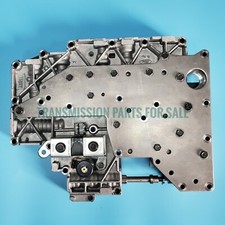
For the cooler loop test, bypass the cooler and lines with a short jumper hose and drive it again. Shudder gone means the restriction is downstream in the cooler or lines, commonly debris from a prior failure. Shudder still there means the restriction is upstream, at the pump or in the valve body passages feeding the converter [3]. Our 4R75W valve body testing guide walks the bores one at a time if you need to go further than the pressure check.
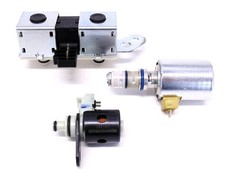
4R75W TCC Lock-Up Solenoid Kit, 2005-2008
A direct-fit 3-piece TCC solenoid kit for the hydraulic/electrical side of the lockup circuit on 2005-2008 4R75W applications.
View the TCC solenoid kit →Need something else? Browse all 4R75W parts at Core Transmission Parts.
Cause 4: The Converter Clutch Itself
If pressure and cooler flow test normal, the fluid is fresh MERCON V, and the shudder is still there, the lining on the converter clutch has usually glazed or worn unevenly from however long it's been slipping. Gears Magazine lists uneven clutch surfaces among the core causes of shudder that fluid and electrical checks won't resolve [4], and it's a terminal-stage symptom: by the time the lining has glazed, nothing short of replacing or relining the converter fixes it.
Two rules apply when the converter comes out. Fix whatever hydraulic cause started the slipping before the new one goes in; a fresh converter on a worn bypass sleeve or a restricted cooler will shudder again, usually sooner. And flush or replace the cooler, since shed lining material from a failed clutch is exactly the kind of debris that restricts cooler flow and starves the rear of the unit.
Quick Triage Order
- 1. Brake tap test and misfire/mount check — free, rules out two common impostors.
- 2. Full MERCON V exchange — cheapest real fix, solves it outright if fluid is the cause.
- 3. Line pressure and cooler flow test under load — tells you whether to look at the valve body or the converter.
- 4. Bypass clutch control valve kit — the most common parts fix on this family if pressure reads low.
- 5. Converter replacement — last, and only after the hydraulic cause is actually fixed.
TCC solenoids, valve bodies, pumps and master rebuild kits for the 4R75W, with checkout on our site.
Shop 4R75W parts →FAQ
What causes a 4R75W to shudder when accelerating lightly?
Most of the time it is the torque converter clutch slipping instead of fully locking, usually between about 35 and 55 mph in 3rd or 4th gear. The leading causes, cheapest first, are worn-out or wrong ATF, a worn bypass clutch control valve and sleeve in the valve body, low converter charge pressure from pump or regulator wear, and finally a glazed or damaged converter clutch itself.
Is 4R75W shudder the same problem as 4R70W shudder?
Yes, mechanically. The 4R75W is Ford's heavier-duty version of the 4R70W, built for F-150, Expedition and Econoline applications, and it uses the same bypass-type converter clutch circuit (CI, CT and CBY) and the same AODE-family valve body architecture. Sonnax documents the bypass clutch control valve wear as a shared issue across the AODE, 4R70E, 4R70W, 4R75E and 4R75W family.
Will a fluid change fix 4R75W acceleration shudder?
It often does if the shudder is new and the fluid is old or the wrong type. The 4R75W runs MERCON V, and Ford's Motorcraft ATF reference chart lists that fluid for the 4R70W/4R70E and 4R75W/E family. A full exchange through the cooler line, not just a pan drop, is the real test. If the shudder returns within a few hundred miles, the cause is hydraulic or mechanical, not the fluid.
Can a misfire or bad motor mount cause shudder that feels like a transmission problem?
Yes, and it is a common false lead. A light-load misfire or a cracked motor mount can produce a shudder at the same speed and throttle position as converter clutch slip. Gears Magazine recommends pulling Mode 6 misfire counts per cylinder while reproducing the complaint, and physically checking engine and transmission mounts, before condemning the converter.
How do I know if the problem is the bypass clutch control valve?
You need a pressure gauge and a cooler flow meter on the unit while you drive it into the shudder. Sonnax's troubleshooting guide for lockup issues explains that low line pressure during the shudder points outside the converter, most often to valve body or pump wear, while normal pressure with low cooler flow points to a restriction elsewhere in the circuit.
Sources
- Sonnax — "AODE, 4R70W Series Bypass Clutch Control Valve Repair Options: When to Use 76948-04K vs. 76948-64K," on bypass clutch control plunger valve and sleeve wear causing TCC shudder, delayed or no lockup and converter codes across the AODE/4R70E/4R70W/4R75E/4R75W family, and the two repair kit options. sonnax.com/tech_resources/1369
- Sonnax — "Ford Bypass Converter Clutch Circuits," on the CI, CT and CBY circuits, how bleeding CBY pressure applies the clutch using converter charge pressure, and low CT pressure equaling low apply pressure and slip. sonnax.com/tech_resources/203
- Sonnax — "Troubleshooting Lockup Issues," on the line pressure and cooler flow test method, the cooler loop test to isolate restrictions, and confirming correct ATF before condemning hard parts. sonnax.com/tech_resources/97
- Gears Magazine (ATRA) — "Shudder Diagnosis," on commanded vs. actual TCC slip, Mode 6 misfire counts as a diagnostic step, uneven converter clutch lining as a root cause, and checking mounts and Ford truck driveshaft slip splines. gearsmagazine.com
- Ford / Motorcraft — Automatic Transmission Fluid Quick Reference Chart (US), listing MERCON V for the 4R70W/4R70E and 4R75W/E family, and its caution against supplemental transmission fluid additives and treatments. fcsdchemicalsandlubricants.com (ATF quick reference PDF)
- Ford Customer Service Division — Motorcraft MERCON V Automatic Transmission and Power Steering Fluid product page, confirming MERCON V as the current replacement specification for Ford, Lincoln and Mercury transmissions previously serviced with MERCON. fcsdchemicalsandlubricants.com