A 4T65E that is leaving spots on the driveway usually tells you where the fluid is coming from, as long as you stop looking at the puddle and start looking at the case. Fluid runs downhill and backward under the car, so the source is the highest wet point on the unit, and on this transaxle there are only a handful of candidates: the vent on top of the case, the side cover over the channel plate, the axle seals, the converter seal at the bellhousing, the pan rail, and the cooler line fittings. One of those, the vent, has its own GM bulletin, and it is the one people misdiagnose most often.

Why this case leaks where it does
The 4T65-E is GM's electronically controlled four-speed transaxle for transverse front-drive cars, introduced for the 1997 model year and documented by GM Powertrain engineers in SAE Technical Paper 980821. It is built like most GM front-drive units of its era: a main case, a chain-driven input, a final drive and differential at the bottom, and a valve body bolted to an aluminum channel plate that sits under a big side cover. That channel plate is the hydraulic switchboard of the transmission. Every passage between the pump, the valve body and the clutches runs through it, and it seals to the case with two large gaskets.
That gives you two kinds of leak: external, where fluid escapes the case, and internal, where pressurized fluid crosses between passages and shows up as a shift complaint. On the 4T65E one failure, a damaged channel plate gasket, can do both at once.
Leak #1: Fluid out of the vent (GM bulletin 01-07-30-032E)
When ATF is wet on top of the case and running down from the vent, most people assume overfill and pull fluid out. Sometimes that is right. But GM published a service bulletin specifically for this complaint on the 4T65-E, and its cause is not overfill.
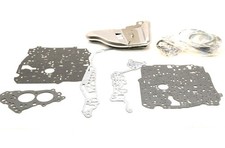
Per GM bulletin 01-07-30-032E (revised September 29, 2008, superseding 032D), 1997 to 2009 GM passenger cars and light-duty trucks with the Hydra-Matic 4T65-E, RPOs MN3, MN7, M15 and M76, may show transmission oil leaking from the transmission vent. GM's stated cause is an improperly torqued channel plate gasket. The correction is to replace the case cover (channel plate) gaskets, called out as items 429 and 430, using gasket kit GM 24206391, and to follow the Unit Repair procedure in service information for that vehicle. The bulletin notes that visual inspection of the upper gasket will show the damage at the problem area.
The mechanism: when that upper gasket is crushed unevenly or blown out between passages, pressurized fluid finds a path into a cavity open to the vent. Pulling fluid out to "fix the overfill" just leaves the unit low while the real problem stays put.
Sonnax lists the same gasket among the top 4T65-E channel plate problems and goes one step further: channel plate-to-case gasket blowout, fixed by flat sanding both sides of the channel plate. That matters. A new gasket on a plate that is no longer flat will blow out again, and a warped plate is exactly how a gasket ends up "improperly torqued" in the first place: the bolts reach spec while the gasket is still not clamped evenly across the plate.
How to tell vent leak from overfill
- Check the level the GM way first. The owner's manual procedure for 4T65-E applications (2008 Impala shown in Sources) is specific: fluid at normal operating temperature, 180 to 200°F (82 to 93°C), which takes about 15 miles of driving above 50°F. Park level, engine running, parking brake on, move the shifter through every range pausing about three seconds in each, back to Park, idle three to five minutes, then read both sides of the dipstick and use the lower reading. It has to be in the crosshatch.
- If it is in the crosshatch and the vent still spits, overfill is ruled out. Now you are looking at the channel plate gasket per the bulletin, or aeration.
- If it is over the crosshatch, correct the level and recheck. GM's own warning in that manual is that too much fluid can come out and land on hot engine or exhaust parts and start a fire, so this is not a cosmetic issue.
- Watch for a shift complaint alongside the vent leak. Because the gasket separates hydraulic circuits, a blown upper gasket can come with soft or late shifts. Vent leak plus shift complaint points hard at the channel plate.
Leak #2: The axle seals
Fluid running down the side of the case near an output, or slinging onto the inboard CV boot, is usually an axle seal. On a high-mileage 4T65E the seal itself is often not the root cause. Sonnax's channel plate write-up pairs the axle seal with the axle bearing: inspect for a pitted, damaged or noisy axle bearing, replace it as needed, then install a new axle seal. A seal riding on a shaft that is moving around in a tired bearing will start weeping again within months, which is the classic "I already replaced that seal" comeback.
Before replacing one, spin the axle by hand and feel for roughness, and check the CV stub for a groove where the old lip rode.
Leak #3: The side cover and its seals
The large side cover over the valve body and channel plate is a real but less common source. Because the seam sits right below the vent, a wet side cover can be either one. Dry it, add dye, and see whether fluid weeps out of the seam or tracks down from above. Seam means a side cover gasket set; above means Leak #1.
Leak #4: Bellhousing (converter seal)
Fluid dripping from the bottom of the converter housing is either the converter hub seal at the pump or something coming from the engine side, usually the rear main seal. Color and smell sort most of these: ATF is red and smells like ATF, engine oil is amber to black. When it is too dirty to tell, a fluorescent dye in the ATF and a black light settle it. Do not pull a transaxle for a converter seal until dye confirms it is transmission fluid.
Leak #5: Pan rail, filter neck and cooler lines
The pan gasket is checked first but is rarely the cause on a unit that has never had the pan off. After a pan service it moves to the top of the list, usually from a reused gasket or uneven bolt torque. The filter seal is an internal leak, not an external one: a nicked or rolled filter neck O-ring lets the pump pull air, which aerates the fluid. Aerated fluid takes up more room, which can push fluid out of the vent and the fill tube even with a correct cold level, and it will make the unit behave like it is low on fluid.
Cooler line fittings at the case and radiator are the last stop. A leak that only shows hot and under pressure usually lives here.
The internal leak nobody sees
Not every 4T65E leak drips. A real-world example published on Vehicle Service Pros documents 4T65-E units with delayed engagements and a flared 2-3 shift that got worse when hot. The cause was the sealing rings on the input shaft housing failing to seal against the driven sprocket support. The support marked 24219592 was the problem casting, and replacing it with one marked 24203724 fixed the complaint. The cases included fleet Chevrolet Uplanders at about 20,000 miles and a 2007 Monte Carlo at 80,000. Air checks on a cold bench tended to miss it.
A cold air check does not reproduce a hot internal leak. That is what Sonnax's 4T65-E vacuum test guide is for: vacuum testing finds the root cause of a pressure loss and verifies the repair before the unit goes back in.
A diagnosis order that saves time
- Check the level hot with the procedure above. A low unit that is not visibly wet anywhere sends you toward the vent and internal causes.
- Clean the case completely, add dye to the ATF, and drive 15 to 20 minutes to full temperature.
- Work top-down with a black light: vent, side cover seam, cooler fittings, axle seals, pan rail, bellhousing. The highest wet point is the source.
- If there is a shift complaint too, treat it as internal and plan for the bench, not just a reseal.
| Where it is wet | Most likely source | Real fix |
|---|---|---|
| Top of case at the vent | Channel plate gasket (or overfill, or aeration) | Verify hot level; replace channel plate gaskets (kit 24206391), flat-sand plate |
| Side cover seam | Side cover gasket / seals | Side cover gasket set; confirm it is not tracking down from the vent |
| Around an axle / CV boot | Axle seal, often from a worn axle bearing | Inspect bearing, replace as needed, new seal |
| Bottom of bellhousing | Converter hub seal or engine rear main | Dye test before pulling anything |
| Pan rail | Reused or unevenly torqued pan gasket | New gasket, even torque, no sealant on a dry-seal gasket |
| Cooler line fittings | Fitting seal or line | Check hot under pressure; reseal or replace line |
When a reseal becomes an overhaul
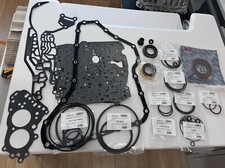
If the unit needs channel plate gaskets, the side cover is off and the valve body is out, so resealing the whole transaxle costs little more labor than you are already in. On a high-mileage 4T65E with a vent leak, a shift complaint and a weeping axle seal, one overhaul gasket and seal kit beats three separate reseals.
4T65E Overhaul Gasket & Seal Kit, 1997-Up
Every gasket and seal for a full 4T65E reseal, including the channel plate gaskets behind the vent-leak bulletin. The right kit when the side cover is coming off anyway.
View the overhaul gasket kit at CoreTransmissionParts →Need something else? Browse all 4T65E parts at CoreTransmissionParts
Need parts for this job?
Overhaul gasket and seal kits, filter and pan gasket kits, and rebuild parts for the 4T65E, shipped from the USA.
Shop 4T65E parts →FAQ
Why is my 4T65E leaking fluid out of the vent?
Either the unit is overfilled or fluid is aerated, or the channel plate gasket is damaged. GM bulletin 01-07-30-032E covers 1997-2009 4T65-E vehicles leaking from the vent and blames an improperly torqued channel plate gasket; the fix is replacing the case cover (channel plate) gaskets with kit 24206391. Check the level hot first so you know which one you are dealing with.
How do I check the fluid level on a 4T65E correctly?
Get the fluid to 180 to 200 degrees F, about 15 miles of driving. Park level with the engine running, move the shifter through every range pausing about three seconds, return to Park, idle three to five minutes, then read both sides of the dipstick and use the lower reading. It must be in the crosshatch area.
Can overfilling a 4T65E cause a leak?
Yes. GM's owner manual warns that too much fluid can come out and land on hot engine or exhaust parts and start a fire. Top-offs are small, generally less than one pint, so add a little at a time and recheck hot.
Why does my 4T65E axle seal keep leaking after I replace it?
The seal is usually riding on a shaft that is moving in a worn axle bearing, or on a grooved CV stub. Sonnax's guidance is to inspect the axle bearing for pitting or noise, replace it as needed, and then install the new seal.
What fluid does the 4T65E use?
GM specifies Dexron-VI automatic transmission fluid for 4T65-E applications. Use only that fluid for top-offs after a leak repair.
Related guides
- 4T65E filter and pan service guide
- 4T65E transmission fluid type and capacity
- 4T65E delayed engagement fix
- 4T65E limp mode: causes and fix
- 4T65E common problems and diagnosis
Shop the part for this fix
The 4T65E overhaul gasket and seal kit covers the channel plate gaskets GM calls out for the vent leak, plus every other seal on the case.
View the 4T65E gasket kit at CoreTransmissionParts →Sources
- GM Service Bulletin 01-07-30-032E, "Transmission Oil Leaking From Transmission Vent (Replace Transmission Case Cover (Channel Plate) Gasket)", revised September 29, 2008, reproduced by the XLR-Net owner knowledge base — backs the 1997-2009 4T65-E applicability (RPOs MN3, MN7, M15, M76), the improperly torqued channel plate gasket cause, items 429/430, gasket kit 24206391, and visible upper-gasket damage. xlr-net.com
- Sonnax, "GM 4T65-E Channel Plate Common Problems & Solutions" — backs channel plate-to-case gasket blowout and the fix of flat sanding both sides of the plate, and the axle bearing inspection plus new axle seal procedure. sonnax.com
- GM, 2008 Chevrolet Impala Owner Manual, Section 5 "Automatic Transmission Fluid" and Section 6 "Recommended Fluids and Lubricants" — backs the hot check procedure (180-200°F, shift through ranges, idle 3-5 minutes, read the lower side, crosshatch), the overfill fire warning, "generally less than one pint" top-off, and the Dexron-VI fluid spec. assets.gm.com (PDF)
- SAE International, "General Motors 4T65-E Electronic Four-Speed Automatic Transaxle," Technical Paper 980821, GM Powertrain authors — backs the transaxle's design background and 1997 introduction. saemobilus.sae.org
- Sonnax, "GM 4T65-E Vacuum Test Guide" — backs vacuum testing as the method for finding the root cause of internal pressure loss and verifying the repair. sonnax.com
- Vehicle Service Pros, "One Part, Two Problems" — backs the driven sprocket support internal leak (24219592 problem casting, 24203724 fix), its delayed engagement and hot 2-3 flare symptoms, and the Uplander and Monte Carlo cases. vehicleservicepros.com