The 4T65E runs two speed sensors that feed the PCM completely different information, and mixing them up sends a lot of techs down the wrong diagnostic path. The input speed sensor (ISS) reads the turbine shaft inside the case and sets codes P0716/P0717. The output speed sensor (OSS), which doubles as the vehicle speed sensor (VSS) and feeds the speedometer and cruise control, sets P0502/P0503. Both signals get compared against each other by the PCM to calculate gear ratio, and when that math doesn't add up, the result is P0730 — a code that can be caused by either sensor, by internal slippage, or by a toothed reluctor wheel that has nothing wrong with it electrically but has physically stopped being accurate. Here is what actually fails, backed by documented field cases rather than guesswork.
Two Sensors, Two Jobs, Two Code Sets
The ISS sits inside the transaxle case and reads the turbine (input) shaft, giving the PCM a real-time number for how fast the input side of the gearset is spinning. It sets P0716 (Input Speed Sensor Circuit Range/Performance) and P0717 (Input Speed Sensor Circuit No Signal). The OSS reads the output shaft going to the final drive and doubles as the vehicle speed sensor, so it is the same signal the speedometer and cruise control depend on. It sets P0502 (VSS Circuit Low) and P0503 (VSS Intermittent). The 4T65E was introduced for the 1997 model year as GM's next evolution of the front-wheel-drive 4T60-E platform, carrying a PCM-controlled electronic architecture forward with a revised pump and torque converter, and that same general sensor layout — one signal off the input shaft, one off the output shaft, both feeding the same control strategy — carries across the rest of GM's electronically controlled 4-speed family, including the 4L60E and 4L70E, per SAE International's own engineering paper on the unit.
The PCM doesn't just watch each sensor in isolation. It divides output speed into input speed to calculate the actual gear ratio the transaxle is producing, compares that to the ratio it commanded, and if the two disagree by enough margin for long enough, it sets P0730, Incorrect Gear Ratio. That makes P0730 a downstream symptom that can point at either speed sensor, at a damaged reluctor wheel, or at genuine internal clutch or band slippage — which is exactly why the two documented field cases below matter: they show how to tell those apart before anything gets replaced.
GM's own diagnostic parameter sheet for the 2004 4T65-E spells out exactly what the PCM is looking for, and it is worth knowing before you read a freeze frame. P0717 sets when input speed reads under 100 RPM for 5 seconds while the vehicle is moving at 5 mph or more, the engine has been above 500 RPM for 5 seconds and engine torque is between 50 and 500 lb-ft. P0716 is a plausibility check, not a dead-signal check: it sets when input speed changes by 1,300 RPM or more within 0.8 second at 14% throttle or more, and only after P0717 has passed that key cycle. On the output side, P0502 sets when output speed stays at or below 150 RPM for 5 seconds while input speed is at least 1,500 RPM at 12% throttle or more, and P0503 sets on a drop of 1,500 RPM or more in output speed within 2 seconds without a matching rise. All four are Type B codes, so the MIL only comes on after a second consecutive failed trip (GM 2004 4T65-E Transmission Diagnostic Parameters).
That tells you two practical things. A P0717 needs a vehicle that is actually rolling with the input signal near zero, so a code that sets right after a cold start in the driveway is unlikely. And a P0716 or P0503 with no hard code is the PCM catching a sudden drop or jump in the signal. That is the signature of an intermittent connection, a chafed wire or a loose reluctor, not a sensor that has simply died.
Case One: A Slipped Reluctor Set P0730 With No Warning Light
Transmission Digest documented a 2001 Buick Century Custom with a 4T65E that came in with jerky, harsh shifts and code P0730 stored — a code that, on this platform, does not illuminate the malfunction indicator lamp, so the customer had no dashboard warning at all. The technician's diagnostic path is the template worth copying: shift-adapt timing had maxed out at 2.8 seconds against a roughly 0.65-second tolerance, and every gear ratio read consistently low by about 10%, which pointed at a sensor-side signal problem rather than random internal slip (true mechanical slippage tends to hit some gears harder than others, not every gear by the same uniform percentage). The technician eliminated the input speed sensor by cross-checking it directly against engine speed, which left the output/vehicle speed sensor side as the remaining variable.
The root cause was mechanical, not electrical: a 0.120-inch gap had opened up between the VSS reluctor and the differential where it should have been seated flush. That gap let the reluctor slip at normal operating temperature, feeding the PCM a speed signal that didn't match what the output shaft was actually doing. The fix was removing the reluctor by heating the final drive assembly with a torch and installing a new one — no transmission replacement, no electrical repair, just a slipped toothed wheel that had nothing wrong with its wiring or its sensor.
Case Two: Internal Harness Damage and a Grounded TCM Circuit
Transmission Digest also documented an ISS DTC P0716/P0717 case on the GM 4L70E, a close relative in the same electronically controlled 4-speed family, that identified two distinct root causes worth checking on any unit in this lineage before condemning the sensor itself. First: the ISS wiring harness was not properly secured in its locating brackets on the pump assembly, and the unsecured wire was physically damaged by the spinning reverse input drum running in close proximity to it — a wear-through failure, not a bad sensor. Second, and easy to miss: an internal failure inside the transmission control module itself can cause a loss of the ground circuit feeding the ISS, producing the identical P0716/P0717 codes with a sensor and harness that are both completely fine. The documented repair for the ground-loss case is splicing an external ground into circuit 1984/1231, which normally runs from terminal 45 at the TCM to terminal V at the case connector, rather than replacing any part on the transmission at all.
The practical takeaway carries straight over to the 4T65E: before ordering a sensor, pull the pan and check the internal harness routing for chafe points near rotating parts, and don't assume a repeat P0716/P0717 after a sensor swap means the new sensor is also bad — a TCM ground fault will produce the exact same code no matter how many sensors go into the case.
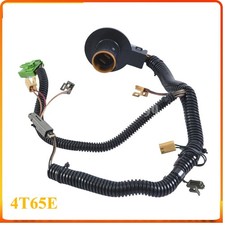
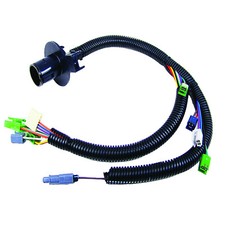
4T65E Internal Wiring Harness
Replaces the internal harness feeding the speed sensors and solenoids through the case, the most common real-world fix once a sensor and its connector have tested clean. Sold in 1997 and 2000-2011 versions — confirm your year before ordering.
View the 2000-2011 internal wiring harness →The Reluctor Wheel Can Fail Without the Sensor Ever Failing a Bench Test
An owner-documented P0717 case on a 4T65E-HD on GrandPrixForums illustrates the same lesson from a different angle. The sensor's three-wire circuit tested clean, including a resistance reading right in spec, and the code was temperature-dependent, only showing up once the transmission reached around 180°F. A forum member who had been inside enough of these units recognized the pattern and pointed at the ISS reluctor wheel, which is pressed onto the shaft with three retaining pins. On this particular unit, teardown found a reluctor with teeth ground down or missing and a damaged channel plate, tied to a failing 3rd-gear clutch and 4th clutch hub chewing up debris inside the case. The sensor was never the problem; the toothed wheel it was reading had been physically destroyed by debris from a separate internal failure.
That is the core trap with speed sensor codes on this transaxle: a sensor is a simple pickup that reports what a reluctor wheel is doing, and if that wheel slips, loses teeth, or stops being true, the sensor can test perfectly on a bench and still be functionally useless in the car. A code that comes and goes with transmission temperature, rather than being hard-set from a cold start, is a strong clue to stop testing the sensor and start thinking about what's happening to the wheel it reads.
GM Has Documented This Same Reluctor-Slip Mechanism on Other Platforms
The slipping-reluctor failure mode isn't a 4T65E quirk or an internet myth. GM's own TechLink technical bulletin #20-NA-153 documents an output speed sensor reluctor wheel slipping on its shaft on 2016-19 Cadillac ATS and 2016-20 Chevrolet Camaro models equipped with a 6-speed manual transmission (RPO M13), triggering DTC P17A2 (Transmission Clutch Slip Detected). The root cause there was an output shaft nut that wasn't torqued to the specified 145 Nm (107 lb-ft), letting the reluctor spin independently of the shaft it's supposed to track. GM's documented check is identical in spirit to what techs do on the 4T65E: pull the sensor and gently pry the reluctor to see if it moves independently of the shaft. That GM felt the need to issue a bulletin on an unrelated manual-transmission platform for the exact same underlying mechanism — a reluctor wheel slipping independently of its shaft and faking a bad speed signal — confirms this is a recognized class of failure across GM's lineup, not something specific to one transaxle's bad luck.
How to Actually Diagnose It
- Note whether the code is hard or intermittent, and at what temperature it sets. A code that only appears once the fluid is hot points toward a mechanical issue like a slipping reluctor or a chafed wire that only grounds out once something expands with heat.
- Compare the ISS PID directly to engine RPM with the vehicle in gear. Remember the P0717 window from GM's parameter sheet: under 100 RPM of input speed for 5 seconds at 5 mph or more, so test it rolling, not parked. The input shaft speed should track engine speed closely (minus normal torque converter slip); a live PID that drops to zero or goes erratic while the engine keeps running cleanly confirms the fault is downstream of the engine, in the ISS circuit or the reluctor it reads.
- Compare the OSS/VSS PID to actual road speed. Per GM's sheet, a P0503 is a drop of 1,500 RPM or more in output speed within 2 seconds, so record the PID on a graph and look for dropouts rather than reading a single number. A mismatch here, especially one that's temperature- or speed-dependent, points at the output sensor or its reluctor rather than internal clutch slippage.
- If P0730 is the only code present, check whether the ratio error is uniform across every gear or worse in some gears than others. A consistent percentage error in every gear, as in the Transmission Digest Buick Century case, points at a sensor or reluctor; an error that's worse in specific gears points at slippage in that gear's clutch or band.
- Pull the pan and inspect the internal harness for chafing near rotating components and check the connector and 20-way case pass-through for corrosion before condemning any sensor. Wiggle-test the harness with a scan tool live to catch an intermittent that won't show up sitting still.
- If the sensor and wiring both check out and the symptom is temperature- or load-dependent, plan on dropping the side cover (or going deeper, since the pump and valve body often have to come out to fully access the ISS reluctor) to physically inspect the reluctor wheel itself rather than throwing a second sensor at it.
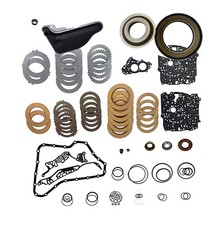
Shop 4T65E internal wiring harnesses, rebuild kits, valve bodies, and solenoids — shipped fast from the USA.
Shop 4T65E parts →FAQ
What is the difference between P0717 and P0502 on a 4T65E?
P0717 (and its sibling P0716) are Input/Turbine Speed Sensor codes: the PCM isn't getting a usable signal from the sensor that reads turbine shaft speed inside the transaxle case. P0502 (and P0503) are Vehicle Speed Sensor codes, which on the 4T65E is the output speed sensor reading the final drive, the same signal that drives the speedometer and cruise control. They are two different sensors on two different shafts, and a scan tool with both PIDs live will show immediately which one has gone quiet.
Can a 4T65E speed sensor test fine electrically and still be the cause of the code?
Yes, and this is the trap that sends techs chasing wiring for hours. The sensor itself is a simple Hall-effect or magnetic pickup that reads teeth on a separate reluctor wheel pressed onto the shaft. If that reluctor wheel slips, cracks, or loses teeth, the sensor can ohm-test perfectly within spec and still produce no usable signal, because there is nothing accurate left for it to read. Transmission Digest has documented this exact failure on the 4T65E's final-drive VSS reluctor and on the ISS reluctor of the related 4L70E.
Will a bad speed sensor cause harsh or jerky shifts even without the check engine light on?
Yes. Transmission Digest's documented P0730 case on a 2001 Buick Century Custom with a 4T65E is the textbook example: the vehicle shifted jerky and harsh, but P0730 (Incorrect Gear Ratio) does not illuminate the malfunction indicator lamp on that platform, so the customer had no warning light at all despite a real underlying sensor fault.
What does P0730 have to do with the speed sensors if it isn't a sensor-specific code?
P0730 sets when the PCM calculates a gear ratio, using the input and output speed sensor signals together, that is off by more than roughly 5% for about seven seconds. A real ratio error can come from internal clutch or band slippage, but it can also come from one of the two speed sensors feeding the PCM a slightly wrong number, which looks identical to the PCM. The diagnostic trick documented in the field is checking whether every gear is off by the same percentage: a uniform error across all gears points at a sensor or reluctor, while an error that is worse in some gears than others points at internal slippage.
Is the 4T65E input speed sensor an easy bolt-on replacement?
The input speed sensor itself sits inside the transaxle's side cover, which on the 4T65E typically requires dropping the front cradle on one side and supporting the engine and transmission to get the side cover off — not a connector-and-a-wrench job like an external VSS can be on some other units. If the problem turns out to be the reluctor wheel rather than the sensor itself, the pump and valve body often have to come out too, which is why a confirmed reluctor failure usually gets handled as part of a larger teardown rather than a stand-alone sensor swap.
Shop the 4T65E internal wire harness at CoreTransmissionParts →
Related 4T65E guides
Sources
- Transmission Digest — "4T65-E's and the Mysterious Code P0730." Backs the 2001 Buick Century Custom case: the 0.120-inch VSS reluctor gap, the 2.8-second shift-adapt time against a 0.65-second tolerance, the uniform ~10% ratio error across all gears, and the fix (reluctor replacement, no transmission swap). transmissiondigest.com
- Transmission Digest — "GM 4L70-E ISS DTC P0716 or P0717." Backs the two documented 4L70E ISS failure modes: wiring damaged by the spinning reverse input drum, and TCM internal ground loss on circuit 1984/1231 as an alternate cause of the identical codes. transmissiondigest.com
- General Motors — 2004 4T65-E Transmission Diagnostic Parameters (2004trans4), GM Service Information, archived copy. Backs the P0716, P0717, P0502 and P0503 monitor descriptions and thresholds: input speed under 100 RPM for 5 s at 5 mph or more (P0717), a 1,300 RPM change within 0.8 s (P0716), output speed at or below 150 RPM for 5 s with input speed at 1,500 RPM or more (P0502), a 1,500 RPM output drop within 2 s (P0503), the enable conditions and the Type B two-trip MIL logic. gsitlc.ext.gm.com via archive.org (PDF)
- General Motors TechLink — Technical Bulletin #20-NA-153. Backs the documented reluctor-wheel-slipping failure mode and the 145 Nm (107 lb-ft) output shaft nut torque spec on 2016-19 Cadillac ATS and 2016-20 Chevrolet Camaro 6-speed manual models, cited here to show GM has documented this same mechanism across its lineup. gm-techlink.com
- SAE International — "General Motors 4T65-E Electronic Four-Speed Automatic Transaxle," Paper 980821. Backs the 4T65E's 1997 introduction as GM's evolution of the 4T60-E platform and its PCM-controlled electronic architecture. saemobilus.sae.org
- GrandPrixForums — "PO717 on 4T65e-HD - Stumped" (owner/technician discussion). Real-world data point only, not counted as an authoritative source: documents a temperature-dependent P0717 with the ISS circuit testing in-spec, traced by a forum member's teardown experience to a reluctor wheel with ground/missing teeth alongside unrelated internal clutch damage. grandprixforums.com