A red or brown puddle under a Super Duty gets blamed on "the pan gasket" more than any other part on the truck, and on a 5R110W TorqShift that guess is wrong often enough to cost real money. This transmission has a filter canister in the cooler line that most techs have never serviced, two families of external sensors sealed only by an O-ring, and a cooler mounted out front where seventeen years of road salt gets at the fittings before it gets at the pan. Guessing costs a gasket, a day of labor, and a truck that is still leaking.
This covers where a 5R110W actually leaks, in the order worth checking, with the design details and a documented case pulled from Transmission Digest and Ford's own service literature. Everything is listed under Sources at the bottom.
Confirm it's actually transmission fluid first
Before chasing a seal, confirm what is actually dripping. The 5R110W runs on Motorcraft MERCON SP, and Ford's documentation on this unit is explicit that it is not interchangeable with MERCON or MERCON V, so a top-off with the wrong bottle is its own problem before you even get to leaks. By 2009 Ford's Super Duty owner guide calls for Motorcraft MERCON LV (XT-10-QLV) in the 5R110 instead [6]; LV is what is on the shelf now for these units. Ford also warns that overfilling can cause shift and engagement concerns, and an overfilled unit pushes fluid out the vent where it looks like a seal leak. Check the level hot, at 150-170 F after about 20 miles of driving, before you condemn anything [6]. Fresh ATF runs red to pink; it darkens with age but should not smell burnt. Gear oil from the front or rear axle or the transfer case runs darker and smells sulfurous. Engine oil is thicker and shows up higher on the bellhousing, running down from the back of the engine rather than up from the transmission. Coolant from the oil-to-air cooler is a different problem entirely, and it is sweet-smelling and usually shows up mixed with ATF rather than on its own. Get the fluid identified before you start pulling parts.
Where this transmission actually leaks
1. The remote cooler-line filter canister (2003 through mid-2008 trucks)
This is the leak point most independent shops miss, because most transmissions do not have it. Ford's original design for the 5R110W, described in Transmission Digest's launch coverage of the unit, routes about 10 percent of the fluid returning from the cooler through a small orifice into a serviceable screw-on filter element, then back into the rear lube circuit through a large opening in the remote-filter manifold. The element itself sits in a canister spliced into the cooler line, not in the pan.
Transmission Digest's later technical coverage of the filter change describes the canister in more detail: the inline element is a 5-micron filter, noticeably finer than the 60-micron filter in the sump, and it has to be removed or bypassed to flush the cooler, because flushing with the element still in place just bypasses the cooler altogether. On some 2007 and 2008 trucks the filter element cannot be serviced separately from the canister, and the whole canister has to be replaced, at a parts cost the article puts around $80. The canister's own seals, and the fittings where it splices into the cooler line, are exactly the kind of connection that corrodes and seeps after a decade and a half outside, in front of the radiator.
Starting in the middle of the 2008 model year, Ford eliminated this design. The external bypass filter was replaced by a redesigned sump filter built into a new transmission-fluid pan, along with a revised pump and pump cover. Do not assume a later truck has nothing in the lines, though. Ford's 2009 Super Duty owner guide still lists Motorcraft FT-175 and FT-176 remote transmission filters for 6.4L TorqShift trucks, and quotes the 5R110 capacity as 17.5 quarts (16.6 L) including a remote filter element change [6]. Look under the truck before you rule the canister out; if it is not there, a leak near the cooler lines is coming from the line fittings themselves or the cooler.
2. External sensor O-rings: TSS/ISS and OSS
The 5R110W carries its sensors outside the case rather than buried in the valve body, which makes them easy to overlook on a leak check because they do not look like a seal. Per Transmission Digest's description of the unit, the combined turbine-shaft-speed (TSS) and intermediate-shaft-speed (ISS) sensor is mounted externally on the transmission case, reading teeth on the coast-clutch input hub and the overdrive ring gear. The separate output-shaft-speed (OSS) sensor is mounted on the extension housing, reading a set of teeth on the park gear. Both are Hall-effect sensors that seat in a machined bore against the case or housing, sealed by an O-ring, the same way a sensor like this seals on most modern automatics.
A weeping sensor O-ring rarely puddles dramatically. It wets the connector and the wiring harness nearby, then runs down the case and gets written off as "leaking from everywhere." If you find fluid tracking from the side of the case rather than the pan rail or the bellhousing, pull the TSS/ISS connector and the OSS connector and check for fluid in the connector itself before you reseal anything else.
3. The pan gasket
Still the most common external leak on any automatic, and still worth checking first because it is the cheapest to confirm and fix. Clean the rail, retorque the pan bolts to spec, and give it a drive cycle before condemning the gasket. A gasket that has taken a permanent compression set, or shows cracking at a bolt hole, should be replaced rather than reused, regardless of what the original design intended. Watch the two front corners of the pan closely on a reseal, since that is the area nearest the bellhousing opening and the easiest place for a weep to get blown around by airflow and misread as coming from the front pump instead.
4. The front pump seal
Like on any longitudinal automatic, the front pump seal rides on the torque converter hub right where the transmission bolts to the engine, and it takes the shift-impact and heat load of everything downstream of the converter. A leak here shows up low on the bellhousing and usually gets worse under load or right after a hard pull, since that is when converter and pump pressures run highest. It requires pulling the transmission or at minimum the converter to reach, so confirm it is actually the pump seal and not fluid that migrated from a pan-bolt weep above it before committing to the R&R.
5. The oil-to-air (OTA) cooler and its line fittings
The 5R110W uses a dedicated oil-to-air cooler mounted in front of the radiator, separate from any cooler built into the radiator tank. Ford's service guidance, per Transmission Digest's coverage of the unit, is to replace this cooler as part of any overhaul or converter exchange and specifically not to back-flush and reuse it. That guidance exists because debris from a failed unit can plug the cooler's internal passages, but the same cooler is also a genuine external leak source on its own: it sits exposed to road debris and salt, and its crimped line fittings corrode over a decade and a half of highway use. A leak here often looks like it is coming from "somewhere up front" and gets chased at the pump or the pan before anyone looks behind the radiator.
Diagnose before you reseal: a real case that looked like a leak
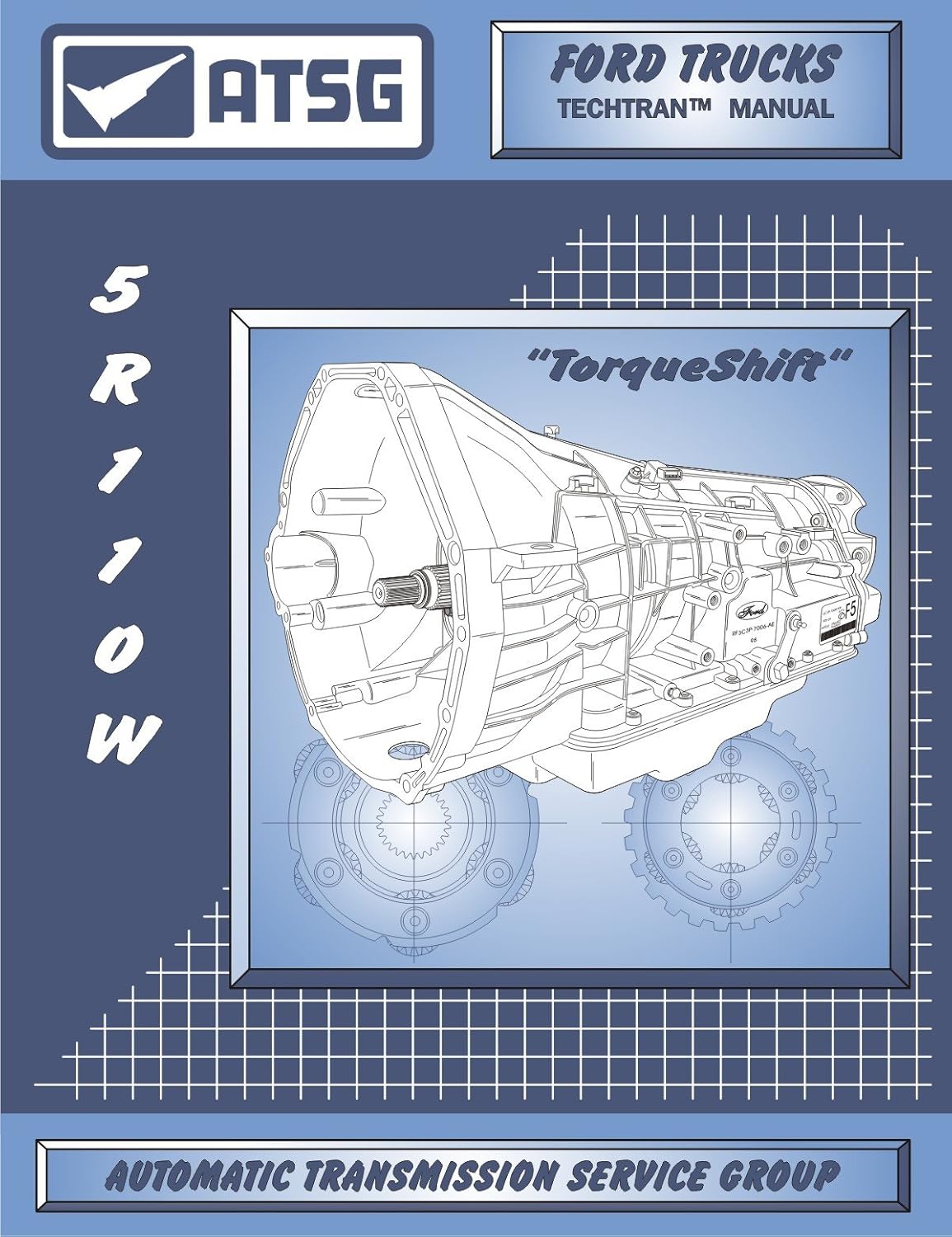
Transmission Digest documented a 5R110W rebuild for a 2009 F-350 where the customer reported the in-cab transmission temperature reading 250°F and the truck setting DTC P0218 for a transmission overtemperature condition. That combination reads like a fluid problem, low level from a leak or a cooler restriction, and it is exactly the kind of symptom that gets a tech reaching for a leak repair first. The shop instead used a laser temperature gun on the pan sump to confirm the overheat was real, then checked cooler flow by disconnecting the return line at the transmission, which showed very little flow. Since the only hard part changed during the rebuild was the pump and converter, the pump went back on the bench, where an ATSG manual was used to verify the internal valve configuration. The Converter Anti Drain-Back Valve had been installed backward during the rebuild. The fix was correcting that valve's orientation in the pump, not a leak repair of any kind.
The lesson carries over directly to leak diagnosis: a symptom near the cooler circuit does not automatically mean a leaking fitting or a bad seal. Confirm cooler flow and, if the truck was recently rebuilt or had the pump serviced, consider a pump-internal cause before resealing external joints that were never the problem.
How to confirm the source before you buy parts
- Clean it completely. Degrease the pan, the bellhousing, the extension housing, the sensor connectors and the cooler lines, then drive the truck normally for a day.
- Inspect dry, not wet. Fluid runs downhill and backward in the airflow once the truck is moving, so trace the trail up to its driest, highest point rather than its lowest, wettest one.
- Check the sensors with a flashlight, not a glance. Fluid in the TSS/ISS or OSS connector is easy to miss if you are only looking at the case surface.
- Confirm cooler flow if anything near the cooler circuit is involved. A quick disconnect-and-check at the return line, as described in the Colonna case above, rules out a flow problem before you touch a fitting.
- Re-torque before you reseal. A loose pan bolt or a line fitting that was never tightened to spec after the last service is a five-minute fix that saves a gasket.
Once you know the exact source, parts and fluid costs for a full service, including how much MERCON LV it actually takes to replace what a repair uses, are covered in our 5R110W fluid change cost guide. If the fluid itself is dark and smells burnt rather than just low, stop and read our 5R110W common problems guide before you reseal anything, since a worn direct clutch or a failing low/reverse retaining ring will keep eating fresh fluid regardless of how good the external seals are.
Shop the part for this fix: 5R110W rebuild and reseal parts
CoreTransmissionParts stocks rebuild kits and hard parts across Ford, GM, Dodge and Allison platforms, including components that cover a 5R110W reseal and rebuild.
See rebuild kits at CoreTransmissionPartsNeed parts for this job?
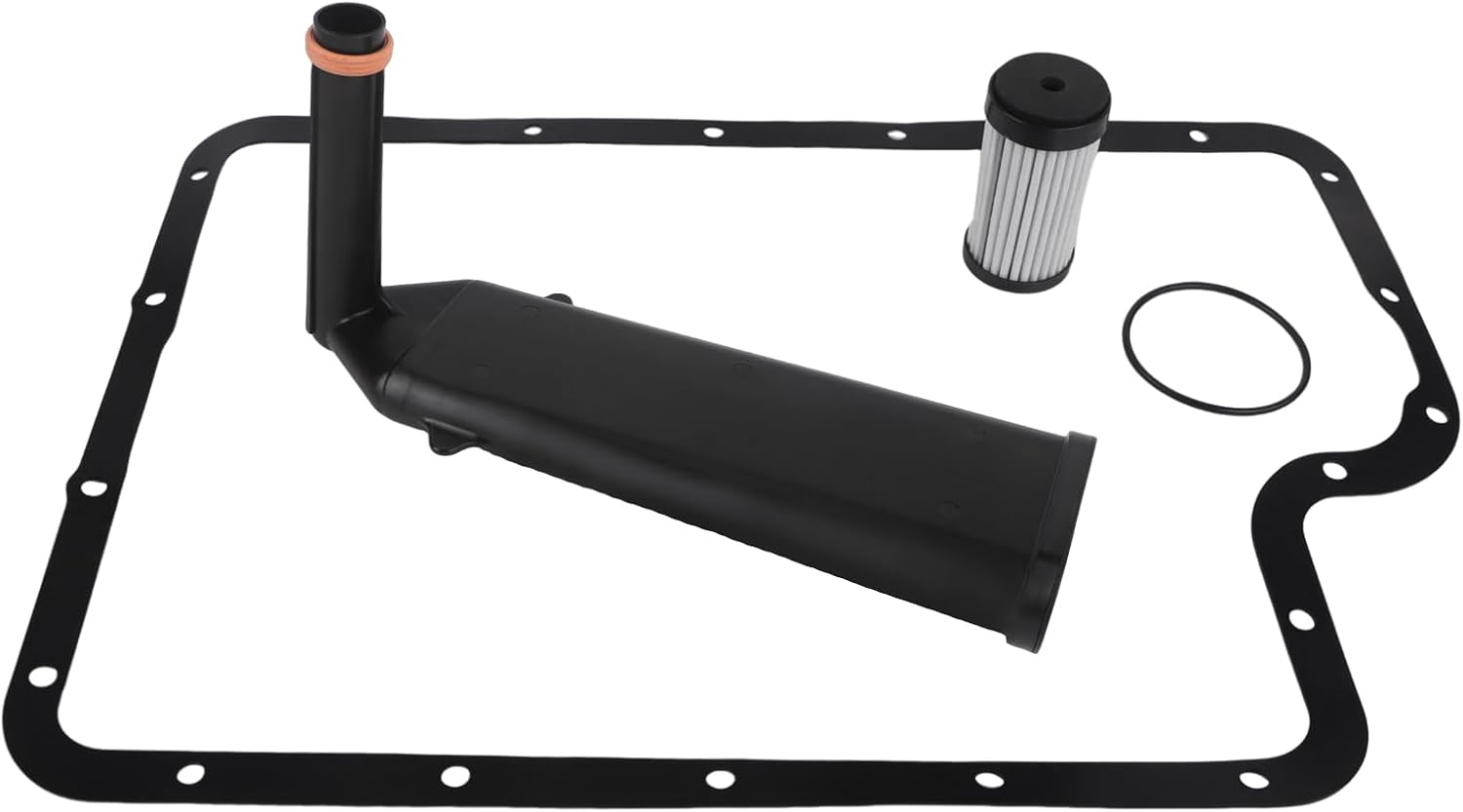
Our 5R110 TorqShift parts page has the pan and remote filter kit, Motorcraft fluid, solenoid kits and master rebuild kits if the leak turns out to be the smaller half of the problem. Checkout is on site.
FAQ
What are the most common leak points on a 5R110W?
On 2003-2007 trucks, the remote cooler-line filter canister is the one shops miss most, because its fittings and the serviceable filter element seal are easy to overlook. After that, check the external TSS/ISS speed-sensor O-ring and the output-shaft-speed sensor O-ring at the extension housing, the pan gasket, the front pump seal at the bellhousing, and the oil-to-air cooler itself, including its line fittings.
Does the 5R110W still have the remote cooler-line filter?
Only on earlier trucks. Transmission Digest reports that Ford used an external bypass filtration system, with a remote filter canister in the cooler line, from the 2003 launch through part of the 2008 model year. Starting in the middle of 2008, Ford replaced it with a redesigned sump filter and a new pump cover, which eliminated the inline canister on many later trucks. Ford's 2009 owner guide still lists remote filters for 6.4L trucks, so confirm what is actually on the truck [6].
How do I find out exactly where a transmission is leaking from?
Clean the transmission, case connector, pan rail and cooler lines thoroughly, then drive the truck and inspect while the leak is fresh rather than after it has run down and spread. Fluid tracks downhill and backward in the airflow, so a drip under the bellhousing does not always mean a front pump seal, and fluid on the pan rail does not always mean the pan gasket. Confirm the source at the highest, driest point of the trail before replacing anything.
Can a cooler flow problem look like a fluid leak?
Yes. Transmission Digest documented a rebuilt 5R110W that set a P0218 overtemperature code and ran hot enough to trigger comment, which looked at first like a fluid or cooling problem. The actual cause was a Converter Anti Drain-Back Valve installed backward in the pump, which restricted cooler return flow. The fix was correcting the valve orientation, not chasing a leak or replacing the cooler.
What fluid does a 5R110W use, and does the type matter for leaks?
The 5R110W launched on Motorcraft MERCON SP, and Ford's documentation is explicit that it is not interchangeable with MERCON or MERCON V. Using the wrong fluid will not create a leak by itself, but it can swell or harden seals over time and contribute to the exact O-ring and gasket failures covered in this guide, so confirm the correct fluid is in it before you reseal anything.
Related guides
- 5R110W Fluid Change Cost
- 5R110W Common Problems and Fixes
- 5R110W Speed Sensor Symptoms
- 5R110W Valve Body Symptoms
- 5R110W No Reverse Fix
Sources
- Ford Motorcraft, "Automatic Transmission Fluid Chart." Backs the MERCON SP fluid identification and that it is not interchangeable with MERCON or MERCON V on this unit. fcsdchemicalsandlubricants.com (PDF)
- Dale England, Transmission Digest, "Ford 5R110W (TorqShift)" (October 1, 2004). Backs the TSS/ISS sensor mounted externally on the transmission case, the OSS sensor mounted on the extension housing, the remote fluid filter passing about 10 percent of flow, the oil-to-air cooler replace-do-not-back-flush guidance, and the Mercon SP interchangeability warning. transmissiondigest.com
- Mike Steen, Transmission Digest, "5R110W Filter Change" (May 2010). Backs the 5-micron inline filter element, the canister design in the cooler line, the approximately $80 canister replacement cost on some 2007-2008 trucks, and the mid-2008 change to a redesigned sump filter. transmissiondigest.com
- Mike Riley, Transmission Digest, "5R110W Lubrication Concern: Warm Weather, No Problem, but Winter's Coming." Backs the bypass filtration design description and the importance of confirming cooler flow on all model years. transmissiondigest.com
- Wayne Colonna, Transmission Digest, "A 5R110W With Transmission Overheating." Backs the documented case of a P0218 overtemperature code traced to a backward-installed Converter Anti Drain-Back Valve rather than a leak or cooler failure. transmissiondigest.com
- Ford Motor Company, 2009 F-250/350/450/550 Super Duty Owner Guide, Maintenance and Specifications. Backs the Motorcraft MERCON LV (XT-10-QLV) fluid callout, the 5R110 capacity of 17.5 quarts (16.6 L) including a remote filter element change, the Motorcraft FT-175 and FT-176 remote transmission filters for 6.4L trucks, the 20-mile warm-up and 150-170 F hot level check, and the overfill warning. Ford owner guide (archive.org PDF)