P0741 on a TorqShift rarely shows up alone as a complaint. The owner says the truck runs hot on the highway, the tach sits a couple hundred rpm higher than it used to at cruise, or there is a shudder right around lockup speed. Then the code shows up and somebody orders a converter. Sometimes that is the answer. On a 5R110W there are also a feed orifice the size of a pin, a pump valve sleeve that is easy to assemble wrong, and a worn bore in the pump cover that can all set the same code, and each one is a lot cheaper than pulling the unit twice.
This post covers one code: what the PCM is looking at when it sets P0741 on a 5R110W, how it differs from the TCC circuit codes, how to prove slip on the scan tool, and the order I work through the hydraulic and mechanical causes. Specs come from the ATSG TorqShift manual, Transmission Digest, Sonnax and Ford, all listed under Sources. For background on how lockup is supposed to work on this unit, read our 5R110W TCC lockup guide first.
What P0741 means on this unit
The ATSG 5R110W diagnostic code chart lists P0741 as "TCC slippage detected during engagement. Mechanical or Hydraulic concern." The code right before it, P0740, is the electrical one: TCC solenoid open circuit. That split matters. P0741 means the PCM commanded the converter clutch on and the speed numbers did not come together. The wiring and solenoid coil passed the circuit check, or you would have a circuit code instead of (or with) P0741.
The PCM judges slip by comparing engine speed against turbine shaft speed (TSS). With the clutch fully applied those two should match. If engine rpm stays above TSS rpm while lockup is commanded, the PCM sees slip, sets P0741, and on most calibrations stops applying the clutch for the rest of the key cycle. Transmission Digest also documents 5R110W trucks setting P1744, described as excessive TCC slip or slip speed out of range, for the same no-lockup complaint, so treat either code as the same diagnostic path.
Driving on it is not harmless. With no lockup the converter is slipping all the time at highway speed, and all that slip turns into heat in the fluid. On a truck that tows, that is how a P0741 turns into a burned unit.
How the 5R110W applies the converter clutch
You cannot fix this code well without knowing the parts in the circuit. Per ATSG, the TCC solenoid lives in the solenoid body under the pan along with the other six variable force solenoids. Sonnax and ATSG both list it as directly proportional: the PCM varies current between 0 and 1 amp, and 1 amp equals maximum output pressure. That is the opposite of the line pressure (PC-A) solenoid, which is inversely proportional. Do not mix them up when you read amperage on a scan tool.
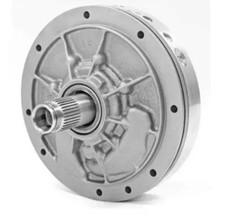
The solenoid only sends a signal. The valves that actually regulate converter apply oil are in the pump cover. The ATSG pump breakdown shows the converter clutch control valve with its sleeve, plug and spring, the converter pressure limit valve, the converter anti-drainback valve, the cooler bypass valve with its thermostatic element, and the main regulator, all in that one casting. Apply oil then has to get past the stator tube seal and into the converter. Any leak along that path shows up as slip.
The PCM also uses other inputs to decide when to apply. ATSG notes that the transmission range sensor and the fluid temperature (TFT) sensor both feed TCC scheduling, and that the converter clutch applies in the Overdrive position. A TFT that reads wrong can change when lockup is commanded. It will not by itself cause slip once the clutch is commanded on.
| Item | 5R110W spec (ATSG unless noted) |
|---|---|
| TCC solenoid type | Directly proportional VFS, 0-1 A, 1 A = max pressure |
| TCC solenoid resistance | 4.1-4.7 ohms at 72 degrees F |
| Solenoid body connector pins | 7 = VPWR (shared with PC-A), 8 = TCC ground signal |
| TCC solenoid feed orifice | 0.018-0.021 in. (Transmission Digest) |
| Fluid | MERCON LV, including back-service (Ford Motorcraft chart) |
| Capacity | About 17.5 qt (16.6 L) including cooler (2009 Super Duty owner guide) |
Prove the slip on the scan tool first
Before you touch a wrench, confirm what the PCM saw. Clear the code so the PCM will command lockup again, warm the fluid to normal operating temperature, and road test in Overdrive with a graph of engine rpm, TSS rpm, commanded TCC (pressure or current, depending on your tool), TFT and gear.
- Commanded on, speeds match: the clutch is holding at that moment. Load it with a moderate throttle tip-in at 45-55 mph in 4th or 5th and watch whether engine rpm flares above TSS. A clutch that holds at light throttle and slips under load is a capacity problem: low apply pressure or a worn lining.
- Commanded on, no drop at all: engine rpm never comes down to TSS. That points at no apply oil reaching the clutch: a plugged feed, a solenoid that is not producing pressure, or the pump valve sleeve problem described below. This is the classic after-overhaul complaint.
- Erratic slip that comes and goes: engine and TSS cross back and forth, often with a shudder you can feel. Think worn bore at the converter pressure limit valve, or lining damage that has already started.
- Bad TSS signal: if TSS is dropping out or noisy, the PCM's slip math is garbage. Fix any TSS code first; see our 5R110W P0715 guide.
One caution on 6.0L trucks: a misfire under light load can feel a lot like converter shudder. If the complaint is shudder but the scan data shows engine and TSS locked together, look at the engine before you look at the transmission.
Electrical checks that take ten minutes
P0741 is not a circuit code, but check the circuit anyway because it is quick. With the key off, measure the TCC solenoid through the case connector: pins 7 and 8, 4.1-4.7 ohms at 72 degrees F per ATSG. Hot fluid reads a little higher. If your scan tool can command the TCC solenoid, compare commanded and actual current. Transmission Digest's 5R110W no-lockup case started with the TCC command signal verified with an amp meter, which is the right first move: once you know the PCM is sending current, the problem is downstream of the wire.
Look at the fluid while you are there. A burned smell, or dark fluid with fine friction material on the pan magnet, tells you the lining has been slipping for a while, and that changes what the repair has to include.
The documented causes, in the order I check them
1. Plugged TCC solenoid feed orifice
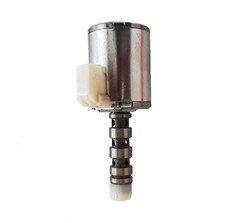
Transmission Digest lists this first for the 5R110W. The solenoid is fed through an orifice of 0.018-0.021 in. sitting in a recess where debris collects. A plugged feed means the solenoid can be commanded to full current and still produce nothing. Pull the solenoid body, inspect and clean the orifice, and only then decide on the solenoid. The same article says that if the orifice is clear, replace the TCC solenoid and road test again.
2. Debris in the TCC feed hole of the solenoid body gasket
A Transmission Digest tech bulletin (January 2008) covers a 5R110W with no TCC apply after overhaul. Scan data showed lockup commanded with no speed drop, and P0741 stored. A piece of metal from the original failure had worked its way out of the cooler and lodged in the TCC feed hole of the solenoid body gasket. Their fix list: flush the cooler thoroughly, replace the inline filter in the cooler line manifold, and replace auxiliary oil-to-air coolers if the unit failed hard, because they may not flush clean. They also warn against washing the solenoid body gasket in solvent and reusing it, because the rubber beading deforms.
3. Converter clutch control valve sleeve installed too deep
The same 2008 bulletin covers a second after-overhaul P0741: during the pump rebuild the converter clutch control valve sleeve was pushed too far into its bore, which opens the regulated converter clutch apply circuit to exhaust. Wayne Colonna's 2024 Transmission Digest article adds the detail you need on the bench: either retainer position works as long as the oil feed holes in the sleeve are visible when the sleeve is installed. If the sleeve is pushed in too far it limits valve travel and you get no lockup. He also notes that later pumps no longer give you the alternate retainer position.
4. Missing or damaged stator tube scarf-cut seal
Colonna lists the stator tube scarf-cut (Teflon) sealing ring as one of the four causes of a 5R110W setting the slip code with the command verified. If the ring is missing or damaged, apply oil bleeds off before it reaches the clutch. This one needs the unit out.
5. Worn converter pressure limit valve bore (2005-later)
Sonnax describes bore wear at the converter pressure limit valve in 2005-later 5R110W pumps causing erratic apply pressure, soft or harsh TCC apply, TCC slip codes and TCC lining failure. In extreme cases converter pressure climbs high enough to balloon the converter. Their drop-in kit 36940-06K replaces OE valves with a .298 in. or .312 in. balance spool; it is not compatible with .402 in. valves, so measure before you order. If you are rebuilding the pump anyway, this bore deserves a wet air check.
6. The converter itself
If apply oil is reaching the converter at the right pressure and it still slips, the lining is done. Colonna's note on this one is plain: if the transmission is original to the truck and a new solenoid does not fix it, replace the torque converter. Whenever a converter gets replaced for slip, fix the cause too. A worn pressure limit valve will cook a new converter the same way.
The fix, done once
- Pull the pan and solenoid body. Inspect the pan debris, clean the TCC feed orifice, and fit a new solenoid body gasket. Do not reuse a washed one.
- Replace the TCC solenoid if the orifice was clear, or replace the full solenoid set if the unit has high mileage and the other solenoids are original. Torque the solenoid body bolts to the ATSG spec; they thread into aluminum.
- If the unit comes out: inspect the stator tube scarf-cut ring, check the converter clutch control valve sleeve depth and feed hole visibility, and inspect the converter pressure limit valve bore. Replace the converter if the lining slipped.
- Flush the cooler, replace the inline cooler line filter, and replace any auxiliary cooler that will not flush clean.
- Refill with MERCON LV, which Ford's Motorcraft chart authorizes for the 5R110 TorqShift including back-service. The 2009 Super Duty owner guide lists about 17.5 qt (16.6 L) including the cooler. Set the final level hot on the dipstick.
- Clear codes and road test with the same graph. Engine rpm and TSS should lock together and stay together under a moderate tip-in.
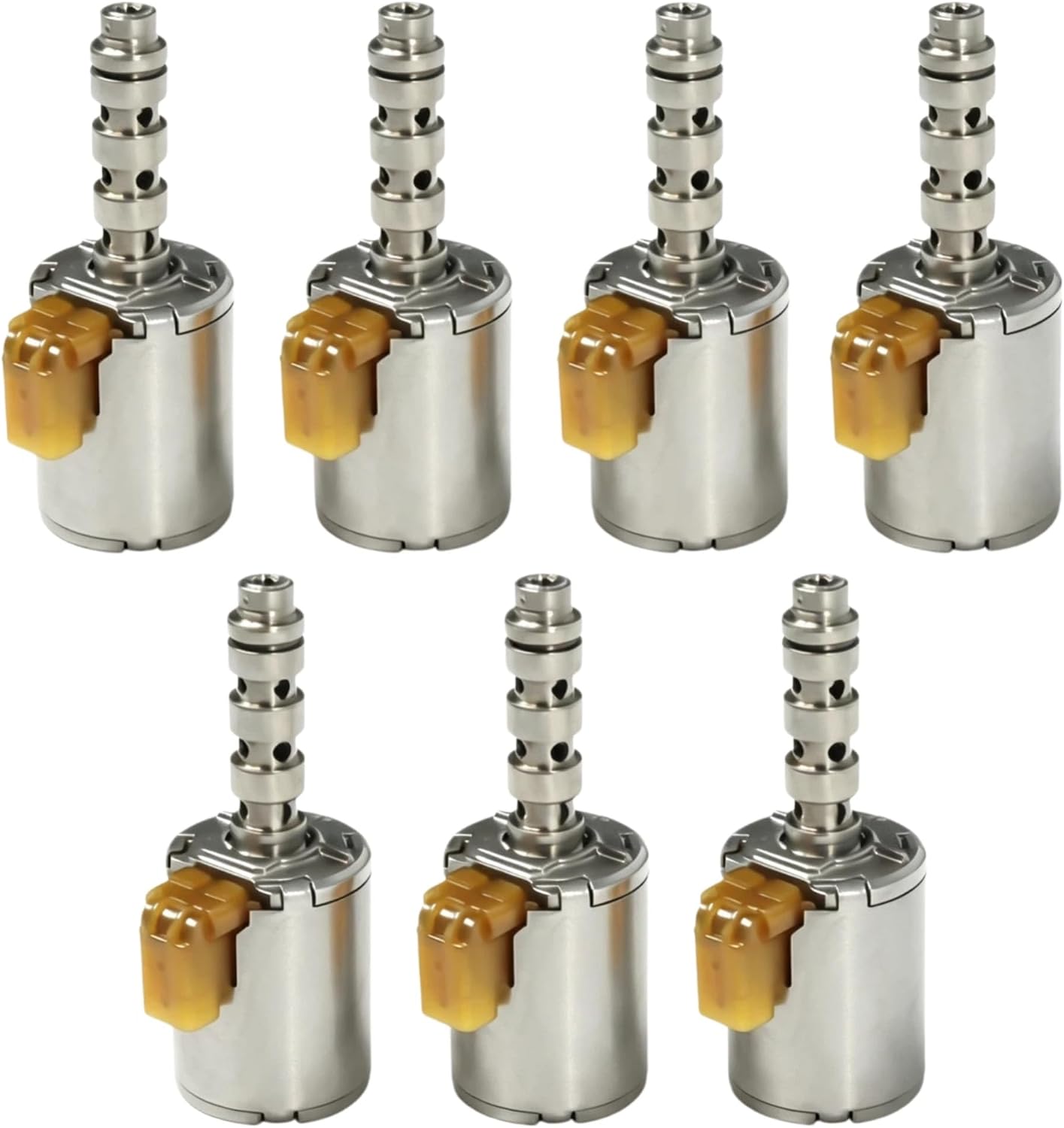
Shop the part for this fix: 5R110W 7-piece master solenoid set
Full solenoid body set for the TorqShift (OEM 3C3Z-7G383AB), including the TCC solenoid, for when the feed orifice is clean and the TCC solenoid is not producing apply pressure.
See the solenoid set at CoreTransmissionPartsPreventing a repeat
Most repeat P0741s on this unit come from two things: debris left in the cooler circuit after a failure, and a pump that went back together with the clutch control valve sleeve in the wrong spot or a worn pressure limit bore. Flush the cooler every time, change the inline filter, and treat the pump cover as part of the TCC system, not just an oil pump. On trucks that tow, keep the fluid on schedule. A converter clutch that slips even a little at highway speed under load is making heat the whole time.
Need parts for this job?
Our 5R110 parts page has the TCC solenoid, full solenoid kits, pumps, valve bodies and rebuild kits for the TorqShift, all on our own checkout.
FAQ
What does P0741 mean on a 5R110W?
Per the ATSG 5R110W code chart, P0741 means the PCM detected torque converter clutch slippage during engagement, listed as a mechanical or hydraulic concern. Lockup was commanded but engine speed did not come down to match turbine shaft speed. The electrical TCC solenoid open circuit code is P0740.
Will a new TCC solenoid fix P0741 on a 5R110W?
Only if the solenoid is the cause. Transmission Digest lists a plugged 0.018-0.021 in. solenoid feed orifice, a damaged stator tube seal and a misplaced lockup valve retainer as other causes, and Sonnax adds pump bore wear at the converter pressure limit valve on 2005-later units. Clean the orifice first, then replace the solenoid if it is clear.
Why does a 5R110W set P0741 right after a rebuild?
Transmission Digest documented two after-overhaul causes: the converter clutch control valve sleeve pushed too far into its pump bore, which opens the apply circuit to exhaust, and metal debris from the cooler lodging in the TCC feed hole of the solenoid body gasket. Flush the cooler, replace the inline filter and check that the sleeve feed holes are visible.
Can I keep driving with P0741?
The truck will usually still drive, but the PCM typically stops applying the converter clutch once the code sets. That means constant converter slip at highway speed and extra fluid heat, which is hard on the unit, especially when towing. Get it diagnosed before the next long trip.
Related guides
- 5R110W TCC Lockup Explained
- 5R110W Torque Converter Shudder
- 5R110W P0715: Input Turbine Speed Sensor Causes & Fix
- 5R110W Pump Failure Symptoms
- 5R110 Shift Solenoid Symptoms
Sources
- ATSG, Ford 5R110W (TorqShift) technical manual (2004). Backs the P0740 and P0741 descriptions, the directly proportional 0-1 A TCC solenoid, solenoid connector pins 7 and 8, 4.1-4.7 ohms at 72 degrees F, TR and TFT inputs to TCC scheduling, and the pump cover valve lineup (converter clutch control valve, converter pressure limit valve, anti-drainback, cooler bypass). ATSG manual (PDF)
- Transmission Digest, Wayne Colonna, "What to do about a Ford 5R110W with no lock up" (November 2024). Backs P1744 excessive slip, the four causes (plugged 0.018-0.021 in. solenoid feed orifice, faulty solenoid, stator tube scarf-cut seal, lockup valve retainer position), and replacing the converter when an original unit does not respond to a new solenoid. transmissiondigest.com
- Transmission Digest, January 2008 issue tech bulletins. Backs the after-overhaul P0741 causes (converter clutch control valve sleeve pushed too deep, cooler debris in the solenoid body gasket TCC feed hole), cooler flushing, inline filter and auxiliary cooler replacement, and not reusing a solvent-washed gasket. transmissiondigest.com
- Sonnax, 5R110W Converter Pressure Limit Valve Kit 36940-06K. Backs 2005-later bore wear causing TCC slip, erratic apply, lining failure and converter ballooning, and the .298/.312 in. versus .402 in. valve compatibility. sonnax.com
- Sonnax, "5R110W Solenoid Identification and Functions" (2013). Backs the TCC solenoid as directly proportional and PC-A as inversely proportional. sonnax.com
- Ford Customer Service Division, Motorcraft ATF quick reference chart, and the 2009 F-250/350/450/550 Owner's Guide (archived). Back MERCON LV for the 5R110 TorqShift and the 17.5 qt (16.6 L) capacity including the cooler. Ford ATF chart (PDF) / Ford owner guide (PDF, archive.org)