Most shops only learn how 5R110W lockup is supposed to work after they already have a truck on the lift with a TCC complaint. That is backwards. The TorqShift controls its converter clutch differently than a lot of the transmissions techs grew up on, and if you do not know the control logic, the scan data for "no lockup," "lockup stuck off" and "lockup cycling" all look similar. This is the reference piece: how the PCM actually commands lockup on this unit, what the codes mean specifically on a 5R110W instead of generically, and the order to check things in so you are not pulling a good converter.
If the complaint is specifically a shudder or vibration during lockup rather than no lockup at all, see our separate 5R110W torque converter lockup shudder guide, which covers that symptom in depth. This piece covers the broader lockup control system and the no-apply, stuck-off and cycling complaints.
How the 5R110W decides to lock up
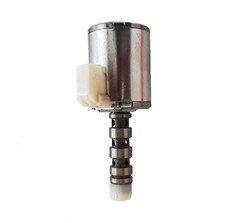
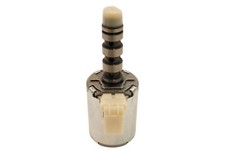
Forget the two-wire, on/off lockup solenoid you may know from older transmissions. Transmission Digest's technical reference on the 5R110W (TorqShift) describes the TCC solenoid as a directly proportional, three-port solenoid. The PCM varies DC current to it between 0 and 1 amp, and 1 amp represents maximum pressure in that circuit. Because the solenoid is proportional rather than switched, it sets both the apply rate and the release rate of the converter clutch, and it can hold the clutch in a controlled slip instead of just snapping it fully locked or fully open.
To decide when and how hard to apply, the PCM reads engine coolant temperature, intake air temperature, accelerator pedal position, transmission fluid temperature, output shaft speed and the transmission range sensor. That list is worth memorizing, because a bad fluid temperature sensor or a flaky APP signal will change lockup behavior and the transmission takes the blame for an input problem.
One input is missing from that list and it matters more than any of them: turbine shaft speed. Per the ATSG TorqShift manual, the turbine and intermediate shaft speed sensors share one case-mounted housing, and their signal is used for line pressure, shift timing and TCC operation. Converter slip is engine rpm minus turbine speed, so a turbine speed signal that drops out makes a locked converter look like it is slipping. ATSG lists three codes for that circuit: P0715 (signal lost during normal operation), P0717 (no signal) and P0718 (noisy signal). If any of them are stored next to a P1744, fix the speed signal first. Our 5R110W P0715 guide walks through it. Do not assume a clean code list clears the sensor, either. Gears' Keith Clark notes that speed sensor faults can cause failsafe behavior with or without a code, and that averaged scan data can hide short dropouts. Graph turbine speed against engine rpm with lockup commanded before you pull the valve body.
On the hydraulic side, Sonnax's converter clutch control reference explains the 5R110W uses a two-path converter. Release oil flows down the center of the turbine shaft and exits between the TCC piston and the converter cover, which holds the piston off the cover so the clutch stays released. To apply, the valve body exhausts that release oil while regulated apply pressure clamps the piston against the cover. The TCC control valve and the regulated apply circuit set how gradually that clamp-up happens, based on what the solenoid is commanding. Anything that disturbs that balance of oil in two opposing paths, too much pressure, too little, or a restriction on either side, shows up as a lockup complaint.
Sonnax also notes a failure mode worth knowing before you start pulling parts: excess feed pressure into the solenoid regulator produces too much output pressure, which causes early lockup and slow release, and worn seals that let charge pressure cross-leak into the apply circuit cause erratic apply timing. Both of those can mimic a bad solenoid on a scan tool even though the solenoid itself is fine.
Reading the codes correctly on this transmission
Three codes come up around 5R110W lockup complaints, and they are not interchangeable:
- P0740 — TCC circuit malfunction. This is the electrical code. It flags an open circuit, a short to ground, or abnormal voltage in the TCC solenoid circuit, something that keeps the PCM from even commanding lockup in the first place. Start with the solenoid wiring and connector, not the valve body.
- P0741 — TCC circuit performance or stuck off. This is a generic performance code. The PCM commanded lockup, but the engine-to-input-shaft speed relationship did not respond the way it should, generally a persistent slip well above what a locked converter should show. This is a hydraulic or mechanical fault, not a wiring fault.
- P1744 — TCC system performance or stuck off (Ford-specific). This is Ford's own manufacturer-specific version of the same complaint, and it is the one you will actually see logged on 5R110W no-lockup comebacks. Transmission Digest's writeup on a 5R110W set up this way describes it specifically as excessive TCC slip, or slip speed out of range.
In other words: P0740 sends you to the wiring harness and connector. P0741 and P1744 both send you to the hydraulic and mechanical side of the lockup circuit, which is the harder diagnosis and the one this guide focuses on.
Diagnosing P1744 or P0741 with no lockup apply
Transmission Digest's technical writeup on a 5R110W with no lockup apply and a P1744 excessive-slip code lays out a specific suspect list, and it starts with confirming the electrical side is clean. First, use an amp meter to confirm the PCM is actually sending a TCC command signal to the solenoid. If the command is present and correct but the clutch still will not apply, the article lists four hydraulic and mechanical causes to work through in order of how invasive they are:
- A debris-plugged lockup solenoid feed orifice. No feed oil, no apply pressure, no lockup, regardless of what the solenoid is doing electrically. Check this before condemning the solenoid.
- A faulty lockup solenoid. If the feed orifice is clear and the command signal checks out, replace the solenoid and road test again before going further.
- A missing or damaged stator tube scarf-cut seal. This seal lives on the stator support and a failure here lets apply oil escape internally instead of building pressure at the piston. Finding this requires pulling the transmission and pump.
- A lockup valve retainer sitting in the wrong position. If the retainer or the bushing behind it is pushed in too far, it physically limits how far the lockup valve can travel, which limits or blocks apply regardless of solenoid command. Also a pump-off inspection.
Work the list in that order. The orifice and the solenoid can be checked and replaced without removing the transmission; the seal and retainer cannot. Confirming the electrical command first with an amp meter also keeps you from replacing a solenoid that was never the problem, which is a common, avoidable comeback on this unit.
Diagnosing a TCC that cycles, slips, or will not fully release
A different complaint pattern, lockup that applies but hunts, slips under load, or will not fully release, points away from the no-apply causes above and toward the valve body or the cooling circuit instead.
Sonnax's 5R110W valve body layout reference identifies three bores that specifically affect converter clutch behavior:
| Valve | Sonnax kit | Symptoms Sonnax lists |
|---|---|---|
| TCC control plunger valve | 36940-01K | Overheating, excess TCC slip, TCC cycling, TCC slip, code 1783, P0741 |
| Converter pressure limit valve (2005 and later) | 36940-06K | Harsh TCC apply, soft TCC apply, TCC codes, TCC slip, TCC lining failure, erratic TCC apply pressure, excess converter pressure |
| Pressure regulator valve (oversized) | 36940-03K | Codes 1744 and 1783, low line pressure and TCC concerns |
Source: Sonnax, "Ford 5R110W Valve Body Layout."
These wear in a predictable pattern: oil leaks past a worn bore, the regulated pressure that bore controls becomes erratic, and apply behavior gets unstable in response. On the scan tool, that reads as actual slip cycling or hunting while the commanded TCC current stays flat and steady, which is a different signature than the no-apply causes above, where the command itself might be fine but nothing happens hydraulically at all.
The other half of this complaint pattern is flow, not pressure. Sonnax's lockup troubleshooting reference gives a specific number: when TCC release flow drops below about 0.45 gallons per minute, the piston starts dragging against the cover instead of releasing cleanly, which feels like a lockup that will not let go or that drags down low-speed driveability. That reference also gives a way to tell a pressure problem from a flow problem on the bench: if cooler flow is normal but line pressure reads low, you have a pressure problem upstream; if cooler flow is low with normal line pressure, something between the converter and the cooler is restricted, most often the cooler itself or a line. Flow test at the cooler return before you assume the valve body is at fault.
What to check, by symptom
| What the scan tool shows | Likely cause | Where to look |
|---|---|---|
| P0740, no command signal present | Wiring or connector fault | TCC solenoid circuit, harness, connector |
| P1744/P0741, command confirmed good with amp meter, no apply at all | Feed orifice, solenoid, stator tube seal, or lockup valve retainer | Check orifice and solenoid first; pump-off inspection for the seal and retainer |
| Actual slip cycling with a steady, correct TCC current command | Worn TCC control plunger or converter pressure limit valve bore | Valve body (Sonnax 36940-01K or 36940-06K) |
| Low line pressure along with TCC slip complaints | Worn pressure regulator valve bore | Valve body (Sonnax 36940-03K); check pump |
| Lockup drags or will not fully release, low-speed driveability feels off | Restricted cooler flow (under ~0.45 GPM release flow) | Flow test at cooler return; flush or replace a restricted cooler |
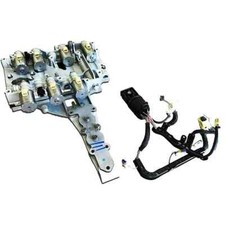
Shop the part for this fix: 5R110W master shift solenoid set (7-piece, OEM 3C3Z-7G383AB)
When the amp meter confirms a bad TCC command or a lockup solenoid that will not respond, this 7-piece set replaces the TCC solenoid along with the rest of the solenoid body in one job rather than chasing one solenoid at a time. For valve bodies and individual solenoids across the 5R110W range, search the full catalog at CoreTransmissionParts.
See the 5R110W master solenoid set at CoreTransmissionPartsNeed parts for this job?
Our 5R110 parts page carries 5R110W TCC solenoids, pressure control solenoids and valve bodies, so once the scan data and amp meter point you to a cause, you can order the matching part and check out on site.
FAQ
What does the TCC solenoid actually control on a 5R110W?
Transmission Digest describes it as a directly proportional, three-port solenoid. The PCM varies DC current from 0 to 1 amp, and that current controls both the apply rate and the release rate of the converter clutch, not just an on/off lockup. The PCM sets that current using engine coolant temperature, intake air temperature, accelerator pedal position, fluid temperature, output shaft speed and the transmission range sensor.
What is the difference between P0740, P0741 and P1744 on a 5R110W?
P0740 is a generic electrical code for the TCC circuit itself, such as an open, a short, or abnormal voltage at the solenoid. P0741 is a generic performance code that sets when the PCM commands lockup but the clutch does not respond, usually from a persistent engine-to-input-shaft speed difference during commanded lockup. P1744 is Ford's own manufacturer-specific version of that same performance complaint, and on the 5R110W it has been documented with excessive TCC slip.
Why would a 5R110W set P1744 with no TCC application at all?
Transmission Digest lists four mechanical and hydraulic suspects for a no-lockup 5R110W setting an excessive-slip code once the electrical command is confirmed good with an amp meter: a debris-plugged lockup solenoid feed orifice, a faulty lockup solenoid, a missing or damaged stator tube scarf-cut seal, and a lockup valve retainer sitting in the wrong position. The orifice and solenoid can be checked without removing the transmission; the seal and retainer checks require pulling the pump.
Can a worn valve body cause the TCC to cycle on and off by itself?
Yes. Sonnax ties TCC cycling, excess slip and overheating to wear at the TCC control plunger valve bore, which they address with kit 36940-01K. A worn converter pressure limit valve bore, addressed with kit 36940-06K on 2005-and-later units, is listed for erratic apply pressure and TCC codes instead of clean cycling.
Does low cooler flow affect torque converter lockup on a 5R110W?
Yes. Sonnax states that when TCC release flow drops below about 0.45 gallons per minute, the TCC piston starts dragging against the cover instead of releasing cleanly. That shows up as a lockup that will not fully let go, or as inconsistent apply feel, and it traces back to a restricted cooler or cooler lines rather than the solenoid or valve body.
Related guides
- 5R110W Torque Converter Lockup Shudder Fix
- 5R110W Pressure Control Solenoid Symptoms
- 5R110W Valve Body Symptoms
- 5R110W Harsh Shift Causes and Fix
- 5R110W Common Problems and Fixes
Sources
- Transmission Digest, "Ford 5R110W (TorqShift)." Backs the TCC solenoid as a directly proportional three-port solenoid (0-1 amp, 1 amp = maximum pressure) controlling both apply and release rates, and the PCM inputs used for TCC control (ECT, IAT, APP, fluid temperature, output shaft speed, TR sensor). transmissiondigest.com
- Transmission Digest, "What to do about a Ford 5R110W with no lock up." Backs the P1744 excessive-slip diagnosis sequence: confirming the TCC command with an amp meter, then checking the lockup solenoid feed orifice, the solenoid itself, the stator tube scarf-cut seal, and the lockup valve retainer position. transmissiondigest.com
- Sonnax, "Ford 5R110W Valve Body Layout." Backs the TCC control plunger valve kit (36940-01K), converter pressure limit valve kit (36940-06K) and oversized pressure regulator valve kit (36940-03K), and the symptoms listed for each. sonnax.com
- Sonnax, "Troubleshooting Lockup Issues." Backs the TCC piston dragging on the cover when release flow drops below about 0.45 GPM, and the cooler-flow-versus-line-pressure test for separating a pressure problem from a flow restriction. sonnax.com
- Sonnax, "Hydraulics Fundamentals, Part IV: Converter Clutch Control." Backs the two-path release/apply oil circuit on the 5R110W's converter, and excess solenoid feed pressure or seal cross-leakage causing early lockup and erratic apply. sonnax.com
- ATSG, Ford 5R110W (TorqShift) technical manual (2004). Backs the shared TSS/ISS housing, the use of the TSS/ISS signal for line pressure, shift timing and TCC operation, and the P0715/P0717/P0718 turbine speed code descriptions. ATSG manual (PDF)
- Gears Magazine (ATRA), Keith Clark, "Sensing Problems: A Look at Common Sensor Failures." Backs speed sensor faults causing failsafe operation with or without codes, and scan data averaging hiding intermittent dropouts. gearsmagazine.com
Generic P0740/P0741 definitions reflect standard SAE J2012 OBD-II convention and are provided for diagnostic context, not quoted from a single source above.