There's no part in a 5R55S parts book labeled "3-4 clutch." The component shops mean when they say that is the direct clutch, and per Sonnax's own breakdown of the 5R55S/5R55W valve body, it's applied in Reverse, 4th and 5th gear by the variable-force PC-C solenoid (also called VFS3). The nickname sticks for the same reason it sticks on Ford's 4R70W family: it's the element that comes on for the shift into 4th and stays clamped through 5th, so a transmission that's fine in the lower gears but flares, slips, or burns specifically on that shift almost always points here first.
What makes this transmission different from a simple "worn friction pack" story is that the apply pressure for this clutch travels through two valve bores that are documented wear points on the 5R55S/5R55W casting, and the solenoid commanding it has its own, separate history of degrading from a bad factory fluid additive. Replacing the clutches without checking which of those is actually the cause is how the same burn happens again in a few thousand miles.
How the Direct Clutch Gets Its Pressure
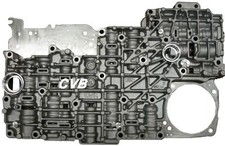
The forward clutch holds in every forward gear on this unit. The direct clutch is the element layered on top of it for Reverse, 4th and 5th. Per Sonnax, the PCM commands the direct clutch on by lowering PC-C solenoid amperage, which raises PC-C (VFS3) pressure. That pressure doesn't go straight to the clutch piston — it's routed through the reverse pressure modulator valve and then the reverse engagement valve before it reaches the direct clutch drum. [1] Two valve bores sit between the solenoid and the clutch, and either one wearing out changes what the clutch actually sees, regardless of what the solenoid is commanding.
Symptoms That Point at the Direct Clutch
- Slipping or loss of 4th and 5th gear while 1st through 3rd pull clean and engage firmly.
- Delayed or slow reverse engagement — the same leak path that starves the direct clutch also bleeds reverse pressure, so the two symptoms often show up together.
- Burned, dark fluid with friction material in the pan, sometimes found on a routine pan drop before the customer has even complained.
- Flashing overdrive-off light and slow 3-4 engagement as an early warning sign, worsening as the fluid warms and thins.
- Gear-ratio or solenoid performance codes that don't point at a specific electrical fault when the solenoid itself tests fine on the bench.
None of these symptoms by themselves prove the direct clutch pack is worn out. The 5R55S has a documented habit of burning a perfectly reasonable clutch pack because of what's happening upstream in the valve body, which is why the diagnosis has to work backward from the symptom to the actual leak before parts get ordered.
Cause 1: Reverse Pressure Modulator Valve Bore and End Plug Wear
This is the single most specific, documented cause of direct clutch burnout on the 5R55S and 5R55W. Sonnax's product documentation for its Reverse Modulator Valve Kit states plainly that constant oscillation wears the reverse pressure modulator valve bore and end plug, and that wear leaks both the VFS3 solenoid feed pressure and the direct clutch apply pressure. The listed result is slipping or loss of 4th and 5th gear, a burned direct clutch, and delayed reverse engagement — the exact symptom cluster described above, from one worn bore. [1]
The practical implication is that a direct clutch pack can be in acceptable condition and still burn repeatedly if this bore is worn, because the clutch never gets the full, stable pressure the solenoid is actually commanding. Installing new frictions without addressing the bore just restarts the same slow burn. Sonnax's fix is Part No. 56947J-23K, a kit built around a highly wear-resistant aluminum sleeve with the end plug integrated and an anodized aluminum valve with annular grooves for hydraulic centering, installed with the F-27741-TL13 tool kit and the VB-FIX fixture. The same valve and sleeve are shared across several related kit numbers (27741-13K, 56947J-29K, 56947J-56K, 56947J-59K), so confirm the exact kit against your casting before ordering.
Cause 2: Case Servo Pin Bore Wear (a Related but Different Circuit)
A second, well-documented wear point on this case is the overdrive and intermediate servo pin bore, and it's worth ruling out separately because it can produce an overlapping symptom picture on a scan tool. Sonnax's tooling for the 56361J-01K Overdrive & Intermediate Servo Pin Bore Sleeve Kit lists the symptoms it corrects as 1-2, 2-3 and 4-5 flares, gear loss, band lining failure, codes 732, 733 and 735, and loss of overdrive and intermediate servo control. [3] Servo apply oil feeds through the case bridge into the servo pin, and as that pin bore wears, apply oil leaks into the barrel area of the case, which hurts shift timing and servo/band apply pressure broadly rather than the direct clutch circuit specifically.
This matters diagnostically because a tech chasing a 4th/5th slip or a burned direct clutch can find a worn servo pin bore and assume it's the whole story, when the reverse pressure modulator bore from Cause 1 is the one actually feeding that clutch. Both wear points exist on the same case and can be present at the same time. The fix for this one is a separate kit, installed with the dedicated S-56361J-TL tool kit, which includes the drill, roughing and finishing reamers, guide pin, reamer jig, installation handle, pilot, O-rings, and a flex hone.
Cause 3: A Solenoid That's Degraded From the Inside Out
The direct clutch is a solenoid-controlled clutch, and on early 5R55S/5R55W builds, the solenoid itself has a documented history that has nothing to do with mechanical wear. Sonnax's own 5R55 identification write-up notes that factory-fill Mercon V used before May 2005 is tied to solenoid degradation, caused by a seal-swell additive issue in that early fluid. Ford's first response was an XL-11 additive fix (part 4L2Z-19B546-AB, bulletin FSA 04B22); the resolution that followed was a revised Mercon V formulation in a black quart container, part number XT-5-QM. [2]
A degraded PC-C solenoid doesn't necessarily fail electrically — it can still read a normal resistance value on a meter while delivering inconsistent, wandering pressure to the reverse pressure modulator valve downstream. That inconsistency is enough to slip and glaze a direct clutch pack with zero mechanical wear anywhere in the circuit. If you're working a pre-2005 5R55S with no obvious case wear and a direct clutch that's still burning, service history and fluid condition on this specific point are worth checking before a second teardown.
Confirm What You're Actually Working On First
5R55S and 5R55W parts do not interchange on the hard parts that matter here. Sonnax's identification guide gives a simple way to tell them apart without pulling a tag: the W uses a 24-tooth OD sun gear and the S uses a 38-tooth OD sun gear. [2] The S replaced the 5R55N in 2003 Lincoln Town Car and Thunderbird applications and carried into 2004-2005 Explorer and Mountaineer, where the W had been used in 2002-2003. Order a valve body or sun gear off the wrong assumption and it won't fit.
It's also worth knowing that Ford revised the 5R55S/W valve body again starting in the 2009 model year, per TSB #09-21-4 (dated 11-02-09), which addresses a whistle noise at idle when hot. [4] The fix on that bulletin is an updated separator plate, identifiable by two small ID holes near the servo bore, and that casting isn't interchangeable with the pre-2009 valve body. If you're ordering a replacement valve body alongside a direct clutch repair, confirm model year before you order.
Diagnosing It on the Bench and Scan Tool
- Check fluid level and condition the Ford way. There is no dipstick to trust here: Ford sets the level at the check plug in the pan with the engine running and TFT between 81 and 120°F, on a unit that holds 12.6 qt of MERCON V total [7]. Burnt-smelling or dark fluid with friction debris confirms the clutch pack is already contributing material to the pan.
- Map exactly which gears are affected. Slipping or loss isolated to 4th and 5th, especially paired with a slow reverse engagement, points straight at the direct clutch's pressure path rather than the forward clutch or the overdrive band.
- Pull codes and check PC-C output with a gauge. Ford's diagnostic data describes PC-A, PC-B and PC-C as variable-force solenoids that set line, band and clutch apply pressure, and PC-C output is verified at the separate pressure control tap, not the line pressure tap [6]. A PC pressure that is always low or always high can be the PCM or wiring, or a solenoid stuck electrically or mechanically [6]. A solenoid that reads correctly can still be feeding a worn valve bore downstream, and Ford's own line pressure chart lists the reverse clutch, servos, separator plate and valve body when pressure is low in Reverse only [6].
- Pull the valve body and inspect the reverse pressure modulator bore and end plug for wear from oscillation before condemning the solenoid.
- Separately inspect the overdrive/intermediate servo pin bore if you're also seeing 1-2, 2-3 or 4-5 flares or codes 732/733/735, since that's a different bore with a different fix.
- On a pre-2005 unit with no case wear found, check service history for the fluid and solenoid history described above before assuming the clutch pack alone is the fix.
The Fix
Match the repair to what you actually found:
- Worn reverse pressure modulator valve bore/end plug: install the Sonnax sleeve, valve and spring kit (56947J-23K or the matching casting-specific number) before reassembling the clutch pack, or the new frictions inherit the same leak that burned the old ones.
- Worn servo pin bore: sleeve the bore with the 56361J-01K kit and the correct reaming tooling. This is a case repair, not a clutch repair, even though it can share symptoms with Cause 1.
- Pre-2005 solenoid degradation with no mechanical wear found: replace the solenoid body assembly and refill with current-spec Mercon V. Additive alone will not reverse damage already done to a degraded solenoid.
- Simple high-mileage friction wear with none of the above present: a fresh clutch pack and steels, properly torqued and clearance-checked, is the correct and sufficient fix.
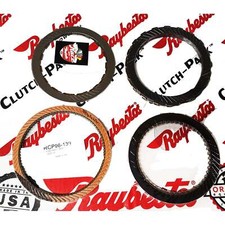
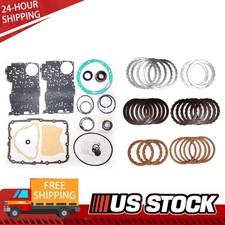
5R55S Friction Clutch Kit, 1999-Up
Direct replacement friction clutch kit for the 5R55S clutch packs. Pair it with a reverse pressure modulator bore inspection before reassembly — a leaking bore will burn new frictions just as fast as it burned the old ones.
Get the 5R55S friction clutch kit →Need a valve body or a full rebuild kit instead? Browse the full 5R55S parts collection.
Fluid, and Why It Matters Here
The 5R55S runs on Mercon V. Ford's own FCSD chemicals and lubricants catalog lists it under Motorcraft part numbers XT-5-QMC (1-quart bottle, case of 12), XT-5-5Q3M (5-quart container) and XT-5-DMC (55-gallon drum), specified for Mercon V and Mercon-type applications, and explicitly not a substitute where Mercon SP, LV or ULV is called for. Given the solenoid-degradation history described above, using current-spec Mercon V rather than an off-brand universal ATF is not a minor detail on this transmission — it's tied directly to the direct clutch's own failure history.
The Short Version: A 3-4 Clutch Failure Checklist
- Confirm whether 4th/5th slipping and slow reverse are showing up together — that pairing points at the reverse pressure modulator bore.
- Run bidirectional solenoid tests on PC-C before assuming the solenoid itself is bad.
- Pull the valve body and inspect the reverse pressure modulator valve bore and end plug for oscillation wear.
- Separately check the servo pin bore if flares or codes 732/733/735 are also present.
- Confirm S vs. W identification (24T vs. 38T sun gear) and model year before ordering a valve body.
- On pre-2005 units, consider solenoid degradation history before a second teardown.
- Refill with current Mercon V and confirm fluid condition before road testing.
Worked in that order, most of these jobs end up being a valve body bore repair or a solenoid body replacement rather than a straight clutch-and-steels swap that quietly fails again in a few thousand miles.
FAQ
What does the "3-4 clutch" mean on a 5R55S?
There's no part in the 5R55S book stamped 3-4 clutch. The component doing that job is the direct clutch, applied in Reverse, 4th and 5th gear by the variable-force PC-C (VFS3) solenoid, per Sonnax's own breakdown of the valve body. Shops call it the 3-4 clutch because it's the element that comes on for the shift into 4th and stays on through 5th, the same naming habit used on Ford's 4R70W family.
Why does a worn reverse pressure modulator bore burn the direct clutch?
The reverse pressure modulator valve and end plug see constant oscillation in normal operation, and Sonnax documents that wear there leaks both the VFS3 solenoid feed pressure and the direct clutch apply pressure. A clutch that can't get full, stable apply pressure slips while it's trying to clamp, and that slipping generates the heat that glazes and burns the friction material even if the pack itself isn't worn out.
Is a 5R55S direct clutch failure always a mechanical wear problem?
No. Sonnax's own 5R55 identification write-up documents that factory-fill Mercon V used before May 2005 had a seal-swell additive issue tied to solenoid degradation, which Ford addressed first with an XL-11 additive fix and then with a revised Mercon V formulation. A degraded PC-C solenoid commands pressure inconsistently, and that electrical/chemical root cause can burn a direct clutch that has no mechanical wear in the pack at all.
Can servo pin bore wear cause the same symptoms as a bad direct clutch?
It can overlap. Sonnax's tooling for the overdrive and intermediate servo pin bore sleeve kit lists 1-2, 2-3 and 4-5 flares, gear loss, and codes 732, 733 and 735 as the symptoms it corrects, which is a different circuit than the direct clutch but shares the same case and can produce flares and gear-ratio codes that look similar on a scan tool. Confirm which bore is actually worn before ordering parts.
Will a fresh clutch pack alone fix a 5R55S direct clutch problem?
Only if plain friction wear is the actual cause, and on this transmission that's often not the whole story. If the reverse pressure modulator bore is worn, a new friction pack will slip and burn again on the same leaking apply pressure. Fix the valve body circuit feeding the clutch first, then install new frictions, or the repair fails again in a few thousand miles.
Working a 5R55S this week?
Clutch modules, valve bodies, solenoid kits, servo pin bore sleeve kits and full rebuild kits — shipped fast from the USA.
Shop 5R55S parts →Sources
- Sonnax — Reverse Modulator Valve Kit, Part No. 56947J-23K, product page. Backs the direct clutch application via the PC-C (VFS3) solenoid through the reverse pressure modulator and reverse engagement valves, constant oscillation wearing the modulator valve bore and end plug, the resulting leakage of solenoid feed and direct clutch apply pressure, and the symptom list of delayed reverse, slipping/loss of 4th-5th gear, and burned direct clutch. sonnax.com
- Sonnax — "Figuring Out the 5R55 Alphabet," tech resource. Backs the S vs. W identification (38-tooth vs. 24-tooth OD sun gear), the S replacing the N in 2003 Lincoln/Thunderbird and its use in 2004-2005 Explorer/Mountaineer, VFS1/2/3 modulator bore wear reducing clutch and servo pressure, and the pre-May-2005 Mercon V seal-swell additive issue tied to solenoid degradation along with the XL-11 additive fix (FSA 04B22) and the revised Mercon V (XT-5-QM) resolution. sonnax.com
- Sonnax — Tool Kit for 56361J-01K (Overdrive & Intermediate Servo Pin Bore Sleeve Kit), product page. Backs the servo pin bore wear symptom list (1-2, 2-3, 4-5 flares; gear loss; band lining failure; codes 732, 733, 735; loss of OD/intermediate servo control) and the dedicated S-56361J-TL reaming tool kit required to service it. sonnax.com
- Sonnax — "5R55S/W, '09-Later Whistle Noise," tech resource. Backs TSB #09-21-4 (11-02-09) addressing a whistle noise when hot at idle, the updated separator plate fix identifiable by two small ID holes near the servo bore, and the 2009-and-later valve body casting change. sonnax.com
- Ford Customer Service Division (FCSD) Chemicals and Lubricants — Mercon V Automatic Transmission and Power Steering Fluid, product page. Backs Mercon V as the correct fluid specification, Motorcraft part numbers XT-5-QMC, XT-5-5Q3M and XT-5-DMC, and that Mercon V is not a substitute for Mercon SP, LV or ULV applications. fcsdchemicalsandlubricants.com
- Ford Motor Co. service information (Mitchell reprint) — "5R55W/S Diagnosis." Backs the three variable-force PC solenoids (PC-A, PC-B, PC-C) controlling line, band and clutch apply pressure, PC-C output being verified at the pressure control tap, the always-low/always-high PC pressure causes, and the "Low In R Only" line pressure result list. 5R55W/S Diagnosis (PDF)
- Ford Motor Co. service information (Mitchell reprint) — "Servicing - Explorer & Mountaineer." Backs MERCON V for the 5R55W/S, the 12.6 qt total capacity, and the check-plug level procedure at 81-120°F TFT with the engine running. 5R55W/S Servicing (PDF)