The 5R55W landed in the 2002-2003 Explorer and Mountaineer as the wide-ratio version of Ford's 5-speed automatic, and the flush-versus-drain-and-fill question comes up on it constantly because it's a sealed-fill unit with no dipstick and a reputation for being touchy about fluid level. But the method isn't actually the first thing worth sorting out on this transmission. This specific family shipped from the factory with a fluid problem that degraded its own solenoids, and Ford had to issue both an interim additive fix and a final revised fluid to deal with it. Before you decide whether to flush it or drop the pan, you need to know where in that history the unit you're working on actually sits, because that history changes what either service does to it.
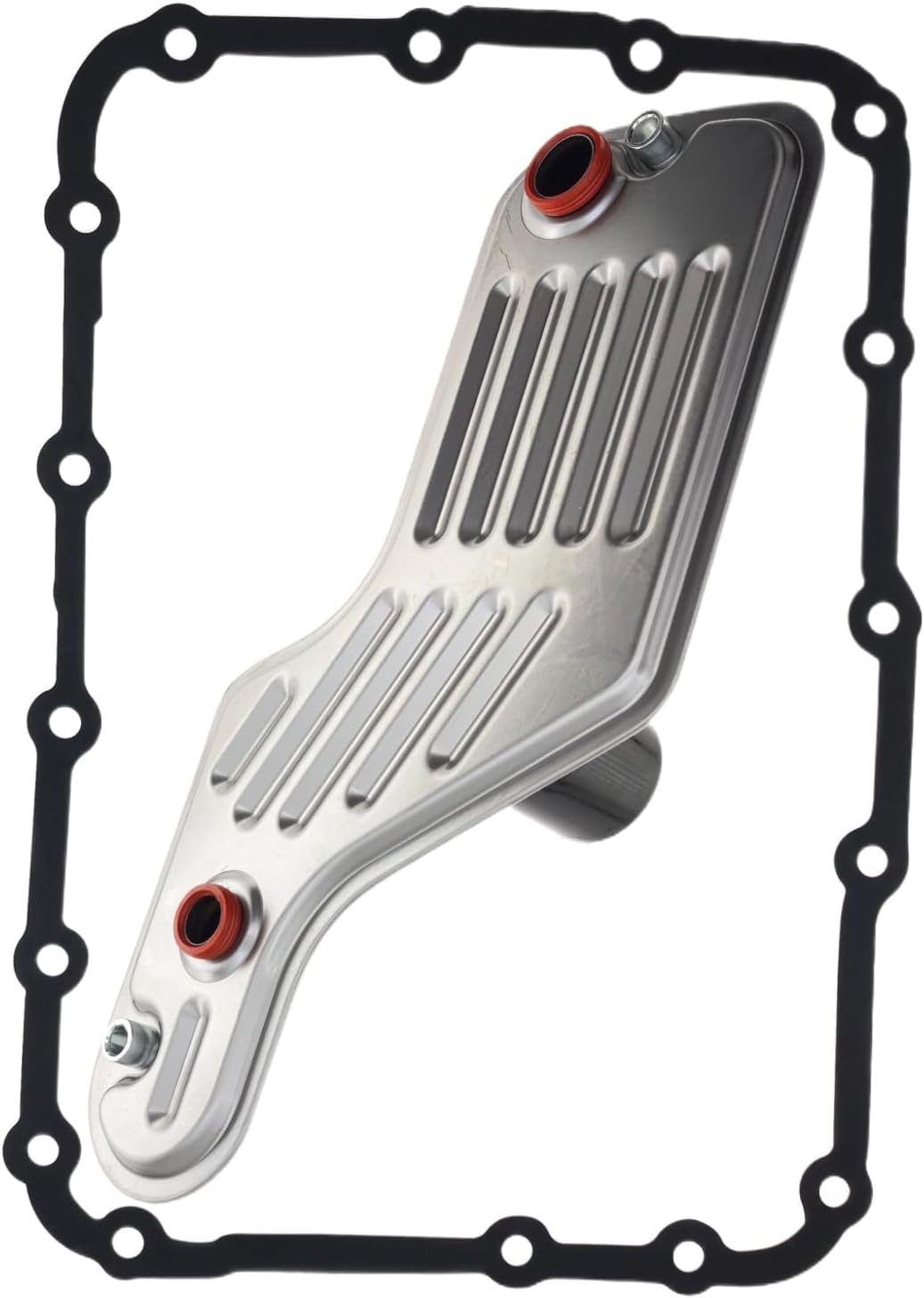
What Each Service Actually Does
A drain-and-fill drops the pan, pulls the filter, drains whatever gravity gives up from the sump, and refills through the fill/check plug with fresh MERCON V using a fill tool, since there's no dipstick tube on this unit. A power-flush, run through an external exchange machine clamped onto the cooler lines, pushes new fluid in one line while pulling old fluid out the other, cycling through the torque converter, valve body, and cooler loop while the engine runs. The appeal of the flush is real: a drain-and-fill only empties the sump, so a meaningful amount of old fluid stays trapped in the converter and valve body passages, because the 5R55W has no converter drain plug. A flush is built to chase that remaining fluid down. It does that by running more flow and more pressure cycling through every bore in the valve body than a refill ever will, and that's exactly where this specific transmission gets exposed.
The Bore Wear Pattern Sonnax Documents on This Family
Sonnax's technical reference covering the 5R55 alphabet names the TCC modulator bore and the main regulator bore as the first to wear on this family, simply because they see the most activity. As city-driving cycle rate increases, the VFS1, VFS2, and VFS3 modulator bores wear next, bleeding off clutch and servo pressure that the PCM's adaptive learning strategy compensates for right up until it can't. Once wear gets ahead of adaptive compensation, Sonnax notes the result is gear ratio codes or outright slippage. On the shop floor that shows up as loss of reverse, a flare on the 1-2 or 2-3 shift, delayed forward engagement, TCC slippage or converter noise, and a rattle in neutral that can trace back to the converter piston or flex plate. None of that gets fixed by moving more fluid through the unit faster. What varnish and partially degraded fluid sometimes do, by accident, is bridge a worn bore just enough to slow the leak down. A flush machine's higher flow and the cleaning action of fresh fluid is specifically what can knock that bridging deposit loose, which is the mechanism behind every rebuilder's warning that flushing a borderline unit is what turns a quiet problem into a comeback.
The Factory Fluid Problem That Makes This One Different
Here's the part that doesn't show up on a 5R55S writeup: Sonnax's own reference states that the factory ATF fill using an early MERCON V, prior to May 2005, degraded solenoids on the 5R55E, 5R55W, 5R55S, and 5R55N transmissions. That's a factory fluid defect, not a service mistake, and it affected a real production window of the exact transmission this article is about. Ford's response came in two stages. The interim fix was an additive package, part number 4L2Z-19B546-AB with fluid designation XL-11, covered under bulletin FSA 04B22, installed into both vehicles in service and dealer parts inventory. The final fix was a revised MERCON V formulation, part number XT-5-QM, distributed in a black quart container to distinguish it from the earlier fluid. Sonnax also flags a separate but related trap: if the solenoid base plate or filter gets mixed between variants during service, the unit will lose reverse, TCC apply, and solenoid oil pressure, and new VFS-style solenoids can lose prime on installation, requiring the circuits to be filled with MERCON V or XL-11 and pulled through with vacuum before the unit is buttoned up. Ford units built after 2002 also carry an adaptive relearn strategy that should be run after any solenoid service.
Why this matters for the flush-versus-drain decision: if a 5R55W in front of you was serviced with the interim XL-11 additive and never got the final revised fluid, you're not just choosing between two generic fluid-change methods, you're choosing how aggressively to displace a fluid chemistry that Ford itself replaced for cause. A drain-and-fill lets you dilute that history down gradually over a few services. A flush tries to force it out in one pass, at the same flow rates that can disturb the bore wear described above. Neither service fixes solenoid degradation that's already happened. What both services need to agree on is getting the unit onto the current, correctly specified MERCON V and keeping the base plate, filter, and solenoid set matched to this exact variant, not a mix of 5R55 parts bins.
What GM Already Put in Writing About Flush Machines
Ford hasn't published a current, public bulletin naming external flush machines for this family by number, but General Motors has, and the engineering logic in it applies to any clutch-and-valve-body automatic, the 5R55W included. GM's technical service bulletin on unscheduled supplemental services addresses it directly under "Subsystem Flushing": external transmission fluid exchange or flush machines are not recommended for automatic or manual transmissions, because using them to replace fluid may affect operation or durability. The approved method, per that same bulletin, is draining and refilling by the procedures in the vehicle's own service information. The bulletin also states that GM's analysis of parts returned after exposure to aftermarket flushes showed potential damage and shortened durability, which is a manufacturer looking at actual warranty returns, not a theoretical caution written to sell a competing service.
Cooler and Line Contamination Is a Different Problem
There's a flush-adjacent service that is standard practice and shouldn't be confused with power-flushing a healthy, in-service transmission: flushing the external cooler and lines after a transmission failure, before a rebuilt or replacement unit goes in. Metal particles and debris left behind in the cooler loop from a prior failure can destroy a freshly rebuilt transmission within miles if they're not cleared out first. Transmission Digest's technical coverage of this exact issue lays out the accepted method: push an aerosol line flush through the cooler and lines, catch the discharge in a clear container so you can actually see how much contamination comes out, and add an inline filter on the return line if there's any doubt left after that. That's a targeted service aimed at a specific, known contamination source. It's a different decision than running fluid-exchange equipment through a 5R55W that's still in service with unknown valve body wear, and conflating the two is how "a flush is standard after a rebuild" turns into "a flush is always safe," which it isn't.
Get the Replacement Fluid Spec Right Regardless of Method
Whichever service you run, it only helps if the fluid going back in is correct. Ford's Motorcraft fluid specification calls for MERCON V in electronically controlled automatic transmissions like the 5R55W, sold under part numbers XT-5-QMC (1-quart, 12-count case), XT-5-5Q3M (5-quart), and XT-5-DMC (55-gallon drum), and it explicitly warns against substituting MERCON SP, MERCON LV, MERCON ULV, or Type F fluid where MERCON V is specified. Because this is a sealed-fill design with no dipstick, confirming the fill is correct means running the unit to operating temperature in Park and checking the level at the fill/check plug in the pan sump with the correct fill adapter, not estimating it by quarts poured. Get that step wrong on either a flush or a drain-and-fill and you can produce the exact shudder and delayed-engagement symptoms the fluid service was supposed to prevent.
The 5R55S/W installation guide used by remanufacturers spells out just how easy that step is to get wrong on this unit, and why it matters more after a flush or a multi-pass drain-and-fill than after a single pan drop: the guide states plainly that overfilling the transmission is the number one cause of fluid leaks from the converter housing, because the extra volume gets pushed out the vent and runs down the bell housing where it looks exactly like a front pump seal leak. Its fill procedure pumps in 8 quarts, brings the fluid to 80-120°F at a 650 rpm idle while cycling the shifter through every range, then adds roughly 2 more quarts before the level gets checked at the T30 plug with Ford tool 307-437 or an equivalent adapter. Dry fill capacity runs 11.2 quarts behind the 3.0L/3.9L and 12.4-12.7 quarts behind the 4.0L/4.6L, and the pan drain plug and level check plug torque to 19 ft-lbs (26 Nm) and 89 in-lbs (10 Nm) respectively. A tech who pumps in a round number of quarts instead of running this procedure, especially right after a flush when every circuit in the unit has just been displaced, is the most common way a correctly performed fluid service gets blamed for a leak it didn't cause.
Ford's own service data puts a hard requirement behind that. After a rebuild or replacement unit, the 2002 Explorer 5R55W/S diagnosis section calls for a new cooler or cleaned and backflushed cooler tubes, then a cooler flow test: with the return line routed into the fill adapter at idle, adequate flow is about 8 oz (237 ml) in 15 seconds, and low flow means the lines and auxiliary cooler get cleaned or replaced before the job is done [Ford 5R55W/S Diagnosis].
The Practical Recommendation
Start with Ford's interval, not a shop menu. Ford's 2002 Explorer and Mountaineer servicing data lists fluid and filter at 150,000 miles under normal use, dropping to 30,000 miles for towing, sustained temperatures above 90°F, heavy loads, hilly terrain, or dusty and off-road use, with total capacity at 12.6 quarts (12.0 L) of MERCON V and the level set at the check plug with TFT at 81-120°F [Ford 5R55W/S Servicing]. Most Explorers qualify for the 30,000-mile schedule.
On a 5R55W with no slip, no shudder, no codes, and a known or reasonably assumed fluid history (no leftover factory-fill issue, no mixed components), a drain-and-fill with a filter and gasket change is the lower-risk service. If you want to displace more old fluid than one drain-and-fill removes, run two or three spaced a short drive apart rather than reaching for a flush machine. If the unit's history is unknown, especially on a vehicle old enough to have been built before the May 2005 fluid fix, treat that as a reason to lean toward the gentler, staged drain-and-fill approach rather than a one-pass flush. And if the transmission already shows slip, TCC shudder, delayed reverse, or a ratio code, skip the fluid-service question entirely until the valve body bore wear and solenoid condition have been checked; pushing more fluid volume through a worn bore first is more likely to finish the failure than fix it.
FAQ
Is it safe to run a power-flush machine on a 5R55W?
Only if you actually know the unit's condition first. Sonnax documents that the TCC modulator bore and main regulator bore on the 5R55 family wear first because they see the most activity, and the VFS1, VFS2, and VFS3 modulator bores follow as city-driving cycle rate climbs. Varnish from degraded fluid sometimes bridges a worn bore just enough to limit the leak. A flush machine's higher flow and the cleaning action of fresh fluid is exactly what can knock that bridging deposit loose, turning a quiet seep into slippage, a flare on the 1-2 or 2-3 shift, or delayed forward engagement right after the service.
Why does the 5R55W specifically have a fluid history that other transmissions don't?
Because Ford's own factory fill fluid on this family had a documented problem. Sonnax's technical reference on the 5R55 alphabet states that the factory ATF fill using an early MERCON V, prior to May 2005, degraded solenoids on the 5R55E, W, S, and N transmissions. Ford's interim fix was an additive package (part 4L2Z-19B546-AB, fluid XL-11, under bulletin FSA 04B22) added to vehicles and dealer inventory, followed by a final fix switching to a revised MERCON V fluid sold in a black quart container. A 5R55W built or serviced in that window may be running fluid chemistry that neither a flush nor a drain-and-fill alone fully corrects unless you know which fix, if any, it already received.
Why do some manufacturers say not to use flush machines at all?
Because at least one has put it in writing with warranty data behind it. General Motors' technical service bulletin on unscheduled supplemental services states under "Subsystem Flushing" that external transmission fluid exchange or flush machines are not recommended for automatic or manual transmissions, and that using them may affect operation or durability. The bulletin adds that GM's own analysis of parts returned after exposure to aftermarket flushes showed potential damage and shortened durability. That's a GM document, not a Ford one, but the underlying logic, pushing exchange-rate flow through bores that weren't designed to see it, applies just as directly to a clutch-and-valve-body unit like the 5R55W.
How much fluid does a drain-and-fill actually replace on a 5R55W?
Less than most people assume. A pan drop only empties the sump; the torque converter, the valve body passages, and the cooler loop hold fluid that never drains out, since the 5R55W has no converter drain plug and fills through a check plug rather than a dipstick tube. A single drain-and-fill typically displaces well under half the total fluid. Technicians who want more than one pass without a machine usually run two or three drain-and-fills spaced a short drive apart, diluting the old fluid down in stages instead of trying to force a full exchange in one sitting.
What fluid does the 5R55W actually need?
MERCON V, and only MERCON V. Ford's Motorcraft fluid specification lists MERCON V as the correct fluid for electronically controlled Ford, Lincoln, and Mercury automatic transmissions, sold under part numbers XT-5-QMC (1-quart), XT-5-5Q3M (5-quart), and XT-5-DMC (55-gallon drum), and it explicitly says not to use MERCON SP, MERCON LV, MERCON ULV, or Type F fluid where MERCON V is specified. Because the 5R55W has no dipstick, confirming the fill is correct means running the unit to operating temperature in Park and checking the level at the fill/check plug in the pan, not estimating it.
Shop the part for this fix — the 5R55W Transmission Filter (2002-2010) at CoreTransmissionParts is the correct filter to pair with a drain-and-fill service on this unit. If you need the broader catalog of 5R55W parts instead, the full 5R55W transmission parts collection on CoreTransmissionParts covers solenoid packs, gaskets, bonded pistons, and rebuild kits for this family.
Sources
- Sonnax — “Figuring Out the 5R55 Alphabet.” Backs the TCC modulator and main regulator bore wear pattern, the VFS1/VFS2/VFS3 modulator bore wear tied to city-driving cycle rate, the resulting gear-ratio-code and slippage symptoms, and the factory early-MERCON-V solenoid degradation history including the FSA 04B22 / XL-11 interim fix and the XT-5-QM final-fix fluid. sonnax.com/tech_resources/195-figuring-out-the-5r55-alphabet
- General Motors — Technical Service Bulletin on Unscheduled Supplemental Services (Including Flushing Services and Additives), “Subsystem Flushing” section. Backs the manufacturer statement that external transmission fluid exchange or flush machines are not recommended, that drain-and-refill per Service Information is the approved method, and that GM's analysis of returned parts exposed to aftermarket flushes showed potential damage and shortened durability. Hosted via NHTSA's public TSB database. static.nhtsa.gov/odi/tsbs/2016/MC-10116888-9999.pdf
- Transmission Digest — “To Flush or Not to Flush,” by Pat Barrow (Lubegard). Backs the separate issue of transmission cooler and line contamination after a prior failure, the aerosol line-flush method, catching discharge in a clear container to assess contamination level, and the option of an inline return-line filter. transmissiondigest.com/to-flush-or-not-to-flush
- Ford Customer Service Division / Motorcraft — MERCON V Automatic Transmission and Power Steering Fluid product page. Backs the fluid specification call and the XT-5-QMC/XT-5-5Q3M/XT-5-DMC part numbers, plus the warning against substituting MERCON SP, MERCON LV, or MERCON ULV. fcsdchemicalsandlubricants.com — MERCON V
- 5R55S & 5R55W Installation Guide (remanufacturer service documentation). Backs the statement that overfilling is the number one cause of fluid leaks from the converter housing, the T30 fill/level plug procedure with Ford special tool 307-437, the fluid fill steps (8 quarts, warm to 80-120°F at 650 rpm, cycle through gears, add roughly 2 more quarts before checking), dry fill capacities of 11.2 quarts (3.0L/3.9L) and 12.4-12.7 quarts (4.0L/4.6L), and the drain plug torque of 19 ft-lbs (26 Nm) and level plug torque of 89 in-lbs (10 Nm). static.summitracing.com/.../vre-7800a-4s.pdf
- Ford Motor Co. service information (Mitchell reprint) — 2002 Ford Explorer, “Servicing - Explorer & Mountaineer,” 5R55W/S. Backs the 150,000-mile normal and 30,000-mile severe-duty fluid and filter intervals, the 12.6 qt (12.0 L) MERCON V capacity, and the 81-120°F TFT check-plug level procedure. 5R55W/S Servicing (PDF)
- Ford Motor Co. service information (Mitchell reprint) — 2002 Ford Explorer, “5R55W/S Diagnosis.” Backs the requirement to replace or backflush the cooler after a rebuild and the cooler flow test (about 8 oz / 237 ml in 15 seconds). 5R55W/S Diagnosis (PDF)