A 62TE that is leaving spots in the driveway sends most people straight to the pan gasket, and sometimes that is the whole story. But this transaxle has at least five other leak paths that are just as common, two of them chronic enough that Sonnax and Transmission Digest have both written dedicated service pieces on them. Chase the wrong one and you will pull a pan, replace a gasket that was not the problem, and have the customer back in two weeks with the same wet bellhousing.
This is a zone-by-zone map of where the fluid is actually coming from, the fluid spec and capacity so you stop chasing a leak that is really an overfill, and the documented fix for each spot — Sonnax kit numbers, OEM part numbers, and the one Chrysler service note almost nobody checks before they bolt the pump back on.

The Six Spots, Ranked by How Often They Actually Show Up
Work the list in this order before you commit to a repair. The first three account for most of the comebacks I see on this transaxle.
1. The shift shaft bushing (top of the case)
This is the one most techs miss because it is not where anyone expects a transmission to leak. The manual shift shaft passes through the top of the 62TE case on a nylon bushing, and Sonnax's own technical write-up calls the bushing's tendency to crack a chronic problem on this unit. Once it splits, the seal fails in both directions: ATF weeps out along the shaft, and road water, salt and dirt work their way in from outside. Sonnax links that moisture ingress directly to shudder complaints and shortened torque converter clutch life, so a leak here is not just a fluid-loss problem — it is feeding a converter failure you have not connected yet. Epoxy does not fix it, because it cannot seal a shaft that is still moving inside a cracked ring.
2. The pan gasket
Still the most common simple leak, and the most commonly over-diagnosed. The 62TE pan uses a reusable rubber gasket, and after enough heat cycles it hardens and stops conforming at the corners, especially near the filter neck. Before you resurface anything, check that the pan bolts are actually torqued even — an overtightened corner next to an undertightened one will weep at the loose side no matter how new the gasket is.
3. The Low/Reverse piston retainer oil feed (an internal leak, not a drip)
This one will not show up on your driveway, and that is exactly why it gets missed. Transmission Digest's writeup on the Sonnax fix explains that the gasket material around the Low/Reverse clutch feed hole loses its resilience with age, letting the piston retainer distort and lose its seal at that feed hole. The result is a cross-leak between hydraulic circuits, not fluid loss from the case. On the vehicle it presents as delayed reverse engagement and, on a scan tool, an abnormally high Low/Reverse clutch volume index. If a customer complains about a reverse-engagement delay with no fluid on the ground, this is the first thing to check, not the pan.
4. The front pump seal and gasket
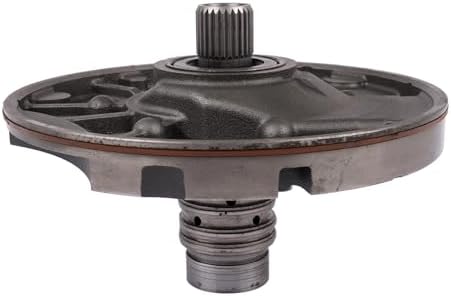
Classic bellhousing-area leak. The front pump assembly carries its own seals and gasket at the case split line, and age plus heat cycling takes the lip seal out first. If you are pulling the pump anyway for a converter or pump bushing concern, replace the complete assembly rather than just the seal — a scored pump bushing on a worn assembly will just as easily take out a freshly rebuilt case.
5. Case-to-bracket fasteners and the torque converter bolts
Easy to create this leak yourself during a pump or converter job. Chrysler's GPOP tech tip 9004330 is explicit: the transmission bracket-to-case fasteners are one-time-use and must be replaced and torqued to 105 Nm if they are removed during service, and the eight drive plate-to-crankshaft bolts plus the four torque converter bolts carry factory sealant and must also be replaced, never reinstalled dry. Reuse any of those and you have built a slow leak into the job before the vehicle leaves the bay.
6. The vent tube (not a leak at all)
Fluid dripping from the vent on top of the case after a fill is not a seal failure — it is the transmission correctly purging excess fluid above its proper level. Chrysler's own service information explains the mechanism: with too much fluid, the geartrain churns it into foam, and that foam "may be mistaken for a leak" when it escapes from the transmission vent (Chrysler fluid level check). Before you touch a single seal, pull the level and compare it to spec.
Two things to keep out of the hunt: stop-leak products and generic additives. Chrysler's ATF+4 guidance says transmission "sealers" should be avoided because they may adversely affect seal integrity, and that the only additive it accepts is a leak-detection dye (Chrysler automatic transmission fluid). Dye plus a UV light is the right tool for pinning down which zone is wet; a bottle of seal swell is not a repair.
Fluid Spec and Capacity, So You Are Not Chasing an Overfill
The 62TE runs MOPAR ATF+4, Chrysler Material Standard MS-9602, part number 05013457AA by the quart or 05191185AA by the gallon. Per Chrysler's own vehicle quick-reference capacity chart, a 62TE service fill is 5.5 quarts (5.2 liters) and a full dry overhaul fill is 9.0 quarts (8.5 liters). That overhaul figure is a nominal dry-fill number — the chart itself notes that actual capacity varies with cooler type, cooler line length and whether an auxiliary cooler is installed, so always finish the job with the fluid-level-check procedure at operating temperature rather than stopping at the spec number. An overfilled unit purges through the vent and mimics a leak at the bellhousing; an underfilled one aerates and can trigger pressure-related codes that have nothing to do with a seal.
Diagnosis Order That Does Not Waste a Pan Gasket
- Check the level and condition first. Confirm it against the 5.5-quart service-fill spec before you assume any seal has failed.
- Clean the case and drive it. Degrease the transmission and the bellhousing, drive a normal loop, then look at where fluid reappears first — the top of the case near the shift shaft, the pan rail, or the bellhousing.
- Separate "wet" from "weeping." Fluid at the vent with everything else dry points to overfill, not a seal.
- Check the shift shaft bushing by hand. Wipe the area dry, work the shift linkage, and look for fluid working out around the shaft itself rather than running down from above.
- If there is no external leak but the customer reports a reverse-engagement delay, scan for Low/Reverse clutch volume index data before you assume a hydraulic problem elsewhere in the valve body.
- Pull the pan last, once the external leak paths are ruled out, so you are not replacing a gasket that was never the source.
Fixes, By Spot
- Shift shaft bushing: Sonnax Shift Shaft Saver Kit, part number 262991-04K. It replaces the OE nylon bushing with a Delrin bushing and PTFE sleeve on the existing shaft, so you are not sourcing a new shift shaft to fix a bushing problem.
- Low/Reverse piston retainer feed: Sonnax 92106-03K for the late-style, large-feed-hole retainer (OEM retainer 04800255AB); use 92106-01K on earlier four-speed-style gaskets. The kit adds a steel shim that resists the distortion that causes the leak, plus a sealing grommet at the feed hole.
- Pan gasket: replace the gasket and filter together rather than reusing either, and verify even pan-bolt torque on reassembly.
- Front pump seal: replace the complete pump assembly when the bushing shows any scoring; a new seal on a worn bushing bore will not hold.
- Case-to-bracket fasteners and TC bolts: replace rather than reuse, torque the case-bracket fasteners to 105 Nm, and do not reinstall the drive plate or converter bolts without fresh sealant on new bolts.
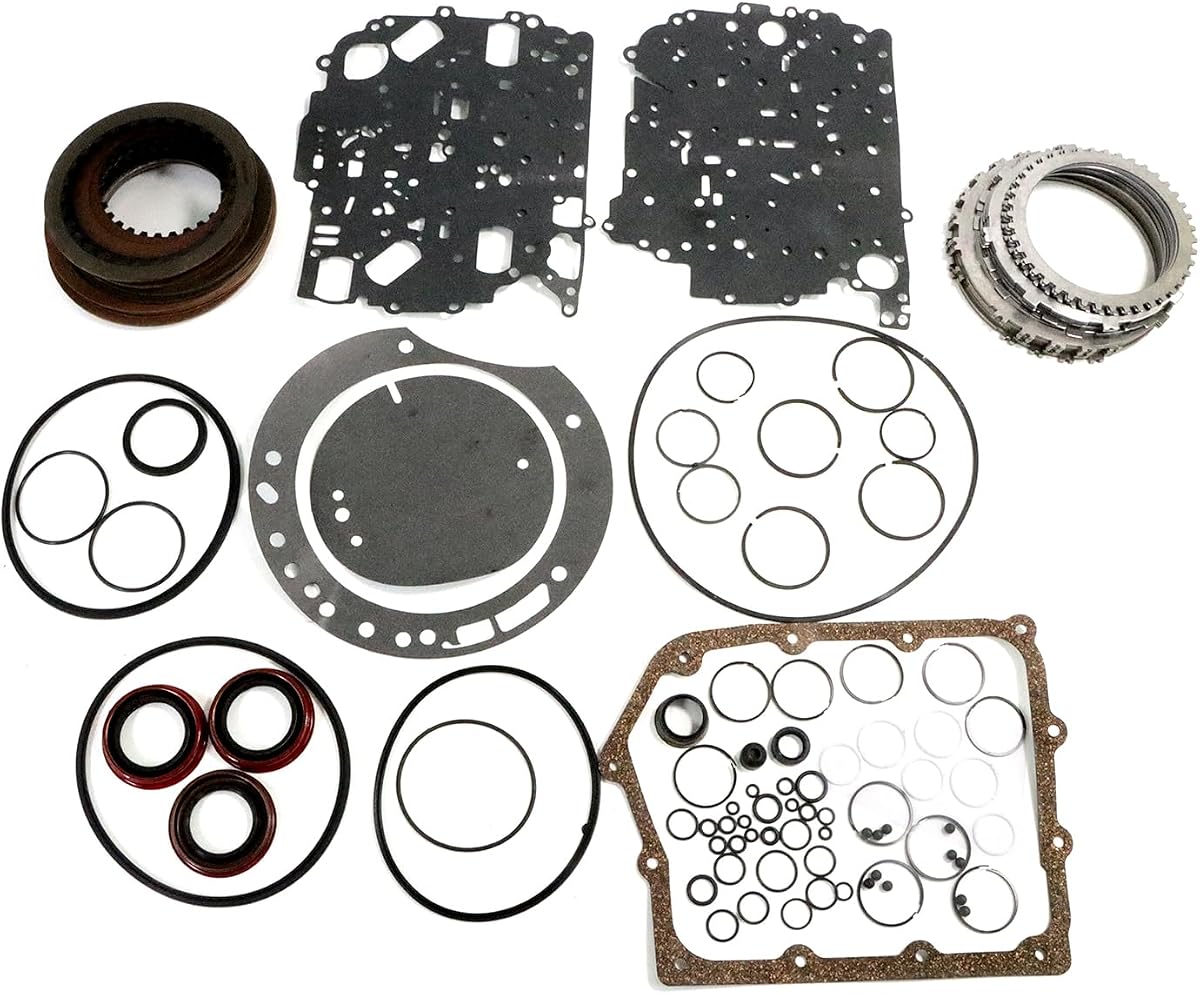
62TE Overhaul Gasket & Seal Kit, 2007-Up → or the aluminum pan and filter kit
None of these fixes require pulling the transaxle out of the vehicle. The shift shaft kit and pan gasket are both in-car jobs; the pump and converter-area work needs the transaxle out, which is also your opportunity to replace the case-bracket fasteners correctly instead of reusing whatever came out.
Need parts for this job?
Seal kits, pump assemblies, pan and filter kits, and full rebuild kits for the Chrysler 62TE, priced for shops and shipped from the USA.
Shop 62TE parts →FAQ
What is the single most common 62TE fluid leak?
Two spots compete for that title. The pan gasket is the most common simple leak because it is a reusable rubber gasket that takes heat cycles for years and eventually hardens at the corners. The shift shaft bushing at the top of the case is the most common chronic leak, because Sonnax documents it as a known failure point where the stock nylon bushing cracks, and a cracked bushing leaks fluid out along the shaft while pulling moisture and road salt in.
Why does a cracked 62TE shift shaft bushing matter more than a normal seal leak?
Because the damage runs both directions. Fluid gets out along the shaft, but water and dirt also work their way in from the top of the case. Sonnax ties that moisture ingress directly to torque converter clutch shudder and shortened clutch life, so a leak that looks minor on the driveway can be feeding a converter problem you have not diagnosed yet.
How much ATF+4 does a 62TE take?
Per Chrysler's own vehicle quick-reference capacity chart, a 62TE service fill is 5.5 quarts (5.2 liters) and a full overhaul (dry) fill is 9.0 quarts (8.5 liters), both using MOPAR ATF+4, quart part number 05013457AA or the 05191185AA gallon jug. Always confirm the final level with the fluid-level-check procedure at operating temperature rather than trusting the fill number alone, since actual fill varies with cooler length and whether an auxiliary cooler is installed.
Can I reuse the torque converter bolts and case-bracket fasteners when I pull a 62TE pump?
No. Chrysler's GPOP tech tip 9004330 states that the transmission bracket-to-case fasteners are one-time use and must be replaced and torqued to 105 Nm if removed during service, and that the eight drive plate-to-crankshaft bolts and four torque converter bolts carry sealant and must also be replaced rather than reinstalled dry. Reusing bolts that were sealed at the factory is a documented way to turn a routine pump job into a comeback leak.
Does an overfilled 62TE look like it has a leak?
Yes, and it is one of the most common false alarms on this transaxle. Excess fluid above the correct level purges out through the vent tube on top of the case, which drips down the bellhousing and pools under the vehicle exactly like a seal leak. Before replacing any seal, pull the fluid level, let it settle at operating temperature, and compare it against the correct service-fill spec.
Is a leak at the Low/Reverse feed the same as a leak you can see dripping?
No, and this is a common misdiagnosis. The Low/Reverse piston retainer oil feed leak that Sonnax and Transmission Digest document is an internal cross-leak: aging gasket material around the clutch feed hole lets pressure bleed into the wrong cavity. It shows up as delayed reverse engagement and a high Low/Reverse clutch volume index on a scan tool, not as fluid on the garage floor, so do not rule it out just because the unit is not visibly dripping.
Sources
- Sonnax — "How to Repair/Prevent 62TE Shift Shaft Bushing Failure," April 21, 2021. Backs the shift shaft bushing as a chronic failure point, the cracked-nylon-bushing mechanism that lets moisture and dirt into the case, the link to shudder and shortened torque converter clutch life, why epoxy does not fix it, and the 262991-04K Shift Shaft Saver Kit fix (Delrin bushing, PTFE sleeve, O-rings, retaining clips). sonnax.com
- Transmission Digest — "Chrysler Low/Reverse Piston Retainer Oil Feed Seal Kit." Backs the Low/Reverse feed leak as an internal cross-leak caused by gasket material relaxing around the clutch feed hole, the resulting piston retainer distortion, the delayed-reverse and high clutch-volume-index symptoms, and the Sonnax 92106-03K (late-style, large feed hole, retainer 04800255AB) and 92106-01K (early four-speed-style gasket) kit fix. transmissiondigest.com
- Chrysler Group LLC (FCA) — GPOP Issue Review System Tech Tip 9004330, "Plate, Torque Converter Drive," June 16, 2021 (NHTSA document library). Backs the one-time-use requirement and 105 Nm torque spec for the transmission bracket-to-case fasteners, and the requirement to replace rather than reuse the eight drive plate-to-crankshaft bolts and four torque converter bolts because they carry factory sealant. static.nhtsa.gov
- Chrysler — "04 Vehicle Quick Reference / Capacities and Recommended Fluids / Specifications" (NHTSA document library). Backs the 62TE service-fill capacity of 5.5 quarts (5.2 liters), the overhaul (dry) fill of 9.0 quarts (8.5 liters), the MOPAR ATF+4 fluid spec and part numbers (05013457AA quart, 05191185AA gallon), and the note that nominal refill figures vary with cooler type and length. static.nhtsa.gov
- Chrysler service information — Fluid Level Check. Backs the explanation that overfilling lets the geartrain churn the fluid into foam, which can escape from the transmission vent and be mistaken for a leak, and that low or high level both aerate the fluid. jeep.automotive-manuals.com
- Chrysler service information — Automatic Transmission Fluid (ATF+4). Backs the factory position against transmission sealers and aftermarket additives, the leak-detection dye exception, and that ATF+4 color and odor do not indicate fluid condition. jeep.automotive-manuals.com