Every 62TE that comes in slipping or refusing to move gets the same guess: "it's the pump." Sometimes it is. More often, on this specific transaxle, it is a cracked torque converter piston scraping friction material into the pan while the pump is fine, and Chrysler's own parent company wrote a bulletin about exactly that confusion because enough shops were replacing the wrong part. The two failures can set the same codes and feel almost identical from the driver's seat, which is why a real diagnosis matters more here than on most units.
This guide covers what a genuine 62TE pump-prime failure looks like, how FCA's own decision tree tells it apart from the converter piston problem that mimics it, and why pressure testing this transaxle is more limited than you're used to. Every source is listed at the bottom.

The code that actually points at the pump: P0944
Three codes travel together on a 62TE hydraulic problem, and they do not mean the same thing. P0740 is TCC Out of Range. P0868 is Transmission Fluid Pressure Low. P0944 is Loss of Hydraulic Pump Prime, and it is the one that specifically implicates the pump. A 62TE that sets P0740 or P0868 alone is not necessarily a pump problem; one that sets P0944 alongside them is a different, more serious case according to FCA's own documentation.
That documentation exists because of a known build defect: FCA US LLC's STAR Case S2121000005, "62TE 6-Speed Transmission Cracked Torque Converter (TC) Piston Repair Index," released April 1, 2021, documents that some vehicles were built with a torque converter whose internal piston can develop a crack over time. The cracked piston scrapes friction material off the front cover, which can cause transmission slipping, erratic shifting, and the same P0740/P0868/P0944 code set a real pump failure produces. The bulletin lists specific suspect transmission and torque converter assembly part numbers (several R80xxxxx series builds) and notes that remanufactured units and converters built after August 2017 should not exhibit the condition.
FCA's own decision tree: how to tell the two apart
The bulletin does not just describe the problem, it gives a repair index built entirely around which codes are present and what the fluid, pan, and filter show. This is the single most useful diagnostic tool for this complaint, and it is worth following step by step rather than guessing:
- Service Action A — P0740 is present, but P0868 and P0944 are not. If the fluid shows no thermal breakdown and the pan, filter, and magnet show no friction material, the fix is a torque converter, transmission fluid, and filter replacement. No pump, no valve body.
- Service Action B — P0740 and/or P0868 are present, but P0944 is not. Same clean-fluid, clean-filter check. If it passes, but the clutches show wear, the repair grows to converter, cooler, fluid, a line flush, the valve body, and the filter.
- Service Action C — P0868 and/or P0740 are present along with P0944, or the fluid shows thermal deterioration, or the filter/pan/magnet already show significant friction material. This is the escalation tier: if the clutches show significant wear or heat staining on top of that, the repair is the full transmission assembly (including the torque converter), the cooler, and a line flush.
Notice what is absent from all three tiers: a pump assembly replacement by itself. The bulletin treats P0944 as a marker for how far the contamination and clutch damage has progressed, not as an instruction to swap the pump. If your 62TE sets P0944 and the fluid and filter are clean, you are looking at the earlier end of this chart, not necessarily a dead pump; if the fluid is dark, smells burned, and the filter is loaded with friction material, you're at Service Action C and a used or rebuilt pump is the least of what the unit needs.
What a genuine pump-prime failure looks and feels like
No-move on a fresh install, or after cooler line work
Transmission Digest's Wayne Colonna, writing on 62TE no-move diagnostics, gives the clearest field test for a pump that truly is not drawing fluid: on a fresh install, pay attention to how much fluid the unit takes. If it only sucks up around four quarts and stays full even after start-up, the pump is not drawing fluid at all, and that points at a filter or pump problem rather than anything downstream. A pan drop is the first step, before you chase anything else.
No cooler flow at the return line
If the transmission did take up a normal fill and still will not move, Colonna's next check is pulling the transmission cooler return line to see if fluid is actually reaching the converter. No flow at the return line means the converter charge circuit is compromised. The next suspect is the pressure regulator valve: if it's stuck in the high-line position, it restricts converter fill outright, which produces the same no-move symptom without the pump itself being the cause.
Slip or hesitation across every gear, not one clutch
A single worn clutch circuit produces a ratio problem in specific gears. A real pump-prime or main-line pressure problem does not respect gear boundaries, because every clutch depends on the same supply. If the hesitation or slip shows up in Drive and Reverse alike, that pattern, combined with the P0944/P0868/P0740 code set above, is what separates a supply-side problem from a single burned clutch.
Why you can't just hook up a gauge and check every circuit
On most transmissions, a shop can tap several clutch circuits and isolate the problem quickly. The 62TE was not designed that way. Wayne Colonna's "62TE Observations," written after Chrysler's engineers presented the unit's design at the 2007 SAE World Congress, explains why: the SAE paper behind the transaxle (Martin, Dourra, Redinger, Champine, et al., "62TE 6-Speed Transaxle for Chrysler Group," SAE 2007-01-1097) documents that the designers eliminated every clutch-pressure tap from the valve body to cut machining cost and remove potential leak points.
To still verify clutch pressure on the assembly line, the valve body was built with nine non-removable checkballs sitting in specially tapered ports. A factory test probe unseats them temporarily to measure clutch circuit pressure, then the balls reseat and seal the circuit permanently once the probe is withdrawn. Those nine checkballs are not meant to be disturbed in the field; if you pull a valve body apart and find them, leave them alone and just confirm they still seal.
That leaves exactly one usable pressure tap on the entire transmission: main line pressure only, and it's in an unusual location, the lower-left pan rail, right alongside the pan bolts. If you want a clutch-circuit-specific pressure reading on a 62TE, you don't have the option most other transmissions give you. You're working from main line pressure, the DTC pattern, and what the pan and filter tell you instead.
Rule out a low fill before you blame the pump
A pump can only move the oil it can reach. When the level is low, the pickup pulls air on hard acceleration and turns, line pressure dips, and the shift quality goes with it. FCA documented exactly this from the factory side: Technical Service Bulletin 21-046-15 (July 16, 2015) covers 2015 Dodge Grand Caravan and Chrysler Town and Country vans with the 62TE (sales code DG2) built June 19-21, 2015, that left the plant under-filled. The complaint was harsh shifting under heavy acceleration in hot or cold weather, and the fix was nothing more than setting the level with the 62TE "Fluid Level and Condition Check" procedure and topping up with ATF+4 (Mopar 05013457AA). Check for DTCs first, as the bulletin says, then set the level hot by the procedure before you pull a pump.
Diagnose it in this order
- Pull the codes and sort them against the FCA decision tree above. P0740 alone, P0740/P0868 without P0944, or the full set with P0944 put you on a different branch before you touch a wrench.
- Drop the pan. Look at fluid color and smell for thermal breakdown, and check the pan and magnet for friction material. This single step decides whether you're on Service Action A/B or C.
- Pull the filter and inspect it for clutch material. Significant friction material here moves you to the heavier repair tier regardless of which codes were set.
- If this is a fresh install with a no-move complaint, check how much fluid it actually took. Roughly four quarts and staying full points at the pump or filter, per Colonna's field diagnosis above.
- Check main line pressure at the lower-left pan rail tap. It's the only pressure reading you get on this unit, so treat it as the primary hydraulic data point alongside the DTC pattern.
- Pull the cooler return line if there's no movement at all. No flow there means the converter charge circuit, and specifically the pressure regulator valve, is the next suspect, not necessarily a worn pump.
62TE Transmission Pressure Transducer Sensor, OEM 5078708AC
Before you condemn the pump, rule out the sensor. A faulty line pressure transducer can report a false low reading that looks exactly like a real P0868 pressure problem. This is the OEM-spec sensor, sold by our sister store, CoreTransmissionParts.
Shop the part for this fix →Confirmed a real pump or internal failure instead? See CoreTransmissionParts' full 62TE parts search for pump, valve body, and rebuild kit options.
Need parts for this job?
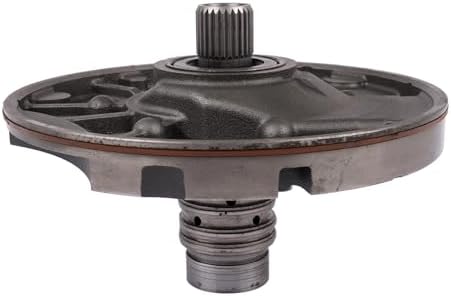
Our 62TE parts page has the front oil pump assembly, filter and gasket kits, solenoid packs, and master rebuild kits for when the damage has gone past the pump. Checkout is on site.
FAQ
What are the symptoms of a failing 62TE pump?
A true pump-prime failure sets DTC P0944 (Loss of Hydraulic Pump Prime), usually alongside P0740 and/or P0868, and shows up as a no-move condition or a hard slip in every gear rather than one clutch circuit. On a fresh install, a pump that is not drawing fluid will only take a few quarts and stay full even after start-up. A whine while the engine runs and a no-move condition after a cooler line was disconnected and reconnected are the other classic signs.
Does a P0944 code always mean the pump itself has failed?
No. FCA's own technical bulletin on the 62TE treats P0944 as part of a symptom set that can also be caused by a cracked torque converter internal piston scraping friction material into the pan and filter, not a worn pump. The bulletin's diagnostic path checks fluid condition, pan debris, and filter debris before you condemn the pump, because the repair is very different: a converter and fluid service versus a full transmission replacement.
Why does a cracked torque converter piston get confused with a pump failure?
Both conditions choke off hydraulic pressure to the clutches, so both can produce slipping, erratic shifts, and the same family of pressure codes, P0740, P0868, and P0944. FCA's bulletin exists specifically because techs were chasing the wrong repair; its decision tree (Service Actions A, B, and C) sorts the two apart by which codes are present together and what the fluid, pan, and filter show.
Why is line pressure testing harder on a 62TE than on most transmissions?
Chrysler's engineers removed every clutch-circuit pressure tap from the 62TE valve body to cut machining cost and leak points, verifying clutch pressure at the factory instead through nine non-removable checkballs that a test probe unseats on the assembly line. That leaves technicians with exactly one usable pressure tap on the whole unit, for main line pressure only, and it sits in an unusual spot: the lower-left pan rail next to the pan bolts.
Should I replace just the pump or the whole transmission?
It depends on what the fluid, pan, and filter show. FCA's bulletin escalates from a torque converter and fluid service (Service Action A) to a converter, cooler, fluid, line flush, valve body, and filter service (Service Action B) to a full transmission assembly replacement with cooler and line flush (Service Action C), based on whether the fluid shows thermal breakdown and whether the clutches show significant wear. Skipping straight to a pump swap without running that check risks replacing the wrong part.
Related guides
- 62TE No Movement Diagnosis
- 62TE Pressure Testing
- 62TE Torque Converter Shudder
- 62TE P0894 Fix
- 62TE Slipping: Causes and Fix
Sources
- FCA US LLC, STAR Online Case S2121000005, "62TE 6-Speed Transmission Cracked Torque Converter (TC) Piston Repair Index, To Aid In Diagnosis And Repair," Version 4.3, released April 1, 2021. Backs the P0740/P0868/P0944 code set, the cracked internal piston defect, the suspect transmission/converter part numbers, the August 2017 production cutoff, and the Service Action A/B/C diagnostic and repair tiers. static.nhtsa.gov (PDF)
- Transmission Digest, Wayne Colonna, "Another 62TE 'No-Move' Possibility," published December 30, 2020. Backs the fresh-install fluid-draw test (roughly four quarts and staying full indicates a pump or filter problem), the cooler-return-line flow check, and the pressure regulator valve stuck-in-high-line-position no-move cause. transmissiondigest.com
- Transmission Digest, Wayne Colonna, "62TE Observations," published April 1, 2008. Backs the elimination of clutch-pressure taps, the nine non-removable factory-test checkballs, and the single main line pressure tap located at the lower-left pan rail. transmissiondigest.com
- SAE International, Martin, Dourra, Redinger, Champine, et al., "62TE 6-Speed Transaxle for Chrysler Group," SAE Technical Paper 2007-01-1097, presented at the 2007 SAE World Congress. Backs the engineering rationale for removing clutch-pressure taps from the valve body design. saemobilus.sae.org
- FCA US LLC, Technical Service Bulletin 21-046-15, "Low Transmission Fluid Level," July 16, 2015 (hosted by NHTSA). Backs the under-filled 62TE build window (June 19-21, 2015, sales code DG2) on 2015 Grand Caravan and Town and Country, the harsh-shift-under-heavy-acceleration symptom, the Fluid Level and Condition Check procedure, and ATF+4 part number 05013457AA. static.nhtsa.gov (PDF)