The customer usually describes it as driving over rumble strips. Steady cruise somewhere between 35 and 55 mph, light throttle, and the whole van starts a low, fast vibration that goes away the moment they press harder on the pedal or touch the brake. On a Grand Caravan, Town and Country, Journey or ProMaster with the 62TE six-speed, that pattern is the converter clutch shuddering nine times out of ten. The tenth time it is an engine misfire or a compounder shift, and those are the jobs where somebody sells a converter that did not need selling.
This guide covers why a modulated converter clutch shudders in the first place, how to prove the shudder is the converter clutch and not something that feels like it, the causes in the order they actually turn up, and the repair sequence that fixes it once instead of three times. If you are chasing a stored slip code rather than a feel complaint, start with our 62TE P0741 guide; this one is about the vibration itself.
Why a Modulated Converter Clutch Shudders
Chrysler's 62TE service information is plain about what the converter clutch is for. A fluid coupling always slips, and the clutch was added to recover the efficiency lost to that slip by clamping the turbine's piston against friction material on the front cover for a direct 1:1 link. The controller does not engage it in the lower gears, because that would kill the torque multiplication needed to accelerate. Engagement is decided on coolant temperature, vehicle speed and throttle position, and the clutch engages at approximately 56 km/h (35 mph) with light throttle after the shift to third gear. That speed window is exactly where the shudder complaint lives, which is the first clue.
The second clue is that the 62TE does not simply lock the clutch. It is an EMCC system, Electronically Modulated Converter Clutch, and a variable force solenoid holds the clutch at a controlled slip rate for long stretches. A clutch that is deliberately slipping under load is sensitive to the friction behavior of the surfaces and the oil between them.
The fluid chemists described the failure precisely. Lubrizol's patent on anti-shudder friction durability, US5858929A, defines shudder as low frequency vibration in continuous slip torque converter clutches, and ties it to the stick-slip friction characteristics of the engaged clutch at slow slip speeds. The same document splits shudder into two components: initial shudder, and shudder durability, the shudder that develops over time. That second category is the one you see in the bay. A 62TE that was smooth for 70,000 miles and now shudders did not suddenly develop a design flaw. Its fluid's friction package wore out, its lining glazed, or its apply pressure stopped being stable, and the clutch started grabbing and releasing many times a second instead of slipping smoothly.
The hydraulics add the third piece. The 62TE runs a two-path converter. As Bob Warnke explains in Sonnax's converter clutch control article, release oil exits between the piston and the cover and holds the lining off, apply pressure clamps the piston on, and as release oil is exhausted apply pressure rises. Two-path clutch control typically takes three to four valves to regulate the slip rate. Every one of those valves, plus the solenoid feeding them, is a place where pressure can oscillate instead of hold steady, and an oscillating apply pressure feels exactly like a worn lining.
Prove It Is the Converter Clutch First
Three things feel like converter shudder on this unit and are not.
- Engine misfire under load. A weak coil or plug on a Pentastar produces a miss at light-load cruise that the driver reads as the transmission. Check misfire counters before anything else.
- A compounder shift that is out of time. Chrysler's own description of the 62TE's clutch-to-clutch shifts says the swap happens within 40 to 70 milliseconds, and that if the underdrive compounder shifts too early relative to the main centerline, a shudder or harsh shift results. That is a shift-event shudder, felt during a gear change, not a steady cruise vibration.
- Engine mounts. A collapsed mount turns normal lockup into a buzz through the floor. The tell is that it gets worse with load changes rather than at a specific slip condition.
The data list that settles it
Graph engine RPM and Input Speed Sensor RPM on the same scale, add the EMCC command or duty cycle, and add transmission temperature. Road test fully warm, because the controller will not command apply cold, and hold a steady light-throttle cruise above 35 mph.
- Shudder that begins only when EMCC is commanded and stops the instant it releases is converter clutch shudder. A light brake tap drops the command; if the vibration disappears with it, you have your answer without a single part replaced.
- ISS that saws back and forth around engine RPM while the command is steady means the clutch is grabbing and releasing. That is the stick-slip behavior the Lubrizol patent describes, visible on your scan tool.
- ISS that follows the engine RPM trace while the converter clutch is commanded off is a different animal. Keith Clark flagged exactly that pattern in ATRA's Gears as the signature of a mechanically faulty TCC solenoid that is not releasing, which on a 62TE shows up as a stumble or shudder while coming to a stop.
- Vibration with no EMCC command at all is not the converter clutch. Go back to the engine and the mounts.
The Causes, in the Order They Actually Show Up
1. Worn-out or wrong ATF
This is first because it is the most common and the cheapest to fix, not because it is the most interesting. Chrysler's service information says only fluids labeled Mopar ATF+4 should be used, and that color and odor cannot be used to judge fluid condition, since ATF+4 darkens to brown in normal use. The anti-shudder additives are exactly what the Lubrizol patent is about: the friction modifier package is what keeps the clutch's friction curve stable at low slip speed, and its durability is what fades with miles and heat. A generic multi-vehicle fluid, or ATF+4 that has cooked for 100,000 miles, loses that and the clutch starts to chatter.
Sonnax's Ed Lee made the same point from the rebuilder side in a converter troubleshooting case: switching to a fluid without the right friction additives was enough by itself to produce lockup shudder. The practical move on a shudder with no codes and no metal in the pan is a full fluid exchange with genuine ATF+4, a pan and filter service, and a road test. A meaningful share of these go away right there. If it comes back within a few hundred miles, the fluid was masking a mechanical cause, and the list continues.
2. A sticking EMCC solenoid
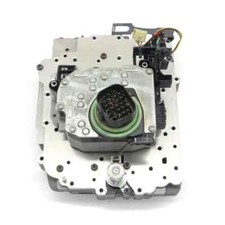
The 62TE's EMCC variable force solenoid bolts directly to the valve body and is separate from the main solenoid pack, so it is a pan-down job. Rob Faucett's 62TE case in Gears notes that this solenoid can stick both on and off, and Clark's column lists the mechanically faulty TCC solenoid as the usual source of the stumble-at-stop complaint. A spool that hangs on varnish does not hold a steady pressure, it steps, and a stepping apply pressure is felt as shudder. Resistance checks will not find this. The scan tool pattern above will.
3. TCC control and regulator valve bore wear
This is the cause that survives a new solenoid and a fluid change. Sonnax's 62TE catalog lists the Oversized TCC Control and Plunger Valve Kit 92835-33K as helping cure excess TCC slip, TCC shudder, TCC codes, overheated fluid and TCC lining, TCC apply and release concerns, and loss of fuel economy. It fits all 62TE units and requires the F-92835-TL33 reamer and VB-FIX fixture. Next to it, the Oversized TCC Regulator Valve Kit 92835-37K (tooling F-92835-TL37) is listed for damaged converter, TCC codes, no TCC release, excess converter pressure, excess cooler pressure, and high or low TCC release pressure.
Read those two lists together and the mechanism is clear. A worn control bore leaks the apply signal, so apply pressure wanders; a worn regulator bore lets release and converter-feed pressure drift. Either one makes the clamping force unstable while the clutch is supposed to be holding a steady slip. If you install a new converter against that valve body, you will be back in the same bay with a shuddering new converter, and Sonnax specifically ties overheated fluid and lining damage to the same wear.
4. Restricted cooler flow
Converter release oil has to leave the converter fast enough for the clutch to apply cleanly. Ed Lee's Sonnax case traced a lockup shudder to exactly that: if the exit orifice is too small, oil does not leave quickly enough and you get lockup shudder. The same case used a restricted cooler as a cause, a bypass test with the cooler lines looped together to isolate it, and a working benchmark of at least 1 quart of fluid in 20 seconds of cooler flow. On a 62TE that has already failed once, check this carefully, because Chrysler's overhaul procedure states that if transaxle failure has occurred the cooler bypass valve must be replaced and not reused or cleaned. Debris-loaded bypass valves and coolers are a classic reason a fresh rebuild shudders out of the box.
5. The converter lining itself
Last, not first. When fluid is fresh, the solenoid and valve body test clean, cooler flow is healthy and the shudder is still there under a steady command, the lining is glazed or damaged and the converter is the repair. Chrysler describes the converter as a sealed, welded unit that is not repairable and is serviced as an assembly. On the 2007 Pacifica specifically, Chrysler bulletin 21-016-07 addressed shudder with a controller flash plus a replacement converter using revised friction material, which is a good reminder that the software and the hardware were revised together.
62TE Torque Converter Clutch (TCC) Solenoid, OEM 926-378 → or browse all transmission solenoids
The Repair Sequence That Fixes It Once
- Rule out the engine and mounts. Misfire counters, a mount check, and the brake-tap test. Five minutes.
- Check for software. Clark's advice in Gears is to always check for software updates for the vehicle before chasing shift and converter complaints, and the Pacifica bulletin shows Chrysler treated converter shudder partly as a calibration problem.
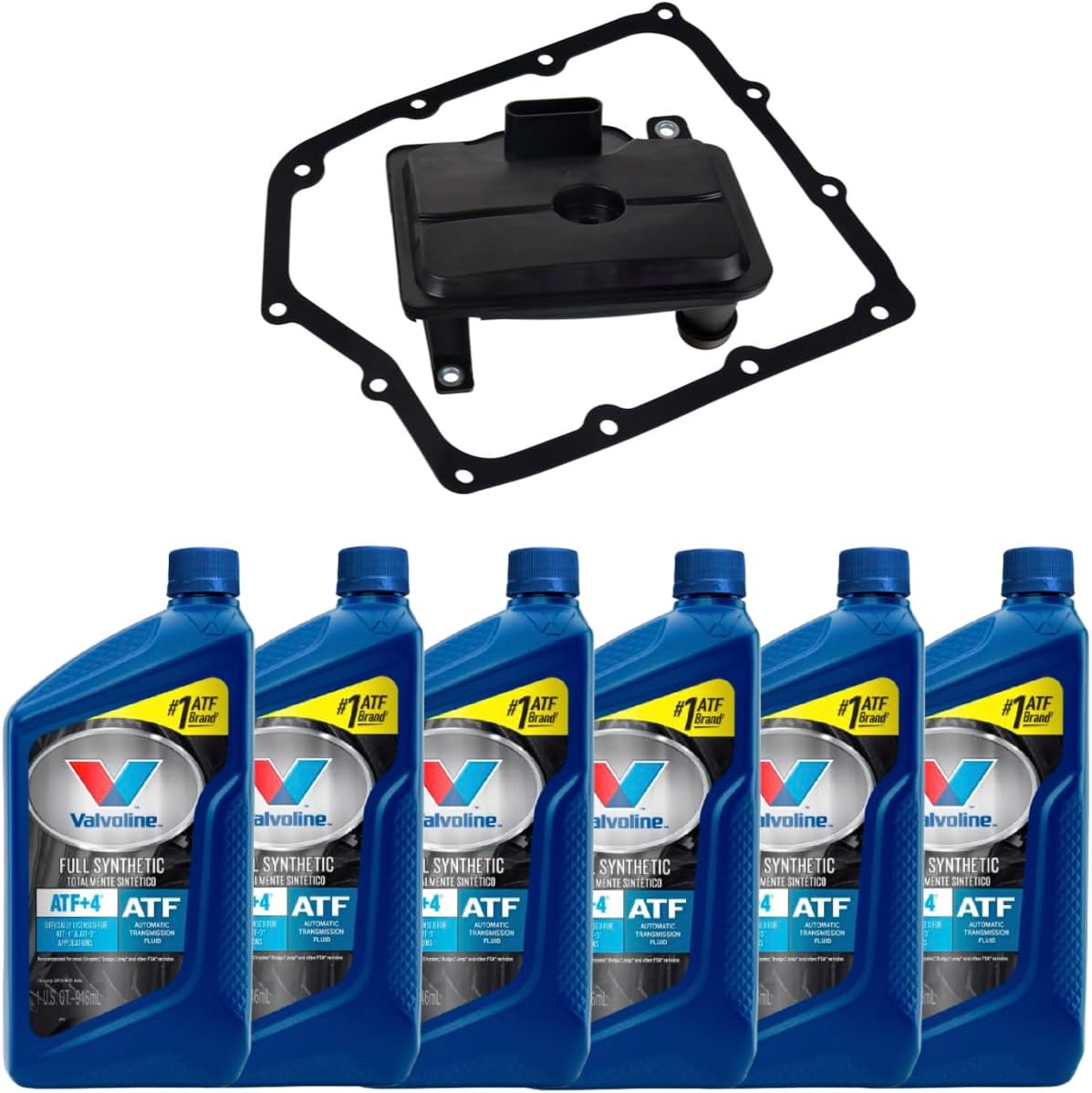
- Fluid exchange with genuine ATF+4, new filter, clean the pan magnet. Set the level correctly; most 62TE applications need the service dipstick tool. Road test fully warm.
- Still shuddering: pan down, EMCC solenoid. Inspect the solenoid and its hold-down bracket, and replace the solenoid if the data showed stepping apply or failure to release.
- Still shuddering: valve body. Vacuum test the TCC control and TCC regulator bores. Low vacuum means wear. Ream and install oversized valves, or replace the valve body.
- Only then the converter, together with a cooler flush, a flow check against the 1 quart in 20 seconds benchmark, and a new cooler bypass valve if the unit has failed.
- Relearn. Chrysler requires the TCM/PCM Quick Learn procedure after an overhaul involving clutch or seal replacement. Skipping it leaves the controller driving new hardware with old adaptive values.
Keeping It From Coming Back
- Treat ATF+4 as a wear item. Shudder durability is, by definition, the shudder that develops over time as the friction package fades. Change it on an interval, not on a complaint. Towing and hot-climate minivans deserve the severe-service schedule.
- Never mix in a universal fluid. The exact failure mode of the wrong fluid is converter shudder.
- Fix the cooler on every converter job. A new converter bolted to a plugged cooler is a new converter that will overheat its lining.
- Do not leave a mild shudder alone. Every mile the clutch spends chattering is heat going into the lining and the fluid, and it turns a fluid service into a converter plus a valve body.
Need parts for this job?
EMCC/TCC solenoids, valve bodies, ATF+4 service kits, coolers and full rebuild kits for the Chrysler 62TE, priced for shops and shipped from the USA.
Shop 62TE parts →FAQ
What does 62TE torque converter shudder feel like?
It feels like driving over rumble strips: a low, fast vibration at steady light-throttle cruise, usually between about 35 and 55 mph, that disappears when you press harder on the pedal or lightly touch the brake. That speed range matches where Chrysler says the converter clutch engages, at approximately 35 mph with light throttle after the shift to third gear.
How do I know the shudder is the converter and not the engine?
Graph engine RPM against Input Speed Sensor RPM with the EMCC command on the scan tool. If the vibration starts only when the converter clutch is commanded and stops the instant a light brake tap drops the command, it is converter clutch shudder. If it continues with no EMCC command, look at misfires and engine mounts instead.
Will a fluid change fix 62TE torque converter shudder?
Often it does, when the cause is worn or incorrect fluid. The anti-shudder friction modifiers in ATF+4 fade with miles and heat, and Chrysler specifies Mopar ATF+4 only. Do a full exchange with genuine ATF+4 and a new filter, then road test fully warm. If the shudder returns within a few hundred miles, the fluid was masking a solenoid, valve body or converter problem.
Can a bad TCC solenoid cause shudder on a 62TE?
Yes. The EMCC variable force solenoid bolts to the valve body separately from the solenoid pack and can stick on or off. A spool hanging on varnish makes apply pressure step instead of hold steady, which feels like shudder, and a solenoid that will not release causes a stumble when coming to a stop. It can be replaced with the pan down.
Do I need a new torque converter for 62TE shudder?
Only after the cheaper causes are ruled out. Fluid, the EMCC solenoid, TCC control and regulator valve bore wear, and cooler restriction all cause the same shudder. The 62TE converter is a sealed, welded unit serviced only as an assembly, so if you do replace it, also flush and flow-test the cooler, replace the cooler bypass valve after a failure, and perform the Quick Learn.
Sources
- Chrysler LLC — 2009 Automatic Transmission 62TE Service Information (Dodge Journey). Backs the torque converter clutch description (fluid coupling slip, piston against front-cover friction material for a 1:1 link), no engagement in lower gears, engagement inputs of coolant temperature, vehicle speed and throttle position, engagement at approximately 56 km/h (35 mph) with light throttle after the shift to third; the sealed, welded, non-repairable converter serviced as an assembly; the 40 to 70 millisecond clutch-to-clutch swap and the underdrive compounder shifting too early producing a shudder or harsh shift; Mopar ATF+4 only, and color and odor not indicating condition; the cooler bypass valve that must be replaced after transaxle failure; and the TCM/PCM Quick Learn requirement after overhaul. documents.cdn.ifixit.com (PDF)
- Sonnax — Chrysler 62TE unit parts catalog. Backs the valve body repairs: Oversized TCC Control and Plunger Valve Kit 92835-33K (compatible with all 62TE units; helps cure excess TCC slip, TCC shudder, TCC codes, overheated fluid and TCC lining, TCC apply and release concerns, loss of fuel economy; tooling F-92835-TL33 and VB-FIX) and Oversized TCC Regulator Valve Kit 92835-37K (damaged converter, TCC codes, no TCC release, excess converter and cooler pressure, high or low TCC release pressure; tooling F-92835-TL37). sonnax.com
- Sonnax — "Hydraulics Fundamentals Part IV: Converter Clutch Control," Bob Warnke. Backs the two-path converter mechanism: release oil exiting between the piston and cover, apply pressure clamping the piston, apply pressure rising as release oil is exhausted, and three to four valves typically regulating slip rate. sonnax.com
- Sonnax — "Troubleshooting Converters Has Twists and Turns," Ed Lee, September 8, 2005. Backs the fluid and cooler causes: fluid lacking the needed friction additives producing lockup shudder, an undersized exit orifice keeping oil from leaving the converter fast enough and causing lockup shudder, restricted cooler flow as a cause, the looped cooler-line bypass test, and the minimum 1 quart in 20 seconds cooler flow benchmark. sonnax.com
- Gears Magazine (ATRA) — "Six-Speed Success! 62TE Things to Do to Deliver Them Right the First Time," Keith Clark, August 19, 2022. Backs the stumble-at-stop complaint tied to a mechanically faulty TCC solenoid, the solenoid being serviceable without removing the unit, the scan tool signature of ISS following engine RPM while the converter clutch is commanded off, and the advice to always check for software updates. gearsmagazine.com
- Gears Magazine (ATRA) — "Even Common Conditions are Sometimes Wrong," Rob Faucett. Backs the description of the 62TE EMCC solenoid and its ability to stick both on and off. gearsmagazine.com
- The Lubrizol Corporation — US Patent 5,858,929, "Composition for providing anti-shudder friction durability performance for automatic transmissions." Backs the definition of shudder as low frequency vibration in continuous slip torque converter clutches, its link to stick-slip friction characteristics at slow slip speeds, and the split into initial shudder and shudder durability, the shudder that develops over time. patents.google.com