A harsh shift on a 62TE is one of the most common complaints these vans and crossovers come in with, and it is also the one most likely to get a transmission condemned that did not need it. A lot of the bangs and clunks on a Grand Caravan, Town and Country or Journey are software and adaptive problems. Some are fluid. A smaller share are real hardware: a delaminated piston, worn clutch clearances, or a leaking switch valve bore. The order you check them in decides how much money the customer spends.
The numbered references point to the Sources list at the bottom.

Why the 62TE is touchy about shift timing
The 62TE is a 41TE main box with an underdrive compounder added behind it, and several of its shifts have to change elements in both places at once. Chrysler calls the 2-3, 3-2 and 4-2 shifts "double swap" shifts: two elements release while two different elements apply. That clutch-to-clutch handoff happens in 40 to 70 milliseconds. If the compounder shifts too early relative to the main centerline, the result is a shudder or a harsh shift. If it shifts too late, the driver feels a "double bump" [1][3].
That is why this unit is so sensitive to anything that changes apply timing: fluid condition, line pressure, clutch clearance, and the TCM's learned values. The one-way clutch in the compounder helps on some shifts. ATRA notes the sprag holds in first, third and fourth, which gives a smoother 1-2, 2-1, 4-5 and 5-4 [3]. The shifts without that help, 2-3 above all, are where you hear most of the complaints.
Step 1: Pin down which shift is harsh
"It shifts hard" is not a diagnosis. Drive it with a scan tool and note the exact shift, whether it happens cold or hot, and at what throttle. Then match it to the element that changes. The chart below is built from Chrysler's elements-applied table [1]:
| Shift | What changes | Look at first |
|---|---|---|
| 1-2 | DC applies (compounder to direct), overrunning clutch stops holding | DC volume, DC piston, software |
| 2-3 | Double swap: L/R and DC release, 2/4 applies, compounder back to reduction | Calibration, 2/4 and DC volumes |
| 3-4 | 2/4 releases, OD applies | OD volume, switch valve |
| 4-5 | DC applies | DC volume and clearance |
| 5-6 | UD releases, 2/4 applies | 2/4 volume |
| 2-1 / 3-1 coast | L/R applies on the coast downshift | L/R volume, Quick Learn |
If every shift is firm, think line pressure or fluid. If one shift is harsh and the rest are fine, think that element's clutch volume, its clearance or its feed circuit.
Step 2: Codes, fluid and the no-code cases
Pull codes before you drive it far. The 62TE monitors five pressure switches (L/R, 2/4, DC, LC and OD), and when one reads wrong for the gear, the TCM inhibits first gear and converter lockup. The van launches in second and shifts through the gears without EMCC [5]. Customers often describe that as a "hard" or "lazy" shift, but the fix is whatever set the code, not the shift quality. Line pressure codes P0868 (low) and P0869 (high), P0933 through P0935 (line pressure sensor) and P1684 (battery was disconnected) are all on the 62TE list and all matter here [5].
Next, fluid. The 62TE takes ATF+4 only. Chrysler's level check is done with the engine idling after shifting through the ranges, using the 9336A dipstick with marks every 10 mm, read against transmission fluid temperature on the scan tool and the level chart [1]. Low fluid alone can do it: Chrysler bulletin 21-046-15 (July 14, 2015) covers 2015 Grand Caravan and Town and Country vans that left the plant low and shifted harshly under heavy acceleration. The whole repair was to set the level per the 62TE procedure and top off with ATF+4, part 05013457AA, allowing up to one quart [2]. See our 62TE fluid type and capacity guide for the numbers.
Do not trust your eyes and nose on the fluid, either. Wayne Colonna wrote up a 2016 Grand Caravan with a 3.6L that came back with several shifting complaints and no codes about 3,400 miles after a rebuild. The fluid looked and smelled normal. A glycol test turned an intense purple, meaning more than 150 mg/L of coolant in the ATF, traced to a faulty cooler. On teardown the bonded spacer plate and transfer plate gaskets were stuck to the case [6]. If a unit has shift complaints, no codes and a clean-looking pan, spend a few dollars on a glycol test before you spend a few hundred on parts.
Step 3: Check for a software update
On 2011 to 2013 RT Caravan and Town and Country with the 3.6L (sales code ERB) and 62TE (sales code DG2) built before September 26, 2012, Chrysler bulletin 21-012-12 Rev. B covers a harsh 1-3 upshift in Economy mode, a harsh 2-3 upshift in normal mode, and a 1-2 upshift clunk after a throttle back-out on 2012 and 2013 models [2]. The same flash changed the shift schedules for the 1-2, 3-4, 4-5 and 5-6 upshifts and the 6-4 prime, 6-5 and 5-4 downshifts, and improved fifth gear converter lock and unlock [2]. The bulletin notes that for 2012 models the 1-3 and 2-3 harshness had already been addressed by bulletin 21-008-12 [2].
The procedure itself tells you what the TCM needs after any shift-quality repair [2]:
- Put a battery charger on and hold 13.2 to 13.5 volts during the flash.
- Reprogram the PCM with the latest calibration and clear any codes the flash sets in other modules.
- Clear the Variable Line Pressure (VLP) counters in the PCM Misc Functions menu.
- Run the Quick Learn.
Chrysler books that at 0.2 hours. Check the calibration on any 62TE with a shift complaint before you go further. It is the cheapest fix there is.
Step 4: Read the clutch volumes, then Quick Learn
The TCM adapts each shift using clutch volume indexes (CVIs), which represent the volume of fluid it takes to stroke a clutch pack. It calculates them from how long the ratio change takes after it commands a shift, using the input and output speed sensors [3]. ATRA's preliminary 62TE ranges [3]:
| Clutch | Preliminary CVI range |
|---|---|
| UD | 26-74 |
| 2/4 | 16-54 |
| OD | 42-143 |
| L/R | 16-63 |
| LC | 16-25 |
| DC | 26-34 |
Note how tight the LC and DC windows are compared with the main-box clutches. Volumes only update under specific conditions. For the TE family, ATRA lists L/R updating on a 2-1 or 3-1 coast downshift above 21 C (70 F) with less than 5 degrees of throttle, 2/4 on the 1-2 shift and OD on the 2-3 shift above 43 C (110 F) at 5 to 54 degrees of throttle, and UD on a 4-3 or 4-2 shift above 43 C [3]. A cold van driven gently for a week may never learn some of them.
How to use this: a volume above the range means the clutch is taking too long to stroke, which usually points to excess clearance or a leak in that circuit. The TCM compensates up to a point, then the shift flares and lands hard. A volume at the bottom of the range or below it can mean too little clearance, which makes the apply abrupt. Record the numbers before you reset anything.
Then run the Quick Learn. Chrysler requires it after any overhaul or clutch and seal replacement [1], and it is part of the TSB procedure above [2]. A battery disconnect sets P1684 [5], and a unit that shifts hard right after a battery or fluid job often just needs to relearn. After the Quick Learn, drive it hot through every upshift and a few gentle coast downshifts so the volumes can update.
Step 5: When it is hardware
If the calibration is current, the fluid is clean, the Quick Learn is done and one shift is still harsh with a volume out of range, you are looking at a mechanical fault.
Line pressure
The 62TE controls line pressure with a variable force solenoid and reads it back on a line pressure sensor, both part of the RFE-style solenoid and pressure switch assembly with its 23-way connector [3]. High line pressure makes every shift firm. Compare commanded and actual pressure on the scan tool, and put a gauge on it if they do not agree. Our 62TE line pressure testing guide covers the procedure.
Solenoid switch valve bore
The solenoid switch valve routes oil between the L/R clutch and the converter clutch, and on the 62TE branch it also controls oil to the 2nd and overdrive clutches through shuttle valves. Sonnax lists bind-up, failsafe, no converter lockup and a burned OD clutch among the symptoms of a worn bore, with codes 841, 868, 871, 1775 and 1776. Their approach is to vacuum test the bore and install an oversize valve kit if it leaks [4]. A leaking bore also moves the clutch volumes around, which is why the TCM can never quite learn a good shift.
Direct clutch piston
ATRA calls out direct clutch piston delamination, a split in the bonded rubber seal, as a common problem, and warns that some pistons with minimal damage still air check well [3]. A DC with a narrow 26-34 volume window and a split piston is a classic cause of a harsh or erratic 1-2 and 4-5.
Clutch clearances and compounder wear
With the unit out, check clearances with 30 psi of air through the compounder feed hole. ATRA gives 0.037 to 0.056 in. for the direct clutch and 0.018 to 0.029 in. for the low clutch [3]. On the compounder, also check the low clutch drum ring lands, which ATRA calls the most common failure on this unit, and the direct clutch housing snap ring groove. Those bring P0792, P0735, no line rise and a 1-2 slip [3].
The fix, by what you found
- Old calibration: flash per 21-012-12, clear the VLP counters, Quick Learn [2].
- Battery or fluid work, no codes: Quick Learn and a proper hot drive cycle [1][2].
- Pressure switch code, launching in second: repair the circuit or the solenoid and pressure switch assembly [5].
- Glycol in the fluid: replace the cooler first, then plan on internal work; in Colonna's case the coolant had already loosened the bonded gaskets [6].
- Worn switch valve bore: oversize valve kit or a replacement valve body [4].
- Out-of-range volume with the unit out: piston, frictions and clearances to spec, then Quick Learn [1][3].
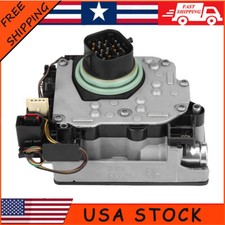
Shop the part for this fix: 62TE shift solenoid block pack
When a pressure switch code or a failed solenoid is behind the harsh shift, this CoreTransmissionParts pack replaces the solenoid and pressure switch assembly in one piece.
View the 62TE solenoid block pack at CoreTransmissionPartsIf the teardown shows a split DC piston or burnt packs, see the 62TE master rebuild kit with pistons or browse all 62TE parts at CoreTransmissionParts.
Need parts for this job?
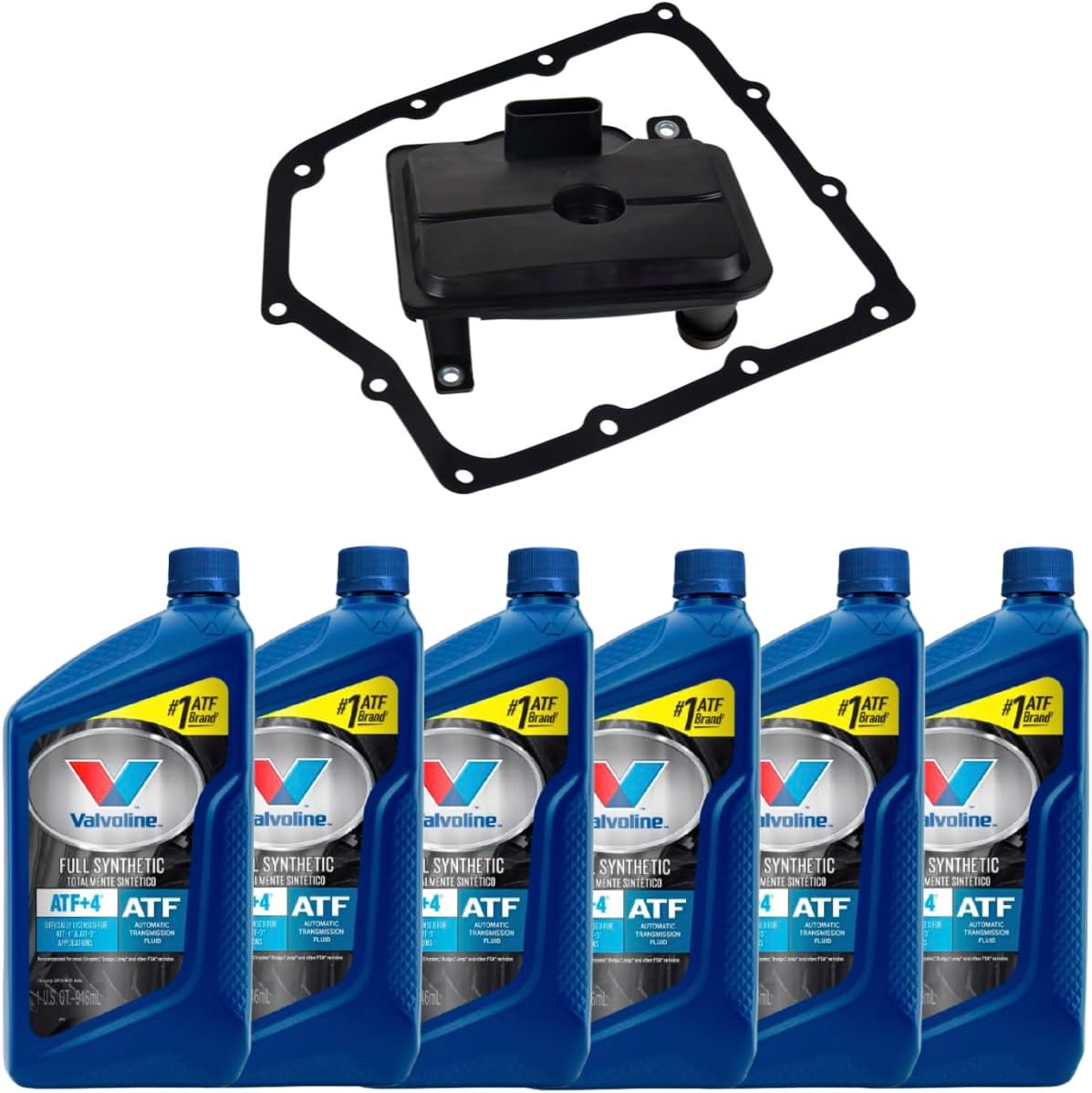
Our 62TE parts page has solenoid packs, valve bodies, master rebuild kits and ATF+4 service kits, all on our own checkout. The 62TE takes ATF+4 only; see the transmission fluid spec chart.
FAQ
Why does my 62TE shift hard after a battery change?
Disconnecting the battery sets P1684 and can leave the TCM without good learned clutch volumes. Chrysler's fix is the Quick Learn with a scan tool, followed by a hot drive through every upshift and some gentle coast downshifts so the volumes can update. If it is still harsh after that, look at calibration and hardware.
Is there a TSB for 62TE harsh shifts?
Yes. Chrysler bulletin 21-012-12 Rev. B covers 2011 to 2013 Caravan and Town and Country with the 3.6L built before September 26, 2012. It fixes a harsh 1-3 in Economy mode, a harsh 2-3 in normal mode and a 1-2 clunk after a throttle back-out with a PCM flash, a VLP counter reset and a Quick Learn.
Why is the 2-3 shift the worst on a 62TE?
The 2-3 is a double swap shift: two elements release while two others apply, with the compounder changing ratio at the same time as the main box. Chrysler says the handoff happens in 40 to 70 milliseconds, and if the compounder shifts too early the result is a harsh shift or shudder. Anything that changes apply timing shows up there first.
Can a shift kit fix a harsh-shifting 62TE?
Not by itself. A harsh shift on this unit usually comes from calibration, learned clutch volumes, fluid condition or a worn part such as a split direct clutch piston or a leaking switch valve bore. Diagnose which shift is harsh and why, fix that, and run the Quick Learn.
Related guides
Sources
- Chrysler LLC, 2009 62TE Automatic Transmission Service Information (Dodge Journey). Backs the double swap 2-3, 3-2 and 4-2 shifts, the 40-70 ms synchronization and the harsh shift versus double bump explanation, the elements applied in each gear, the 9336A dipstick fluid level check against TFT, ATF+4, and the Quick Learn requirement after overhaul. documents.cdn.ifixit.com (PDF)
- Chrysler Group LLC / FCA US, Service Bulletin 21-012-12 Rev. B, "Flash: Transmission Shift Quality Improvements" (November 29, 2012), via NHTSA. Backs the affected vehicles and build date, the harsh 1-3, harsh 2-3 and 1-2 clunk conditions, the shift schedule and fifth gear lock-up changes, the reference to 21-008-12, and the flash, VLP counter reset and Quick Learn procedure. 21-012-12 Rev. B (PDF). Also Service Bulletin 21-046-15, "Low Transmission Fluid Level" (July 14, 2015), which backs the underfilled 2015 vans with harsh shifts under heavy acceleration and the one-quart ATF+4 top-off. 21-046-15 (PDF)
- ATRA, 62TE Update webinar (Mike Souza, 2014) and ATRA Technical Seminar Manual 2012, Clutch Volume Indexes. Backs the double swap timing, the sprag holding in first, third and fourth, the line pressure VFS and sensor, DC piston delamination, the DC and LC air-check clearances, the compounder ring land and snap ring groove failures, how CVIs are calculated, the preliminary 62TE CVI ranges, and the TE-family update conditions. 62TE Update (PDF); clutch volume indexes (PDF)
- Tory Royce, Sonnax, "All in the Family: Identification and Repair of Chrysler Solenoid Switch Valve Problems." Backs the switch valve's role in the L/R, TCC, 2nd and OD circuits, the bind-up, failsafe and burned OD clutch symptoms, codes 841/868/871/1775/1776, and the vacuum test and oversize valve repair. sonnax.com
- ATRA Technical Seminar Manual 2008, Chrysler section, 62TE DTC list and shift solenoid and pressure switch monitoring (pages 127-129). Backs the five monitored pressure switches, the second-gear launch with no EMCC when a switch fault is detected, and codes P0868, P0869, P0933-P0935 and P1684. DTC list (PDF); solenoids and pressure switches (PDF)
- Wayne Colonna, "62TE Shifting Issues: A Problem Caused by the Invisible," Transmission Digest. Backs the 2016 Grand Caravan with no-code shifting complaints after a rebuild, glycol above 150 mg/L from a faulty cooler with normal-looking fluid, and the gaskets stuck to the case. transmissiondigest.com