A P0944 on a 66RFE scares people for the right reason, even if they cannot say exactly why. It is not a sensor-wiring code like most of the pressure-control faults on this platform. Stellantis's own bulletin language for it is Loss Of Hydraulic Pump Prime - the control module has concluded the pump is not building the pressure it needs to run clutches, hold gears, and charge the torque converter. That is a different category of problem than a connector that corroded or a solenoid that drifted out of spec.
The 66RFE is the gas-engine member of Chrysler's RFE family, built in the 545RFE case with 68RFE internals, and almost everything documented about this pump and its pressure control - including the only manufacturer bulletin that spells out what P0944 means - was written and tested on the shared 68RFE hydraulics, not the 66RFE in isolation. That matters for how you read the sources below.
Related reading: 66RFE P2764 TCC pressure control solenoid low and 66RFE valve body symptoms and testing.
What Stellantis's Own Bulletin Says P0944 Means
There is no ambiguity in the manufacturer's own description. Stellantis technical service bulletin 21-054-24 REV D, covering 2024 Ram 2500 and 3500 trucks built with the 6.7L Cummins and 68RFE transmission, lists P0944-00 - Loss Of Hydraulic Pump Prime by name as one of the diagnostic trouble codes tied to a specific internal failure: cracking of the rear selective thrust bearing/washer package between the number six thrust bearing and the reaction sun gear. On the trucks covered by that bulletin, the fix was physical - replace the thrust plate package and the reaction sun gear, not clear a code and move on.
Read that bulletin for what it is and is not. It applies to a specific 2024-model-year 68RFE build issue, not a blanket statement that every 66RFE with a worn thrust bearing. What it gives you that is genuinely useful on a 66RFE is the manufacturer's own plain-language definition of the code, and a real example of what total loss of pump prime looks like mechanically on this shared RFE hydraulic architecture: it does not travel alone. The same bulletin lists P0841, P0868, P0871 and P0876 as codes that frequently show up on the same vehicle, because a pump that cannot hold prime drags down every pressure-dependent circuit downstream of it, not just the one sensor the TCM happens to flag first.
Why this is not a sensor code
Compare that to the opposite-direction faults on this same platform. Transmission Digest's TASC Force Tips column by Jim Mobley covers P0933 (line pressure sensor performance) and P0869 (high line pressure) on the Chrysler RFE, RLE and TES family, and both of those are typically an electrical fault - an open circuit on the pressure control solenoid line that lets commanded pressure default high, to roughly 150-160 psi at idle in Park, Neutral and Drive, and 250 psi in Reverse. P0944 is the mirror image: the module is not seeing pressure come up at all. That points the diagnosis away from wiring and connectors and toward the pump, a suction leak, or filter restriction before you touch a harness.
How 66RFE Line Pressure Control Actually Works
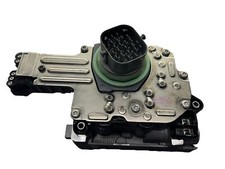
There is no dedicated line pressure tap on this transmission family. Line pressure is read through an external transducer mounted on the case, and the TCM runs closed-loop control: it commands a duty cycle to the pressure control solenoid and reads the transducer's actual-pressure feedback to correct itself. Sonnax makes the point that this closed-loop behavior is exactly why a stronger valve spring or a bigger boost valve alone will not raise pressure on these units - the module simply commands a lower duty cycle to compensate and the net pressure ends up unchanged. Sonnax's own fix for chronically low or inadequate pressure across the RFE family, including the 66RFE, is an electrical pressure booster kit (RFE-LB1) that works with the closed-loop system instead of fighting it.
On a scan tool, the PIDs that matter are the same ones Mobley's column uses for the high-pressure side of this system: Desired Line Pressure, Actual Line Pressure, and Line Pressure Duty Cycle. For a loss-of-prime condition, the pattern you are looking for is the opposite of a max-pressure fault - actual pressure sitting well below desired while the module drives the duty cycle toward its floor trying to command more pressure than the pump can deliver. On this family the duty cycle runs inverse to pressure: lower duty means more pressure requested. GEARS Magazine's May 2024 RFE article, written on the shared 68RFE hydraulics, puts a healthy unit at roughly 60-70 psi commanded and actual at idle with a line pressure duty cycle around 22-24%, calls anything under 10% at idle unsuitable, and reads a duty cycle sitting at 5% as the computer maxed out. Duty at 5% with actual still below desired is a pump-supply problem, not a sensor problem.
Rule out the circuit before you pull the pan. Mobley's Transmission Digest column notes that a pressure control solenoid circuit shorted to ground still shows current on a low-amp clamp but produces low line pressure, the opposite of the open-circuit max-pressure default, so check the PCS ground control circuit before you condemn the pump.
What Actually Causes the Pressure Loss
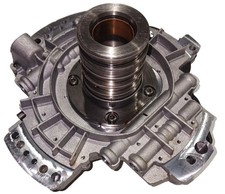
Sonnax's own 66RFE parts and symptom listing ties a remanufactured pump assembly directly to the symptoms Low pressure and Damaged pump gears - this is the core P0944 wear pattern, a pump that has lost enough internal clearance or gear condition that it cannot build and hold prime under load. The same listing separately ties oversized pressure regulator valve kits to Poor line pressure control, Restricted converter/lube flow, and Lube failures - valve body bore wear that produces erratic or inadequate pressure rather than a flat, consistent loss.
- Worn pump gears or clearances - the classic cause behind the Low pressure / Damaged pump gears symptom pairing Sonnax documents for this unit. Pressure is consistently low, often worse hot than cold.
- Suction-side air leak at the filter. A cracked or improperly seated sump filter O-ring lets the pump draw air instead of fluid. This produces a loss-of-prime symptom that looks electrically identical to a worn pump but costs a filter kit, not a teardown.
- Low or contaminated fluid. Fluid that is low, aerated, or badly worn thins the hydraulic film the pump and regulator valves depend on to hold pressure.
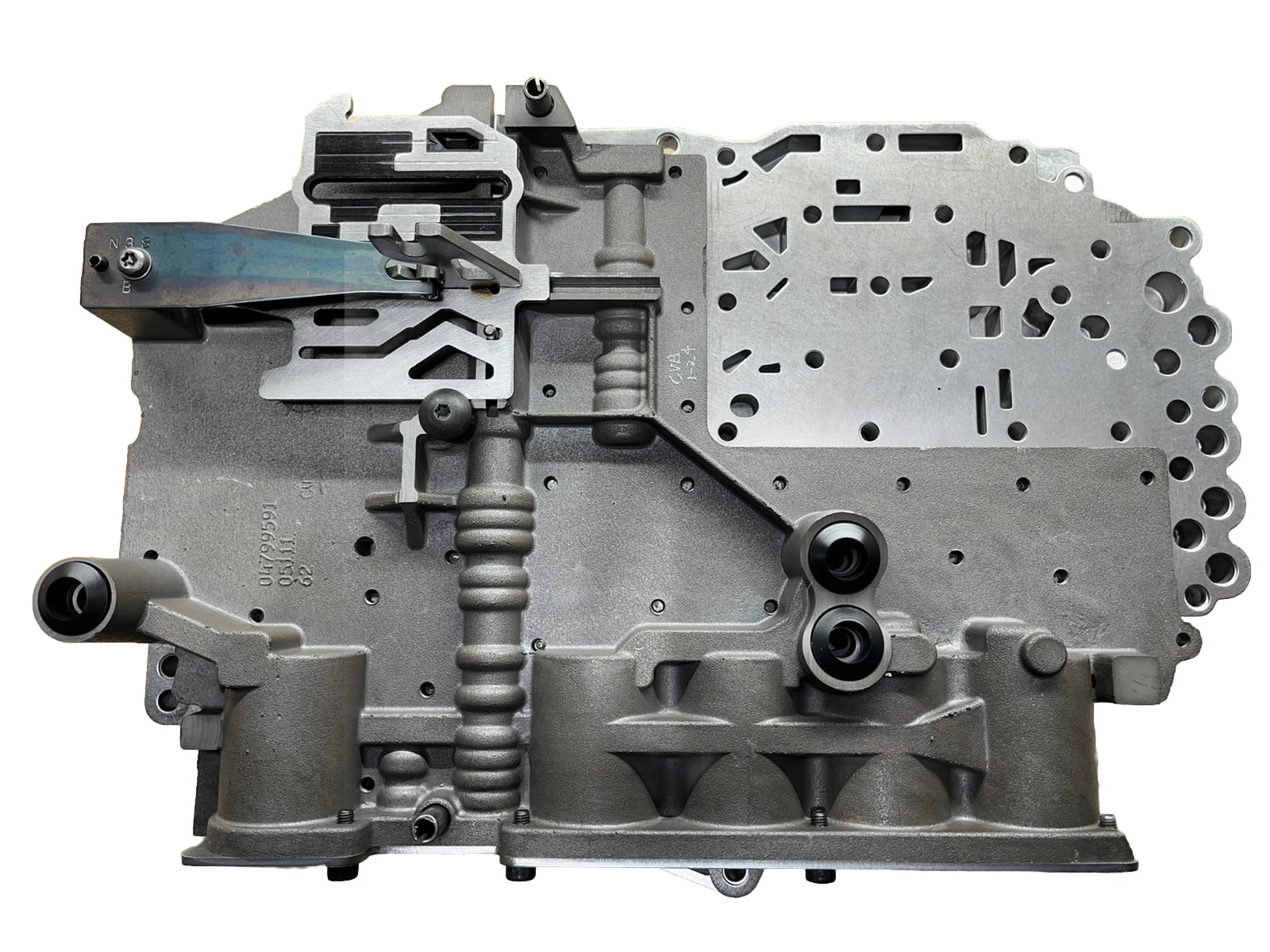
- Worn pressure regulator valve bores in the valve body. This tends to produce erratic or poor pressure control rather than a flat loss, and Sonnax addresses it with oversized valve kits rather than a pump swap.
66RFE / 68RFE Shared Pump Hardware at CoreTransmissionParts
The 66RFE uses the same pump architecture as the 68RFE. If you want a second source for a remanufactured pump assembly while chasing this code, CoreTransmissionParts carries the 68RFE-family pump - confirm the exact listing matches your build before ordering.
View the pump assembly →A Diagnostic Order That Doesn't Start With a Pump Swap
- Check fluid level and condition first. Stellantis specifies ATF+4 (MS-9602) for this family and warns that the wrong fluid affects how the transmission functions. Low or burnt fluid starves a perfectly good pump exactly the way a worn pump does.
- Pull every code present, not just P0944. Stellantis's own bulletin groups this code with P0841, P0868, P0871 and P0876 on the shared architecture - a cluster of pressure-related codes together tells you the whole hydraulic system is struggling, not one sensor.
- Inspect the filter and sump seal before you condemn the pump. A cracked or loose filter-to-pump O-ring lets the pump draw air, producing the same symptom as internal pump wear for a fraction of the cost to fix.
- Graph Desired Line Pressure, Actual Line Pressure, and Line Pressure Duty Cycle on a scan tool. Actual pressure sitting persistently below desired, with the duty cycle driven down to its 5% floor trying to compensate (GEARS gives 22-24% at a healthy idle), confirms a real pressure-building problem rather than a sensor fault.
- Note whether the loss is flat and consistent or erratic. A consistently low reading across conditions points at the pump. An erratic or condition-dependent reading points at valve body bore wear in the pressure regulator circuit instead.
- If fluid, filter, and the electrical circuit all check out clean, the pump or the valve body pressure regulator bores are what's left - match the repair to which pattern the scan data actually showed.
The Fix
Match the repair to what the diagnostic steps actually found. A suction leak at the filter gets a proper filter and seal service - confirm the new O-ring is fully seated, since a substandard or incorrectly seated filter seal is a documented cause of exactly this symptom. A pump that shows worn gears or has lost internal clearance gets replaced; Sonnax ties its remanufactured pump directly to this failure pattern for a reason. A valve body with erratic rather than flat-low pressure gets the pressure regulator bores inspected and, where worn, fitted with an oversized valve kit rather than a straight pump swap. If pressure is simply inadequate across the board on an otherwise healthy unit, Sonnax's electrical line pressure booster (RFE-LB1) works with the closed-loop control system rather than against it, which is why a stiffer spring alone does not move the needle here.
After any repair, clear the code and recheck the Desired/Actual Line Pressure and Duty Cycle PIDs under load, not just at idle in the driveway. A pump or valve body fix that looks clean cold and at idle but still shows actual pressure falling behind desired once the fluid is hot and the truck is loaded is telling you the repair did not fully address the wear - don't call it done until the numbers hold up hot.
Working a 66RFE this week?
Pumps, pressure control solenoids, remanufactured valve bodies and master rebuild kits for the 66RFE — shipped fast from the USA.
Shop 66RFE parts →FAQ
What does P0944 actually mean on a 66RFE?
Stellantis's own technical service bulletin language for this code is blunt: P0944-00, Loss Of Hydraulic Pump Prime. That is not a sensor reading out of range - it means the transmission control module decided the pump is not building the fluid pressure it is supposed to be building. On the shared RFE hydraulic architecture it commonly sets alongside P0841, P0868, P0871 and P0876, since a pump that cannot hold prime drags every pressure-dependent circuit down with it.
Is P0944 the same problem as the high line pressure codes P0869 or P0933?
No, they are opposite failures on the same control system. Transmission Digest's TASC Force Tips column covers P0869 and P0933 as max line pressure conditions, usually an open circuit on the pressure control solenoid that drives pressure up to a 150-160 psi idle default. P0944 is pressure that will not come up at all, which almost always points at the pump, a suction leak, or a plugged filter rather than the solenoid circuit.
Will a fluid and filter service fix a P0944 code?
Sometimes, and it is always the first thing to rule out. A cracked or improperly seated filter O-ring lets the pump draw air instead of fluid, which produces the exact same loss-of-prime symptom as a worn pump but costs a filter kit instead of a teardown. If pressure comes back clean after a proper fluid and filter service with the correct seal seated, you found the problem. If it does not, the pump itself is next.
Does P0944 always mean the pump needs to be replaced?
No. Sonnax lists its remanufactured 66RFE pump assembly against the symptom Low pressure and against damaged pump gears specifically, which is the classic P0944 wear pattern - but Sonnax also sells oversized pressure regulator valve kits for the valve body side of erratic or poor line pressure control. A pump that primes fine at idle but loses pressure once hot, or pressure that is erratic rather than simply low, points at the valve body bores before the pump.
What fluid does a 66RFE use, and does it matter here?
Stellantis specifies ATF+4 (MS-9602) for the RFE family and warns in the owner's manual that a different fluid can affect how the transmission performs. Low fluid level is one of the simplest ways to starve a healthy pump of prime, so confirm the fluid level and condition before any pump or valve body work - it is the cheapest possible explanation for this code and the one most often skipped.
Browse 68RFE-family parts →
Sources
- Stellantis / FCA US LLC - Technical Service Bulletin 21-054-24 REV D, "Rear Selective Thrust Washer Failure," December 3, 2024 (hosted by NHTSA). Backs the manufacturer's own definition of code P0944-00 as "Loss Of Hydraulic Pump Prime," the real-world root cause on this shared RFE architecture (cracking of the rear selective thrust bearing/washer package between the No. 6 thrust bearing and the reaction sun gear), and the cluster of related codes (P0841, P0868, P0871, P0876, P0944) that commonly appear together. Scope: 2024 Ram 2500/3500 with the 6.7L Cummins and 68RFE transmission - cited here for the code definition and shared-architecture failure pattern, not as a 66RFE-specific recall. static.nhtsa.gov
- Sonnax - Chrysler 66RFE Transmission parts and symptom listing. Backs the direct link between a remanufactured pump assembly and the symptoms "Low pressure" and "Damaged pump gears," and the separate link between oversized pressure regulator valve kits and "Poor line pressure control," "Restricted converter/lube flow," and "Lube failures" on this specific unit. sonnax.com
- Sonnax - "Achieving a Progressive Pressure Boost in RFEs." Backs the closed-loop pressure control architecture across the RFE family (45RFE, 545RFE, 65RFE, 66RFE, 68RFE), why a stronger regulator spring alone cannot raise pressure under closed-loop control, and the RFE-LB1 electrical line pressure booster kit as the documented fix for chronically inadequate pressure. sonnax.com
- Transmission Digest - TASC Force Tips by Jim Mobley, "Diagnosing Chrysler transmission max line pressure and P0933, P0869, P1745 codes," January 19, 2023. Backs the pressure control solenoid (PCS) closed-loop architecture shared across Chrysler RFE/RLE/TES transmissions, the scan-tool PIDs for desired/actual line pressure and duty cycle, and the contrasting high-pressure fault pattern (150-160 psi idle default, 250 psi in Reverse) used here to distinguish P0944 as the opposite-direction failure, plus the note that a PCS circuit shorted to ground causes low line pressure. transmissiondigest.com
- GEARS Magazine (ATRA) - "Fixing the Root Cause of the Problem: Solving Issues with the 68RFE Transmission." Backs the scan-tool diagnostic method on this shared hydraulic architecture - graphing commanded pressure, actual pressure and line pressure duty cycle, and the May 2024 baseline of 60-70 psi at idle with a 22-24% line pressure duty cycle, the 10% and 5% duty cycle thresholds, and reading a duty cycle pinned at its 5% floor with actual pressure below desired as confirmation of a real pressure-building problem rather than a sensor fault. gearsmagazine.com
- Stellantis / Mopar - 2022 Ram 2500/3500 Owner's Manual, Chassis Fluids and Lubricants. Backs the ATF+4 (MS-9602) fluid specification for the 68RFE and, by shared-platform extension, the 66RFE, and the manufacturer's warning that using a different fluid may affect transmission function or performance. vehicleinfo.mopar.com
Shop 66RFE pumps, pressure control solenoids, remanufactured valve bodies, and master rebuild kits — shipped fast from the USA.
Shop 66RFE parts →