Every shop that sells a transmission "flush" as an upsell is making a claim about what happens inside a 6L80 when an external machine pushes fluid through it. GM has already weighed in on that claim, in writing, and the answer is not what the service menu implies. This is what the corporate bulletin actually says, what a pan-and-filter service really replaces by volume, and the one narrow case where GM does approve a flush.


What GM's Bulletin Actually Says
GM Corporate Bulletin 04-06-01-029K, titled "Unscheduled Supplemental Services (Including Flushing Services and Additives)," is current through October 2024 and applies to 2025-and-prior gasoline-engine GM cars and trucks. Its transmission language is unambiguous: "The use of external transmission fluid exchange or flush machines is not recommended for the automatic or manual transmission. Use of external machines to replace the fluid may affect the operation or durability of the transmission. Transmission fluid should only be replaced by draining and refilling following procedures in Service Information (SI)."
That sentence has been carried forward, worded almost identically, through at least three prior revisions of the same bulletin going back to 2012. This is not a one-off note from an overcautious engineer. It is GM's standing position on the machine your local quick-lube is probably trying to upsell you on.
The bulletin's opening section explains why GM bothers to say this at all: "Today, many of your service departments merchandise supplemental services and fluids to customers indicating that these 'flushes' have a positive effect on durability of the component part. It should be noted that analyses of returned parts that have been exposed to these aftermarket 'flushes' show indications of potential damage and shortened durability." GM does not spell out the failure mechanism for the transmission specifically in this bulletin, but the warning sits in the same document as GM's separate, blunter statement that engine crankcase flushing can damage seals and bearings and that resulting damage is not covered under the New Vehicle Warranty. The pattern across every subsystem the bulletin covers is the same: GM wrote a specific SI procedure for normal service, and anything outside that procedure is something GM is declining to vouch for.
Get the filter and gasket kit →
The One Flush GM Does Approve, and Why It Is Different
The same bulletin family draws a sharp line between flushing the transmission and flushing the transmission's external cooler. Under "Subsystem Flushing," GM states: "Flushing of air conditioning (A/C) lines, radiators, transmission coolers, and power steering systems are recognized practices to be performed after catastrophic failures or extreme corrosion when encountered in radiators... This practice is not required or recommended for normal service operations."
A 2017 revision of this same bulletin, 04-06-01-029I, goes a step further and names the approved equipment: "The Automatic Transmission Oil Cooler Flow Check and Flush Tool IS recommended for GM vehicles," citing the J-45096 tool and its Service Information procedure. That is the entire exception. It is a cooler-and-line-only procedure, run with a specific GM tool, used to clear contamination and debris out of the external cooler circuit after a failure, not a scheduled maintenance item and not a substitute for the SI drain-and-fill on the transmission itself.
The distinction matters because it is exactly backward from what a flush-machine sales pitch implies. The machine most shops use connects to the transmission's cooler lines and pushes new fluid through the entire unit, case included. GM's approved flush does the opposite: it isolates the cooler circuit and leaves the case fluid to be handled by the drain-and-fill procedure. One is sanctioned maintenance for a narrow failure scenario. The other is the practice GM's corporate bulletin tells its own dealers not to sell.
What a Drain-and-Fill Actually Replaces, By the Numbers
The honest criticism of a drain-and-fill is that it does not get all the old fluid out, and that criticism is correct. Chevrolet Performance's own Approximate Fluid Capacities table for the 6L80 lists a pan removal and filter replacement at 5.7 liters (6.0 quarts), against 11.5 liters (12.2 quarts) for the complete system including the cooler. Divide those two figures and a standard pan-and-filter service turns over roughly 49 percent of the total fluid in the unit. The rest sits in the torque converter, the external cooler, the cooler lines and the valve body passages, none of which drain when the pan comes off.
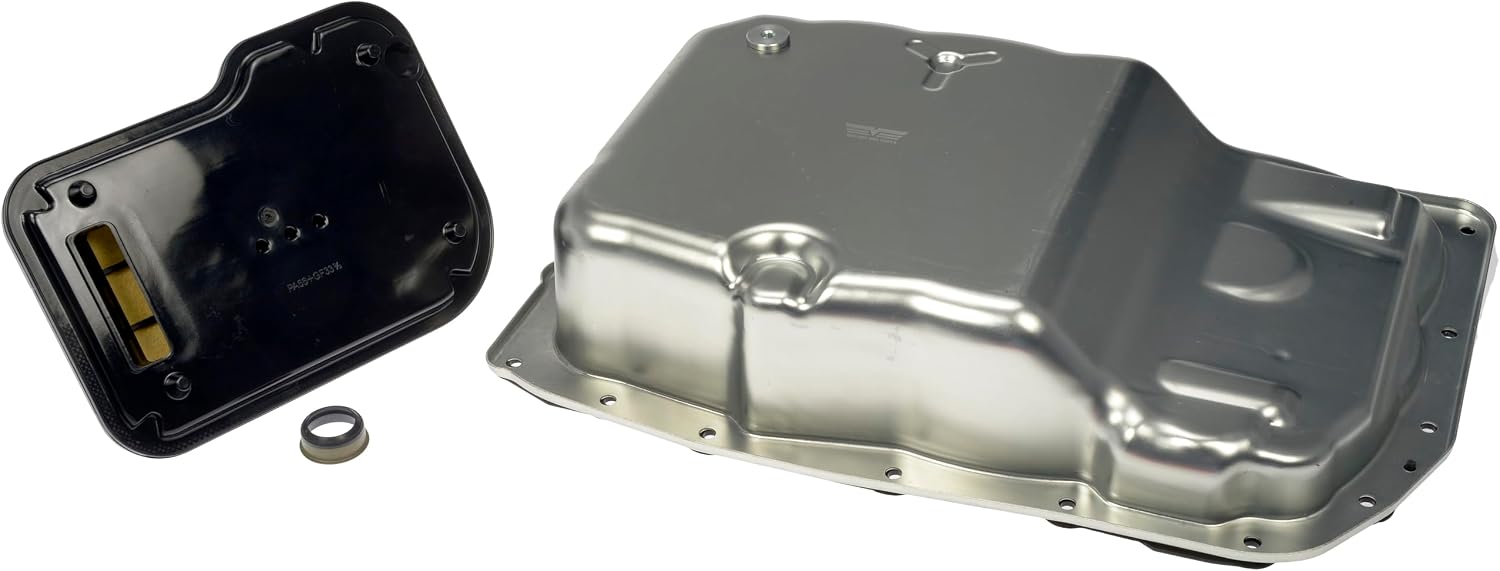
That is the real argument for a flush: turning over close to 100 percent in one visit instead of half. It is also exactly the convenience GM says is not worth the risk to the transmission's durability. The alternative that gets most of the way there without an external machine is simply repeating the SI procedure. If one drain-and-fill replaces about half the fluid, a second one on the next interval replaces about half of what is left, which mathematically works out to roughly three-quarters of the original fluid gone after two services and around seven-eighths after three. A drain-plug pan, like the kits built for this transmission, turns each round into a 20-minute job instead of a full pan drop, which is what makes staging two or three services over a season a realistic plan instead of a theoretical one.
Where the Thermal Bypass Valve Complicates a Flush
There is a 6L80-specific wrinkle that makes an external flush even less reliable than it would be on a simpler transmission. GM Bulletin 22-NA-182, covering 6L80 and 6L90 units in trucks and SUVs through the 2025 model year, documents a Thermal Bypass Valve (TBV) in the cooler circuit that is external to the transmission and does not open until the fluid reaches 158°F (70°C). Below that temperature, the valve is holding fluid out of the external cooler loop.
A flush machine connected to the cooler lines on a transmission that has not been driven to operating temperature is pushing new fluid against a circuit the TBV has not fully opened yet. The shop performing the flush has no way to confirm from the machine's gauges whether the valve state matches what the procedure assumes, and a customer paying for a "complete" flush on a cold unit has no way to know the cooler-side volume was ever fully turned over at all. A drain-and-fill does not have this problem, because the fluid that comes out of the pan comes out regardless of the TBV's position.
When Cooler Contamination Is the Real Problem
GM's narrow exception for cooler flushing exists because cooler and line contamination is a genuine failure mode, just not a routine-maintenance one. Transmission Digest has documented the mechanism directly: when a transmission fails internally, the external cooler and its lines retain old, contaminated fluid loaded with dirt, metal shavings, clutch material and sludge, and that debris will destroy a freshly rebuilt or replacement unit if the cooler circuit is not cleared before the new transmission goes in. That is precisely the "catastrophic failure" scenario GM's bulletin carves out for the J-45096 tool, and it is also why reputable remanufacturers require a new or flushed cooler as a condition of their warranty.
What that is not is a reason to run a whole-unit machine flush on a 6L80 that is simply due for fluid. A healthy transmission with discolored but non-metallic fluid is a drain-and-fill candidate per GM's own SI procedure. A transmission that just failed internally, or a replacement unit going behind a known-contaminated cooler, is a cooler-flush candidate with the approved tool. Treating every fluid service like the second case is how a routine maintenance visit turns into the exact scenario GM is warning against.
Filter and pan gasket kits, drain-plug pans, fill adapters and master rebuild kits for 6L80 and 6L90 units, all in stock.
Shop 6L80 parts →Every Drain-and-Fill Ends With a Level Set
A staged drain-and-fill only works if each service ends at the correct level, and that is where a lot of "flush vs. fill" arguments actually get decided. Two details from GM's paperwork matter on every pan drop. First, GM bulletin 23-NA-224, which covers 6L50, 6L80 and 6L90 units from 2007 through the current trucks, states that current service procedures require the filter seal to be replaced any time the filter is removed. A reused, hardened seal lets the pump draw air, and the low-pressure complaint that follows gets blamed on the "old fluid" the flush was supposed to fix.
Second, the refill amount is a starting point, not the answer. On dipstick-equipped trucks the level is read hot. On no-dipstick units such as the 2010-2015 Camaro SS, the level is set at the check plug in the bottom of the pan: the B&M (Holley) 6L80 instructions for that car call for transmission fluid temperature between 30 and 50 C (86-122 F), a three-second pause in each range, a low idle, and draining from the check plug until it drips, with the plug torqued to 25 N·m (18 lb-ft). GM's own check-plug procedure in bulletin 15667 adds the warning that matters most: the engine must be running when the check plug comes out, or the unit drains down and ends up underfilled. A machine flush does not remove the need for that step; it just adds a step that can go wrong before it. The full Camaro procedure is in our 6L80 Camaro fluid change guide.
The Short Version for the Bench
- GM's written position: external flush/exchange machines are not recommended for the 6L80's automatic transmission. Service it by draining and refilling per SI, full stop.
- What a pan drop replaces: about 5.7 L / 6.0 qt out of 11.5 L / 12.2 qt total, roughly 49 percent, because the converter, cooler and cooler lines do not drain with the pan.
- Get more turnover without a machine: stage two or three drain-and-fills over successive services. A drain-plug pan makes each one fast.
- The one approved flush: cooler-and-line-only, with GM's J-45096 tool, after a catastrophic failure or extreme corrosion — not routine maintenance.
- Why a whole-unit flush is extra unreliable on this unit: the external Thermal Bypass Valve does not open until 158°F (70°C), so a flush run on a cold transmission may not fully turn over the cooler-side volume at all.
FAQ
Can you flush a 6L80 transmission?
Not with an external fluid exchange or flush machine, per General Motors' own position. GM Corporate Bulletin 04-06-01-029K states plainly that external transmission fluid exchange or flush machines are not recommended for the automatic or manual transmission, that using one may affect the operation or durability of the transmission, and that fluid should only be replaced by draining and refilling per Service Information.
What is the difference between a drain-and-fill and a flush on a 6L80?
A drain-and-fill removes whatever fluid comes out when the pan is dropped and the filter is changed, then replaces that measured amount. A flush uses an external machine to push new fluid through the transmission while old fluid is pumped out, aiming to turn over close to 100 percent of the system in one pass. GM's SI procedure for the 6L80 is the drain-and-fill; the external machine approach is the one the corporate bulletin advises against.
Why does a 6L80 pan drop only replace about half the fluid?
Because the torque converter, the external cooler, the cooler lines and the valve body passages do not drain when the pan comes off. Chevrolet Performance's own capacity table lists 5.7 liters (6.0 quarts) for a pan removal and filter replacement against 11.5 liters (12.2 quarts) for the complete system including the cooler. That pan-and-filter service exchanges roughly half the total fluid in the unit, and the rest comes out only through the torque converter and cooler circuit, which a pan drop does not touch.
Is it ever acceptable to flush a 6L80 transmission?
GM treats cooler flushing as a separate, narrower case from flushing the transmission itself. The same bulletin family lists flushing of transmission coolers as a recognized practice after a catastrophic failure or extreme corrosion, not for normal service, and an earlier revision names GM's own J-45096 Transmission Oil Cooler Flow Check and Flush tool as the approved equipment for that specific job. That is cooler-circuit contamination control after a failure, not a routine whole-unit fluid exchange.
How do you get more fluid turnover on a 6L80 without a flush machine?
Repeat the drain-and-fill GM already specifies. If one pan drop replaces roughly half the fluid, a second drop on the next service interval replaces roughly half of what is left, and a third pushes the original fluid fraction down further still. A pan with a drain plug, like the kits sold for this transmission, turns each round into a 20-minute job instead of a full pan removal, which is what makes a staged approach realistic for a shop or a DIYer.
Related 6L80 guides
Sources
- General Motors — Corporate Bulletin No. 04-06-01-029K, "Unscheduled Supplemental Services (Including Flushing Services and Additives) and Proper use of GM Simplified Maintenance Schedules," October 2024 (NHTSA-hosted PDF). Backs the core statement that external transmission fluid exchange or flush machines are not recommended for the automatic or manual transmission, that use of external machines may affect the operation or durability of the transmission, that transmission fluid should only be replaced by draining and refilling per Service Information, and the Subsystem Flushing language limiting transmission cooler flushing to catastrophic failure or extreme corrosion rather than normal service. static.nhtsa.gov
- General Motors — Corporate Bulletin No. 04-06-01-029I, same subject, September 2017 (NHTSA-hosted PDF). Backs the explicit "Approved Transmission Flushing Tool (Transmission Cooler Only)" language naming the J-45096 Automatic Transmission Oil Cooler Flow Check and Flush Tool as the approved equipment for that narrow, cooler-only exception. static.nhtsa.gov
- General Motors — Service Bulletin 22-NA-182, "Information on 6L80, 6L90, 8L90, 10L80, 10L90, 10L1000 Equipped Vehicles with A Harsh Shift, Shudder, Surge, Stall, Neutral/Flare, Transmission Overheating and/or High Transmission Fluid Temperature," May 2025 (NHTSA-hosted PDF). Backs the 6L80/6L90 Thermal Bypass Valve detail: external to the transmission, opening at 158°F (70°C). static.nhtsa.gov
- Chevrolet Performance — Supermatic 6L80 Transmission Controller Kit for LS Crate Engines, Installation Instructions, P/N 19366636 (PDF). Backs the Approximate Fluid Capacities table used for the volume math: pan removal and filter replacement 5.7 liters / 6.0 quarts; complete transmission system including cooler volume 11.5 liters / 12.2 quarts. www.chevrolet.com
- Transmission Digest — "To Flush Or Not To Flush," by Pat Barrow, product-technical manager at Lubegard, June 1, 2019. Backs the explanation of why contaminated external coolers and lines destroy a new or rebuilt transmission if not cleared of old, debris-laden fluid first, which is the failure scenario GM's cooler-only flush exception addresses. www.transmissiondigest.com
- General Motors — Service Bulletin 23-NA-224, "Information on 6L50 (MYB), 6L80 (MYC) and 6L90 (MYD) Automatic Transmission Oil Filter and Seal Kit Part Number," December 2023 (NHTSA-hosted PDF). Backs the requirement to replace the filter seal any time the filter is removed, and kit 24236933 moving to filter 24236517 and seal 24225347. GM bulletin 23-NA-224 (PDF)
- General Motors — Service Bulletin 15667, "Transmission Overfill," August 2015 (NHTSA-hosted PDF). Backs GM's check-plug level procedure and the warning that the engine must be running when the level check plug is removed to avoid an underfill. GM bulletin 15667 (PDF)
- B&M (Holley) — Installation Instructions, 6L80 Locking Dipstick, P/N 22168, Rev 1/9/2020, for the 2010-2014 Camaro SS. Backs the 30-50 C (86-122 F) check temperature window for 6L45/6L50/6L80/6L90 check-plug units, the range sweep and idle steps, and the 25 N·m (18 lb-ft) check plug torque. B&M 22168 instructions (PDF)