A 6L80 or 6L90 that sits in Drive or Reverse and just revs, with nothing happening at the wheels, feels like a catastrophic internal failure. Most of the time it isn't. GM has a documented list of causes that range from a $20 filter to a stuck valve to, less often, actual broken internal parts, and the fix depends entirely on getting the diagnostic order right before anyone pulls a pan or condemns a transmission control module. This is the same order a transmission shop would run, built from GM's own service bulletins and Sonnax's published technical breakdown of 6L45/6L50/6L80/6L90 no-movement conditions.


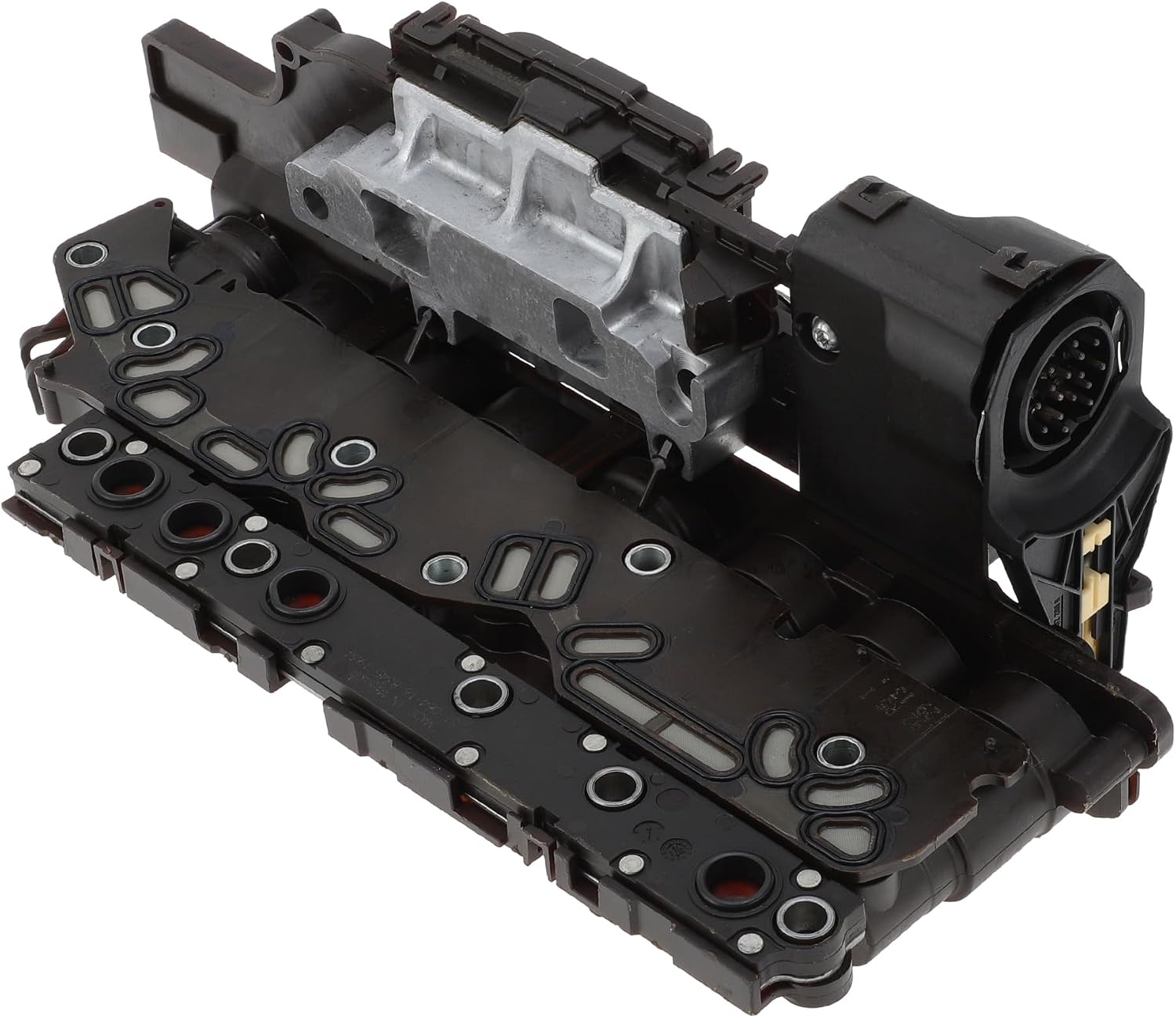
Start With What GM's Own Bulletin Says: Check the Filter First
Before chasing electronics or pulling the valve body, GM has published a specific instruction for exactly this complaint. Preliminary Information PI0488 (June 2011) gives diagnostic information for no-forward, no-reverse and slip complaints on 2010-2011 cars, trucks and vans with the 6L80 or 6L90 (RPO MYC or MYD). Once the condition is confirmed, GM says to thoroughly inspect the fluid filter assembly, because it may be cracked or split. A cracked filter lets the pump pull air instead of fluid, which can produce anything from a delayed engagement up to complete no-movement in every gear. It is a quick visual check once the pan is down, so it belongs first in the order, not last.
Do not stop at the filter, though. Per PI0488, if a cracked or split filter is found, the pump should be disassembled and inspected for a scored rotor or vanes, a scored pump cover or rotor pocket, or a cracked pump slide, and the transmission should be evaluated for clutch damage. A new filter can get the vehicle moving again without making it fixed.
Rule Out Software and a TEHCM Mismatch Next
If the no-movement complaint showed up immediately after a TEHCM (transmission electro-hydraulic control module) replacement, a reflash, or any dealer reprogramming, don't condemn the new part yet. A temporary no-move condition during the OE programming or relearn process is documented and usually clears on its own: pull the scan tool, shut off the key, open and close the driver's door, then wait 15 to 20 minutes before trying to drive again. If the condition is still there after that wait, confirm the TEHCM's part number and its programmed calibration actually match the VIN. An incorrect part number or a misprogrammed module is a separate, documented cause of no movement or no-upshift complaints, and it is a paperwork check, not a teardown.
Check Line Pressure Before You Touch Anything Mechanical
A line pressure gauge at this point tells you which half of the transmission to chase. Two readings matter most:
- Pressure flat around 60-68 psi with no rise against RPM points to the TEHCM's line pressure control solenoid stuck in exhaust mode. Because these solenoids are over-molded into the TEHCM housing and aren't individually serviceable, this almost always means replacing the TEHCM assembly rather than a single solenoid.
- Pressure below roughly 30 psi at idle, often with some abnormal movement rather than a complete no-move, points to a missing pressure regulator boost valve roll pin in the pump.
- No line pressure at all, combined with no movement, points to a missing pump pressure relief ball and spring, a problem Sonnax notes shows up most often in rebuilt pumps where that small ball-and-spring assembly gets left out during reassembly.
If pressure comes back normal and movement is still absent, the fault has moved out of the pump and TEHCM and into the valve body or the internal geartrain, covered next.
Pump-Side Causes With Normal or Abnormal Pressure
Besides the boost-pin and relief-ball failures above, a pump TCC control valve stuck against its return spring can block converter charge (apply) oil entirely, and that alone is usually enough to produce no movement in any gear. This valve can be air-checked in the vehicle once the valve body is pulled, before you commit to a full pump teardown or replacement.
One more pump-side cause has its own GM bulletin. Preliminary Information PIP5175F (February 2025) covers 6L80 units built at GM's Silao, Mexico Plant 2 in 2013-2020 Tahoe, Suburban, Yukon and Escalade models and 2013-2021 Silverado and Sierra trucks, among others. The complaints are delayed engagement into Drive, slip or shudder on launch in 1st through 4th, and a 1-2 bump, often only at operating temperature. GM's cause is loose stator support to pump cover bolts leaking 1-2-3-4 clutch apply oil at the stator support gasket. The check is to apply air to the 1-2-3-4 apply passage with the pan and control assembly removed and look for leakage at the compensator feed passage. If the bolts are loose or the gasket is misaligned, GM's fix is pump cover kit 24248573, inspection of the 1-2-3-4 clutch plates and an adapt reset.
Valve Body Causes That Often Show Normal Line Pressure
This is the category most likely to fool a tech working off pressure readings alone, because line pressure frequently reads normal with every one of these faults:
- Separator plate mismatch. A Type 2 separator plate installed on a Type 1 valve body causes no Forward. The correct Type 1 plate (GM #24245720) uses seven checkballs, and early Type 1 bodies cannot be updated to the later eight-checkball plate. Install the Type 1 plate on a Type 2 body instead, and you get no 3rd gear and no Reverse.
- Clutch select valves installed backwards, or stuck. These valves go in springs-outboard. Backwards or seized, they cause a loss of Forward, Reverse, or both depending on which valve is affected.
- Stuck clutch regulator valves. A stuck 1-2-3-4 clutch regulator valve causes no Forward. A stuck 3-5-R clutch regulator valve causes no Reverse, often with other shift complaints. Line pressure is typically normal in both cases.
- Misplaced or shrunken checkballs. A shrunken or displaced No. 1 checkball causes no Forward; a misplaced No. 5 checkball causes no Reverse. Either can be intermittent, which makes it easy to misdiagnose as an electronic fault. GM bulletin 23-NA-142 (September 2024) traces no forward after a Park-to-Drive or Reverse-to-Drive shift on 2015-2020 Tahoe, Suburban and Yukon and 2018-2022 Silverado and Sierra 1500 models to a spacer plate check ball seat that wears the plastic No. 1 ball, and replaces it with spacer plate package 24272467. Gears Magazine reports those balls shrinking from 0.250 in. to 0.180 in. or less, and advises replacing all of them on any valve body service.
- A 6L90 valve body installed on a 6L80. This specific mix-up, usually from a parts-swap rebuild, causes no Reverse on its own.
Internal Geartrain Faults (Less Common, Usually Rebuild-Related)
When pressure is normal and the valve body checks out, the remaining causes are mechanical and typically trace back to a prior rebuild or assembly error rather than normal wear:
- A sun gear left out of the front planet, or the front input planet installed upside down, causes no movement in both Forward and Reverse with normal line pressure.
- A cracked or popped 1-2-3-4 (Forward) clutch piston, often from a snap ring that wasn't seated correctly or a piston that was already cracked and missed during a prior repair. The OE 1-2-3-4 piston has a known high failure rate, which is why a heavy-duty aftermarket piston is a common upgrade during a rebuild rather than reusing the stock part.
- A broken output gear weld, which reads normal on the output speed sensor but still produces no movement in Forward or Reverse, since the sensor is reading a shaft that's no longer connected to the gear it's welded to.
- A broken or cracked 3-5-R drum weld, which typically shows up as no or slipping Reverse along with 3rd and 5th gear problems rather than a total no-move.
Fluid: Rule Out the Cheap Variable While You're In There
The 6L80 was the transmission GM developed DEXRON-VI for in the first place, specifically because its clutch material sits in direct contact with the fluid. DEXRON-VI is fully back-serviceable into any earlier unit that called for DEXRON, DEXRON-II, or DEXRON-III, per GM's own global service-fill specification, so there's no compatibility concern using it here. While the pan is down for the filter inspection, confirm the fluid level and condition match spec. A severely overfilled or underfilled unit, or fluid that's badly burnt, can mask or worsen several of the pressure symptoms above and is worth ruling out before you chase a valve body fault that isn't actually there.
| Symptom | Likely cause | Check first |
|---|---|---|
| No movement, right after TEHCM swap/reflash | Temporary relearn condition, or part number/VIN mismatch | Key-off relearn wait; verify TEHCM part number against VIN |
| No movement, line pressure flat 60-68 psi | Line pressure solenoid stuck in exhaust (TEHCM) | Line pressure gauge under load |
| No movement, pressure under ~30 psi at idle | Missing pump boost valve roll pin | Pump teardown and inspection |
| No movement, zero line pressure | Missing pump relief ball and spring | Pump teardown (common after a prior rebuild) |
| No Forward, pressure normal | Separator plate mismatch, stuck 1-2-3-4 valve, or No. 1 checkball | Valve body teardown and plate part number check |
| No Reverse, pressure normal | Stuck 3-5-R valve, No. 5 checkball, cracked 3-5-R drum, or 6L90 VB on a 6L80 | Valve body teardown; drum inspection |
| No movement, any gear, pressure normal | Missing/upside-down planet sun gear, broken output gear weld | Internal teardown |
Diagnostic Order
- Pull the pan and inspect the fluid filter and neck for cracks or splits (GM PI0488 series). Check fluid level and condition at the same time.
- If the complaint started right after a TEHCM swap or reflash, run the relearn wait procedure first, then verify the part number and calibration match the VIN.
- Hook up a line pressure gauge. Flat 60-68 psi points to the TEHCM solenoid; under 30 psi at idle points to the pump boost pin; zero pressure points to the pump relief ball/spring.
- If pressure is normal, pull the valve body. Check the separator plate part number against the body type, inspect the clutch select and regulator valves for orientation and sticking, and check the No. 1 and No. 5 checkball locations.
- If the valve body checks out, the fault is internal: inspect the front planet sun gear, the 1-2-3-4 piston and snap ring, the output gear weld, and the 3-5-R drum weld.
Frequently Asked Questions
What is the most common documented cause of no movement on a 6L80?
GM Preliminary Information PI0488 points directly at the fluid filter assembly. It tells techs confirming a no-forward, no-reverse or slip complaint to inspect the filter, because it can crack or split and starve the pump. If the filter is cracked, GM also says to disassemble and inspect the pump and evaluate the clutches, so the filter is the first check, not always the whole repair.
Can a 6L80 have no movement with normal line pressure?
Yes, and that reading narrows the search fast. A Type 2 separator plate installed on a Type 1 valve body, a stuck or backwards clutch select valve, a stuck 1-2-3-4 or 3-5-R clutch regulator valve, a sun gear left out of the front planet, or a broken output gear weld can all produce no movement while line pressure reads normal on a gauge. When pressure is normal, the problem is almost always a specific stuck valve, a misassembled valve body, or an internal mechanical fault rather than the pump or the TEHCM's line pressure solenoid.
Why would a 6L80 have no movement right after a TEHCM replacement or reprogram?
This is common enough that it has a known non-repair fix. During OE programming or a relearn, a temporary no-move condition can show up on the first attempt to drive. Before assuming a failed part, remove the scan tool, shut off the key, cycle the driver door, and wait 15 to 20 minutes before retrying. If it persists, verify the TEHCM part number and the programmed calibration actually match the VIN, since a mismatched or incorrectly flashed module is a documented cause of no movement or no upshift on its own.
What line pressure reading points to a stuck pressure control solenoid on a 6L80?
A TEHCM line pressure solenoid stuck in exhaust mode typically holds pressure flat around 60 to 68 psi with no rise at all as RPM climbs. Because the solenoids are over-molded into the TEHCM housing and are not individually serviceable, a confirmed stuck-exhaust reading on this unit usually means replacing the TEHCM assembly rather than a single solenoid.
Can a bad oil pump cause a 6L80 to have zero movement in any gear?
Yes. A missing pump pressure relief ball and spring, most often seen after a prior rebuild, produces no movement and no line pressure at all. A missing pressure regulator boost valve roll pin drops idle pressure below roughly 30 psi, which can leave some abnormal movement rather than none. A pump TCC control valve stuck against its spring can block converter charge oil entirely and is also a documented no-movement cause, and it can be air-checked with the valve body removed before condemning the pump.
6L80 Transmission Filter Kit with Pan Gasket, OEM 24236933
CoreTransmissionParts carries the matching filter and pan gasket set for the exact fault GM's PI0488 bulletin points at. Rule this out first before any teardown.
View the filter and gasket kit →Shop 6L80 parts →
Sources
- Sonnax Technical Resource, "GM 6L45/50, 6L80/90 No Movement Conditions: Analysis and Repair Tips." Backs the full list of pump, valve body, and geartrain causes, their associated line pressure readings, and the specific part numbers and checkball locations cited above. sonnax.com
- Transmission Digest, "GM 6L Series No-Movement Conditions: Analysis and Repair Tips." Backs the same diagnostic breakdown from the original TASC Force Tips source material, including the separator plate type mismatch and clutch select valve orientation faults. transmissiondigest.com
- GM Service Bulletin PI0488 series (NHTSA-hosted), diagnostic information for no-forward, no-reverse, and transmission slips on 6L80/6L90 units. Backs the filter assembly inspection instruction and the affected model range. static.nhtsa.gov (PDF)
- Sonnax Technical Resource, "6L80/6L90 Remanufactured TEHCMs for Top-Quality, Affordable Repairs." Backs the detail that the TEHCM's solenoids, sensors, and pressure switch are over-molded into the housing and not individually serviceable. sonnax.com
- SAE Technical Paper 2006-01-3242, "General Motors DEXRON-VI Global Service-Fill Specification." Backs that DEXRON-VI was developed for the 6L80 and is back-serviceable into units originally filled with DEXRON, DEXRON-II, or DEXRON-III. saemobilus.sae.org
- GM Preliminary Information PIP5175F (NHTSA-hosted), February 2025, delayed engagement, launch slip or shudder and 1-2 clunk on Silao-built 6L80 units. Backs the loose stator support bolt and pump cover gasket leak, the air test, pump cover kit 24248573 and the adapt reset. static.nhtsa.gov (PDF)
- GM Service Bulletin 23-NA-142 (NHTSA-hosted), September 2024, "No Forward Gear When Shifting from Park to Drive and/or Reverse to Drive." Backs the spacer plate check ball seat cause, No. 1 ball wear and spacer plate package 24272467. static.nhtsa.gov (PDF)
- Gears Magazine (ATRA), Steve Garrett, "What's Old Is New Again: 6L45/6L50/6L80/6L90 No Forward, Slips Moving Forward," August 2024. Backs the No. 1 check ball wear from 0.250 in. to 0.180 in. and the replace-all-balls advice. gearsmagazine.com
Shop 6L80 filters, valve bodies, pumps and rebuild kits, shipped fast from the USA.
Shop 6L80 parts →