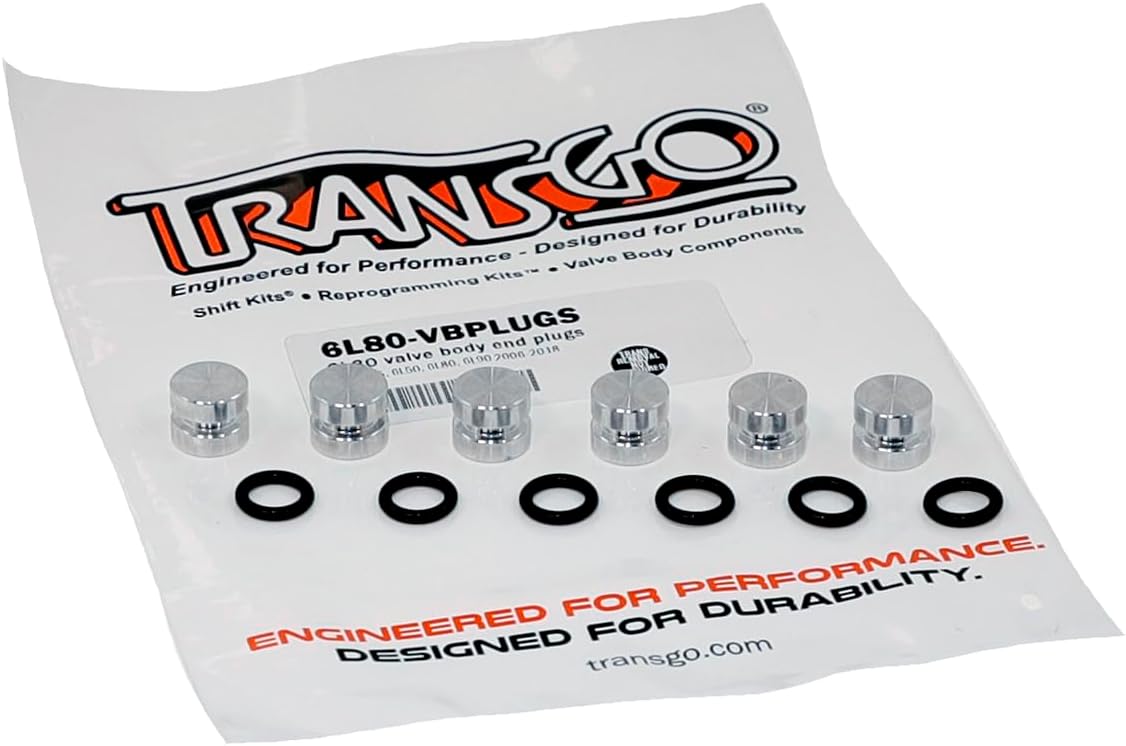
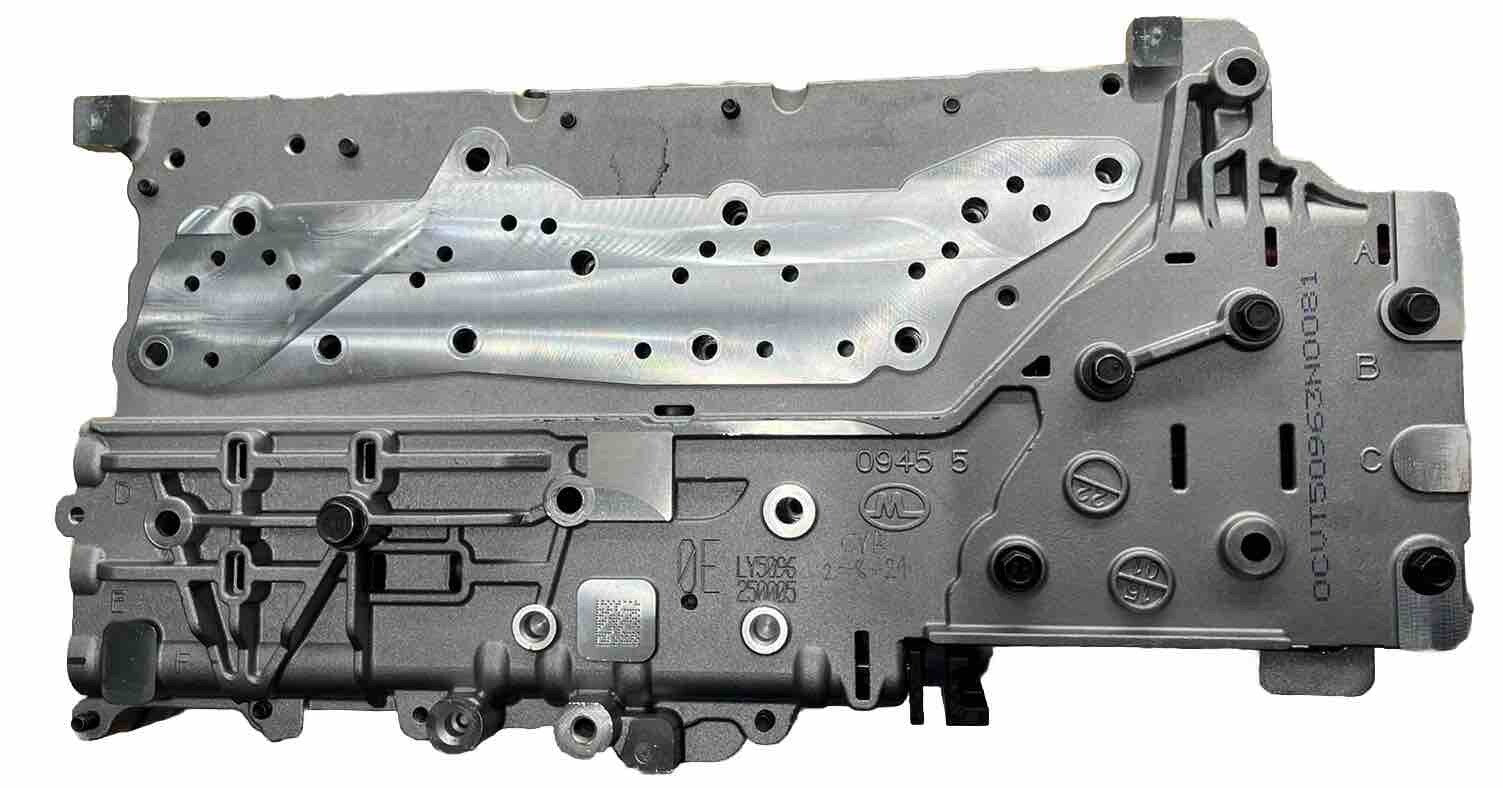
A Silverado, Sierra, Tahoe, Yukon, Escalade, Camaro or Corvette with a 6L80 that shudders on light throttle around 40-60 mph, runs a few hundred RPM high at cruise, or bangs the converter clutch on when it locks up often has a worn TCC regulator valve bore, not a bad converter. The Sonnax 104740-46K is a drop-in repair for that bore in the 6L45, 6L50, 6L80 and 6L90. It replaces the factory TCC regulator valve, shuttle valve, end plug and spring with parts made to seal in a worn bore, and it does not require reaming.
What the TCC regulator valve does in a 6L80
In the 6L80 the TCC pressure control solenoid on the TEHCM does not apply the converter clutch directly. It sends a signal pressure to the TCC regulator valve in the lower valve body, and that valve meters line pressure into the converter clutch apply circuit. The TCM then varies the solenoid to control how fast the clutch engages and how much it is allowed to slip. Because the regulator is constantly modulating, it moves back and forth in its bore thousands of times and wears the aluminum casting oval. Once the bore is worn, oil leaks past the valve lands, apply pressure wanders, and the TCM sees slip it cannot correct.
The Sonnax valves have extended spool lands so they ride in the unworn part of the bore, and a lengthened shuttle valve that resists cocking. Both are hardcoat anodized aluminum. Sonnax states the kit restores proper TCC apply in moderately worn bores.
Symptoms of a worn TCC regulator bore
- Shudder or a rumble-strip feel at steady 40-60 mph cruise, especially after the fluid is hot
- No lockup, or lockup that drops in and out, with cruise RPM higher than normal
- Harsh, clunky converter apply on light throttle
- Hot fluid and dropping fuel economy because the converter never fully couples
- TCC slip code P0741 with no electrical TCC solenoid circuit code present
Torque converter shudder on the 6L80 is also caused by worn-out fluid, and GM bulletins list shudder alongside overheating on these units. Our 6L80 common problems guide covers the fluid exchange that should come first.
How to confirm before you buy
Start with the fluid. If a fresh Dexron VI exchange cures the shudder, you saved a valve body job. If it comes back, watch commanded versus actual TCC slip on a scan tool at a steady cruise. Electrical codes such as P2763 or P2764 point at the solenoid or TEHCM circuit instead, and the 6L80 shift solenoid symptoms guide explains how to separate a solenoid fault from a hydraulic one. Once the valve body is out, a vacuum test at the TCC regulator bore tells you for certain whether it is leaking.
Fitment
This kit fits GM 6L45, 6L50, 6L80 and 6L90 six-speed automatics, which covers the 2006-2020 6L80 trucks, SUVs and performance cars including Silverado, Sierra, Tahoe, Suburban, Yukon, Escalade, Camaro and Corvette, plus the 6L90 heavy-duty and 6L45/6L50 applications. It is intended for moderate bore wear. A bore worn badly enough to fail the vacuum test after installation needs Sonnax's oversized ream-in kit instead. If you are unsure which transmission you have, send us the year and VIN. See every part for this unit on our 6L80 parts page.
Install notes
- Drop the pan, remove the filter and pull the valve body and TEHCM assembly. Keep the TEHCM clean and dry and handle it by the edges.
- In the lower valve body, remove the factory retaining clip and keep it. Discard the original end plug, shuttle valve, regulator valve and spring.
- Seat the Sonnax spring in the regulator valve and install the assembly spring end first with the flats facing up, then the shuttle valve over the stem, flats up.
- Install the end plug with its boss vertical and refit the factory retainer so the slot captures the boss.
- Vacuum test the indicated ports. Sonnax specifies holding a minimum of 13.5 and 18 in-Hg.
- Refill with Dexron VI, check the level at operating temperature at the fill plug, and run a Service Fast Learn with a scan tool before road testing through several lockup cycles.
A 6L80 pan with drain plug and filter makes future fluid changes easy, and if the casting shows wear in other bores, a 2010-19 6L80 valve body may be the better repair.