A 6L80 that will not back up is one of the few complaints on this transmission where the diagnosis is genuinely worth doing. Five different failures produce it, they range from a checkball sitting in the wrong pocket to a clutch housing that needs the unit on the bench, and the one question that separates most of them takes about thirty seconds to answer in the driveway.
That question is: does it still have 3rd and 5th? The 3-5-R clutch serves third gear, fifth gear and reverse. When all three go away together you are looking at that clutch pack or its apply circuit. When reverse alone is missing and the forward gears are intact, the suspect list shifts toward the low/reverse side and the valve body. Note it before you touch anything, because once the pan is off you have lost the cleanest piece of evidence you were going to get.

What actually applies reverse in a 6L80
The 6L80 is clutch-to-clutch with no bands. Five clutch packs cover six forward ratios and reverse, and each range is a pair:
- 1st — 1-2-3-4 clutch plus low/reverse
- 2nd — 1-2-3-4 plus 2-6
- 3rd — 1-2-3-4 plus 3-5-R
- 4th — 1-2-3-4 plus 4-5-6
- 5th — 3-5-R plus 4-5-6
- 6th — 2-6 plus 4-5-6
- Reverse — 3-5-R plus low/reverse
Read that chart sideways and the diagnostic value falls out on its own. Lose 3-5-R and you lose 3rd, 5th and reverse. Lose low/reverse and you lose 1st and reverse but keep 3rd and 5th. Lose the 1-2-3-4 and reverse is fine while the forward gears fall apart. A customer who says "no reverse and it feels like it starts in second" is telling you something different from one who says "no reverse and it slips going up the highway," and both are telling you more than the code list will.
The triage that comes before the pan
Do these four things in order. Skipping them is how a valve body problem turns into a rebuild quote.
1. Fluid level and condition, at temperature
Reverse needs high apply pressure, so it is frequently the first range to drop out when the level is low. Set it by fluid temperature at the check plug, not by eye. Use DEXRON-VI, which is GM's service fill specification for 2006-and-newer vehicles and therefore covers every 6L80 ever built. Shell's Pennzoil data sheet lists its GM-approved DEXRON-VI (spec GMN10060) for all 2006-and-newer GM Hydra-Matic transmissions. If reverse returns after a correct fill, you are not done: something put that fluid on the ground or past a seal, and you still have to find it.
2. Pull codes before you clear anything
The three that matter here are P0776, P2715 and P2723. GM bulletin 09-07-30-004J lists all three alongside "slip when reverse is selected or no reverse" and "delayed engagement into reverse." A history P0776 on a unit that currently has no reverse is close to a confession. Write the codes down before you clear them, because you are about to lose them.
3. Mainline pressure, gauge on the port
This reading sorts electrical from hydraulic from mechanical faster than anything else on the truck. Per Sonnax, line pressure stuck at roughly 60-68 psi with no rise off idle points at a line pressure solenoid stuck in exhaust mode inside the TEHCM. Line pressure below 30 psi at idle points at a missing boost valve roll pin in the pump.
Here is the part that trips people up: with most valve body and geartrain faults, line pressure reads perfectly normal. A good pressure number does not clear the valve body. It rules out the pump and the pressure control circuit, and nothing else.
4. Ask what happened right before it quit
"It has been doing this for six months" and "it did it the day after the valve body went in" send you to completely different places. The second one has its own section below, and it is more common than it should be.
Cause 1: the cracked 1-2-3-4 / 3-5-R clutch housing
This is the headline failure, and GM documented it in bulletin 09-07-30-004J, covering 2006-2009 Cadillac STS-V, XLR and XLR-V, 2007-2008 Escalade, 2006-2009 Corvette, 2007-2008 Silverado and Sierra, 2008 Suburban and Yukon XL, 2008-2009 HUMMER H2 and 2008-2009 Pontiac G8, all with RPO MYC or MYD. The listed conditions run from slip or no reverse and delayed reverse engagement through harsh 2-3 shifts, harsh 4-5 or slips in 5th, and slipping on acceleration when passing. The cause GM gives is a cracked 1-2-3-4 / 3-5-R clutch housing.
The housing cracks at the weld, and a cracked weld leaks 3-5-R apply pressure straight out of the circuit. The clutch never gets enough to hold, which is why the same crack reads as a slip on one truck and a flat no-reverse on another with more wear in the pack.
How to confirm it: the soap-and-air check
GM's own procedure works assembled or disassembled, and it takes a few minutes:
- Apply soap compound to the weld area of the housing.
- Hold your thumb over the air bleed passage.
- Spray compressed air into the 3-5-R clutch feed hole (on a fully assembled 1-2-3-4 and 3-5-reverse housing).
- Inspect the weld area for bubbles. Bubbles means a new housing, full stop.
A dedicated drum leak tester makes this repeatable instead of a thumb-and-hope exercise, which matters when you are deciding whether to sell a customer a clutch housing. Transmission Digest is blunt about the alternative: rebuilders weld these cracks, and it is a short-term solution to a long-term problem, because the welds slowly weaken and fail again or the housing cracks somewhere else.
Two traps in the replacement
Both of these are called out as Important notices in the bulletin, and both will put the truck back in your bay:
- Do not put a 2008 housing in a 2007-or-older 6L80. GM changed the 1-2-3-4 piston, the 1-2-3-4 piston housing and the 3-5-R piston for the 2008 model year. Installing a 2008 complete housing assembly into a 2007 or earlier unit may produce a 2-3 shift flare or 3-5-R clutch distress.
- Install all three inner seals. When fitting a new 1-2-3-4 / 3-5-R housing into a 2007-or-older 6L80, GM states that failing to install the three inner seals can result in no reverse, no forward, or distressed clutches. That is the same complaint you just tore it down for.
Part numbers from the bulletin: 24238694 for the complete 1-2-3-4 and 3-5-R clutch assembly (MYC, 2008 and up) and 24238695 for MYD, 2007-2008. For MYC 2006-2007 there is no complete assembled housing — individual parts have to be ordered and the housing built up.
Cause 2: the valve body is the wrong one, or was never right
If reverse disappeared immediately after a valve body replacement, stop diagnosing the geartrain and go look at the casting. A 6L80 valve body will bolt straight onto a 6L90 case and vice versa — but the center support holes in the upper casting sit at a different offset between the two models. Install the wrong one and, per Sonnax technical support specialist Tory Royce, it will have forward but no reverse, because the case ports are not aligned with those in the upper casting. Nothing is broken. Nothing shows on a pressure gauge in park. It simply cannot feed the circuit.
Identification uses a machined-down boss on the upper casting: A = MYA/6L45, B = MYB/6L50, C = MYC/6L80, D = MYD/6L90. Royce warns that this is helpful but not foolproof, because some valve bodies have no bosses machined down at all. Where you have any doubt, lay the old casting beside the new one and check the center support hole positions directly. The case difference is real and physical: the 6L90 case is 1-3/8 in. longer than the 6L80, with roughly 25 percent of the internals upgraded for torque capacity.
The other valve body causes of no reverse, all from Sonnax's teardown data:
- The no. 5 checkball out of place. Straightforward, common, and free to fix if you catch it on the bench. Its counterpart, no. 1 out of place or shrunken, gives you no forward instead.
- Wrong separator plate. The plates are not interchangeable across body types: a Type 1 plate, part 24245720, installed on a Type 2 body produces no 3rd and no reverse. Run it the other way, a Type 2 plate on a Type 1 body, and you get no forward.
- A stuck 3-5-R clutch regulator valve. This valve meters apply pressure to the pack that reverse depends on. Stick it and the pack never sees its pressure, whatever the clutch itself looks like on the bench.
- Clutch select valves or springs installed backwards — a no-movement condition rather than a no-reverse one, but worth checking on any unit that came back from someone else's rebuild.
- A TEHCM solenoid fault. Test before condemning; this is the one on the list that will usually leave a code behind.
Cause 3: pump cover seal rings and the pressure regulator bore
The clutch fluid seal rings on the transmission fluid pump cover feed the 1-2-3-4 and 3-5-R circuits. GM used a 1-piece seal ring design in 2006, 2007, 2008 and early-build 2009 production, then moved to a 2-piece design in December 2008. The 1-piece rings leak, and the bulletin ties that leakage to a harsh 2-3 shift as the typical low-mileage complaint — but the same leak path bleeds 3-5-R apply pressure, which is what reverse runs on. On a cold unit with delayed or slipping reverse that cleans up once it warms, these rings belong on the list.
Two rules when you are in there. Ring kit 24248581 is the 1-piece replacement. Do not install 1-piece rings on a 2-piece pump cover — the 2-piece cover is identified by a notch in the seal ring groove that accepts the tab on the 2-piece ring. And the rings have a required orientation; getting it wrong buys you a repeat harsh 2-3 and a second teardown.
While the pump is apart, look at the pressure regulator bore. Sonnax documents wear at the balance end cutting into the casting, which drives line pressure high and cooks the unit through insufficient cooler and converter lube flow, and wear at the outboard spool, which robs converter feed and drops line pressure. Current repair is drop-in kit 104520-15K or oversized kit 104520-16K; both superseded the older kits that required drilling the pump.
Cause 4: the mechanical short list
When the pressure is right, the valve body is correct and the drum passes an air check, what is left is mechanical. Sonnax's no-movement analysis gives the ones worth your time:
- An improperly indexed snap ring. Easy to do, invisible once assembled, and a direct cause of no reverse.
- A broken 3-5-R drum weld — no reverse or slipping reverse together with 3rd and 5th gear faults, which brings you right back to the clutch application chart at the top of this article.
- A cracked forward (1-2-3-4) piston or a popped-out snap ring.
- A broken output gear weld. This one takes everything, not just reverse.
The decision tree, compressed
- Does it still have 3rd and 5th? All three gone means the 3-5-R clutch or its apply circuit. Forward gears intact means low/reverse and the valve body.
- Fluid level correct at temperature, on DEXRON-VI? Fix that before anything else.
- P0776, P2715 or P2723 stored? Go straight to the 1-2-3-4 / 3-5-R housing per bulletin 09-07-30-004J.
- Mainline pressure: stuck at 60-68 psi with no rise means a line pressure solenoid stuck in exhaust. Under 30 psi at idle means a missing boost valve roll pin. Normal pressure rules out the pump, and only the pump.
- Did it start right after a valve body job? Verify the casting is the correct model before you go further.
- Pan off: check the no. 5 checkball position and confirm the separator plate type matches the body.
- Unit out: soap-and-air the 1-2-3-4 / 3-5-R housing weld with a drum leak tester. Bubbles means a new housing, not a weld bead.
- Still nothing? Snap ring indexing, pump cover seal rings, stator support rings.
Putting it back together so it stays fixed
Fill with DEXRON-VI and set the level by temperature at the check plug. If you are working on a full-size truck with the MYC 6L80 and the transmission has been out, install the revised fluid fill tube, part 24260606, if it is not already there — it carries a damper near the top that prevents resonance-related damage. Then let the TCM relearn its clutch adapts before you judge shift quality, because a freshly cleared adapt table will feel firm and that is not a fault.
One last note on scope. A 6L80 that lost reverse to a cracked 3-5-R housing has usually been slipping that pack for a while, and slipping clutches make debris. Cut the filter open and read the pan before you decide this is a housing-only job. If the fluid came out dark with material in it, the clutches and the valve body both need attention, and quoting the housing alone is how a repair comes back.
The valve that strangles reverse
When the 3-5-R clutch checks out mechanically but reverse still will not build, the 3-5-R clutch regulator valve is the circuit to recondition. CoreTransmissionParts carries the Sonnax kit for that bore, along with the high-capacity 3-5-R apply ring and the full 6L80 catalog.
Sonnax 6L80 3-5-Reverse Clutch Control Valve Kit →FAQ
Does a 6L80 with no reverse always mean the transmission has to come out?
No. A meaningful share of no-reverse complaints are valve body or fluid issues that never require pulling the unit. Check fluid level and condition first, then scan for P0776, P2715 and P2723, then take a mainline pressure reading. Only after those come back clean does the 3-5-R clutch housing weld become the leading suspect, and that one does require removal.
Why did my 6L80 lose reverse right after a valve body replacement?
Because a 6L80 valve body will bolt straight onto a 6L90 case and vice versa, but the center support holes in the upper casting sit at a different offset between the two models. Install the wrong one and the case ports do not line up: you get forward gears and no reverse. Sonnax technical support specialist Tory Royce documents exactly this failure, and warns that the machined-down A/B/C/D boss used to identify castings is not foolproof because some valve bodies have no bosses machined at all.
What causes a 6L80 to lose 3rd, 5th and reverse at the same time?
That combination points hard at the 3-5-R clutch, because those are the three ranges it serves. The usual mechanical cause is a cracked weld in the 1-2-3-4 / 3-5-R clutch housing, which GM covers in bulletin 09-07-30-004J. The hydraulic cause is a stuck 3-5-R clutch regulator valve in the valve body. Losing all three at once is the single most useful clue on this transmission, so note it before anything comes apart.
Can low fluid cause no reverse in a 6L80?
It can, and reverse is often the first range to drop out because it needs the most apply pressure. Use DEXRON-VI, which is the approved GM service fill specification for 2006-and-newer vehicles, and set the level by fluid temperature using the check plug rather than guessing. If reverse comes back after a correct fill, you still have to find where the fluid went.
Is welding a cracked 3-5-R drum a real repair?
It is a stopgap, not a fix. Transmission Digest describes rebuilders welding these cracks and notes it becomes a short-term solution to a long-term problem, because the welds slowly weaken and fail again or the housing cracks somewhere else. GM sells complete assembled 1-2-3-4 / 3-5-R clutch housings for most applications, and an updated housing is the repair that stays repaired.
Need parts for this job?
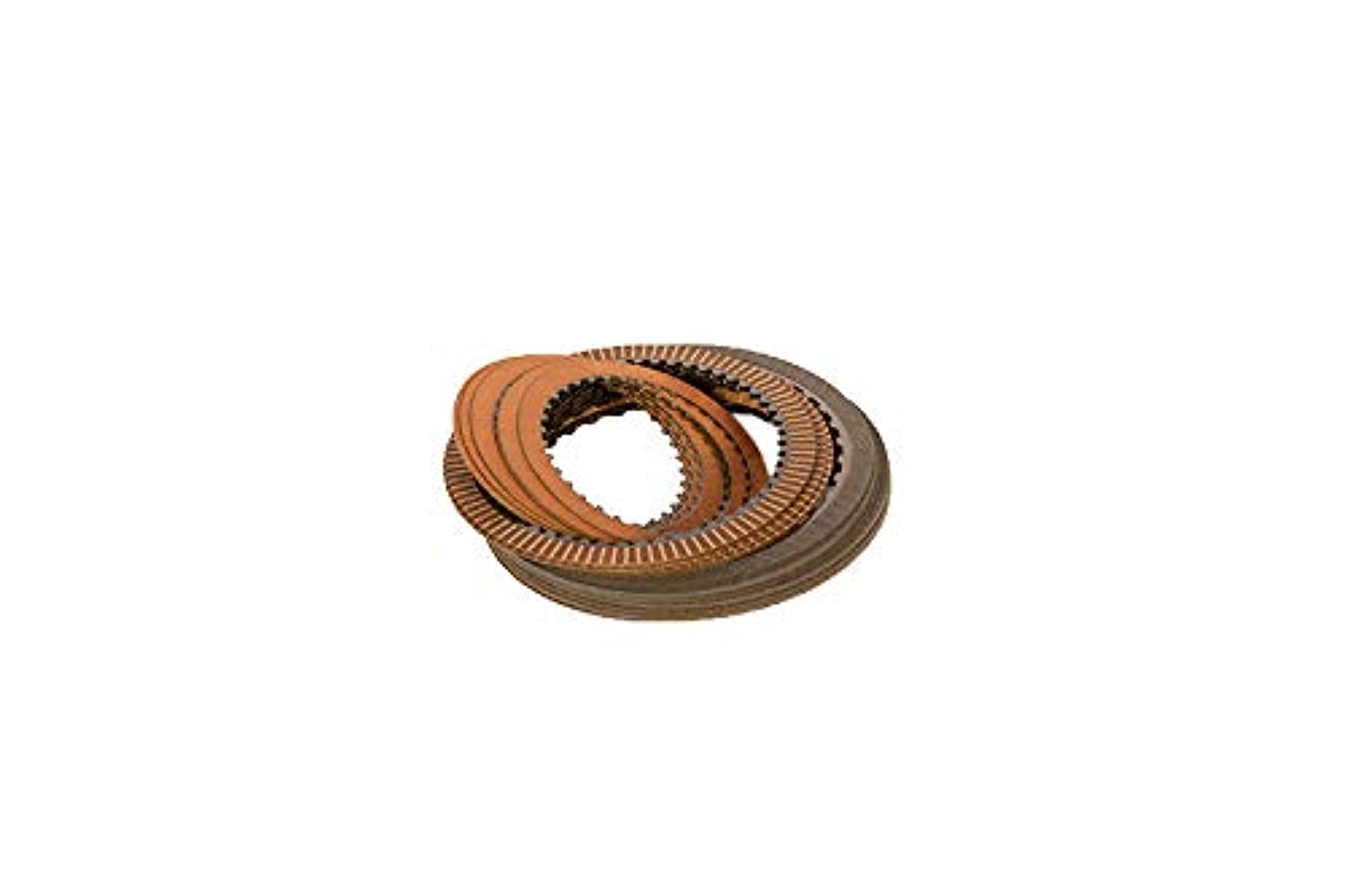
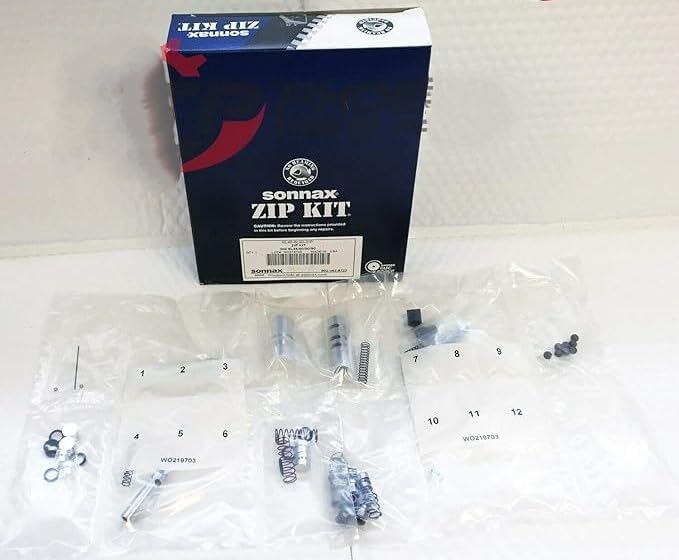
1-2-3-4 / 3-5-R clutch housings, friction and steel plate kits, drum leak testers, valve body Zip Kits, pump seal ring kits, pressure regulator kits and DEXRON-VI — every part this diagnosis can end at, in one 6L80 collection.
Shop 6L80 parts →Shop 6L80 parts →
Related 6L80/6L90 guides
Sources
- GM Service Bulletin 09-07-30-004J (February 2014), via NHTSA — Backs the core of this article: the condition list (slip in reverse or no reverse, delayed reverse engagement, DTC P0776, P2715, P2723, harsh 2-3 and 4-5 shifts), the cause statement that a cracked 1-2-3-4 / 3-5-R clutch housing produces it, the soap-and-air weld inspection procedure both assembled and disassembled, the 2008 model-year piston design change warning, the three-inner-seal warning that omitting them causes no reverse or no forward, the 1-piece versus 2-piece pump cover seal ring change in December 2008, and part numbers 24238694, 24238695, 24248581 and 24260606. https://static.nhtsa.gov/odi/tsbs/2014/SB-10043845-3346.pdf
- Sonnax - Addressing GM 6L80, 6L90 No Reverse Condition — Backs the no-reverse cause list (out-of-place no. 5 checkball, incorrect separator plate or gaskets, improperly indexed snap ring, cracked welds in the 3-5-R drum, stuck 3-5-R clutch regulator valve, TEHCM solenoid fault) and the wrong-valve-body failure: the 6L80 and 6L90 valve bodies interchange physically but the center support holes in the upper casting are offset differently, so the case ports do not align and the unit has forward with no reverse. https://www.sonnax.com/tech_resources/1613-addressing-gm-6l80-6l90-no-reverse-condition
- Sonnax - GM 6L45/50, 6L80/90 No Movement Conditions: Analysis & Repair Tips — Backs the pressure triage numbers and the separator plate detail: line pressure stuck at roughly 60-68 psi with no rise off idle pointing to a line pressure solenoid stuck in exhaust, line pressure below 30 psi at idle pointing to a missing boost valve roll pin, line pressure reading normal with most valve body and geartrain faults, Type 1 separator plate 24245720 installed on a Type 2 body causing no 3rd or reverse, clutch select valves or springs installed backwards, and a broken 3-5-R drum weld producing no or slipping reverse plus 3rd and 5th gear faults. https://www.sonnax.com/tech_resources/1216-gm-6l45-50-6l80-90-no-movement-conditions-analysis-repair-tips
- Transmission Digest - GM 6L80, 6L90 No-Reverse Condition Explanation, by Tory Royce (Sonnax TASC Force), January 14, 2026 — Backs the valve body identification section: the A/B/C/D machined boss convention mapping to MYA/6L45, MYB/6L50, MYC/6L80 and MYD/6L90, the caution that some castings have no bosses machined, and the 6L90 case being lengthened 1-3/8 in. with roughly 25 percent of internals upgraded over the 6L80. https://www.transmissiondigest.com/gm-6l80-6l90-no-reverse-condition-explanation/
- Transmission Digest - 6L80/90 3-5/Reverse Drum — Backs the drum weld discussion: the 3-5/Reverse clutch drum cracking at the weld, the resulting apply problem and DTC P0776, the caution to confirm the crack rather than assume it, and that welding the crack is a short-term solution to a long-term problem. https://www.transmissiondigest.com/6l80-90-3-5-reverse-drum/
- Sonnax - Why Do I Drill the Pump? Preventing Excess 6L80-Series Line Pressure With a Drop-In PR Valve — Backs the pressure regulator bore section: wear at the balance end cutting into the casting and producing high line pressure, harsh shifts and overheating from insufficient cooler and converter lube flow, wear at the outboard spool dropping converter feed and line pressure, and current drop-in kit 104520-15K and oversized kit 104520-16K replacing the older drill-required kits. https://www.sonnax.com/tech_resources/945-why-do-i-drill-the-pump-preventing-excess-6l80-series-line-pressure-with-a-drop-in-sonnax-pr-valve
- Shell / Pennzoil - ATF Dexron-VI Technical Data Sheet — Backs the fluid requirement: a GM-approved DEXRON-VI fluid meeting GM specification GMN10060, recommended for all 2006-and-newer GM vehicles with Hydra-Matic automatic transmissions (which covers every 6L80 application) and back-serviceable for DEXRON-III(H), III and IIE. https://shop.sclubricants.com/pub/media/pds/pennzoil/Pennzoil-ATF-Dexron-VI-Technical-Datasheet.pdf