Most scan tools spit P0776 out as Pressure Control Solenoid "B" Performance or Stuck Off, and that generic wording is why the code gets chased in the wrong direction for weeks. GM names it properly in its own service bulletin language: Clutch Pressure Control (PC) Solenoid 2 – Stuck Off. It is not a line pressure code and not really a solenoid code. It is the TCM telling you that when it commanded the 3-5-R clutch to apply, the clutch did not hold.
Related reading: our 6L80/6L90 3-5-R clutch failure breakdown and the 6L80 valve body testing guide.
What PC Solenoid 2 actually controls
PCS2 feeds the 3-5-Reverse clutch. Pull up the clutch and brake application chart in Sonnax's 6L80 valve body service literature and the 3-5-R clutch is on in exactly three places:
- Reverse — 3-5-R clutch plus the Low & Reverse clutch
- 3rd gear — 1-2-3-4 clutch plus 3-5-R
- 5th gear — 3-5-R plus the 4-5-6 clutch
That is a free diagnostic shortcut. If the complaint is confined to Reverse, 3rd and 5th while 1st, 2nd, 4th and 6th are clean, the customer already told you which clutch circuit is failing. A slip in 3rd and 5th but not 4th is the 3-5-R apply circuit, and P0776 is the TCM agreeing with you.
Exactly when the TCM sets P0776
ATRA's 6L50/6L80/6L90 updates material publishes the enable criteria, and knowing them changes how you test. P0776 will only set if:
- P0716, P0717, P0722, P0723 and P1825 are not set
- Transmission fluid temperature is above 32 F (0 C)
- High side driver 1 is operational
- Driven wheel speed is above 80 RPM, and driven and non-driven wheel speeds are within 150 RPM of each other
- Input speed is above 60 RPM
- PCS 2 is commanded ON
- 3rd or 5th gear ratio has been achieved
- The TCM then sees an incorrect on-coming clutch gear ratio — a flare — with the 3-5-R clutch commanded ON for 2.25 seconds, with input shaft speed running 60 to 100 RPM away from the anticipated value
Two things fall out of that. The code is ratio-based: the TCM is not measuring solenoid current, it is doing math on speed sensors and concluding the clutch slipped. And the speed sensor codes are a gate, so if P0716 or P0717 is present, P0776 cannot set at all. A truck full of debris that already killed a speed sensor hides this code entirely. Fix those first, then drive it again.
Once P0776 sets, the TCM commands maximum line pressure, inhibits TCC apply, and freezes the shift adapts. Tell the customer that, because the harsh shifts they are complaining about are the strategy protecting the unit, not a second failure.
The rule that saves the most money on this code
ATRA states it in capital letters in its 6L80/6L90 material on the clutch pressure control solenoid stuck-off family — P0756, P0776, P0796, P2714 and P2723: do not replace the TEHCM for these codes. GM's own bulletin language says the control solenoid valve assembly should not be replaced for any DTC unless the service information diagnostics instruct you to.
These are not electrical circuit codes. The solenoid is usually doing its job and the hydraulic result downstream of it is wrong. Replacing an expensive module to fix a leaking drum or a worn valve bore is how this repair goes sideways.
Diagnosing it in order
1. Fluid level and condition, then the freeze frame
Level moves apply pressure directly, and this code needs warm fluid to set. Set level by GM's fluid temperature check procedure, not a quart count. Capture freeze frame before clearing anything: clearing the code to see if it returns throws away the data that tells you which apply the TCM was watching.
2. Verify the complaint against the apply chart
Drive it. Slip or flare on the 2-3 shift, a slipping 5th, and a delayed or weak Reverse with everything else holding is the textbook 3-5-R signature. If other gears slip too, think line pressure, pump and debris instead.
3. Pull the pan and read what is in it
ATRA documents 6L80 and 6L90 filters cracking and separating at the seam, on both OE and aftermarket designs, which lets the pump ingest air and produces slipping and no-forward or no-reverse complaints that mimic a clutch failure. If you find a cracked filter, inspect the pump too. Friction material and bronze in the pan turns a valve body repair into a teardown.
4. The upper valve body: the 3-5-R clutch regulator valve
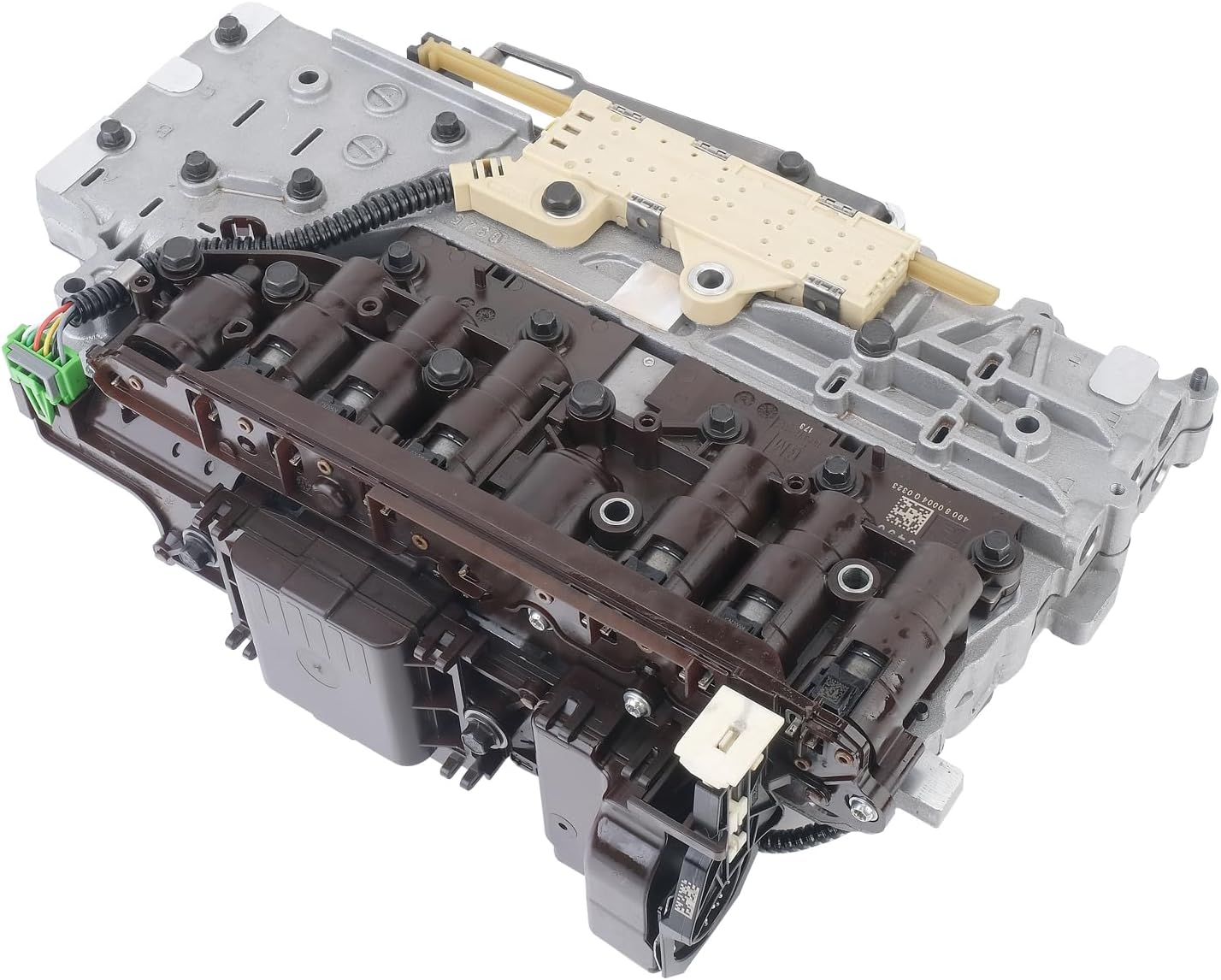
This is the specific inspection ATRA prescribes for this code. Inspect the 3-5-R clutch regulator valve in the upper valve body for wear and sticking. Each clutch has its own regulator valve, and each stuck-off code points at a different one: P0796 at the CBR1/4-5-6 valve, P2714 at the 2-6 valve, P2723 at the 1-2-3-4 valve, P0756 at clutch select valve #3 in the lower body. P0776 belongs to the 3-5-R valve. These valves oscillate constantly and the bore wears; a worn bore leaks the regulated apply pressure away and the clutch never gets what the solenoid commanded. Vacuum test the bore rather than eyeballing it, because a valve that slides freely on the bench can still leak under 60-plus psi.
5. Check balls, spacer plate, and bore plugs
ATRA lists the causes common to every one of these stuck-off codes, and this is where most of them actually live:
- Check balls not sealing on the spacer plate
- A damaged spacer plate, or worn-out check ball holes
- Undersized or incorrect bore plugs. Bore plugs should measure 0.4528 in. ± 0.0001 in. (11.502 mm ± 0.004 mm). Measure them. A plug a few ten-thousandths under spec leaks the regulator circuit and sets this code with no other damage anywhere in the unit.
- Debris
- Cracks in the suspect drum, or seal leakage feeding the suspect drum
6. Air test the 3-5-R drum for cracks
ATRA calls out a leak in the 3-5-Rev drum as a common cause of no or slipping 3rd, 5th and Reverse with a flare on the 2-3 shift, tested with low-pressure air and soapy water on the drum. Sonnax says the same from the other end: a delayed Reverse or flared 2-3 upshift may be caused by a cracked 3-5-R drum, leaking pump support sealing rings, or a bad bushing. A crack in the drum weld bleeds apply pressure, and no amount of valve body work fixes it.
7. The pump cover seals
If the drum is sound and the valves check out, the feed circuit is next. GM revised the grooves and seals on the back of the pump cover for mid-2009 production, cutting the groove deeper so a rubber O-ring sits under the seal. ATRA ties that update directly to 2-3 shift complaints and a P0776 slip. Seal kit 24248581 (old design), seal kit 24248559 (new design), pump cover with seal kit 24248573.
When it is not the valve body: the 3-5-R waved plate
There is a mechanical version of this failure, and it is the one that ends with the unit on the bench. GM documented it in bulletin 09-07-30-012F. That bulletin covers the transverse 6T70/75 family rather than the 6L80, so do not quote it as a 6L80 bulletin, but the clutch architecture and the code are the same and it is the clearest published description of the mechanism.
A broken 35R clutch wave plate allows the apply piston to over-stroke, which lets the piston leak and causes loss of apply. GM notes this normally will not occur before roughly 32,000 km (20,000 miles), and that the debris generated can affect the operation of the speed sensors and other clutches. That is why P0716, P0717, P2714, P2715, P2723 and P0777 can show up alongside or instead of P0776.
Two instructions in that bulletin are not optional if you want the job to stay fixed:
- Clean the debris out of the entire transmission and replace the pump fluid filter and the control solenoid filter plate. GM warns that failing to separate the case halves, clean the debris and replace those filters could lead to repeat damage and repairs.
- Do not wash the control solenoid valve assembly in a parts cleaner. It is an electronic module in a plastic housing.
GM released an updated 3-5 reverse clutch plate (waved), P/N 24254103, for that family, and recommends installing a new plate any time the transmission is disassembled for any reason.
GM's running changes on the 6L80 3-5-R circuit
The 6L80 got its own series of updates in this same area, and knowing them keeps you from building an early unit back to its original weakness. From ATRA's update material:
- Mid-2007: the 1-2-3-4/3-5-R clutch housing was updated to address a no-forward condition caused by the snap ring popping out. At the same time the 3-5-R waved plate went from 12 teeth to 18 (P/N 24239828), and the 1-2-3-4 waved plate from 9 to 18 (P/N 24239615).
- 2008 model year: oil capacity for the 1-2-3-4 and 3-5-R clutches was reduced by 20 percent to limit the volume required to stroke the piston, with a matching TCM calibration change. Related numbers: 24238696 (3-5-R piston), 24238700 (1-2-3-4 piston), 24243898 (drum).
If you are rebuilding an early unit, update it. A 12-tooth waved plate is a broken waved plate waiting for 20,000 miles.
One more trap on the bench
ATSG documented a comeback worth knowing before you pull a 3-5-R hub off the shelf: a 6L90 came back after overhaul screeching on the 2-3 and 4-5 shifts, and the cause was a 6L80 3-5-R clutch hub installed in a 6L90. The 6L80 hub is 8 inches tall and the 6L90 hub is taller, so the shorter hub never engaged the bottom friction plate teeth and scraped them on every apply. ATSG catalogs fifteen 6L80/6L90 parts that differ dimensionally while looking interchangeable. Measure before you assemble.
Reassembly numbers
From Sonnax's published 6L80 valve body installation instructions:
- All TEHCM-to-valve-body bolts: 71 in-lb. Finger-tighten the two 8 mm side bolts first so there is no gap between the TEHCM and the valve body, then install the 7 mm head bolts.
- Input and output speed sensor and harness bolts: 100 in-lb.
- Valve body-to-case bolts: 100 in-lb.
- Install the case connector sleeve, then push in the white electrical connector slide lock.
- Fill with DEXRON-VI to factory spec, warm the fluid to approximately 185 F, and perform the fast adapt with a scan tool. A battery disconnect will not substitute for it, and since P0776 froze the adapts when it set, skipping the reset leaves you driving on a slipping transmission's shift adapts.
- Road test 10 to 15 upshift and downshift cycles at light throttle through all six gears, plus a few passing-gear pulls. A small 2-3 flare and a clunk into 4th are normal during adaptive relearn and clear inside those cycles.
DEXRON-VI is a GM specification, not a marketing label, and fluids carrying it are licensed by GM. Valvoline's sheet for its DEXRON-VI ATF lists 5.94 mm²/s at 100 C, 29.86 mm²/s at 40 C and a viscosity index of 149. Clutch apply timing here is calibrated around that viscosity stability, so a universal multi-vehicle fluid is a false economy in a unit that just cost you a teardown.
Keeping it from coming back
- Never leave the debris. Filters, cooler and the solenoid filter plate all get replaced.
- Measure the bore plugs and vacuum test the bores during any valve body service, not just when chasing a code.
- Update early units to the 18-tooth waved plates and current housing and piston designs.
- Service the fluid on a real interval with DEXRON-VI. Sticking valves, worn bores and cut seals all accelerate with degraded fluid.
Parts for the 3-5-R circuit
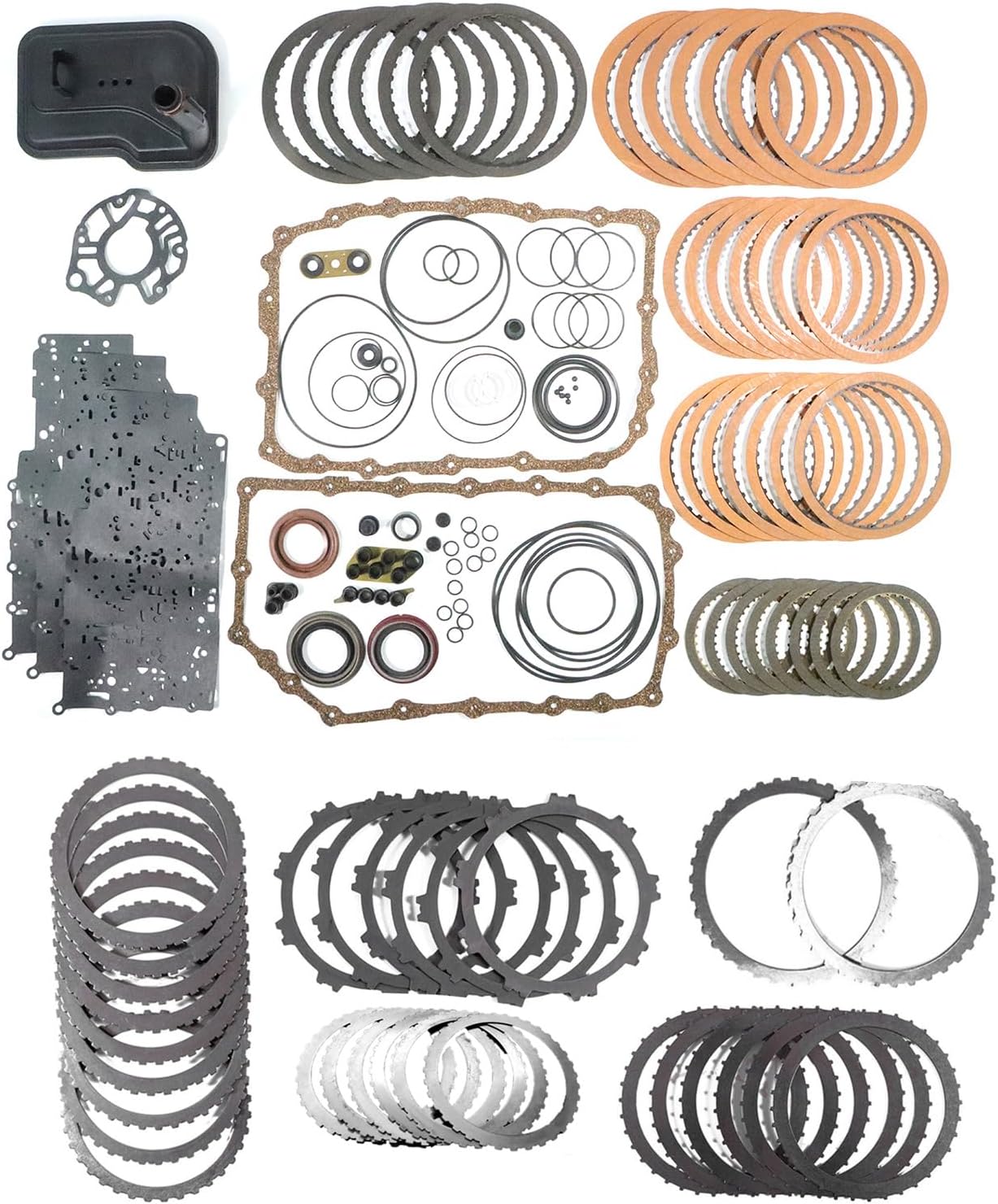
If the leak is in the apply circuit seals, the 6L80 1-2-3-4 and 3-5-Reverse clutch seal and O-ring kit covers both drums. For a worn regulator bore, the Sonnax 3-5-Reverse clutch control valve kit is the matching repair when in stock. Rest of the catalog: 6L80 parts.
6L80 1-2-3-4 and 3-5-R seal kit →FAQ
What does P0776 mean on a 6L80?
GM defines it as Clutch Pressure Control (PC) Solenoid 2 stuck off. PCS2 controls the 3-5-Reverse clutch, so the code means the TCM commanded that clutch to apply and then measured a gear ratio saying it slipped. It is a ratio-based code calculated from speed sensors, not a measurement of the solenoid's electrical circuit.
Do I need a new TEHCM for P0776?
Almost certainly not. ATRA's guidance on this code family is explicit: do not replace the TEHCM for these codes. GM's bulletin language says the control solenoid valve assembly should not be replaced for any DTC unless the service information diagnostics instruct it. The fault is normally a worn 3-5-R regulator valve bore, an undersized bore plug, a leaking or cracked 3-5-R drum, or a broken waved plate.
Can I drive with P0776 set?
Short distances only. The TCM commands maximum line pressure, inhibits torque converter clutch apply and freezes the shift adapts, so the truck moves but shifts hard with no lockup. If the cause is a broken 3-5-R waved plate, driving it circulates metal debris through the speed sensors, the other clutch packs and the pump, turning a clutch repair into a full teardown.
Why do 3rd, 5th and Reverse all slip together?
Because they share the 3-5-Reverse clutch. Reverse applies it with the Low and Reverse clutch, 3rd applies it with the 1-2-3-4 clutch, and 5th applies it with the 4-5-6 clutch. One weak apply circuit takes out all three ranges at once while the gears that do not use that clutch stay clean.
What causes the 3-5-R waved plate to break?
GM's bulletin describes the broken plate letting the apply piston over-stroke, which lets the piston leak and causes loss of apply, and notes it normally will not occur before about 20,000 miles. Early 6L80 units used a 12-tooth 3-5-R waved plate. GM moved to an 18-tooth plate in mid-2007 with an updated clutch housing, and cut clutch oil capacity 20 percent for 2008 to limit the volume needed to stroke the piston.