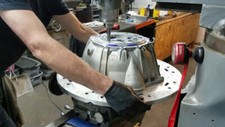
"My 6L80 is making a noise" covers at least four completely different problems, and one of them isn't a problem at all. Before you pull a pan or start ordering parts, the job is to sort the noise into one of a small number of documented buckets -- because a whine you hear with the engine off, a clunk on the 1-2 shift, and a clunk that shows up with a P0741 code all point at different hardware, and none of them get fixed by the same repair.
Characterize the noise before you touch anything
Write down four things before you open a service manual: when it happens (key-on/engine-off, in Park, on a specific shift, under load, on deceleration), whether it's a whine (steady, pitch-related to RPM or speed) or a clunk/bump (a single mechanical impact), whether it's hot-only, cold-only, or both, and whether there's a stored code. These four answers eliminate most of the guesswork, because every documented 6L80 noise fault below has a distinct signature across those four points.
Key-off whine: usually normal, not a fault
If the noise is a high-pitched tone or whine you hear with the key on and the engine off, or for up to about a minute after shutdown, start here before you suspect the transmission at all. GM's bulletin PIP4021 (current revision D, dated February 21, 2019) documents exactly this complaint across a wide range of Cadillac, Chevrolet, GMC, Hummer, and Pontiac vehicles from 2006 through 2019, and it's most noticeable from outside the vehicle or in an enclosed space like a garage or car wash.
GM's explanation is that the TCM commands the internal transmission solenoids to minimum line pressure during this window, and that command itself produces the tone. The bulletin's remedy is explicit: this is an operating characteristic, and no repair should be attempted. The caveat is important -- this only applies when there are no stored transmission codes and the vehicle shifts normally. A whine paired with a stuck-off solenoid code (P0751, P0796, etc.) or a vehicle that falls out of gear is a real fault, not the PIP4021 characteristic, and needs a full diagnosis.
1-2 clunk: loose stator support to pump cover bolts (PIP5175)
A bump or clunk specifically on the 1-2 upshift, sometimes along with delayed engagement into Drive, launch shudder, or slipping in 1st through 4th gear, is covered by GM's PIP5175 bulletin series. The current revision, PIP5175F (February 2025), extends coverage to 2013-2021 Silverado and Sierra trucks plus the 2019-up Silverado LTD and new-body 1500, all Silao-built units identified by transmission source code 2. The symptoms may only show up once the transmission is at operating temperature, which is a useful tell -- if the clunk is cold-only, look elsewhere first.
GM traces the root cause to the stator support-to-pump cover bolts being loose, which lets the stator support-to-pump cover gasket leak. The affected population is mainly 6L80 (RPO MYC) units built at GM's Silao, Mexico Plant 2, with later revisions expanding the model-year range and adding the 6L60 (RPO MYB). If a standard diagnostic routine doesn't isolate the cause, the bulletin's procedure is to remove the pan and control assemblies, then run a compressed-air leak check at the 1-2-3-4 clutch apply passage and the compensator feed passage in the pump cover. Check the stator support bolts with your fingers only. GM is explicit that they are torqued at the factory, are never meant to be loosened, and should never be checked with a hand tool. A loose bolt or misaligned gasket means pump cover kit 24248573 and an inspection of the 1-2-3-4 clutch plates.
Clunk on lift-off or harsh downshifts with no hardware fault: check the calibration
Not every driveline clunk on a 6L80 is a part failing. GM Preliminary Information PI1029 (August 2013) covers 2014 Silverado 1500 and Sierra 1500 trucks with the 5.3L (RPO L83) built before July 3, 2013 that clunk on an upshift when the driver lifts off the accelerator at the start of the shift, or give firm downshifts at low engine speed. There are no parts in that bulletin: the fix is a revised calibration flashed into both the ECM and TCM with ECM/TCM Sequential Programming, holding battery voltage between 12 and 15 volts.
The other common software-side bang is a harsh detent 6-4 kickdown, sometimes with a tie-up feeling after a heavy throttle application. GM PI1343C (April 2016) covers it on 2012-2014 Silverado, Sierra, Tahoe, Suburban and Yukon with the 6L80, and the correction is a transmission adapt reset (SI Document ID 2571000). If the reset does not fix it, GM says that bulletin is not the cause, so keep diagnosing. For the full shift-quality breakdown on the truck, see our 6L80 Silverado 1500 shift problems guide.
Clunk with intermittent slip and a P0741 code: JMBX converter failure
If the clunk shows up along with a slipping sensation, an out-of-range TCC slip reading, and a stored P0741 (TCC performance/stuck off) code, look at the torque converter before the pump or valve body. Sonnax's technical advisory on the 6L80/6L90 describes a consistent failure pattern on full-size trucks and SUVs using the 300mm "JMBX" converter: the clutch piston and front cover make metal-to-metal contact inside the converter -- Sonnax's language is that the piston and cover are "crashing into each other" -- and that contact sheds debris into the transmission. Teardown on these units can also turn up a worn pump bellhousing from the circulating debris.
Sonnax's working theory is that the JMBX piston runs thicker than the 4L60-E's TMBX piston (.150" vs. .115"), and combined with waviness in the stamped front cover, that difference allows the piston and cover to make contact under certain operating conditions. Sonnax is explicit that this is a theory rather than a confirmed root cause, and also notes that electro-hydraulic control problems can separately trigger TCC clutch shudder and failure -- so a P0741 code alone doesn't automatically mean the converter is bad. When debris is found in the pan without an obvious hard-part failure elsewhere, Sonnax's recommendation is to rebuild the converter with a forged front cover (GM-CC-13) and forged piston plate (GM-DA-17P) rather than reusing the stock stamped parts, and to carry that into the repair estimate up front.
On the scan tool, the two PIDs that matter here are TCC slip speed and TCC duty cycle, watched together during a road test with the converter commanded on in a higher gear at steady speed. A slip reading that only appears at certain loads or speeds, rather than constantly, points toward a pressure or valve issue layered on top of the converter problem rather than a simple dead clutch.
Gear-train whine: worn output planetary pinion pins
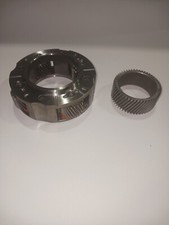
A whine or grinding tone that doesn't match the key-off characteristic and isn't tied to a specific shift can come from inside the output planetary assembly. Sonnax's output planetary gear kit, released for the 6L80 and 6L90 in 2024, exists specifically to address this: the long planetary pinion pins in these units are, in Sonnax's words, "notorious for allowing the smaller gear to burn and seize" from inadequate lubrication. That failure typically takes the larger gear on the opposite end of the same pin with it, which is why the resulting noise tends to be a persistent gear-train whine rather than an intermittent clunk.
The kits are case-hardened alloy steel and replace the worn pinion gears without requiring a full planetary assembly swap: part 104584-30K for the 6L80, and 104584-40K for the 6L90. If you've already ruled out the converter and the pump cover bolts and the noise is a steady whine that scales with output shaft speed rather than engine RPM, pull the output planetary and check the pinion pins and gear faces for burning before you condemn anything else.
A working diagnostic order
- Confirm there's no stored code and the vehicle shifts normally. If the noise is key-on/engine-off only and matches the PIP4021 description, stop -- it's a normal operating characteristic, not a repair.
- If it's a clunk specifically on the 1-2 upshift at operating temperature, check the stator support-to-pump cover bolts for looseness by hand before anything else (PIP5175).
- If the clunk comes with intermittent slip and a P0741, pull TCC slip speed and TCC duty cycle on a road test and inspect the pan for metallic debris before assuming a pump or valve body fault.
- If debris is present without an obvious hard-part failure, plan on rebuilding or replacing the JMBX torque converter rather than chasing the symptom with solenoid or valve body parts.
- If the noise is a steady gear-train whine that scales with output shaft speed, pull the output planetary and inspect the pinion pins and gear faces for burning.
- Refill with DEXRON VI only, reset adapts, and verify with a second road test under the same conditions that originally produced the noise.
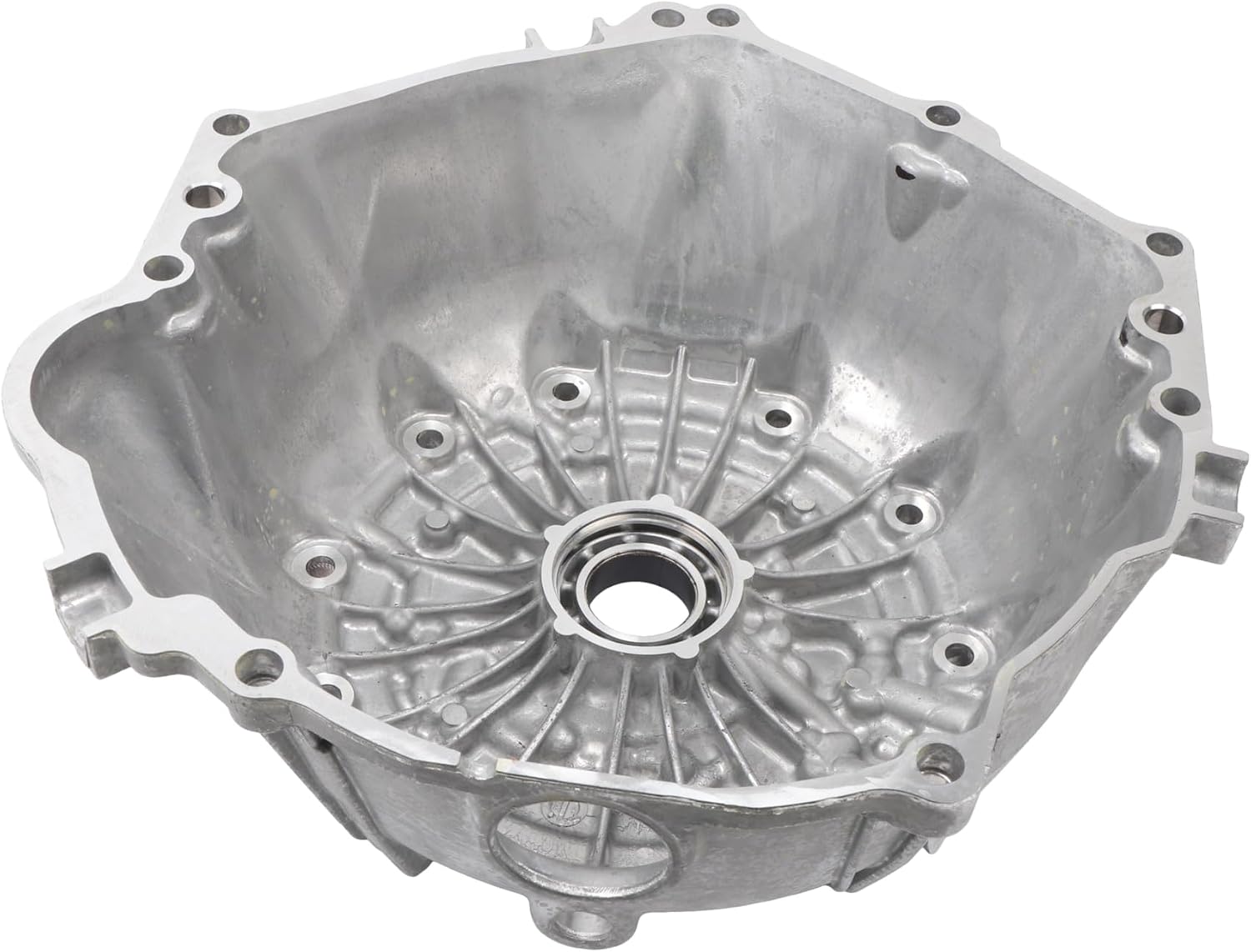
6L80 Pump and Bell Housing Assembly (2007-Up, 9-Bolt)
If the diagnosis points at the pump -- worn bellhousing from converter debris, or a pump that needs replacing outright -- this is the assembly that fixes it. Check the filter pickup bore on any new pump before it goes in.
View the pump assembly at Core Transmission Parts →Shop the part for this fix
Pumps, torque converter bell housings, output planetary gear sets, and valve body hardware for the 6L80 — the parts this diagnosis actually points to, in one place.
Shop 6L80 parts at Core Transmission Parts →Need parts for this job?
We stock 6L80 pumps, converter bell housings, output planetary gears, and DEXRON VI. Order the part the diagnosis actually points to -- a converter clunk doesn't get fixed by a pump, and a pump cover bolt doesn't get fixed by a converter.
Browse the full 6L80 parts collection →
FAQ
Is a whine from a 6L80 with the key on and engine off something to worry about?
Usually not. GM bulletin PIP4021 (current revision D) covers a high-pitched tone or whine heard with the key on and the engine off, or for up to a minute after shutdown, most noticeable in an enclosed space like a garage or car wash. GM attributes it to the TCM commanding the internal transmission solenoids to minimum line pressure, and classifies it as a normal operating characteristic with no repair needed. That only applies with no stored codes and normal shifting -- a whine paired with a code like P0751 or P0796, or with the vehicle falling out of gear, is a different problem and needs real diagnosis.
What causes a clunk on the 1-2 upshift in a 6L80?
GM's PIP5175 bulletin series covers a bump or clunk on the 1-2 shift, often paired with delayed engagement into Drive, launch shudder, or slipping in 1st through 4th gear, mainly on 6L80 (RPO MYC) units built at GM's Silao, Mexico Plant 2. GM traces it to the stator support-to-pump cover bolts being loose, which lets the stator support-to-pump cover gasket leak. If a normal diagnostic routine doesn't find the cause, the bulletin's procedure is to pull the pan and control assemblies and run a compressed-air leak check at the 1-2-3-4 clutch apply passage and the compensator feed passage in the pump cover.
What does a clunk combined with a P0741 code and intermittent slip usually mean on a 6L80?
On full-size trucks and SUVs with the 300mm JMBX torque converter, Sonnax has documented a high rate of converter failure where the clutch piston and front cover contact each other internally. That metal-to-metal contact sheds debris into the transmission, and the symptom pattern includes a slipping sensation, intermittent clunks, a P0741 TCC performance code, and out-of-range TCC slip -- sometimes with a worn pump bellhousing found on teardown. Sonnax's suggested fix when rebuilding this converter is a forged front cover (GM-CC-13) and forged piston plate (GM-DA-17P) instead of the stock stamped parts.
What causes a whining or grinding noise from inside a 6L80 that is not the key-off whine?
One documented cause is wear at the long planetary pinion pins in the 6L80/6L90 output planetary assembly. Sonnax describes these pins as notorious for allowing the smaller pinion gear to burn and seize from inadequate lubrication, a failure that often takes the larger gear on the opposite end of the pin with it and produces gear train noise. Sonnax sells a case-hardened output planetary gear kit (104584-30K for 6L80, 104584-40K for 6L90) to replace the worn pinion gears without swapping the entire planetary assembly.
Related guides
- 6L80 Pump Failure Symptoms and Replacement
- 6L80 TCC Shudder Diagnosis
- 6L80 P0741 Fix
- 6L80 Valve Body Problems and How to Test For Them
- 6L80 Common Problems and Fixes
Sources
- General Motors, Product Information Bulletin PIP5175 (revision B) — 6L80 (RPO MYC) units built at GM's Silao, Mexico Plant 2; delayed engagement into Drive, launch shudder, slipping in 1st-4th gear, and a bump/clunk on the 1-2 shift; root cause traced to loose stator support-to-pump cover bolts and a resulting gasket leak; compressed-air leak check procedure at the 1-2-3-4 clutch apply and compensator feed passages. Hosted in the NHTSA bulletin archive. PIP5175B (PDF) • current revision with expanded 2013-2021 Silverado/Sierra coverage, source code 2 identification, the hand-only bolt check and pump cover kit 24248573: PIP5175F (PDF)
- Sonnax, 6L80/6L90 Transmission Tech Advisory, "Consider an Updated Converter in Your Next Rebuild" (March 31, 2020) — documented pattern of JMBX (300mm) torque converter failure on full-size GM trucks/SUVs: clutch piston and front cover making metal-to-metal contact, shedding debris, producing intermittent clunks, slip, P0741, and worn pump bellhousings; recommended forged front cover (GM-CC-13) and forged piston plate (GM-DA-17P) for rebuilds. sonnax.com
- GEARS Magazine (ATRA), "New! 6L80 and 6L90 Output Planetary Gear Kits from Sonnax" (August 2024) — 6L80/6L90 output planetary pinion pins prone to burning and seizing from inadequate lubrication, producing gear train noise; Sonnax case-hardened replacement kits 104584-30K (6L80) and 104584-40K (6L90). gearsmagazine.com
- SAE International, "General Motors DEXRON-VI Global Service-Fill Specification" (2006-01-3242) — GM's factory-fill ATF requirements for six-speed clutch-to-clutch transmissions like the 6L80 outperformed the DEXRON III service fluids available at the time, driving the DEXRON VI service-fill specification for friction durability, viscosity stability, and oxidation resistance. saemobilus.sae.org
- XLR Net Knowledgebase, reproduction of GM Product Information Bulletin PIP4021 (revision D, February 21, 2019) — "High Pitch Whine or Buzz Noise Heard From Under The Vehicle": key-on/engine-off whine for up to one minute after shutdown across 2006-2019 Cadillac, Chevrolet, GMC, Hummer, and Pontiac models; caused by the TCM commanding internal transmission solenoids to minimum line pressure; classified by GM as a normal operating characteristic requiring no repair. Forum/enthusiast reproduction of GM's bulletin text, cited for the real-world symptom description rather than as a primary authority. xlr-net.com
- General Motors, Preliminary Information PI1029, "Upshift Clunk, Firm Downshifts" (August 2013) — 2014 Silverado 1500 and Sierra 1500 with the L83 5.3L and 6L80 built before July 3, 2013; upshift clunk on lift-off and firm low-speed downshifts corrected by ECM/TCM sequential reprogramming with battery voltage held at 12-15 volts. Hosted in the NHTSA bulletin archive. static.nhtsa.gov (PDF)
- General Motors, Preliminary Information PI1343C, "Harsh or Tie-Up Feeling from 6-4 Downshift" (April 22, 2016) — 2012-2014 GM trucks and SUVs with the 6L80; harsh detent 6-4 downshift and tie-up feel corrected by Reset Transmission Adapts (SI Document ID 2571000), with diagnosis to continue if the reset does not fix it. Hosted in the NHTSA bulletin archive. static.nhtsa.gov (PDF)