
Most "bad pump" diagnoses on a 6L80 turn out to be something else -- a worn valve bore, a tired converter, old fluid. But the pump on this transmission does fail in a handful of specific, well-documented ways, and two of them are things a shop can accidentally cause themselves during a repair. If you're chasing low line pressure, a flared shift, or a unit that falls out of gear at a stop, here's what actually happens at the pump before you start throwing parts at it.
Start with what the pump actually does
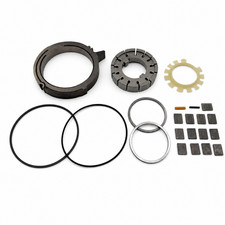
The 6L80 pump is a vane-type pump, offset-drive like a power steering pump, bolted into the bell housing and driven off the torque converter hub. It's the source of every bit of hydraulic pressure in the unit: line pressure for the clutches, TCC apply pressure, cooler flow, and lube to every bushing and bearing downstream. When pump output drops -- from wear, a leak, or a mechanical fault inside the pump itself -- the symptoms show up everywhere else in the transmission before anyone thinks to blame the pump directly: slow or incomplete clutch apply, harsh or delayed engagement, converter clutch problems, and in bad cases the unit simply not moving.
That's the trap. Low line pressure from a pump problem looks identical to low line pressure from a valve body problem, so the diagnosis has to isolate the pump specifically rather than assume it.
Failure #1: the pre-December 2008 pump cover seal ring leak
This is the best-documented pump-related failure on this transmission family. GM vehicles with the 6L80/6L90 built prior to December 2008 can set a complaint of a flared 2-3 upshift, or a delayed, harsh engagement into Forward and/or Reverse -- a complaint that's often worse cold and can show up intermittently rather than every time.
The cause is leakage in the sealing ring area of the pump cover, specifically where it feeds the 1-2-3-4 and 3-5-Reverse clutch packs. A leaking ring means a slow clutch application, and the TCM compensating by raising commanded pressure to try to catch up -- which is why the complaint can present as both soft/flared and elevated/harsh depending on how the TCM happens to be compensating that drive cycle.
The early units used a one-piece sealing ring design. GM's fix, covered in bulletin 09-07-30-004J, is a two-piece sealing ring design with anti-rotation tabs, which requires a ring land machined differently to accept the tabs. Two important details if you're actually doing this repair:
- If your unit already has the one-piece design, you can correct it with new one-piece rings without replacing the whole pump cover.
- You cannot install one-piece rings into a two-piece-design pump cover, or vice versa. Identify which cover is in the unit before you order parts -- the two-piece cover has a notch in the seal ring groove to accept the tab.
If a full cover swap is needed, GM's revised cover is part 24248573, and a mandatory pump alignment tool is called out for the install, with the pump cover's retaining bolts torqued to 11 Nm (97 in-lb).
Failure #2: a brand-new replacement pump that puts the filter in the pan
This one is nasty because it happens after the repair, not before it. Transmission Digest documented cases where a shop replaces the pump assembly in a 6L80/6L90 with a new GM pump, and the vehicle comes back with symptoms that look exactly like a low-fluid condition: it falls out of gear at a stop and shows low line pressure. On inspection, the sump filter -- also newly replaced -- is found lying loose in the bottom of the pan.
The cause traced back to the new pump assembly itself: the machining process that creates a stepped, smaller-diameter section of the bore for the filter pickup tube had not been performed on some units. Without that step, the filter neck sits loose in the bore even with its booted seal, and it can work its way out and drop into the pan during normal operation.
The lesson here is simple and cheap to apply: before you install any new 6L80/6L90 pump assembly, physically check the filter pickup tube bore for that machined step. It takes thirty seconds and it can save you a comeback that looks like you did a bad job when the part itself was the problem.
Failure #3: Rust Inhibitor sticking the pressure regulator after a service pump cover install
If the unit you're working on already had GM's service pump cover (P/N 24248573) installed, there's a separate, documented low line pressure complaint tied specifically to that part. GM's tech tip for 2006-2015 Passenger Cars and Trucks with the 6L80 or 6L90 (RPO MYC or MYD) describes low line pressure after the service pump cover goes in, caused by Rust Inhibitor material -- a thick, waxy substance used in the manufacturing process -- sticking the pressure regulator valve (#233) or the isolator valve (#236), or plugging the small orifice (#5) in the isolator valve sleeve (#237).
If low line pressure is not caught and corrected, clutches can be damaged from running under-pressured. The repair is to inspect the service pump cover and the pressure regulator valve for RI residue before the cover goes on. The isolator valve sleeve (#237) comes out by pressing inward and letting pin (#223) drop free of the cover; the isolator valve (#236) then lifts out of the sleeve, and the orifice (#5) in the sleeve should be checked for plugging before reassembly.
Failure #4: worn pump bushing, usually from converter debris
The 6L80/6L90/6L45/6L50 family shares a common pump bushing design with a PTFE-impregnated load-bearing surface meant to handle heavy loads and dry-start conditions. GM doesn't sell that bushing as a standalone replacement part -- once it's worn, you're either buying a whole bell housing to get a new one, or sourcing an aftermarket replacement. Sonnax's direct-fit version, part 104034A, is a PTFE-impregnated bimetal bushing sized to a 1.994" housing bore, 1.834" shaft diameter, and 0.782" width, and it fits the 6L45, 6L50, 6L80, and 6L90 (not the BMW-branded 6L45, which uses a bearing in that position instead).
The practical reason this bushing wears prematurely is usually not age -- it's an internal torque converter failure. Converter debris circulating through the pump destroys the bushing surface, so if you're replacing a worn pump bushing, inspect the converter for internal damage before you button the transmission back up. Replacing the bushing without addressing a failing converter just buys you another comeback.
Failure #5: a damaged pump that cracks the filter on a cold start
A cracked or split filter on a 6L80 is usually a pump symptom, not a filter defect. GM Preliminary Information PI0488D (February 2014), which covers 2010-2014 6L80 and 6L90 trucks, SUVs, Camaros, Corvettes and the CTS-V, tells technicians to inspect the filter on any no forward, no reverse or slip complaint. GM's testing found that a damaged pump can send a high pressure spike down the filter neck on a cold start, cracking the filter body or splitting the seam, and GM states the filter is not defective.
The instruction that matters: per PI0488D, do not replace the filter without inspecting the pump. Take it apart and look for a scored rotor or vanes, a scored cover or rotor pocket, and a cracked pump slide, and evaluate the clutches. A new filter on a damaged pump just cracks again. For a full no-move workup, see our 6L80 Camaro won't move guide.
A working diagnostic order
- Confirm the complaint with a line pressure test rather than guessing from symptoms alone -- low pressure at idle and under load points at the pump or regulator circuit specifically.
- Check build date and pump cover design. Pre-December 2008 units with a flared 2-3 shift or harsh Forward/Reverse engagement should have the pump cover sealing ring design checked first.
- If the service pump cover (24248573) was already installed, inspect for Rust Inhibitor residue at the pressure regulator and isolator valve before assuming a different fault.
- If you just installed a new pump and the symptoms look like low fluid (falls out of gear at a stop, low line pressure), pull the pan and check for the filter before you look anywhere else.
- If the filter is cracked or split, tear down and inspect the pump (rotor, vanes, cover pocket, slide) and the clutches before installing a new filter, per GM PI0488D.
- If there's no pressure-circuit explanation, check the pump bushing for wear, and inspect the torque converter for internal debris if the bushing is damaged.
- Refill with DEXRON VI only, reset adapts, and verify with a second road test and a repeat pressure check.
6L80 Pump and Bell Housing Assembly (2007-Up, 9-Bolt)
A complete replacement pump and bell housing assembly for 2007-up 6L80 units. If you've ruled out the seal ring leak and the RI contamination and the pump itself is worn or damaged, this is the part that actually fixes it -- just check the filter pickup bore before it goes in.
View the pump assembly at Core Transmission Parts →Shop the part for this fix
Pump and bell housing assemblies, pump bushings, pressure regulator valve kits, and filter/pan kits for the 6L80 — the parts this diagnosis actually points to, in one place.
Shop 6L80 parts at Core Transmission Parts →Need parts for this job?
We stock 6L80 pump assemblies across multiple fitment years, oil pan and filter kits, and DEXRON VI. If the diagnosis points to a worn pump, a filter in the pan, or a seal ring leak, order the pump, filter, and fluid together so the unit doesn't come back on you.
Browse the full 6L80 parts collection →
FAQ
What are the first symptoms of a failing 6L80 pump?
Low line pressure is the common thread: delayed or harsh engagement into Drive or Reverse, a flared or slow 2-3 upshift, the vehicle falling out of gear at a stop, or a transmission that feels sluggish to take off from rest. On GM 6L80/6L90 units built before December 2008, a flared 2-3 shift and delayed, harsh Forward or Reverse engagement is specifically tied to a pump cover seal ring leak, and the complaint tends to show up worse cold. A whine by itself is not a reliable sign of a bad pump on this family -- confirm with a line pressure test before you condemn the pump.
Why would a brand new 6L80 pump still cause low line pressure or the vehicle falling out of gear?
Transmission Digest documented new GM 6L80/6L90 pump assemblies that were mis-machined at the filter pickup tube bore: the step that creates the smaller-diameter section of the bore was never cut, so the filter neck sits loose in the bore even with its booted seal, and the filter can come loose and fall into the pan. That produces exactly the symptoms of a bad pump -- low line pressure and falling out of gear at a stop -- right after a pump replacement. Always check the new pump's filter pickup bore for that machined step before you install it.
What causes a flared 2-3 shift tied to the 6L80 pump on older units?
On 6L80/6L90 units built before December 2008, GM used a one-piece sealing ring design in the pump cover feeding the 1-2-3-4 and 3-5-Reverse clutch packs. That ring design is prone to leakage, which causes slow clutch application and a flared 2-3 upshift, delayed engagement, or a harsh Forward/Reverse engagement, often worse when cold. GM's fix (bulletin 09-07-30-004J) is a redesigned two-piece sealing ring pump cover with anti-rotation tabs, which does not need the pump cover itself replaced if you're only swapping the rings -- but a two-piece cover design cannot accept one-piece rings, so you have to identify which cover you have before ordering parts.
Can I just replace the pump cover without a full pump replacement?
For the seal ring leak specifically, yes -- GM's bulletin says it is not necessary to replace the whole pump cover if you are only correcting one-piece sealing rings with new one-piece rings, as long as you confirm the cover is the one-piece design first. If GM's service pump cover kit (P/N 24248573) was already installed on your unit, check it and the pressure regulator valve for a thick, waxy Rust Inhibitor residue that can stick the pressure regulator valve or the isolator valve, or plug the isolator valve sleeve's orifice, which causes low line pressure after that specific repair.
What fluid should go back in a 6L80 after a pump repair?
DEXRON VI only. GM developed DEXRON VI specifically because the DEXRON III service fluid available in 2005 could not match the friction durability, viscosity stability, aeration control, and oxidation resistance the 6L80's clutch-to-clutch design needed. Using an older-spec fluid after a pump or valve body repair can reintroduce slip and shudder complaints that look like a hydraulic fault but are actually a fluid problem.
Related guides
- 6L80 No Movement: Diagnosis
- 6L80 Harsh Shift Causes
- 6L80 Delayed Engagement Fix
- 6L80 Fluid Leak: Common Spots
- 6L80 Valve Body Problems and How to Test For Them
Sources
- General Motors, Technical Service Bulletin 09-07-30-004J — 6L80/6L90 (RPO MYC/MYD) units built prior to December 2008; flared 2-3 upshift and delayed, harsh Forward/Reverse engagement caused by leakage in the pump cover sealing ring area feeding the 1-2-3-4 and 3-5-Reverse clutch packs; one-piece vs. two-piece anti-rotation-tab ring designs; revised pump cover part 24248573; 13 retaining bolts torqued to 11 Nm (97 in-lb); mandatory pump alignment tool required. Hosted in the NHTSA bulletin archive. static.nhtsa.gov (PDF)
- Vehicle Service Pros, "GM 6L80 Revised Pump Rings" (Wayne Colonna) — plain-language breakdown of the same TSB: complaint, cause, and correction for the pump cover sealing ring leak, including the note that the two-piece ring design retrofits as a complete assembly and will not accept one-piece rings. vehicleservicepros.com
- Transmission Digest, "Keep an eye out for 6L80/90 defective oil pumps" (Wayne Colonna, July 7, 2022) — new GM 6L80/6L90 pump assemblies mis-machined at the filter pickup tube bore, causing a loose filter fit and the filter dropping into the pan; symptoms matching a low-fluid condition (falling out of gear at a stop, low line pressure) after a pump replacement; inspection check for the machined step in the bore before installing a new pump. transmissiondigest.com
- Underhood Service, "GM Transmission Tech Tip: Low Line Pressure" (Sep 2, 2020) — 2006-2015 GM Passenger Cars and Trucks with 6L80/6L90 (RPO MYC/MYD); low line pressure after installing service pump cover P/N 24248573, caused by Rust Inhibitor material sticking the pressure regulator valve (#233) or isolator valve (#236), or plugging the orifice (#5) in the isolator valve sleeve (#237); repair procedure for removing the isolator sleeve and valve to inspect and clear RI residue. underhoodservice.com
- Sonnax, Pump Bushing 104034A product page — PTFE-impregnated bimetal pump bushing, direct-fit replacement for the GM 6L45, 6L50, 6L80 and 6L90 (excluding BMW-branded 6L45 units, which use a bearing in that position); housing bore 1.994", shaft diameter 1.834", width 0.782"; intended for units with a worn bushing or one damaged by internal torque converter failure debris. sonnax.com
- SAE International, "General Motors DEXRON-VI Global Service-Fill Specification" (2006-01-3242) — GM's 2005 factory-fill ATF for six-speed clutch-to-clutch transmissions outperformed the DEXRON III service fluids then available, requiring a new service-fill specification targeting friction durability, viscosity stability, aeration/foam control and oxidation resistance. saemobilus.sae.org
- General Motors, Preliminary Information PI0488D (February 2014, hosted by NHTSA) — 2010-2014 6L80/6L90 (RPO MYC/MYD) vehicles with no forward, no reverse or slips; a damaged pump can send a high pressure spike down the filter neck on a cold start and crack or split the filter; the filter is not defective; do not replace the filter without inspecting the pump rotor, vanes, cover, pocket and slide and the clutches. GM PI0488D (PDF)