"TCC lockup" gets thrown around like it's one simple on/off event. On the 6L80 it isn't. The converter clutch spends most of its working life in a controlled slip zone the TCM manages on purpose, and the hardware that makes that happen lives in two separate castings that most techs never think to test separately. If you're chasing a lockup complaint — shudder, flare, no-lockup, or a code that won't clear — you need the actual mechanism in your head before you start pulling parts.
What "locked up" actually means hydraulically
Sonnax's Hydraulics Fundamentals series lays out the two-path lockup converter design the 6L80 uses. Release oil flows through the center of the turbine shaft and exits between the TCC piston and the front cover, which is what holds the piston off the cover when the clutch is supposed to be open. Apply pressure is the clamping force that loads the piston onto the cover. As release oil is exhausted, apply pressure rises and the piston clamps down. By design, apply pressure on this family is typically limited to roughly 130 psi — a figure worth remembering, because a modified or overpressured circuit pushing 150-200+ psi can distort the piston or overload the damper and lining instead of just locking harder.
Two valves stand between line pressure and that clamping force, and the detail that trips up a lot of diagnoses is that they sit in different parts of the transmission:
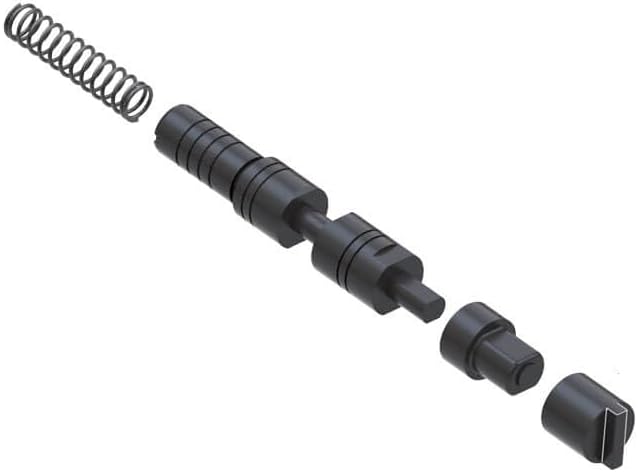
- TCC regulator (apply) valve — lives in the lower valve body. It regulates the pressure that actually goes to the apply side of the piston, and it's the valve the TCM leans on to manage clutch slip.
- TCC control (switch) valve — lives in the pump body, stroked by the TCC solenoid. It's the gateway that decides whether the converter sees apply oil or release oil at all.
A worn bore on either valve produces the same complaint at the dash: lockup that won't hold, lockup that never happens, or a clutch that slips and cooks the fluid. But one is a valve body job and the other is a pump job, and you can't tell which from the code alone.
One more mechanical note specific to this family: the 6L80's converter clutch design is described as preloaded, applied even with the engine off. That means pump volume at startup has to actively release the clutch before the engine spins it up, or you can get rough idle or a stall-type complaint that has nothing to do with the TCM's lockup logic at all.
At full lockup the apply circuit is dead-headed and flow redirects to the cooler instead of circulating through the converter — on the related 6L90 flow chart that shows up as roughly a 0.2 to 0.5 gpm increase. A small orifice or grooved friction surface lets a trickle of apply oil wash over the clutch lining even while locked, which is what keeps the friction material from cooking during extended highway lockup.
Controlled slip, not an on/off switch
The TCM doesn't simply energize a solenoid and call it locked. It varies amperage to the TCC solenoid, which strokes the TCC control valve and lets the TCC regulator valve manage how hard the clutch clamps, and it does this continuously while comparing actual slip (engine RPM minus turbine RPM) against a desired slip target calculated for the current speed and load. This is why a transmission can show a few RPM of slip on a scan tool during steady highway cruise and be working exactly as designed — the TCM is actively managing that slip, not failing to lock.
A documented case study in ATRA's GEARS magazine on a different clutch-to-clutch platform (a Chrysler NAG-1) illustrates the method GM-style TCMs use generally, even though the exact calibration numbers don't carry over to a 6L80: the converter clutch is intentionally allowed to slip anywhere from roughly 5% to 95% depending on vehicle speed and load while in "slip mode," and the TCM only flags a problem when actual slip blows through a calibrated threshold against desired slip, repeated multiple times in one key cycle. In that specific NAG-1 case the threshold was 60 RPM, repeated three times, before P0741 set — your 6L80's own threshold will be different and is set by its own calibration, but the underlying logic (compare actual to desired, require repeated failures before setting a code) is the same across GM's clutch-to-clutch transmissions.
Reading lockup on a scan tool
Graph these together rather than watching them one at a time:
- TCC actual slip and TCC desired slip — the comparison that actually tells you whether the clutch is doing its job, not just whether it's "locked."
- TCC status / commanded state — confirms whether the TCM is in slip mode, full lockup, or release so you're reading the right window.
- Line pressure command vs. actual — low actual pressure against a normal command points to a pump or regulator problem rather than the TCC circuit itself.
- TCC solenoid duty cycle — if you can back-probe the solenoid command wire, compare the measured duty cycle on your meter or scope against what the scan tool reports. A mismatch points at a wiring or module fault rather than a worn valve, and it's a two-minute check that can save you from tearing into a good valve body.
What you're looking for is slip that tracks the desired target and settles quickly. Slip that pulls in and then walks back out as the fluid heats up is the classic signature of a worn valve bore, because the leak path gets worse as the fluid thins with temperature — that's a hydraulic problem, not an electrical one, and no amount of solenoid or TCM replacement will fix it.
Codes you'll actually see
Sonnax's vacuum test guide for the 6L45/6L50/6L80/6L90 family ties bore wear at the TCC regulator valve (lower valve body) to codes P0741 and P0742, along with high TCC slip RPM, harsh TCC apply, overheated fluid, failsafe mode, and a drop in fuel economy. A valve stuck in the release position gives no apply or continuous slip; one stuck in apply gives harsh, bangy engagement. The pump-side TCC control valve carries its own symptom list in the same guide: no lockup, high TCC slip RPM, an overheated converter, falling back out of lockup once hot, and codes P0218 (transmission overtemp) and P0741.
Separately, GM's electrical codes for the TCC pressure control solenoid circuit itself — the P2764/P2765 pair — cover wiring and solenoid faults rather than worn hydraulic bores: an open, a short to ground, or a short to voltage in the solenoid circuit. Don't assume a P2764-family code means the valve body is bad. Confirm with a resistance check at the solenoid and a visual on the connector and harness before you order any hydraulic parts.
The GM bulletin that explains a lot of "random" shudder complaints
Not every 6L80 lockup complaint traces back to a worn valve. GM's Preliminary Information PIP5175E covers 2013-2022 6L80 (RPO MYC) and 6L50 (RPO MYB) units built at the Silao, Mexico plant with source code 2, for delayed engagement into Drive, shudder on launch, slipping in first through fourth gear, and a bump or clunk on the 1-2 shift — typically only once the unit reaches operating temperature. The cause GM identifies is loose stator support-to-pump cover bolts, or a misaligned pump cover gasket, leaking internally. The test is applying compressed air to the 1-2-3-4 clutch apply passage with the pan and control assemblies removed, then watching for air escaping from the compensator feed passage in the pump cover.
GM is explicit about one thing: never check those bolts for looseness with a hand tool, because they're torqued at the factory and are never meant to be loosened. Check only with fingers, trying to rotate counterclockwise. If any are loose or the gasket is misaligned, the pump cover gets replaced with GM kit 24248573, the 1-2-3-4 clutch plates get inspected, and the transmission adapts have to be reset afterward. That's a pump-cover leak, not a TCC valve problem, and it's worth ruling out before you start swapping lockup parts on a unit built in that window.
Why the right fluid matters more than people think
The 6L80 is a DEXRON VI-only transmission, and that spec exists specifically because of clutch-to-clutch units like this one. Per the SAE paper documenting the DEXRON VI global service-fill specification, GM's factory-fill fluid introduced for 2006-model-year six-speed automatics performed far better than the DEXRON III service fluids available at the time, so GM had to create a new service specification to make an equivalent fluid available in the aftermarket. The targeted improvements were friction durability, viscosity stability, aeration/foam control, and oxidation resistance.
Friction durability is the one that matters for lockup specifically. As any ATF ages, shear and oxidation shift its friction curve, and a shifted friction curve shows up on a converter clutch as shudder or harsh apply even when every valve and solenoid in the unit tests within spec. If you've ruled out the TCC regulator valve, the TCC control valve, and the solenoid circuit and you're still chasing an intermittent shudder, pull a fluid sample before you condemn more hardware.
A working diagnostic order
- Confirm the complaint on a road test while logging TCC actual slip, desired slip, and TCC status together. Note whether lockup happens at all and whether it falls back out as the fluid heats.
- Compare line pressure command to actual, and back-probe the TCC solenoid command wire if you have code access, to separate an electrical fault from a hydraulic one.
- Pull stored codes and freeze frame before clearing anything. P0741/P0742 point at the regulator or control valve; P0218 points at overtemp from a slipping clutch; a P2764-family code points at the solenoid circuit itself.
- If the unit is a 2013-2022 6L80/6L50 built at Silao with source code 2 and the complaint matches PIP5175E, check the pump cover bolts and gasket with the compressed-air test before you touch the valve body.
- Vacuum test the TCC regulator valve in the lower valve body and the TCC control valve in the pump body separately — they fail independently and a passing valve body doesn't clear the pump.
- Repair the worn valve with the correct kit for the bore, replace the converter if there's evidence of clutch damage, and refill with DEXRON VI only. Reset adapts and verify slip speed on a second road test.
6L80 TCC Lock-Up Solenoid
The PWM solenoid that strokes the TCC control valve and sets apply pressure. If your duty-cycle check at the connector doesn't match what the scan tool commands, this is the part that's lying to the valve body.
View the TCC solenoid at Core Transmission Parts →Shop the part for this fix
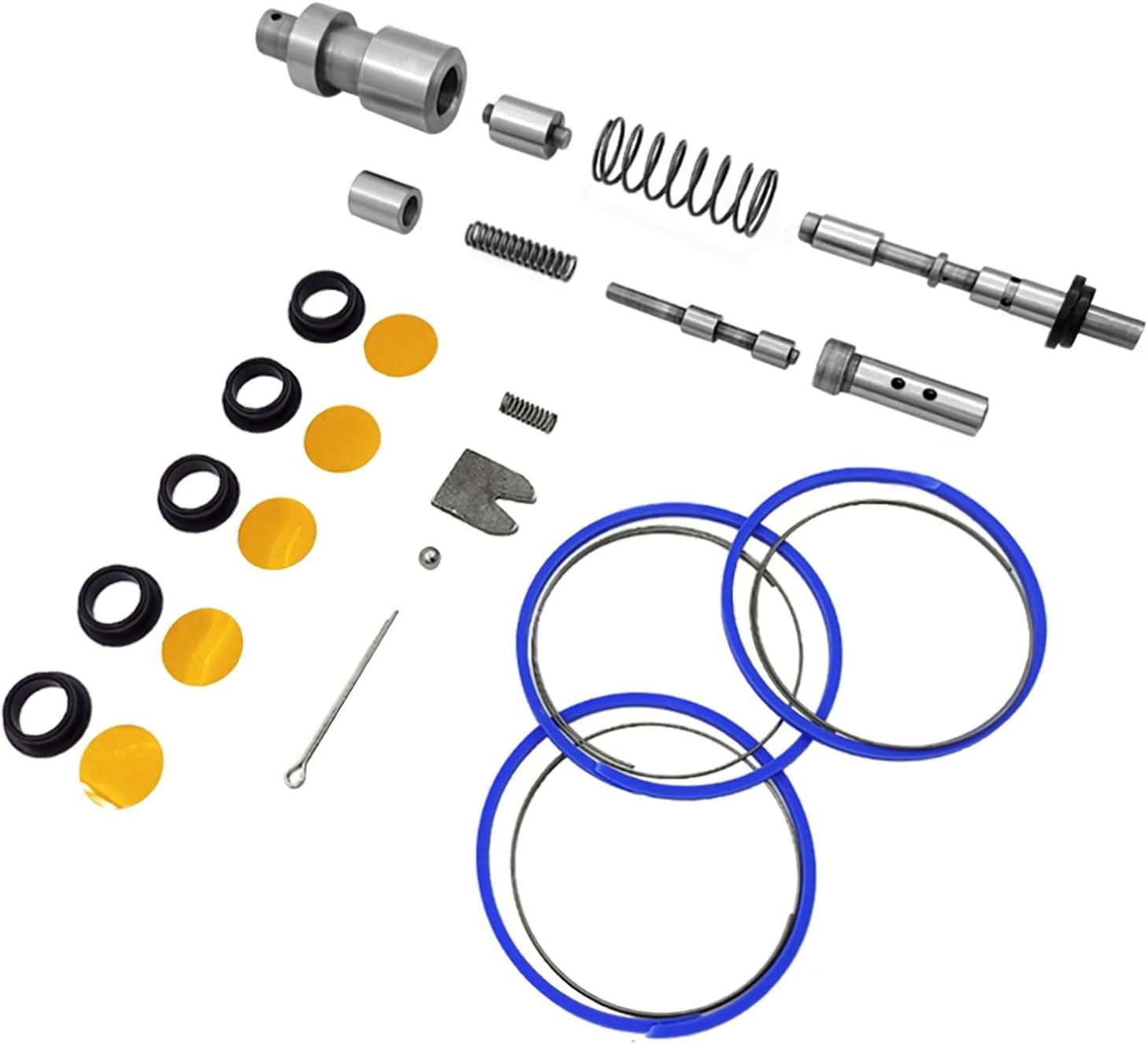
TCC regulator and control valve kits, solenoids, pressure regulator valves and the full valve body catalog for the 6L80 — the parts this diagnosis actually points to, in one place.
Shop 6L80 parts at Core Transmission Parts →Need parts for this job?
We stock the 6L80 TCC regulator valve kit, the solenoid kit, pressure regulator valve kits and DEXRON VI. If the diagnosis points to a worn valve bore or a bad solenoid, order the kit, the filter and the fluid together so the unit doesn't come back on you for something you could have caught the first time.
Browse the full 6L80 parts collection →
FAQ
What does "TCC lockup" mean on a 6L80?
Lockup means the converter clutch has clamped the turbine to the front cover so the engine and transmission turn at the same speed instead of coupling through fluid. On the 6L80 that clamping force comes from two valves in two different castings: a TCC regulator valve in the lower valve body that sets apply pressure, and a TCC control valve in the pump body that routes apply oil versus release oil to the piston. The TCM runs a PWM solenoid that varies amperage to move those valves and manage how hard the clutch clamps.
Is some torque converter clutch slip normal when the 6L80 is locked up?
Yes. GM runs the 6L80's converter clutch in a controlled slip mode rather than a hard on/off lock. The TCM compares actual slip (engine RPM minus turbine RPM) against a desired slip target and adjusts solenoid duty cycle to hold it there, so a few RPM of slip while the TCM is actively managing apply pressure is normal operation, not a fault. A code only sets when actual slip exceeds the calibrated threshold against desired slip repeatedly within one key cycle.
What codes show up when 6L80 TCC lockup fails?
P0741 (TCC circuit performance or stuck off) and P0742 (TCC stuck on) are the two most common, and Sonnax's vacuum test data for this transmission family ties both to bore wear at the TCC regulator valve. The pump-side TCC control valve is tied to the same P0741 along with P0218 (transmission overtemp), no lockup, high TCC slip RPM, and the converter falling back out of lockup once it is hot. A separate P2764/P2765 pair covers the TCC pressure control solenoid's electrical circuit rather than the hydraulic valves, so always confirm whether the fault is wiring, the solenoid, or a worn valve bore before you order parts.
What scan tool PIDs should I watch to diagnose a 6L80 TCC lockup problem?
Graph TCC actual slip, TCC desired slip, and TCC status together, then add line pressure command and TCC solenoid duty cycle. The useful comparison is actual slip against desired slip while status shows the TCM in slip mode: slip that tracks the target and settles is healthy, slip that will not come down or that grows as the fluid heats points to a worn valve bore or a converter problem. If you have access to the connector, back-probe the TCC solenoid command wire and compare the measured duty cycle to what the scan tool reports to rule out a wiring or module fault before you pull the pan.
Does transmission fluid affect TCC lockup smoothness on the 6L80?
Yes. The 6L80 is a DEXRON VI-only transmission, and GM developed that fluid specifically because the service-fill DEXRON III fluid available in 2005 could not match the friction durability of the 6L80's factory fill. DEXRON VI's friction modifier package is what keeps converter clutch engagement smooth as the fluid ages; as any ATF shears and oxidizes, its friction curve drifts and that shows up as TCC shudder or harsh apply even when every valve and solenoid in the unit is within spec.
Related guides
- 6L80 P0741: Torque Converter Clutch Stuck Off
- 6L80 P0742: Torque Converter Clutch Stuck On
- 6L80 TCC Shudder: Diagnosis and Fix
- 6L80 Valve Body Problems and How to Test For Them
- 6L80 Slipping Under Load: What to Check
Sources
- Sonnax, Hydraulics Fundamentals Part IV: Converter Clutch Control (Bob Warnke) — two-path lockup converter operation; release oil through the center of the turbine shaft exiting between piston and cover; apply pressure rising as release oil is exhausted and typically limited to about 130 psi by design; the TC control valve as the gateway for apply/release oil and the TC regulator valve managing slip; the 6L80's preloaded, applied-at-engine-off clutch design; the 6L90 flow increase of roughly 0.2-0.5 gpm at full apply. sonnax.com
- Sonnax, GM 6L45, 6L50, 6L80, 6L90 Vacuum Test Guide — TCC regulator valve bore wear tied to codes P0741/P0742, high TCC slip RPM, harsh TCC apply, overheated fluid, failsafe mode and reduced fuel economy; TCC control valve in the pump body tied to no lockup, high TCC slip RPM, overheated converter, falling out of lockup hot, and codes P0218/P0741. sonnax.com
- Sonnax, TCC Regulator Valve Kit 104740-46K product page — a valve stuck in the release position causes no apply or continuous slip, while one stuck in apply causes harsh engagement; symptoms of bore wear including no TCC apply, slip on engagement, high TCC slip RPM and codes P0741/P0742; kit design using lengthened valve lands to reseal in unworn bore. sonnax.com
- ATRA / GEARS Magazine, "Back on the Bench" (December 2020) — a documented Chrysler NAG-1 P0741 case illustrating GM-style TCM lockup logic generally: converter clutch intentionally slipping roughly 5-95% depending on speed/load while in slip mode; monitoring actual slip, desired slip and TCC status together; a code setting after actual slip exceeds a calibrated threshold against desired slip repeated multiple times in one key cycle (60 RPM x3 on that specific platform); back-probing the solenoid command wire and comparing measured duty cycle to the scan tool reading. gearsmagazine.com
- General Motors, Preliminary Information PIP5175E — 2013-2022 6L80 (RPO MYC) and 6L50 (MYB) units built in Silao, Mexico with source code 2; delayed engagement, launch shudder, slipping in first through fourth gear and 1-2 clunk at operating temperature caused by loose stator support-to-pump cover bolts or a misaligned pump cover gasket leaking internally; compressed-air test at the 1-2-3-4 clutch apply passage watching the compensator feed passage; bolts checked by finger only, never a hand tool; pump cover kit 24248573; adapts reset required. Hosted in the NHTSA bulletin archive. static.nhtsa.gov (PDF)
- SAE International, "General Motors DEXRON-VI Global Service-Fill Specification" (2006-01-3242) — GM's 2005 factory-fill ATF for six-speed clutch-to-clutch transmissions outperformed the DEXRON III service fluids then available, requiring a new service specification; targeted improvements in friction durability, viscosity stability, aeration/foam control and oxidation resistance; specification presented October 2006 at the Powertrain & Fluid Systems Conference. saemobilus.sae.org