A customer pulls the lever into Drive and nothing happens. Two seconds, four seconds, sometimes longer, then the truck takes off like nothing was wrong. It does it in the driveway in the morning and never again for the rest of the day. Or it only does it in Reverse. Or it only does it after an hour on the highway, which is the opposite pattern and a completely different repair.
Delayed engagement is not one fault. On a 6L80 it is four or five different faults that produce roughly the same customer complaint, and the thing that separates them is when the delay happens, not how long it lasts. Get the pattern right and you will usually know what is wrong before the pan comes off. Get it wrong and you will sell somebody a valve body for a pump problem.
Here is how to sort them, with the measurements that make each call defensible.

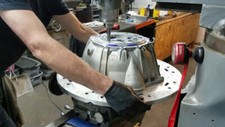

What the delay actually is
An engagement is a clutch apply. On a 6L80 that means the pump has to move enough fluid, at enough pressure, through the right circuit, to stroke an apply piston and squeeze a clutch pack. A delay means one of those three things is missing: volume, pressure, or the circuit itself.
The 6L80 is unforgiving about this in a way older GM units were not. It runs clutch-to-clutch shifting with no shift valves, backfill circuits for clutch exhaust control and compensator circuits for clutch release, all commanded by a 32-bit TCM built into the transmission as part of the control solenoid valve assembly, bolted to the valve body with six bolts. ATRA's own 6L80 introduction material lists what the DEXRON-VI generation of units brought with it: reduced sump volumes, higher fluid turnover rates, increased energy densities and reduced cooling capacity. There is less fluid in the unit and it works harder. That shrinks the margin for a pump that has gone a little lazy.
So the first question is never "what part is bad." It is "when does it delay."
Cold and only after it sits: converter drain back
This is the classic morning complaint. The vehicle sits overnight, fluid drains out of the torque converter back into the pan, and on the next start the pump has to refill the converter before there is enough volume in the system to build pressure and apply anything. Once it is full it stays full. Every engagement for the rest of the day is normal.
GM described exactly this condition and gave it a test. Bulletin 16-NA-014, "Delayed Engagement After Sitting With Engine Off – Torque Converter Fluid Drain Back," was written for 2015-2016 8L45 and 8L90 applications, and the customer descriptions in it will sound familiar to anybody who has taken one of these calls: vehicle delaying into gear, not wanting to move, feeling like the transmission is slipping, delayed engagement followed by a harsh engagement.
The test is the useful part, and it transfers to the 6L80 because the physics do:
- Connect the scan tool and monitor engine RPM and transmission Input Speed Sensor (ISS) RPM before starting the engine.
- Start the engine with the transmission in Park.
- ISS should equal engine RPM in two seconds or less. Drain down is present if the time between engine speed ramping up and input shaft speed matching engine speed exceeds two seconds.
GM puts two conditions on that measurement: evaluate the vehicle only if it has been sitting 24 hours or less, and measure at 50F (10C) and above. Both matter. A unit that sat for three days will always look bad, and cold fluid drags the number out on its own.
One honest caveat. The correction in 16-NA-014 is a new stator shaft support assembly that includes an additional check ball, and that is an eight-speed part for an eight-speed unit. Use the two-second measurement as your test on a 6L80. Do not go looking for that part number. On the 6L80 the same symptom usually traces back to the pump.
The nine thousandths that drains your converter
Here is where the 6L80 version of drain back usually lives. Gears Magazine documented a 6L80 case with a morning delay, a loss of pressure at startup and a fluid level that read high first thing in the morning. The pump rotor in the vehicle measured .699 inch. A new rotor measured .708 inch. Nine thousandths of wear was enough clearance for fluid to bleed past internally overnight and leave the converter empty.
The high fluid level is the tell that ties it together: the fluid did not leak out of the transmission, it just moved from the converter into the pan while the truck sat. If the morning delay comes with a level that reads high cold and correct warm, stop chasing electronics.
The lesson from that writeup is worth repeating on the bench: measure rotor thickness even if it looks good, because calipers do not lie. A rotor with no visible scoring can still be out of spec.
Cold, and only into Reverse: stator support sealing rings
Different pattern, different part. On the back of the stator support are sealing rings that seal the feed oil circuits for the 3-5-Reverse and 1-2-3-4 clutches. Early units had a ring design that leaked, and the leak was worst during cold operation. The complaint that came with it was a delayed or slipping engagement, usually going into Reverse.
GM updated the sealing rings on the support to fix it. The catch is in the repair, not the diagnosis: the updated ring design will not fit the earlier design pumps. You either replace the pump entirely or have the existing pump machined so the updated rings will install. Both Transmission Digest and Gears Magazine document the same limitation, so budget for it before you quote the job.
While the pump is apart, the stator support tube and liner are worth a look for cracks. They are not common, but a crack there can take out the 4-6-5 clutches, and you are already in the right place to check.
Warm or hot, and getting worse: pressure regulator bore wear
This is the inverted pattern, and it is the one that gets misdiagnosed most often. The unit is fine cold and starts delaying after it comes up to temperature. Hot fluid is thinner, thinner fluid leaks past worn clearances faster, and a bore that held pressure at 80F stops holding it at 190F.
Per Sonnax, continuous oscillation of the pressure regulator valve produces excess wear in the bore, which causes erratic line pressure and restricts cooler and lube flow. The published complaint list for the repair covers both directions of failure: erratic line pressure, high line pressure, low line pressure, clutch slippage, harsh shifts, soft shifts, low cooler flow, no cooler flow, overheated transmission and converter concerns. The specific mechanism is that the balance end of the valve wears into the casting, and wear at the outboard spool robs converter feed pressure and lowers line pressure. Low line pressure and low converter feed are precisely what a delayed engagement is made of.
There is a fast confirming check. Hook a gauge to the mainline port and watch the needle at idle. Gears Magazine's machinist writeup on these units flags a "shaky" needle at idle, alongside low pressure issues and delayed engagements especially when hot, as the sign that the pump assembly needs attention. A steady needle at a reasonable value says the problem is somewhere else. A needle that will not sit still is telling you the regulator valve is hunting in a worn bore.
While you have the scan tool connected, compare commanded EPC against actual line pressure and use the functional tests to command solenoid amperage while you watch the gauge respond. If the command is right and the hydraulics are not following it, the fault is mechanical.
The cheap causes you check first anyway
Fluid level, set correctly. Most 6L80 applications have no dipstick. Level is set at a control plug with the engine idling and the vehicle level, after shifting slowly through each range with about a three second pause in each to let the passages and clutches fill. Fluid should drip from the level control hole. If it runs out in a stream, the unit is overfull. The part everyone gets wrong is the temperature: the fluid must be between 86F and 122F (30C to 50C) when you check, verified on a scan tool, the driver information center or a transmission gauge. Check it at 180F and you will drain a correctly filled unit down until it is low.
The filter seal and pan gasket. A filter seal that is not seated, or a gasket letting the pump pull air, gives you a delay that is hard to pin on any single part because the pump is moving foam instead of fluid. If the delay showed up right after somebody else serviced the unit, this is the first thing to pull.
The stator support bushings. The 6L80 and 6L90 use aluminum bushings at the front and rear of the stator shaft. Sonnax notes these are vulnerable during moments of low or no oil flow, such as during startup, which is exactly the condition a drain-back unit lives in every morning. Their replacement bushings are steel-backed bronze, with a 1.115 inch journal diameter at the front and 1.476 inch at the rear. A unit that has been drain-backing for a year has been starting dry every day, and the bushings will show it.
Pump specs worth having on the bench
| Measurement | Spec | Note |
|---|---|---|
| Slide and rotor clearance | .0008 in to .002 in | Measure with Plastigage, not a feeler gauge |
| Nominal rotor and slide thickness | approx. .707 in | A documented worn example measured .699 in |
| Pump pocket clearance | .020 in or more | Ensures the coils do not bind |
| Unit endplay | .004 in to .006 in | Desired range |
| Front stator support bushing journal | 1.115 in | Sonnax replacement, steel-backed bronze |
| Rear stator support bushing journal | 1.476 in | Sonnax replacement, steel-backed bronze |
| Fluid level check temperature | 86F to 122F (30C to 50C) | At the level control plug, engine idling, vehicle level |
| Fluid | DEXRON-VI | GM lists 88865601 (US) in current bulletin parts tables |
| Overhaul fill, by unit | 9.5 L / 10.0 qt (6CDA), 9.7 L / 10.2 qt (6CZA), 11.9 L / 12.6 qt (CYA) | Varies by application |
One inspection note that will save you a comeback: check the stator and pump pocket surfaces for signs of aggressive resurfacing before you reuse anything. Gears Magazine's machinist coverage of these units warns that "wizz wheel" resurfacing is showing up more often on pump halves, and that a part that looks clean is not the same as a part that is flat.
Diagnosis in order
- Ask when it delays. Morning only, Reverse only, or hot only. That single answer eliminates two thirds of the possibilities before you touch the truck.
- Scan for codes first. A ratio or pressure code changes the path entirely. No codes with a real delay points at hydraulics rather than electronics.
- Check fluid level correctly, in the 86F to 122F window, at the control plug. Note whether it reads high cold.
- Run the two-second ISS test on a cold start after the vehicle has sat 24 hours or less at 50F or above. Over two seconds means drain back.
- Gauge the mainline port at idle, warm. Watch for a shaky needle and compare commanded EPC against actual.
- If it is drain back, plan on the pump: measure rotor thickness against .708 inch and slide-to-rotor clearance against .0008 to .002 inch.
- If it is Reverse and cold, plan on stator support sealing rings, and price a pump replacement or pump machining, because the updated rings do not fit early pumps.
- If it is hot only, plan on the pressure regulator bore.
Need parts for this job?
Pumps, pressure regulator valve kits, filter and gasket kits, overhaul seal kits and valve bodies for the 6L80, with fitment listed by year and application.
Shop 6L80 parts →FAQ
Why does my 6L80 take several seconds to go into gear in the morning but is fine all day?
That pattern is converter drain back. Fluid leaks out of the torque converter back into the pan while the vehicle sits, and on the next start the pump has to refill the converter before it can build enough pressure to apply a clutch. Once it is full it stays full, so every engagement for the rest of the day is normal. The condition returns only after the vehicle sits again for several hours or overnight. A high reading on the fluid level check first thing in the morning supports the same conclusion, because the fluid that left the converter is now sitting in the pan.
How do I test a 6L80 for converter drain back with a scan tool?
Watch engine RPM and transmission Input Speed Sensor RPM together on the scan tool before you start the engine, then start it in Park. The turbine is coupled to the engine through a full converter, so input shaft speed should come up and equal engine speed almost immediately. GM published this test with a number attached in bulletin 16-NA-014 for the 8L45 and 8L90: if input speed takes more than two seconds to equal engine speed, drain back is present, and the vehicle should only be evaluated after sitting 24 hours or less at 50F or above. The bulletin's parts correction is an eight-speed stator shaft support, so use the measurement as your test on a 6L80, not the repair.
What fluid temperature do you check the 6L80 level at?
Between 86F and 122F (30C to 50C), read on a scan tool, the driver information center or a transmission gauge. Many 6L80 applications have no dipstick, so the level is set at a control plug in the center of the drain plug with the engine idling and the vehicle level, after shifting through the ranges and pausing about three seconds in each. Fluid should drip from the hole. If it runs out in a stream the unit is overfull. Check the level outside that temperature window and you will get a wrong answer in both directions, because the fluid expands as it heats.
Can a worn pump cause delayed engagement on a 6L80?
Yes, and it is one of the more commonly missed causes. Gears Magazine documented a 6L80 with a morning delay and a high fluid level where the pump rotor measured .699 inch against a new rotor at .708 inch. That nine thousandths of wear let fluid bleed past internal clearances overnight and cost the unit pressure at startup. Slide and rotor clearance should run between .0008 inch and .002 inch, measured with Plastigage rather than a feeler gauge, and nominal rotor and slide thickness is about .707 inch. A rotor that looks fine can still be out of spec, so measure it.
Why does my 6L80 only delay into Reverse?
Look at the stator support sealing rings. The rings on the back of the stator support seal the feed oil circuits for the 3-5-Reverse and 1-2-3-4 clutches, and early units had a ring design that leaked, particularly when cold. The usual complaint was a delayed or slipping engagement going into Reverse. GM updated the sealing rings, but the updated ring design does not fit the earlier design pumps, so the repair is either a pump replacement or machining the existing pump to accept the updated rings.
Sources
- General Motors — Service Bulletin 16-NA-014, "Delayed Engagement After Sitting With Engine Off – Torque Converter Fluid Drain Back," November 2016 (via NHTSA). Backs the drain back condition and customer descriptions (vehicle delaying into gear, not wanting to move, feeling like the transmission is slipping, delayed engagement followed by a harsh engagement), the cause given as the torque converter draining fluid back into the pan, the two-second ISS versus engine RPM test procedure and its 24-hour and 50F (10C) evaluation conditions, and the fact that the parts correction is an 8L45/8L90 stator shaft support assembly with an additional check ball. static.nhtsa.gov (PDF)
- ATRA / Gears Magazine — "What a Drip! 6L80 Drain Back, That Is." Backs the 6L80 pump rotor wear case: a morning delayed engagement after sitting overnight with a high fluid level and loss of pressure at startup, the in-vehicle rotor measuring .699 inch against a new rotor at .708 inch, normal operation once warmed, and the instruction to measure rotor thickness even when it looks good. gearsmagazine.com
- ATRA / Gears Magazine — "6L80/6L90: Issues That Could Drive You Crazy." Backs the pump and stator inspection guidance and bench specs: low pressure issues, delayed engagements especially when hot and a shaky line pressure needle at idle as indicators of pump trouble, slide and rotor clearance of .0008 in to .002 in measured with Plastigage, nominal rotor and slide thickness of about .707 in, pump pocket clearance of .020 in or more so the coils do not bind, desired unit endplay of .004 in to .006 in, the mainline gauge plus commanded-versus-actual EPC diagnostic approach, and the warning to check pump and stator surfaces for "wizz wheel" resurfacing. gearsmagazine.com
- ATRA — "Introduction to the GM 6L80" technical webinar material, presented by Steve Garrett. Backs the fluid level procedure and unit specifications: the 86-122F (30-50C) check window verified by scan tool, driver information center or transmission gauge, the no-dipstick level control plug method with the engine idling and a pause in each range, DEXRON-VI as the required fluid, overhaul capacities of 9.5 L (10 qt) for the 6CDA, 9.7 L (10.2 qt) for the 6CZA and 11.9 L (12.6 qt) for the CYA, the 32-bit TCM built into the control solenoid valve assembly bolted to the valve body with six bolts, and the DEXRON-VI design drivers of reduced sump volumes, higher fluid turnover rates, increased energy densities and reduced cooling capacity. atracom.blob.core.windows.net (PDF)
- Sonnax — Pressure Regulator Valve Kit 104520-15K product data (GM 6L45, 6L50, 6L80, 6L90). Backs the hot-only delay mechanism: continuous oscillation of the pressure regulator valve producing excess bore wear that causes erratic line pressure and restricts cooler and lube flow, balance spool wear allowing fluid loss, outboard spool wear robbing converter feed pressure and lowering line pressure, and the published complaint list including erratic, high and low line pressure, clutch slippage, harsh shifts, soft shifts, low and no cooler flow, overheated transmission and converter concerns. sonnax.com
- Sonnax — Stator Support Bushing Kit 104036AK product data (GM 6L80, 6L90). Backs the bushing failure mode: OE aluminum bushings prematurely wearing under some operating conditions and being vulnerable during moments of low or no oil flow such as during startup, the resulting bushing failure, P0741 and TCC apply and release concerns, and the steel-backed bronze replacement journal diameters of 1.115 in front and 1.476 in rear. sonnax.com
- Transmission Digest — "GM 6L80 Transmission Early Failure Issues & Fixes," May 2022. Backs the stator support sealing ring failure: rings on the back of the stator support covering the feed oil circuits for the 3-5-R and 1-2-3-4 clutches, the early ring design leaking mostly during cold operation and producing a slipping or delayed engagement into Reverse, GM's updated seal ring design, and the repair limitation that the updated design does not fit the earlier design pumps, requiring a pump replacement or machining, plus the stator support tube and liner cracking risk to the 4-6-5 clutches. transmissiondigest.com
6L80 pressure regulator valve kit → or browse all 6L80 parts →