Pull a repair order that says "3-4 clutch failure" on a 6L90 and you're already working with a label that doesn't match any part on the build sheet. GM never named a 3-4 clutch on this transmission. What a customer or a shop calls a "3-4 clutch" is really the handoff between two separate clutch packs, and depending on which one actually failed, the fix is a $90 valve kit or a full rebuild. Get the label wrong and you can replace the wrong clutch pack entirely.
This matters because the 6L90 (RPO MYD) shares its clutch architecture with the 6L80, 6L50 and 6L45, and the symptom that lands on your bench as "won't go into 4th" or "flares going into 4th" can come from three different places in that shared design: the clutch that actually engages for 4th gear, the valve that regulates how it applies, or a worn check ball two circuits away that only looks like the same problem. Below is where to actually look, in the order that saves a teardown.

Why there is no single "3-4 clutch" to replace
The 6L90 applies two clutches at a time to hold each gear, and the same clutches get reused across multiple gears. The five clutch packs are Low/Reverse, 2nd, 3-5-Reverse, 4-5-6, and 1-2-3-4. Walk the gear range and the handoff becomes obvious: 1st gear holds 1-2-3-4 and Low/Reverse; 2nd holds 1-2-3-4 and 2nd; 3rd holds 1-2-3-4 and 3-5-Reverse; 4th holds 1-2-3-4 and 4-5-6; 5th holds 3-5-Reverse and 4-5-6; 6th holds 2nd and 4-5-6; Reverse holds Low/Reverse and 3-5-Reverse.
Look at what changes between 3rd and 4th: the 1-2-3-4 clutch never lets go - it's applied continuously from 1st gear through 4th. What actually happens on the 3-4 upshift is the 3-5-Reverse clutch releasing while the 4-5-6 clutch applies. So when a tech says "3-4 clutch failure," they're really describing one of two distinct faults: the 4-5-6 clutch failing to apply cleanly (the component that's actually new to the shift), or the 1-2-3-4 clutch's own apply circuit losing pressure partway through a gear range it was supposed to hold the whole time. Those are different repairs, and mixing them up is how parts get bought twice.
Fault #1: the 4-5-6 clutch itself - an OE design limit, not just wear
Two other places can starve the 4-5-6 clutch before the clutch itself is at fault. Gears Magazine (ATRA) points out that the stator support supplies apply oil to all three rotating clutches, so a leaking stator support gasket leads to clutch failure, and which clutch fails depends on where the gasket leaks. The same article reports cracks in the stator support tube on high-mileage units that generally take out the 4-5-6 clutch, so take a minute to look at the support ID before you reuse it [5].
Sonnax, which builds the aftermarket fix for this exact part, documents 4-5-6 clutch failure as common on both the 6L80 and 6L90 and attributes it to the original design rather than abuse: not enough clutch plates and insufficient piston-to-plate apply surface area to handle the loads reliably, made worse when apply pressures run above OE spec. The other named failure path is backing plate flexing and bowing (coning), which Sonnax calls a primary source of clutch failure in this assembly on its own.
The fix Sonnax built around that failure mode is a high-capacity 4-5-6 clutch apply piston kit (104960-20K) using a 45-tooth, Powerglide-style friction set with a toothed apply plate in place of the OE waved plate, specifically to add apply surface area the factory design was short on. If the pan shows burnt, glazed 4-5-6 friction material and the 3-5-Reverse and 1-2-3-4 clutches look clean, this is the part that failed and the part that needs replacing - not the valve body, not the whole clutch stack.
Fault #2: the CBR1/4-5-6 clutch regulator valve - the same symptoms, a different part
Before you condemn the clutch itself, rule out the valve that feeds it. The CBR1/4-5-6 clutch regulator valve sits in the valve body and is positioned by solenoid and spring pressure on one end and clutch feedback pressure on the other; depending on driving conditions it directs line pressure to whichever clutch enables Low, Reverse, 4th, 5th or 6th. Sonnax lists this valve's bore wear as a cause of delayed engagement, flare shifts, a burned 4-5-6 clutch, and poor shift quality - the same complaint list as fault #1, produced by a leaking valve instead of a worn piston.
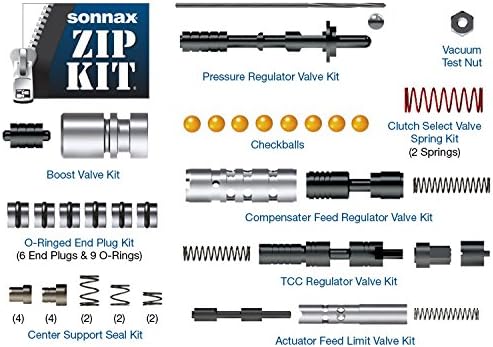
The mechanism is oscillation: the valve rides back and forth under normal operation, and over time that movement wears the bore enough that fluid starts leaking past it instead of actuating the clutch cleanly. Sonnax's own replacement guidance is to vacuum-test the valve at its ports and replace it once it fails to hold the minimum spec, or sooner if wear is visible - and a worn regulator valve left in place is exactly what turns a cheap valve-kit job into a burned clutch and a much bigger bill.
Fault #3: a worn check ball in the 1-2-3-4 clutch feed circuit
This is the one that gets missed because it doesn't look like a clutch problem at all. Gears Magazine documents the #1 check ball in the upper valve body, which sits in the 1-2-3-4 clutch feed circuit: Drive 1-6 fluid seats the ball against the spacer plate to apply the 1-2-3-4 clutch for 1st gear, and that ball is expected to hold that seal every time the transmission uses 1st through 4th. Under normal operation the ball spins and tumbles in its pocket, and its soft material wears - the article measures a new ball at roughly .250 inch, shrinking to .180 inch or smaller once it's too small to seal the spacer plate hole. In the case Gears documents, on a 6L80, the ball had actually blown through the plate entirely.
Because the 1-2-3-4 clutch has to stay applied through the exact window where a "3-4 clutch" complaint shows up, a worn or blown check ball produces the same slip, flare, or no-forward-drive symptom as a bad 4-5-6 clutch or regulator valve - sometimes with no code at all, sometimes with P2723 or P2724 (below). The article's repair advice is blunt: replace every check ball in the valve body during any overhaul or valve body service, not just the one you suspect, because if one has worn down the others are wearing on the same schedule.
On early units there is also a hard-part cause GM documented by bulletin. GM Service Bulletin 09-07-30-004J lists 2007-2008 trucks with the 6L80 or 6L90 (RPO MYC/MYD) and a cracked 1-2-3-4 / 3-5-R clutch housing weld as a cause of harsh 4-5 shifts, slipping in fifth, harsh 2-3 shifts and P0776, P2715 or P2723. GM's check is soap on the weld and compressed air into the 3-5-R feed hole; bubbles mean a new housing [6].
Rule this out first: GM's documented normal 2-3 flare
Before you chase any of the three faults above, confirm the complaint is actually about the 3-4 shift and not the 2-3 shift. GM bulletin PIP5429 / PIP5429A, "2-3 Upshift Slip or Flare," covers the entire 6L45/6L50/6L80/6L90 family including the 6L90 (RPO MYD) and states plainly that a 2-3 upshift slip or flare is a normal characteristic of the transmission that will not cause durability problems, with no repair attempted. GM identifies two triggers: air trapped in the 3-5-Reverse clutch assembly after the vehicle sits with the engine off for several hours (purged by the first 2-3 upshift, or by a garage shift into reverse before drive), and ATF temperature at or below 85 F (30 C), which clears once the fluid warms past 104 F (40 C).
A lot of "3-4 clutch" repair orders are actually this bulletin's 2-3 flare, misreported by a driver who isn't counting gears the same way a scan tool does. Confirm which shift the flare is actually on with a road test and the scan tool before you open anything.
Codes that actually point at this transmission
- P0734 - gear 4 incorrect ratio. Points at the 4-5-6 clutch failing to fully apply once the TCM has commanded the 3-4 shift complete; by the generic GM logic for gear-ratio codes, worn clutch packs, low or contaminated fluid, a failing shift solenoid, and valve body or line-pressure faults are all on the standing cause list.
- P2723 - 1-2-3-4 clutch ratio error. Set when the measured gear ratio doesn't match what the 1-2-3-4 clutch should be producing; the TCM responds by limiting the transmission to reverse and fifth gear only.
- P2724 - 1-2-3-4 clutch commanded off in 1st gear. The TCM limits the transmission to second or fourth gear in response.
P2723 and P2724 both point directly at the 1-2-3-4 clutch's own apply circuit - the check ball fault above is a prime suspect for either one. P0734 points at the 4-5-6 side. If you have no codes at all, you're not automatically clear: Gears Magazine notes the check-ball wear case can present with no DTC set whatsoever, which is exactly why the pan inspection below isn't optional.
A diagnosis order that doesn't waste a teardown
- Pull every stored code, not just the ones that look transmission-related, and note P0734 versus P2723/P2724 specifically - they point at different clutches.
- Road test at full operating temperature and confirm, by counting shifts on the scan tool, whether the complaint is the 2-3 shift or the 3-4 shift. If it's 2-3 with slip steady and the ATF above 104 F, check it against PIP5429A before doing anything else.
- Drop the pan and read it before touching the valve body. Burnt 4-5-6 friction material with clean 1-2-3-4 and 3-5-Reverse material points at fault #1 or #2. No obvious burnt material with a slip/flare complaint and no clear code points harder at the check ball.
- Vacuum-test the CBR1/4-5-6 clutch regulator valve at its ports per Sonnax spec before condemning the clutch pack itself - a leaking valve will burn a brand-new clutch just as fast as the old one.
- If the valve body is open for any reason, replace every check ball, not just the #1 ball in the 1-2-3-4 feed circuit.
- If the clutch pack itself is burned or glazed, the design-limited OE piston and friction setup is the root cause - replace it with the high-capacity piston kit rather than OE-spec replacement parts, or the same wear pattern returns on the same mileage schedule.
Sonnax High Capacity 4-5-6 Clutch Apply Piston Kit
If the pan shows burnt 4-5-6 friction material and the valve body tests good, this is the part that actually failed - a redesigned piston and 45-tooth friction set built to carry more clutch apply area than the factory setup.
View the 4-5-6 clutch apply piston kit at Core Transmission Parts →Shop the part for this fix
4-5-6 clutch hardware, CBR1 regulator valve kits, check ball kits, and full master rebuild kits for the 6L90, in one place.
Shop 6L90 parts at Core Transmission Parts →Need parts for this job?
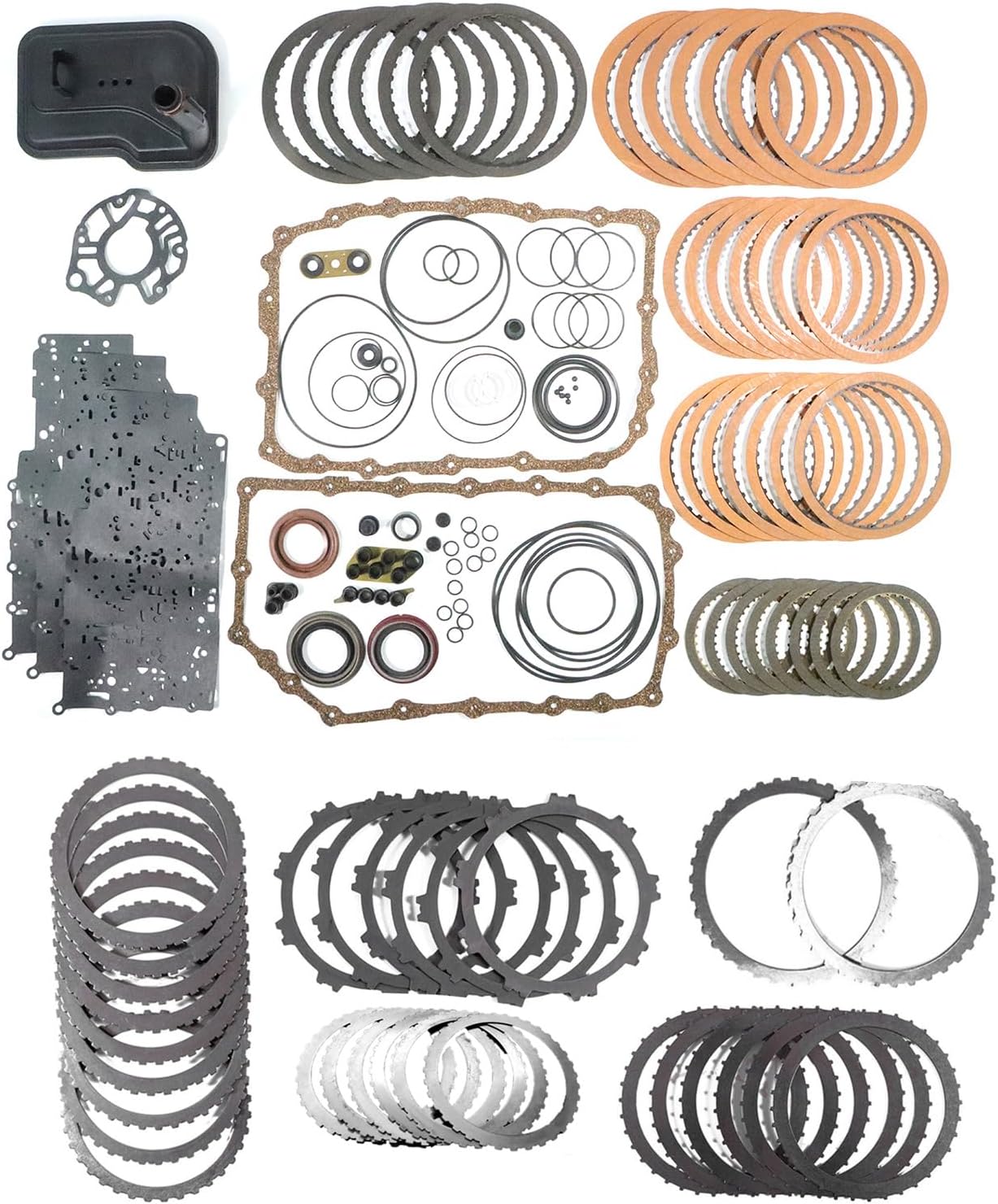
We stock the bonded clutch piston set, the full valve body Zip Kit for the regulator valve and check balls, and the master rebuild kit with steel clutch plates covered above, so a confirmed 3-4 complaint gets closed out in one order instead of three.
Browse the full 6L90 parts collection →
FAQ
Does the 6L90 actually have a part called the "3-4 clutch"?
No. GM's clutch names for this family are Low/Reverse, 2nd, 3-5-Reverse, 4-5-6 and 1-2-3-4. The 3-4 upshift is completed by releasing the 3-5-Reverse clutch and applying the 4-5-6 clutch while the 1-2-3-4 clutch stays applied through the whole shift. "3-4 clutch failure" is shop shorthand for a problem in that handoff, almost always the 4-5-6 clutch, its regulator valve, or the 1-2-3-4 clutch's own apply circuit.
What codes point to a 6L90 3-4 clutch problem?
P0734 (gear 4 incorrect ratio) points at the 4-5-6 clutch not fully applying once the 3-4 shift should be complete. P2723 and P2724 point at the 1-2-3-4 clutch apply circuit itself - P2723 is a 1-2-3-4 clutch ratio error that limits the transmission to reverse and fifth, P2724 sets when the 1-2-3-4 clutch is commanded off in first gear and limits the transmission to second or fourth. Which code sets tells you which clutch circuit to chase first.
How do I tell a real 3-4 clutch failure from GM's documented normal 2-3 flare?
GM bulletin PIP5429A documents a 2-3 upshift slip or flare as a normal characteristic on this transmission family, caused by air trapped in the 3-5-Reverse clutch assembly after the vehicle sits, or by ATF temperature at or below 85 F. GM's instruction is not to repair it. A customer describing a 2-3 flare is not describing a 3-4 clutch problem at all; confirm which shift the complaint is actually on with a scan tool and a road test before you touch anything.
Can a worn check ball cause 3-4 shift problems on a 6L90?
Yes. Gears Magazine documents the #1 check ball in the upper valve body, which sits in the 1-2-3-4 clutch feed circuit, wearing from about .250 inch down to .180 inch or less, letting clutch apply pressure exhaust instead of holding the spacer plate hole sealed. Because the 1-2-3-4 clutch has to stay applied through the 3-4 shift, a worn or blown-through check ball shows up as the same slip, flare or no-forward complaint as a bad 4-5-6 clutch, which is why the article recommends replacing every check ball during any valve body service, not just the suspect one.
What is the real fix for a 6L90 4-5-6 clutch that burned during the 3-4 shift?
It depends on what caused the burn. If the regulator valve bore is worn, a drop-in CBR1/4-5-6 clutch regulator valve kit restores correct apply pressure without replacing the whole valve body. If the clutch itself failed from insufficient piston apply area or backing-plate coning - the OE design limit Sonnax documents on the 6L80 and 6L90 - the fix is a high-capacity 4-5-6 clutch apply piston kit built around a 45-tooth friction set. If the burn already contaminated the pan, a full master rebuild with new clutch plates is the only repair that does not leave debris in a healthy circuit.
Related guides
- 6L90 Slipping: Causes and Fix
- 6L90 Valve Body Wear Fix
- 6L90 Valve Body Problems and How to Test For Them
- 6L90 Harsh Shift Causes
- 6L90 Shift Solenoid Symptoms
Sources
- General Motors, Bulletin PIP5429 / PIP5429A, "2-3 Upshift Slip or Flare" (Oct. 2016, revised May 2020) — covers the 6L45, 6L50, 6L80 and 6L90 (RPO MYA/MYB/MYC/MYD) across the GM lineup; states a 2-3 upshift slip or flare is a normal characteristic with no repair to be attempted; identifies two triggers - air trapped in the 3-5-Reverse clutch assembly after the vehicle sits, and ATF temperature at or below 85 F (30 C); notes a revised TCM calibration for 2007 vehicles with the 6L90 RPO MYD. Hosted in the NHTSA bulletin archive. static.nhtsa.gov
- Sonnax, High Capacity 4-5-6 Clutch Apply Piston Kit (104960-20K), product and technical page — documents 4-5-6 clutch failure as common on GM 6L80/6L90 transmissions due to OE design shortcomings: insufficient clutch plates and piston-to-plate apply surface area, and backing plate flexing/bowing (coning) as a primary failure source; describes the replacement kit's 45-tooth friction set and toothed apply plate built to add apply surface area. sonnax.com
- Sonnax, CBR1/4-5-6 Clutch Regulator Valve (104740-50), product and technical page — lists delayed engagement, flare shifts, a burned 4-5-6 clutch and poor shift quality as the symptoms of valve bore wear; explains the failure mechanism as valve oscillation wearing the bore until fluid leaks past it instead of actuating the clutch correctly; recommends vacuum testing at the valve's ports as the pass/fail check. sonnax.com
- Gears Magazine (ATRA), "What's Old Is New Again: 6L45/6L50/6L80/6L90 No Forward, Slips Moving Forward" — documents the #1 check ball in the upper valve body's 1-2-3-4 clutch feed circuit wearing from approximately .250 inch to .180 inch or smaller, or blowing through the spacer plate entirely on a 6L80 case example; ties this wear to P2723 (1-2-3-4 clutch ratio error, limits to reverse and fifth) and P2724 (1-2-3-4 clutch commanded off in first, limits to second or fourth) and notes the DTC may not set at all; recommends replacing every check ball during overhaul or valve body service. gearsmagazine.com
- Gears Magazine (ATRA), "Tackling Clutch Failure in the GM 6L80/90" — backs the stator support supplying apply oil to the 1-2-3-4, 3-5-R and 4-5-6 clutches, gasket leaks causing clutch failure by location, stator support tube cracks generally causing 4-5-6 clutch failure, and pressure regulator valve wear leading to clutch failure. gearsmagazine.com
- General Motors, Service Bulletin 09-07-30-004J (February 2014), hosted by NHTSA — backs the 2007-2008 6L80/6L90 (RPO MYC/MYD) cracked 1-2-3-4 / 3-5-R clutch housing cause of harsh 4-5 shifts, slipping in fifth, harsh 2-3 shifts and DTCs P0776, P2715 and P2723, and the soap-and-compressed-air weld test. GM bulletin 09-07-30-004J (PDF)