Ask five shops what a 6L90 fluid change costs and you will get five numbers between $180 and $600, and all five can be honest. The spread is not markup. It is that “fluid change” on this transmission describes at least three different jobs, the 6L90 has no dipstick so setting the level is real labor rather than a thirty-second check, and GM itself publishes more than one procedure depending on why the fluid is coming out.
So here is the job priced from the parts and the published labor times instead of from a guess. Every volume, part number, torque and labor figure below comes from GM's own documents, and they are listed at the bottom.
What actually comes out: 6.0 quarts of a 12.4 quart fill
GM's transmission fluid capacity chart lists the 6L90, RPO MYD, at 5.7 liters / 6.0 quarts for a fluid change, on DEXRON VI. The Lubegard OEM ATF conversion chart lines up with that at 6.0 to 6.3 quarts depending on model year, and puts the total fill at 12.4 quarts (11.7 liters).
Sit with those two numbers for a second, because they explain most of the confusion about this service. A pan drop and refill on a 6L90 moves slightly under half the fluid in the unit. The other six-plus quarts are in the torque converter, the cooler, the cooler lines and the clutch circuits, and no amount of draining the pan reaches them. That is not a flaw in the procedure. It is the reason GM's own fix for fluid-related complaints is not one drain.
It also means a customer who expects the fluid to look brand new after one service is going to be disappointed, and that conversation is easier to have before the truck is on the hoist than after.
The fluid, and the part numbers that settle arguments
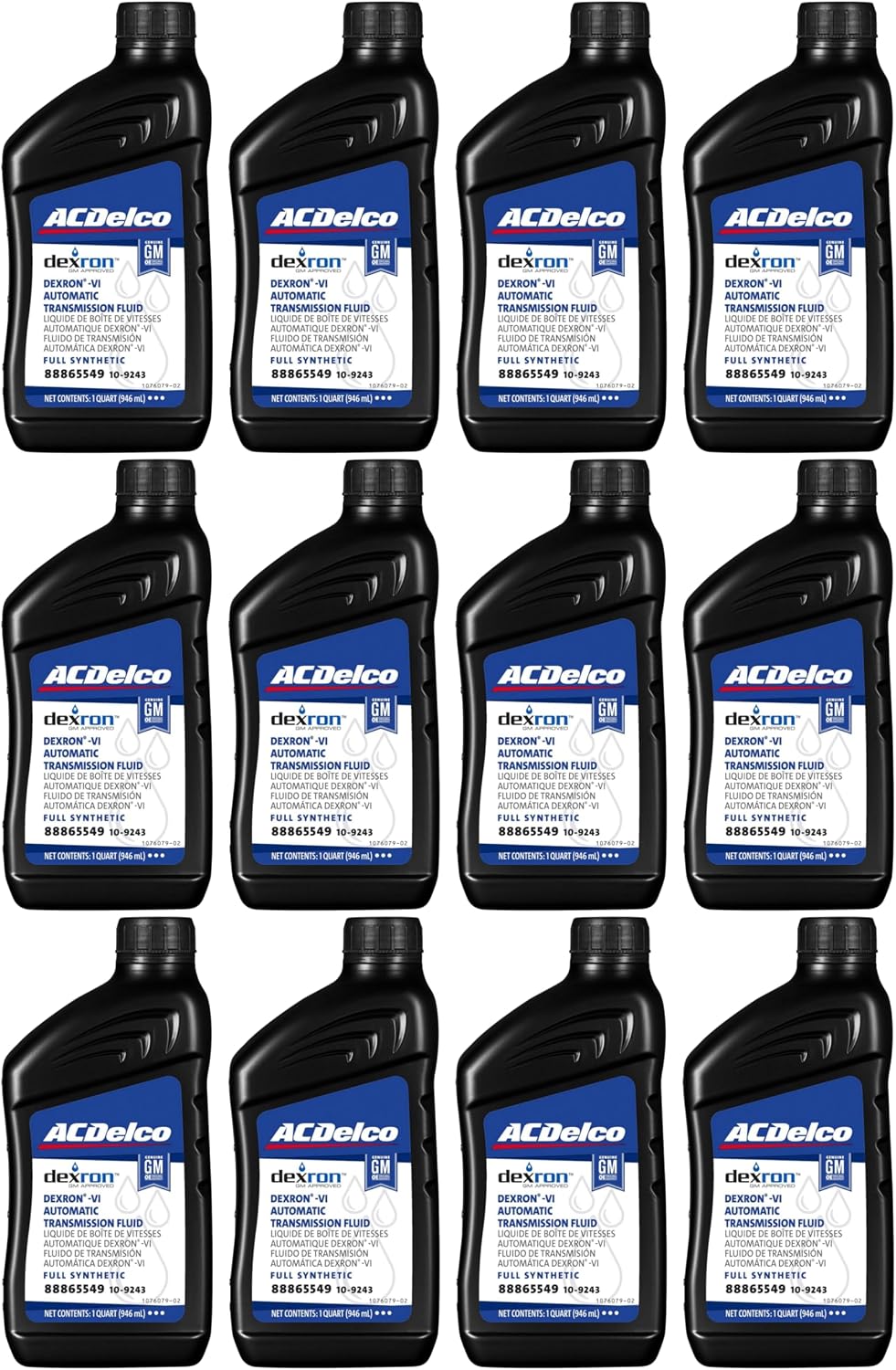
DEXRON VI only. GM's parts list in bulletin 20-NA-142 names the fluid explicitly: 88864060 and 19421240 for a US quart, 88865601 as the GM CCA stock-order quart, 19293024 or 19420008 for a 55-gallon drum, and 19420142, 19420143 and 19420144 for the Canadian containers. The Lubegard chart classes the 6L90 fill as DEXRON VI MLV.
A licensed DEXRON VI fluid is a specification, not a suggestion, on this unit. The friction characteristics the 6L90's clutch-to-clutch shift control depends on are part of that spec, and GM has a bulletin whose entire premise is that those additives deplete with use. More on that in a minute, because it is also the most expensive version of this job.
Budget in whole cases rather than quarts. If you are doing the job the way GM does it you are buying twelve to eighteen quarts, not six.
Parts: the filter kit and the one seal people forget
The service parts are short and cheap. GM lists filter kit 24236933 for this job, which covers the 6L80, 6L90 and 6L50. If you disturb the thermal bypass valve or the cooler pipe assembly while you are under there, you also need the transmission fluid cooler pipe fitting seal, 23135703, and GM specifies a new seal rather than the one you took off.
Two torque values worth writing on the back of your hand, both from 20-NA-142:
- Level set plug: 9 N-m (80 lb-in). That is inch-pounds. It threads into aluminum and people snug it like a drain plug.
- Thermal bypass valve / cooler line bolt: 22 N-m (16 lb-ft).
Add a pan gasket if yours is not reusable, and on a high-mileage unit expect the pan to want cleaning rather than wiping. Parts on a straightforward pan-and-filter service land in the $70 to $130 range plus fluid, which for a single 6-quart fill is another $60 to $105 at typical retail on a DEXRON VI case or gallon.
Labor: GM publishes the times, so use them
This is the part that actually sets the price, and you do not have to estimate it. GM's warranty labor operation 8481018, published in 20-NA-142, is 1.2 hours for automatic transmission fluid, fluid pan and/or filter replacement. The bulletin then lists add-on times for the harder variants:
- Add 0.6 hour for the fluid exchange procedure on vehicles equipped with a fluid fill tube.
- Add 1.0 hour for the fluid exchange on 2019-2022 Silverado 1500 and Sierra 1500 not equipped with a fill tube.
- Add 1.5 hours for pan removal, inspection and filter replacement on the 2019-2022 Silverado 1500 and Sierra 1500 T1XX body.
Run the arithmetic at a few door rates and the quotes you have been getting stop looking arbitrary. A plain 1.2-hour pan and filter is about $132 at $110/hour and $216 at $180/hour. A 1.8-hour pan, filter and exchange on a fill-tube truck is about $198 to $324. A 2.7-hour job on a T1XX with no fill tube runs $297 to $486 in labor alone, and that is before a quart of fluid.
Those are warranty times, which are tight by design. A rusty HD truck in the salt belt will beat them, and an independent shop billing book time is not padding the bill when the total lands north of $400.
GM's own procedure uses 18 quarts, not 6
Here is where the price of this job doubles, and it is worth understanding because it is the version that fixes something. GM bulletin 20-NA-142, dated May 2022, addresses shudder and surging on 6L80 and 6L90 trucks. The cause GM states outright is that additives in the transmission fluid have been depleted during vehicle operation, specifically the additives that regulated a consistent clutch slip rate.
The correction is a triple drain and fill, and it reads like this:
- Remove the pan. If metallic debris is present, stop: remove the transmission and replace the torque converter and the filter. If it is clean, drain and clean the pan and reinstall it.
- Fill with 6 quarts of DEXRON VI.
- Lower the vehicle and run the transmission through all six forward ranges, reverse and neutral.
- Remove the pan, drain, reinstall. Fill with another 6 quarts.
- Run it through all the ranges again.
- Remove the pan, drain, clean it, and now replace the filter. Fill with a final 6 quarts and set the level.
That is 18 quarts of DEXRON VI, three pan removals and a filter. It is also the clearest answer GM has given about why one drain is not a fluid change on a 6L90: the only way to reach the fluid you cannot drain is to dilute it, run it, and drain again. Note where the filter goes in that sequence, at the end rather than the beginning, so the new filter never sees the old fluid.
One hard limit: the bulletin states it applies only to vehicles with 50,000 km (30,000 miles) or less. Above that, GM says the torque converter and the transmission oil filter should be replaced per published service information. That single sentence is the most useful cost-planning fact in the whole document, because it is GM telling you that past 30,000 miles a shudder complaint is not a fluid problem you can drain your way out of.
The machine exchange, and why “flush” is the wrong word
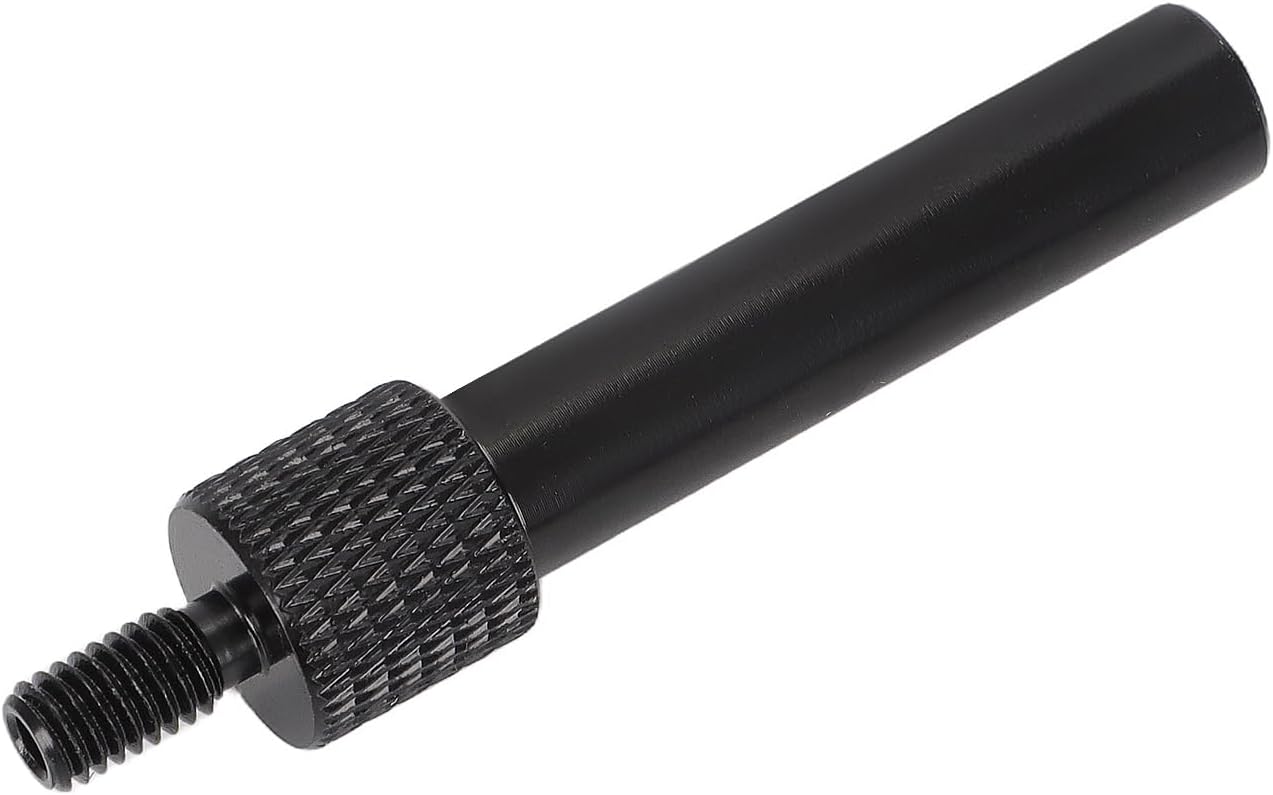
The same bulletin documents the shop-equipment version using the DT-45096 TransFlow machine, and the details are instructive. The reservoir gets filled with 17 quarts of DEXRON VI. The thermal bypass valve and cooler pipe assembly come off the transmission and a DT-53040 adapter block goes on in their place, reusing the cooler pipe seal, torqued to 22 N-m. The level set plug is removed and a DT-51190 fill adapter goes in, hand tight, not to exceed 9 N-m (80 lb-in).
Then it is a measured exchange, not a pressurized flush: add 6 quarts, start the engine, run 30 to 45 seconds until exactly 4 quarts are expelled into a graduated bucket, shut it off immediately, add 4, expel 4, add 4, expel 4. Fluid in equals fluid out, measured every round, engine driving its own pump.
Nobody pushes solvent backward through this transmission. That distinction matters for the quote, because a proper exchange on a 6L90 costs more than a $99 driveway service and less than a repair, and it is the one that does not put debris somewhere new.
Setting the level is the part that goes wrong
There is no dipstick. The level is set through the level control plug in the pan, on level ground, engine running, after the unit has been cycled through the ranges so the circuits and clutch cavities are full. GM's last two steps in every version of this procedure are the same: run it through all forward gears and reverse with the wheels off the ground, then set the level per service information.
Temperature is what makes this hard, and the thermal bypass valve is why. GM's PIP5882 gives the numbers: the original TBV starts to open between 180 and 187 F (82-86 C) and is fully open at 194 F (90 C). If the valve has been updated per TSB 21-NA-199, it starts opening at 138 to 145 F and is fully open at 158 F (70 C). Below that, cooler flow is blocked and those quarts are inside the transmission. Above it, they are out in the cooler and the lines. Same fluid, different level at the plug.
Set it outside the window in service information and you have either underfilled a transmission that will aerate under load or overfilled one that will foam. This is the entire reason the labor time for this job is not fifteen minutes.
PIP5882 also gives a five-minute diagnostic worth running while the truck is already on the hoist. Drive it until fluid temperature reaches about 190 F so the valve is definitely open, then shoot the pan, the TBV and both cooler lines about six inches from the valve with an infrared thermometer. The line heading to the cooler should read hotter than the pan; the return line should read cooler. If both lines are cooler than the pan and the TBV reads hotter than the pan, the valve is not opening. If the pan runs 10 to 15 degrees F hotter than the cooler line, GM says replace the valve. And if the scan tool's transmission temperature is more than 15 degrees above the pan, suspect the sensor, which lives in the TEHCM.
When a $250 service turns into a $2,500 one
The reason to drop the pan before quoting anything is that the pan tells you whether this is a maintenance job at all.
Metallic debris ends it, per 20-NA-142. Converter and filter, minimum.
Aluminum is worse than it looks. ATRA's GEARS coverage of these units notes that aluminum contamination embeds itself in the cooler interior and drops the cooler's effectiveness, and that low-pressure auxiliary coolers cannot be flushed clean and should be replaced when material has accumulated. Fresh fluid pumped through a loaded cooler is a short-lived repair.
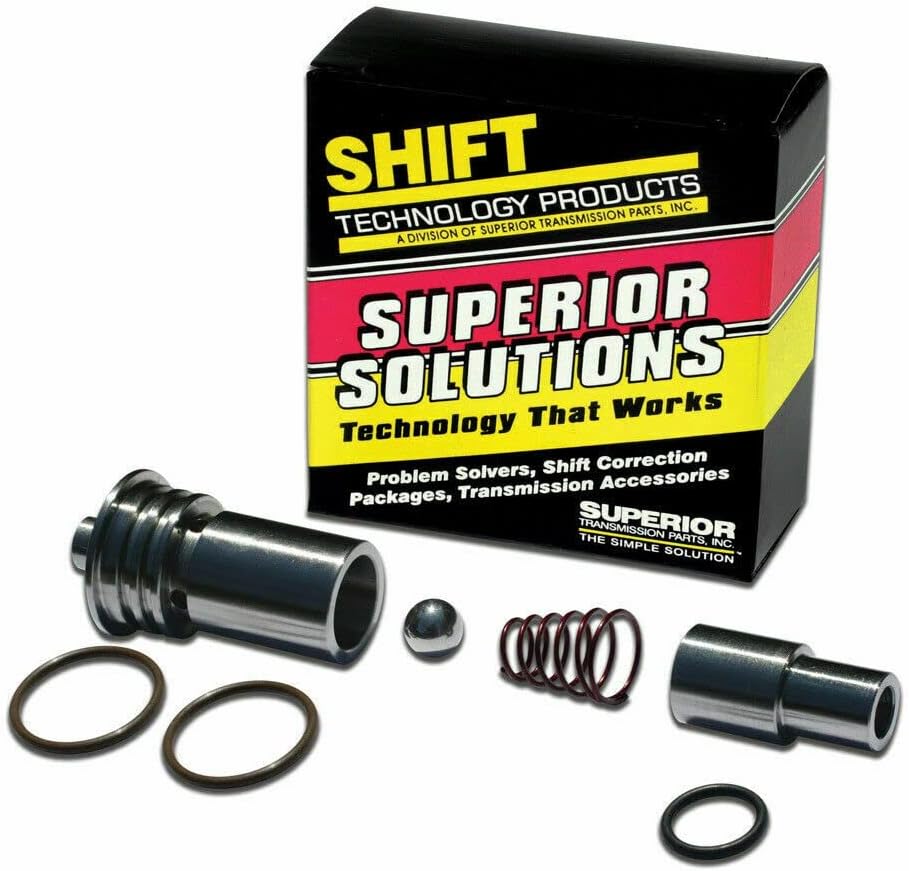
Clean fluid does not clear a worn bore. Sonnax makes the point that the actuator feed limit valve regulates line pressure down to a lower maximum supply for the solenoids, typically 80 to 115 psi, and that wear in that bore produces solenoid performance codes, wrong gear starts, harsh or soft shifts, slips and flares, delayed engagements, no lockup and TCC slip or cycling. Those are the same complaints people hope a fluid change will fix. The AFL and its neighbors should be vacuum tested, and Sonnax's oversized valve 104740-12 and kit 104740-47K are the repair when they fail the test. A fluid service will not move that needle by a pound.
Same story on the mechanical side: GEARS puts pump slide and rotor clearance on these at .0008 to .002 inch and total unit endplay at a desired .004 to .006 inch. Nothing in a bottle changes those.
What the job should actually cost
Putting the pieces together, for a 6L90:
- DIY pan and filter, one drain. 6 quarts of DEXRON VI, filter kit 24236933, a fill adapter, and a level-set that you take seriously. Parts and fluid roughly $130 to $220, plus an afternoon. The fill adapter is not optional equipment on this transmission.
- Shop pan and filter. GM's 1.2 hours plus fluid and filter. Roughly $210 to $340 at $110 to $180 per hour.
- Shop pan, filter and fluid exchange. 1.8 to 2.7 hours depending on body style and fill tube, plus twelve or more quarts. Roughly $330 to $600.
- GM's triple drain for a shudder complaint, under 30,000 miles. Three pan removals, 18 quarts, a filter. Realistically $500 to $750, and it is a repair rather than maintenance.
- Over 30,000 miles with a shudder. GM's answer is a converter and filter, which means the transmission comes out. Price it as a repair, not a service.
If you take one thing from this: drop the pan, look at what fell out of it, and check whether there is a 70 stamped on the bottom of the thermal bypass valve. A truck that has been running its fluid to 194 F for 90,000 miles is not going to be saved by six fresh quarts, and the bypass valve kit is the cheapest part on this entire page.
Shop the part for this fix
The filter goes in on the last drain, not the first. CoreTransmissionParts stocks the 6L90 transmission filter, GM number 24236931, so the new element only ever sees fresh DEXRON VI.
6L90 Transmission Filter 24236931 →Need parts for this job?
DEXRON VI by the case, fill adapters, filter and pan kits, cooler bypass valve kits and pans for the 6L90, in stock with secure on-site checkout.
Shop 6L90 parts →FAQ
How much fluid does a 6L90 fluid change take?
About 6.0 quarts (5.7 liters) for a pan drop and refill. GM's own transmission fluid capacity chart lists the 6L90, RPO MYD, at that figure, and the Lubegard OEM ATF conversion chart agrees at 6.0 to 6.3 quarts depending on year. The total fill is roughly 12.4 quarts (11.7 liters), so a single pan drop replaces slightly under half the fluid in the unit. The rest is sitting in the converter, the cooler and the circuits, which is why one drain never gets the fluid looking new.
What does a shop charge for a 6L90 transmission service?
Start from GM's published labor time. Labor operation 8481018 in bulletin 20-NA-142 is 1.2 hours for automatic transmission fluid, pan and/or filter replacement, with 0.6 hour added for the fluid exchange on trucks that have a fill tube and 1.0 hour if they do not. On the 2019-2022 Silverado and Sierra 1500 the pan removal, inspection and filter replacement adds 1.5 hours. At a $140 per hour door rate that is roughly $250 to $380 in labor, plus fluid and a filter kit.
Does a 6L90 have a transmission dipstick?
No. The level is set through a level control plug threaded into the pan, with the engine running and the vehicle level, and GM torques that plug to 9 N-m (80 lb-in) per bulletin 20-NA-142. You also need a way to get fluid in. Later trucks have a fill tube; earlier ones are filled through the level-set plug hole with an adapter. Fluid temperature changes the answer, because the thermal bypass valve starts opening between 180 and 187 F on the original valve and sends fluid out to the cooler, so a level set cold and a level set hot are not the same level.
Is a 6L90 fluid change worth it at high mileage?
It depends entirely on what is in the pan, and GM draws the line at 30,000 miles in bulletin 20-NA-142. Above that mileage GM stops treating a fluid exchange as the repair and calls for the torque converter and filter to be replaced. If you drop the pan and find metallic debris, the same bulletin says remove the transmission and replace the converter. Clean fluid in a unit that is already making metal buys you nothing, so pull the pan first and price the job after you have looked in it.
What transmission fluid does a 6L90 take?
DEXRON VI, and nothing else. GM's capacity chart lists DEXRON VI for the 6L90 (MYD), and the Lubegard OEM ATF chart classes it as a DEXRON VI MLV fill. GM's own part numbers in bulletin 20-NA-142 are 88864060 and 19421240 for a US quart, 88865601 for the CCA stock-order quart, and 19293024 or 19420008 for a 55-gallon drum. DEXRON III is not a substitute and a DEXRON VI licensed fluid is not optional on this unit.
Related guides
- 6L90 Common Problems and Fixes: Six Failures That Actually Show Up
- Transmission Flush vs Drain and Fill: Which One Your Unit Needs
- 6L80 vs 6L90: What Actually Changed
- 6L90 Valve Body Problems and How to Test Them
- 6L90 Rebuild Wear Points
Sources
- General Motors, TechLink — Transmission Capacities & Fluids (2025 edition) — The 6L90 (RPO MYD) fluid change capacity of 5.7 liters / 6.0 quarts and DEXRON VI as the specified fluid, alongside the DEXRON HP and DEXRON ULV fills used by the 8- and 10-speeds. https://gm-techlink.com/wp-content/uploads/2025/06/TechLink-transmission-fluid-capacities-2025_A.pdf
- General Motors, Service Bulletin 20-NA-142, May 2022 (hosted by NHTSA) — Depleted fluid additives as the stated cause of shudder and surging on 6L80 and 6L90 units; the three-drain correction using 6 quarts of DEXRON VI per fill with the filter replaced on the final drain; the 50,000 km / 30,000 mile limit above which the torque converter and filter are replaced instead; metallic debris in the pan requiring converter replacement; filter kit 24236933 and cooler pipe fitting seal 23135703; DEXRON VI part numbers 88864060, 19421240, 88865601, 19293024 and 19420008; the level set plug torque of 9 N-m (80 lb-in) and cooler line bolt torque of 22 N-m (16 lb-ft); the 17-quart DT-45096 TransFlow exchange with measured 4-quart expels; and labor operation 8481018 at 1.2 hours with the 0.6, 1.0 and 1.5 hour add-on times. https://static.nhtsa.gov/odi/tsbs/2022/MC-10213032-0001.pdf
- General Motors, PIP5882, October 2022 (hosted by NHTSA) — Thermal bypass valve operation on 2014-2021 6L80 (MYC) and 6L90 (MYD) units: the original valve starting to open between 180 and 187 F and fully open at 194 F, the TSB 21-NA-199 replacement valve starting at 138 to 145 F and fully open at 158 F; and the infrared pan / TBV / cooler line comparison used to decide whether the valve or the TEHCM temperature sensor is at fault. https://static.nhtsa.gov/odi/tsbs/2022/MC-10226356-9999.pdf
- General Motors, Service Bulletin 22-NA-182, March 2024 (hosted by NHTSA, replaces PIP5792E) — Harsh shift, shudder, surge, stall, neutral/flare and transmission overheating across 6L80, 6L90, 8L90, 10L80, 10L90 and 10L1000 units; a twisted cooler line on low-mileage vehicles as the cause; and the thermal bypass valve being external to the transmission on the 6-speeds with a 158 F (70 C) opening point. https://static.nhtsa.gov/odi/tsbs/2024/MC-10251353-0001.pdf
- Sonnax — Uncovering the Root Cause of Pressure Complaints: The Critical Role of Solenoid Modulator and AFL Valves — The actuator feed limit valve regulating line pressure down to a lower maximum supply for the solenoids, typically 80 to 115 psi; the symptom list from a worn AFL bore including solenoid performance codes, wrong gear starts, harsh or soft shifts, slips, flares, delayed engagements and TCC slip or cycling; the instruction to vacuum test these valves; and repair parts 104740-12 and kit 104740-47K. https://www.sonnax.com/tech_resources/1208-uncovering-the-root-cause-of-pressure-complaints-the-critical-role-of-solenoid-modulator-afl-valves
- ATRA / GEARS Magazine — 6L80/6L90: Issues That Could Drive You Crazy — Aluminum contamination embedding in the cooler interior and reducing cooler effectiveness, with low-pressure auxiliary coolers being unflushable and requiring replacement; pump slide and rotor clearance of .0008 to .002 inch; and desired total unit endplay of .004 to .006 inch. https://gearsmagazine.com/magazine/6l80-6l90-issues-that-could-drive-you-crazy/
- Lubegard — OEM ATF and Conversion Chart, 12th Edition — The 6L90 (MYD) total fill of 12.4 quarts / 11.7 liters against a 6.0 to 6.3 quart refill depending on model year, and the DEXRON VI MLV classification of the fill. https://www.lubegard.com/wp-content/uploads/2018/10/12th-Edition-OEM-ATF-Conversion-Chart.pdf