A repair order that says "6L90 pump failure" almost always means something upstream did the actual damage. The 6L90's oil pump is a variable-displacement vane pump machined directly into the bellhousing, not a bolt-on part that fails on its own from age. In most shops, a dead pump on this unit is the downstream result of a torque converter that let go internally, not a standalone part that simply wore out - and knowing which one you're actually looking at changes whether you're ordering a $100 valve kit or a reman bellhousing.
There are two other causes worth ruling out before you blame wear at all: a brand-new replacement pump that was mis-machined at the factory, and a documented GM pump-cover defect that has nothing to do with mileage. Below is what each failure actually looks like, what GM and the trade press have published about it, and what a real pump repair checks before it goes back together.

What the 6L90 pump actually is
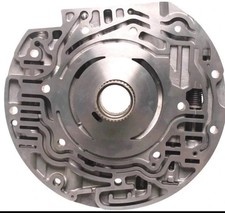
The 6L45, 6L50, 6L80 and 6L90 all share the same pump architecture: a variable-displacement vane-style oil pump built into the bellhousing itself. A pump slide, positioned by a spring and by line pressure feedback, changes the pump's effective displacement, and since pressure is created by resistance to flow, moving that slide changes both volume and pressure at the same time. The pressure regulator valve that governs this sits in the pump cover on every application, and its position is set by a pressure control solenoid inside the TEHCM (Transmission Electronic Hydraulic Control Module) - meaning a line-pressure complaint on a 6L90 can start as a mechanical pump problem, an electrical solenoid problem, or both at once.
Sonnax's own technical page for the 6L80/6L90 pump slide spring explains the failure mode built into this design: at high engine speed, increased pressure and centrifugal force acting on the pump vanes push the slide toward a lower-volume position, which is the opposite of what the transmission needs under load. The OE spring is sized to resist that for normal driving, but a weak or worn spring, or a slide that's sticking in its bore, lets the pump drift toward low volume exactly when it shouldn't - producing the same low-pressure symptoms as a worn pump even on a unit that was recently rebuilt.
Symptoms that actually point at the pump
- Falls out of gear at a stop. Documented in a Transmission Digest case where a brand-new pump still produced this complaint - see the mis-machined pump section below.
- Low measured line pressure on a pressure gauge or scan tool, even though fluid level and condition look normal.
- Delayed engagement into drive or reverse after sitting.
- Slipping or burnt clutches under load, without a specific gear-ratio code pointing at one clutch pack - because low pump volume affects every clutch, not just one.
- A whine that tracks engine RPM, which points at pump cavitation, a worn pump bushing, or vane/rotor wear rather than a gear-mesh noise.
- No movement in any gear in the worst cases, where converter debris has badly scored the pump cover and bellhousing mating surface.
Notice what's missing from that list: a dedicated pump trouble code. A worn or contaminated pump usually doesn't set a pump-specific DTC. It shows up as a drivability complaint, sometimes with no code at all, which is exactly why the diagnosis order below starts with a pressure check instead of a scan tool.
Root cause #1: torque converter failure is what actually kills most 6L90 pumps
GEARS Magazine (ATRA) states it plainly: if a 6L series unit shows up in your shop, it will typically have an issue related to the pump and/or the torque converter, and torque converter failure is the number one issue bringing these units in. The mechanism is straightforward and unforgiving. Internal converter failure - extensive friction disc wear that lets the TCC pressure plate contact the converter cover directly, or spline damage to the stator one-way clutch outer race bore - generates metal particulate. Because the pump is integral to the bellhousing and sits directly in that fluid path, the metal migrates straight back into the pump and into the cooler, and it's the contamination from that debris, not simple mileage wear, that scores the pump cover and its mating surface on the bellhousing.
This is also why "just replace the pump" repairs comeback. GEARS notes that metal contamination from a failed converter commonly causes valve and solenoid issues elsewhere in the unit too, so putting in a new converter and pump without addressing what the debris did to the valve body is fixing the root cause while leaving a second problem behind.
Root cause #2: a brand-new pump that was never machined correctly
Transmission Digest's Wayne Colonna documented a case that looks exactly like pump wear but isn't: a shop replaced a 6L80/6L90 pump assembly with a new GM pump, and the vehicle came back with symptoms that pointed straight at low fluid - it fell out of gear at a stop and showed low line pressure. On teardown, the new replacement sump filter was found lying loose in the bottom of the pan. The cause was a machining defect on some new GM pump assemblies: the step that creates the smaller-diameter bore for the filter pickup tube had simply not been cut. That left the filter neck fitting loosely in the bore, even with its booted seal in place, and the pump starved for fluid exactly as if the unit were low on ATF. Colonna's fix is specific and worth doing on every new pump before it goes in: physically check the filter pickup tube bore for that machined step before you trust a new pump assembly.
Root cause #3: GM's own pump-cover bulletins
Two separate GM Preliminary Information bulletins cover known problems with the 6L80/6L90 service pump cover, part number 24248573, and neither one is caused by driver abuse or mileage. PI1404 (February 2015) covers 2006-2015 GM cars and light trucks with the 6L80 or 6L90 (RPO MYC or MYD): after installing that service pump cover, a transmission may show low line pressure, and GM's own warning is that if the low pressure isn't caught and corrected, clutches can be damaged in operation. The suspected cause is rust-inhibitor (RI) material left in the new cover - a thick, waxy substance that can stick the pressure regulator valve or the isolator valve, or plug the small orifice in the isolator valve sleeve. GM's recommended check is to inspect the cover and regulator valve for that residue before the cover ever goes on the car.
A second, more recent GM bulletin covering the same pump cover part number addresses a different defect: misaligned gaskets and loose stator bolts, and it notes that transmission adapts must be reset after any pump cover replacement - a step that's easy to skip and will leave shift quality off even after a correct mechanical repair.
How a real pump repair is actually done
GEARS Magazine walked through a machinist's perspective on this exact repair (Mike Tilley, Arizona Transmission Machine) and it's a useful checklist for anyone buying remachined parts instead of new OEM pieces:
- Material removal to restore the pump pocket. A typical repair removes about 0.010-0.015 inch from the stator support and bellhousing to clean up converter-failure damage, then removes an equal amount from the pump surface to hold OEM dimensions.
- Slide and rotor clearance. Check with a straight edge and feeler gauge, confirm with Plastigage if it's close. The spec is 0.0008-0.002 inch end clearance between the bellhousing's machined surface and the slide/rotor. Too much clearance kills pump volume and pressure; too little and the slide sticks or the rotor contacts the bellhousing bore and pump cover - a catastrophic failure, not a slow leak.
- High- and low-pressure slide stop surfaces. These limit slide travel and must not be touched during machining. The slide has to physically contact both stops; if it doesn't, file a small chamfer on the slide rather than removing more material from the stop.
- Slide spring end clearance. Machining the bellhousing changes the distance between the spring bore's floor and the pump cover. Check with a feeler gauge against a straight edge laid across the slide - you want at least 0.020 inch, or the spring can wedge and keep the slide from reacting, producing erratic pressure and shift-feel problems.
- Bellhousing warpage at the surface that feeds 1-2-3-4 and 3-5-Reverse oil to the stator support, commonly 0.001-0.002 inch - enough to cause apply issues on its own if it's not checked with a straight edge and feeler gauge.
- Pump alignment using the factory tool (or an equivalent) to center the stator support body's outer circumference to the pump body. Geartrain alignment depends on this; skipping it leads to premature bushing wear and repeat failure.
- Unit endplay, measured before teardown. These units commonly arrive with 0.010-0.035 inch of endplay and should be rebuilt to a 0.004-0.006 inch target. GM builds the 6L80/6L90 as a net-build unit with no factory endplay adjustment, so the aftermarket (Superior is named specifically) sells selective shims to get there.
A diagnosis order that doesn't waste a teardown
- Pull a line pressure reading before assuming anything about the pump. A low-pressure complaint with no code at all is normal for this failure, not a sign the scan tool missed something.
- If a service pump cover (24248573) was recently installed, check it against PI1404 for rust-inhibitor residue before condemning the pump body itself.
- If the pump is brand new and the symptom is low pressure or falling out of gear at a stop, pull the filter and check the pickup tube bore for the missing machined step documented by Transmission Digest.
- Drop the pan and look for metal. Converter-failure debris in the pump and cooler points at the torque converter as the root cause, not the pump alone - plan on replacing both.
- If the valve body or pump cover was recently remachined, verify slide/rotor clearance, slide spring clearance, bellhousing flatness, and endplay against the specs above before final assembly.
- After any pump cover replacement, reset the transmission adapts - GM's own bulletin calls this out as a required step, not an optional one.
6L90 Pump and Bell Housing Assembly (2007-Up, 9-Bolt)
When converter debris has scored the bellhousing mating surface beyond what remachining can clean up, a complete pump-and-bellhousing assembly closes out the repair in one part instead of a machine-shop trip.
View the 6L90 pump and bell housing assembly at Core Transmission Parts →Shop the part for this fix
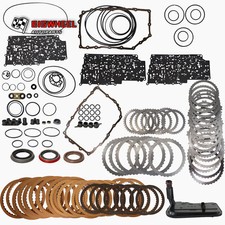
Pumps, pressure regulator valve kits, oil pump rotor kits, and full master rebuild kits for the 6L90, in one place.
Shop 6L90 parts at Core Transmission Parts →Need parts for this job?
We stock the 6L90 pump, the shared 6L80/6L90/6L45/6L50 pressure regulator valve kit, and the full master rebuild kit covered above, so a confirmed pump or converter-related repair gets closed out in one order.
Browse the full 6L90 parts collection →
FAQ
What are the first signs of a 6L90 pump going bad?
The earliest signs are usually pressure-related, not noise-related: delayed engagement into drive or reverse, the vehicle falling out of gear at a stop, a drop in measured line pressure, and clutches that slip or burn under load. Pump noise (a whine that changes with RPM) can show up too, but a lot of 6L90 pump problems present first as a pressure complaint with no unusual sound at all.
Does a torque converter failure really cause 6L90 pump failure?
Yes, and GEARS Magazine (ATRA) calls it the number one issue bringing these units into the shop. When a 6L90 torque converter fails internally - friction disc wear that lets the TCC pressure plate contact the converter cover, or spline damage to the stator one-way clutch outer race - the metal it generates migrates straight back into the pump and the cooler, since the pump is integral to the bellhousing. That contamination is what actually damages the pump cover and bellhousing mating surface in most cases, not simple wear.
Can a brand new 6L90 pump still cause low line pressure?
Yes, in two documented ways. Transmission Digest reported new GM 6L80/6L90 pump assemblies that were mis-machined - missing the step that creates the smaller-diameter bore for the filter pickup tube - which let the filter sit loose and starve the pump for fluid. Separately, GM's own bulletin PI1404 covers service pump cover 24248573, where leftover rust-inhibitor residue can stick the pressure regulator valve or isolator valve, or plug the isolator sleeve orifice, cutting line pressure enough to damage clutches if it isn't caught before installation.
What clearance does a 6L90 pump rotor and slide need?
GEARS Magazine gives the slide and rotor-to-stator end clearance as 0.0008 to 0.002 inch, checked with a straight edge and feeler gauge or confirmed with Plastigage if it's marginal. Too much clearance drops pump volume and pressure; too little and the slide can stick or the rotor can contact the bellhousing bore and pump cover, which is a catastrophic failure, not a slow leak.
How is 6L90 pump endplay set if GM doesn't give an adjustment?
GM builds the 6L80/6L90 as a net-build unit with no factory endplay adjustment, but GEARS Magazine documents that these units commonly come into the shop with 0.010 to 0.035 inch of endplay and should be rebuilt back down to a 0.004 to 0.006 inch target. Since there's no OE shim option, the aftermarket (Superior is named specifically) sells selective shims to hit that range, and the endplay should be measured before teardown so you know what you're correcting toward.
Related guides
- 6L90 Delayed Engagement Fix
- 6L90 Valve Body Problems and How to Test For Them
- 6L90 Valve Body Wear Fix
- 6L90 Rebuild Wear Points
- 6L90 Slipping: Causes and Fix
Sources
- General Motors, Preliminary Information Bulletin PI1404 (Feb. 2015) — covers 2006-2015 GM cars and light trucks with the 6L80/6L90 (RPO MYC/MYD); documents low line pressure after installing service pump cover 24248573, caused by rust-inhibitor residue sticking the pressure regulator valve or isolator valve, or plugging the isolator sleeve orifice; warns that uncorrected low pressure can damage clutches. Hosted in the NHTSA bulletin archive. static.nhtsa.gov
- General Motors, Preliminary Information Bulletin (2025), pump cover 24248573 — a separate, later bulletin covering the same service pump cover part number; documents misaligned gaskets and loose stator bolts as a distinct defect and specifies that transmission adapts must be reset after pump cover replacement. Hosted in the NHTSA bulletin archive. static.nhtsa.gov
- GEARS Magazine (ATRA), "Rise and Fall - 6L80/6L90 Pressure Issues" (March 2022) — describes the variable-displacement vane pump integral to the bellhousing, the pressure regulator valve's location in the pump cover and its control by the TEHCM's pressure control solenoid, torque converter failure as the top cause of pump/bellhousing damage from metal contamination, and the pump slide/rotor clearance spec of 0.0008-0.002 inch with a 0.004-0.006 inch endplay target. gearsmagazine.com
- GEARS Magazine (ATRA), "The Devil's in the Details! A Machinist's Look at the 6L80/6L90 Units" by Keith Clark (Jan. 2021) — machinist walkthrough naming torque converter failure as the number one issue bringing these units into the shop; documents 0.010-0.015 inch of material removal to restore the stator support and bellhousing, the slide stop and slide spring clearance checks, bellhousing warpage of 0.001-0.002 inch at the 1-2-3-4/3-5-Reverse feed surface, the pump alignment procedure, and as-found endplay of 0.010-0.035 inch. gearsmagazine.com
- Transmission Digest, "Keep an eye out for 6L80/90 defective oil pumps" by Wayne Colonna (July 7, 2022) — documents a case where a new GM 6L80/6L90 pump assembly was mis-machined, missing the step that creates the smaller-diameter filter pickup tube bore, causing a loose filter fit and a low-fluid-like complaint (falling out of gear at a stop, low line pressure) on a brand-new pump. transmissiondigest.com
- Sonnax, GM Pump Spring, Part No. 104534-HD (product and technical page) — explains the mechanism by which increased pressure and centrifugal force at high engine speed push the 6L80/6L90 pump slide toward a lower-volume position, and how the pump slide spring resists that to hold line pressure and prevent clutch failure. sonnax.com