The Ford 6R140 TorqShift-6 -- standard behind the 6.7L Power Stroke in Super Duty pickups from 2011-2019, and used in various forms through the medium-duty F-650/F-750 and E-Series chassis -- isn't a notoriously leaky unit, but it has a short list of spots that account for most of the fluid you'll actually find on a driveway or a shop floor. Some are cheap gasket and o-ring problems. One is a documented, NHTSA-filed defect with a specific mechanical cause. Chasing the wrong one wastes a day and a set of seals.
This guide walks the leak points front to back -- cooling-circuit confusion, pan gasket and filter neck, the rear extension housing seal and the recall that explains why it fails, the front pump bearing, and the internal seal rings that cause fluid loss without a puddle at all.

Rule Out Coolant Before You Blame ATF
On the 6.7L Power Stroke diesel trucks, the 6R140 shares a secondary cooling circuit with the transmission fluid warmer, the charge-air intercooler, the fuel cooler, and the EGR cooler. That circuit runs its own coolant through lines routed right past the transmission, and a failed hose, fitting, or warmer core in that system drips in roughly the same spots a transmission leak would. Before you pull a pan or chase a seal, check the secondary coolant reservoir level and inspect the warmer's coolant lines -- a low secondary reservoir combined with a fluid puddle under the bellhousing is a strong sign you're chasing coolant, not ATF. Wipe the suspect area dry, run the truck, and confirm the color and smell of whatever comes back before you order parts.
Pan Gasket and Filter Neck -- the Most Common External Leak
Reported shop cases on this platform most often trace a front-area or pan-seam leak back to the pan gasket, and specifically to a gasket that was reused on a prior fluid service instead of replaced. The 6R140's factory gasket doesn't reliably reseal once it's been compressed and removed; treat it as a one-time-use part every time the pan comes off, torque the bolts evenly in a cross pattern, and don't chase a "mystery" front leak for an hour before checking whether the last tech who was in there reused the old gasket.
The second most common pan-area leak isn't the gasket at all -- it's the o-ring at the filter neck. The filter's intake seals against the pump body with a round o-ring, and a worn, pinched, or missing o-ring here lets fluid seep past the filter neck and show up looking like a pan leak. If a pan reseal doesn't fully stop a slow weep, pull the filter and inspect that o-ring before you resurface or replace the pan again.
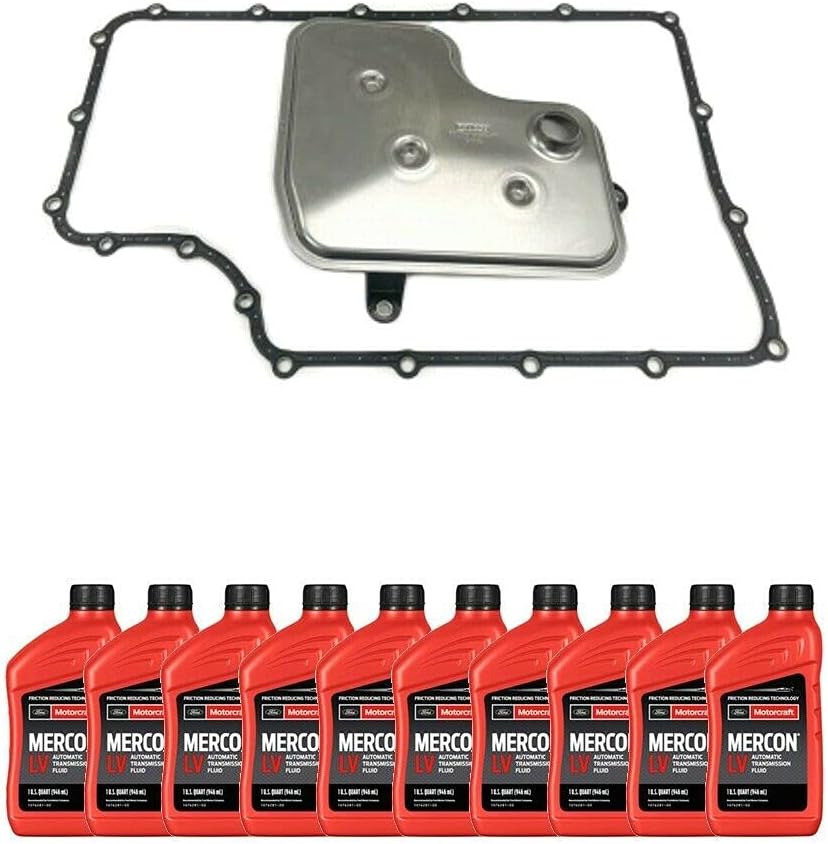
6R140 Transmission Filter and Pan Gasket Kit (Ford Super Duty TorqShift)
Covers both common points in one job: a fresh filter with its own intake o-ring, plus the pan gasket. Don't reinstall the old gasket -- it's the single most common cause of a "new" pan leak on this transmission.
View the filter and pan gasket kit →Rear Extension Housing Seal -- What NHTSA Recall 23V-625 Actually Found
A leak at the back of the transmission, where the driveshaft slip yoke enters the extension housing, is a different repair than a pan leak -- and Ford's own recall paperwork gives an unusually detailed, documented explanation of exactly how that rear seal fails on a 6R140.
NHTSA Recall 23V-625 (Ford's internal number 23S54, filed with NHTSA on September 8, 2023) covers 2,525 model year 2024-2025 Ford E-350 units and 3,270 model year 2024-2025 Medium Duty F-650/F-750 units, all built between December 2022 and August 2023. It does not cover the 2011-2019 F-250/F-350 Super Duty pickup's 6R140 -- those trucks use a different transmission casting and are not part of this action. But the failure mechanism Ford documented is worth understanding on any 6R140 with a rear leak, because it's the clearest root-cause explanation that exists for this platform's rear seal.
Ford's teardown investigation found a casting defect in the transmission's upper valve body: wear on the casting die left excess material on the wall of the main control poppet valve's bore. That excess material can cause the poppet valve to stick in the open position. A stuck-open poppet valve restricts the flow of lubricant to the rear extension housing bushing. Starved of lube, the bushing generates excessive heat, and that heat erodes the rear seal -- which is what actually produces the fluid leak, along with noise and vibration. Ford's report adds that the resulting vibration can, in some cases, loosen the torque on the abutment plate bolts, which is the safety concern that triggered the recall (a loose abutment plate can keep the park pawl from fully engaging park).
The remedy Ford specified: inspect the pan for metal fragments. If metal is found, the whole transmission is replaced. If the pan is clean, the valve body and extension housing are replaced together -- not the seal alone, because the seal failure is a symptom of the upstream poppet valve and lube-starvation problem, not an isolated wear item. That's the practical lesson for any 6R140 rear-seal leak, recall or not: a new seal that goes back in without checking why the bushing ran dry is a repeat repair waiting to happen. If you're chasing a rear leak on an earlier Super Duty 6R140 (not covered by this recall), check for the same symptom pattern -- heat discoloration at the bushing, a glazed or worn bushing bore, and excess driveshaft slip-yoke play -- before you assume a fresh seal alone will hold.
Front Pump Area -- Converter Hub Support Bearing
A leak or weep near the bellhousing paired with a high-pitched whine from the front of the transmission points at a different part: the converter hub support pump bearing. This bearing carries its own integral seal, and Sonnax -- which sells the OE-replacement bearing under part number 126202 -- documents that when that seal fails, the transmission loses lubrication pressure at the pump, and the bearing itself tends to announce its wear with noise before it fully lets go.
Sonnax's own technical writeup on this platform's impeller hub service makes a point rebuilders should take seriously: a needle bearing that "looks acceptable" on a visual check can still be worn enough at the hub contact surface to leak and whine. Their guidance is to replace the pump bearing (126202) any time the impeller hub itself is serviced, rather than reusing a bearing that looks fine. If you're diagnosing a whine-plus-leak complaint and the hub has never been replaced, don't skip inspecting it just because the bearing "looks okay" -- that's the exact failure mode Sonnax is warning about.
Seal Rings and the 4-5-6 Clutch Drum -- Fluid Loss With No Puddle
Not every 6R140 fluid problem shows up as a leak you can see. ATRA's Gears Magazine, in a 2022 technical piece revisiting common 6R140 failures, flags the shaft sealing rings on the input assembly as a point worth inspecting any time you're into the unit, noting that damage to these rings tends to go hand in hand with a damaged 4-5-6 clutch drum. Because this fluid loss happens inside the case -- between the shaft and the drum bore -- rather than past an external gasket, it shows up as low fluid in the pan and shift-quality complaints with no visible puddle anywhere, which is exactly the kind of leak that gets missed when a tech only checks the ground under the truck.
If you've chased every external seal and gasket on a unit that still won't hold its fluid level, and especially if shift quality on the 4-5-6 range is also off, the seal rings and the clutch drum they seal against are the next place to look -- not another external gasket.
| Spec | Value |
|---|---|
| Fluid | Motorcraft MERCON LV (XT-10-QLVC, XT-10-5Q3LV, XT-10-DLV) |
| Refill after pan/drain only | 7.8 L / 8.2 qt |
| Refill after valve body removal | 9.7 L / 10.2 qt |
| Refill after full disassembly | 15.3 L / 16.2 qt |
| Converter hub support pump bearing | Sonnax 126202 (OE replacement, seal side faces converter) |
| Rear seal failure mechanism (per NHTSA 23V-625) | Stuck-open main control poppet valve → starved extension housing bushing → bushing heat → rear seal erosion |
The fill quantities above are the ones Jim Mobley of the Sonnax TASC Force documents by service level in his 6R140 intermittent-neutral article, along with the warning that the unit is sensitive to fill level. For total dry capacity, the Vehicle Service Pros TorqShift 6 overview lists 16.2 qt for late-build diesel trucks and 17.2 qt for gas, down from 18 and 19 qt on early builds -- so a leak that has dropped the level a quart or two matters more than it would on an older, larger-sump unit.
Diagnostic Order: What to Check, In What Sequence
- Rule out coolant. Check the secondary coolant reservoir and the transmission fluid warmer's lines before assuming red fluid on the ground is ATF.
- Clean and recheck. Degrease the suspect area, run the truck, and find the actual source -- pan seam, filter neck, rear housing, or bellhousing -- before ordering parts.
- Pan seam or front-area weep: check whether the last pan service reused the old gasket, and inspect the filter neck o-ring.
- Rear leak at the extension housing: check for driveshaft slip-yoke play and bushing heat discoloration before installing a seal alone -- a worn, lube-starved bushing will eat a new seal too.
- Front weep plus a whine: suspect the converter hub support pump bearing (126202) rather than a gasket.
- Fluid loss with no visible puddle: check the input shaft sealing rings and the 4-5-6 clutch drum for internal leakage.
- Refill with MERCON LV only to the correct quantity for the service performed -- 8.2 qt for a pan/drain service, 10.2 qt after valve body removal, up to 16.2 qt after a full disassembly, per the Sonnax TASC Force write-up on the 6R140 intermittent neutral. Set the final level warm: Ford's procedure as summarized in Vehicle Service Pros checks it at 180-200°F.
Worked in that order, a 6R140 leak gets diagnosed by where the fluid is actually coming from instead of by whichever seal is easiest to reach.
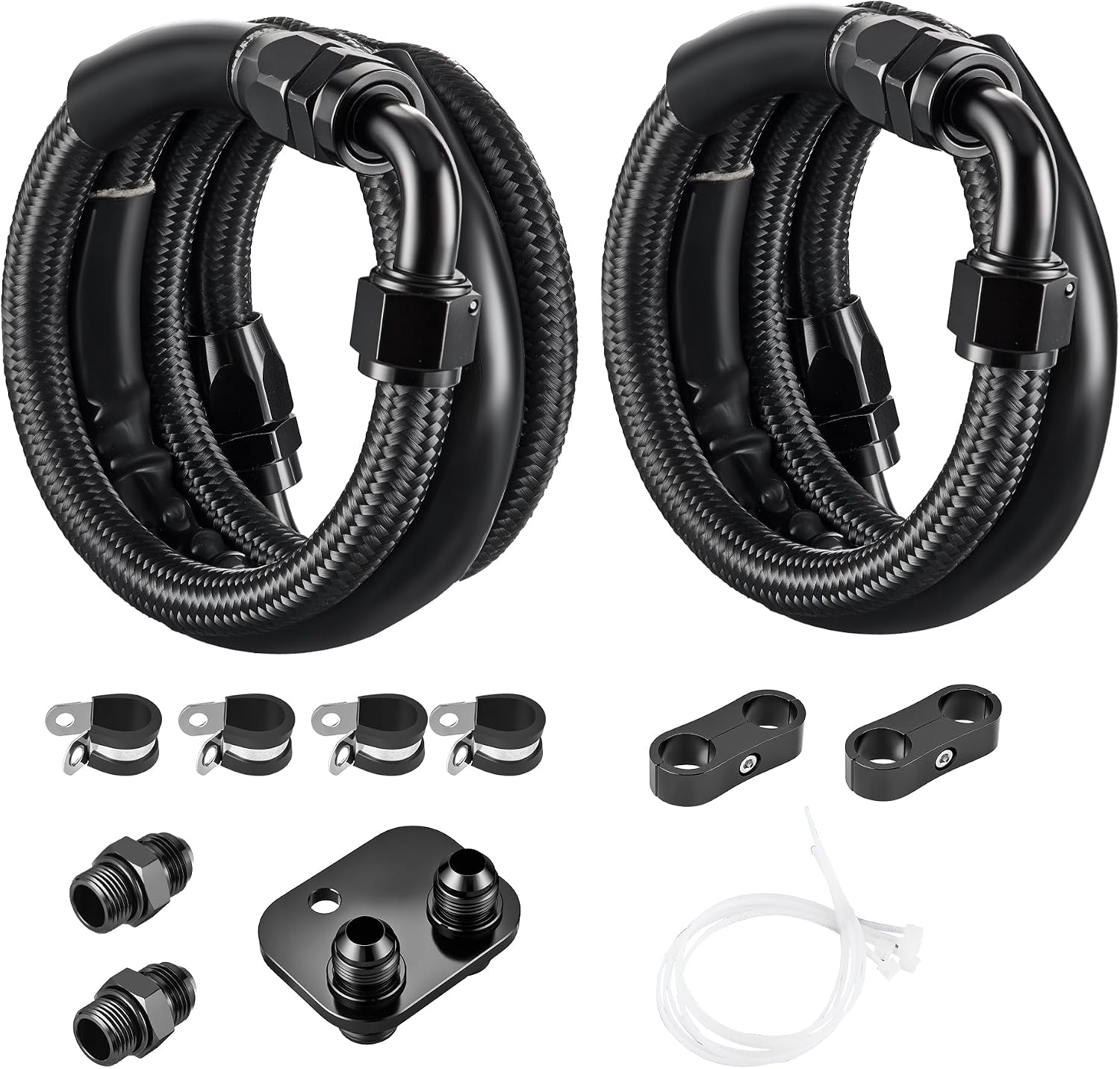
Shop 6R140 filter and pan gasket kits, cooler line kits, pump bearings and MERCON LV fluid service kits — shipped fast from the USA.
Shop 6R140 parts →FAQ
What's the most common place a 6R140 actually leaks fluid?
Shop reports consistently point to the pan gasket seam first, especially after a prior service where the gasket was reused instead of replaced, and the filter neck o-ring second -- a worn or pinched o-ring at the filter intake lets fluid seep past the filter neck into the pan area. Both are cheap, fast fixes compared to a seal that requires pulling the transmission or the driveshaft.
Could what looks like a 6R140 fluid leak actually be coolant?
Yes, and it's a common misdiagnosis on the diesel trucks. The 6R140 in 6.7L Power Stroke applications shares a secondary cooling circuit with the transmission fluid warmer, intercooler, fuel cooler, and EGR cooler. A leak anywhere in that circuit can drip near the transmission and get blamed on ATF. Check the secondary coolant reservoir level and the warmer's coolant lines before you assume the fluid on the ground is red.
What does the NHTSA recall on the 6R140 rear seal actually cover?
NHTSA Recall 23V-625 (Ford internal number 23S54, filed September 2023) covers 2024-2025 Ford E-350 and 2024-2025 Medium Duty F-650/F-750 trucks built between December 2022 and August 2023 -- not the 2011-2019 F-250/F-350 Super Duty pickup's 6R140. The defect is a casting flaw in the upper valve body that lets the main control poppet valve stick open, starving the rear extension housing bushing of lubricant and eroding the rear seal. It's the clearest documented explanation of how a 6R140 rear seal fails from the inside, even though the recall itself only applies to the newer medium-duty trucks.
What fluid does a 6R140 take, and can I substitute something else?
The 6R140 specifies Motorcraft MERCON LV (part numbers XT-10-QLVC, XT-10-5Q3LV, XT-10-DLV). Ford's own fluid documentation is explicit that MERCON LV is not interchangeable with MERCON ULV, MERCON V, or MERCON SP -- each has a different viscosity and friction-modifier package. Topping off a leak with whatever ATF is on the shelf instead of MERCON LV is a bad habit on this transmission; use the specified fluid.
I have a whine from the front of the transmission along with a slow leak -- what is that?
That combination points at the converter hub support pump bearing, not the pan or rear seal. This bearing has an integral seal, and when that seal fails the transmission loses lubrication pressure at the pump and typically produces a high-pitched whine. Sonnax sells the OE-replacement bearing (part 126202) specifically for this failure, and recommends replacing it any time the impeller hub is serviced, since a needle bearing that looks fine can still be worn enough to leak.
Sources
- NHTSA — Part 573 Safety Recall Report 23V-625, Ford Motor Company (submitted September 8, 2023). Backs the recall population (2024-2025 E-350 and Medium Duty F-650/F-750, built Dec 2022-Aug 2023), the casting-defect root cause, the poppet-valve-to-bushing-to-rear-seal failure chain, and the valve body/extension housing remedy. static.nhtsa.gov (NHTSA Part 573 Recall Report)
- Gears Magazine (ATRA) — "Problems and Fixes: Revisiting the 6R140 Transmission," November 2022. Backs the secondary cooling circuit leak-vs-coolant confusion, the shaft sealing ring and 4-5-6 clutch drum internal-leak connection, and the filter-neck o-ring failure point. gearsmagazine.com
- Sonnax — "There's a New Hub in Town," January 9, 2018. Backs the converter hub support pump bearing (126202) as the OE-replacement part for this platform's integral-seal bearing failure, and the recommendation to replace it whenever the impeller hub is serviced. sonnax.com
- Ford Customer Service Division — Motorcraft MERCON LV Automatic Transmission Fluid product page. Backs the specified fluid (MERCON LV) and its part numbers, and that it is not interchangeable with MERCON ULV, MERCON V, or MERCON SP. fcsdchemicalsandlubricants.com
- Sonnax — Jim Mobley, "Ford 6R140: Repairing the Elusive Intermittent Neutral Condition." Backs the fill quantities by service level (8.2 qt pan/drain, 10.2 qt valve body removal, 16.2 qt full disassembly) and the unit's sensitivity to correct fill. sonnax.com
- Wayne Colonna — "Introducing Ford's TorqShift 6 Transmission," Vehicle Service Pros. Backs the early versus late build capacities (18/19 qt versus 16.2/17.2 qt diesel/gas), MERCON LV, and the 180-200°F level check temperature. vehicleservicepros.com