The short answer: a healthy Ford 6R140 runs 195 to 230°F, per GEARS Magazine, and Ford Component Sales rates it for 250°F continuous. When one runs hotter than that, the transmission is usually the victim, not the cause. On a 6.7L Super Duty I check four things in this order: the secondary cooling loop, whether the converter clutch is actually locking, converter charge oil flow to the cooler, and the cooler bypass and TCC valves in the lower valve body.
Heat is what kills these units. It oxidizes the MERCON LV, the fluid loses friction control, the clutches slip a little more, and slipping makes more heat. Break that loop early and a 6R140 will pull a trailer for a long time. Below is how I find where the heat comes from, with the Ford, Sonnax and GEARS figures behind each step. Sources are at the bottom.

What "too hot" means on a 6R140
Ford's spec sheet for the 6R140 gives a 250°F continuous rating on a unit built to hold 935 lb-ft, with a converter K factor of 125K on gas engines and 97K on diesels. GEARS gives the normal operating range as 195-230°F and says a truck sitting at 210-220°F through an Arizona summer, with no codes, is normal.
That gives you three bands to work with on the transmission fluid temperature (TFT) PID:
| TFT reading | What it means | What I do |
|---|---|---|
| 195-230°F | Normal operating range (GEARS) | Nothing. 210-220°F in hot weather is fine. |
| 230-250°F | Above normal, under Ford's continuous rating | Find the cause before it becomes a fluid problem. Check cooling and lockup. |
| Over 250°F | Past the continuous rating on the Ford spec sheet | Back off the load. Diagnose before the next tow, then change the fluid. |
Read the temperature from the TFT PID on a scan tool, not the dash gauge. A lot of gauges are buffered to sit in the middle across a wide range, so the needle does not move until the problem is already serious.
Step 1: the 6.7L secondary cooling loop
This is the first place I look on a diesel Super Duty, and the one most people skip. The 6.7L Power Stroke runs two cooling systems. Per GEARS, the secondary loop cools four things: the transmission fluid warmer, the intercooler, the fuel cooler and the EGR cooler, and of those the transmission puts the most heat into it.
GEARS is direct about it: a low secondary coolant reservoir by itself will overheat the transmission. The primary system can be full and the engine temperature normal while the transmission is running hot, because they are separate loops. What I check:
- Secondary reservoir level. Cold, on level ground. Low means there is a leak somewhere in the loop, so topping it off is step one, not the fix.
- Leaks anywhere in the loop. The loop runs through four heat exchangers. Check the hoses and the fittings at each one.
- Secondary coolant pump. If it is not moving coolant, the reservoir can be full and the transmission still cooks.
- Debris in the front heat exchangers. Mud and bugs packed between the stacked coolers cut airflow. A truck that works off-road or on gravel needs them cleaned out.
If the TFT drops back into range after the secondary loop is sorted out, you are done. If it does not, move inside the transmission.
Step 2: confirm the converter clutch is locking
An unlocked or slipping converter turns engine power into fluid heat. On a truck with a trailer behind it, that is the single biggest heat source in the transmission.
The 6R140 converter locks earlier than most people think. Sonnax notes that at normal operating temperature, the clutch can apply as early as 2nd gear at 18 mph, and that it applies and releases often during upshifts and downshifts. The OE converter, supplied by BorgWarner, uses a single double-sided segmented friction plate that reacts against an internal backing plate, not the front cover. So on a road test at operating temperature you should see lockup in most gears at cruise.
On the scan tool, log these during a steady-throttle road test:
- TCC commanded slip and TCC actual slip
- TCC solenoid amperage
- Vehicle speed, throttle position and engine load
- TFT
That is the list Aaron Golas uses in his GEARS article on shudder diagnosis, and it works just as well for a heat complaint. He also gives the number to judge against: most lockup clutches are built to slip under 60 rpm when applied. If actual slip is well above commanded slip under load, the converter clutch is making heat. Hold throttle and load steady while you record, or the numbers mean nothing.
Tunes that delay lockup
This one comes up a lot on diesels. GEARS points out that many aftermarket tunes delay converter lockup to get more torque multiplication. That feels strong off the line, and it heats the fluid. Before I diagnose an overheating complaint on a tuned truck, I put it back on factory programming and compare. If the heat goes away on the stock calibration, the transmission was never the problem.
Wrong converter for the application
Sonnax describes three 6R140 converter versions. The 4-stud converter used behind lower-torque gas engines has a smaller clutch apply area. The 6-stud and 8-stud diesel converters have a larger apply area and are the same inside. A 4-stud converter in an 8-stud truck will bolt up, and Sonnax warns it will fail in use, because the smaller piston cannot hold diesel torque. Before a slipping converter becomes a heat complaint, make sure the right one is in the truck.
Step 3: converter charge oil and the cooler
On the 6R140, the cooler is fed by converter charge oil. Anything that cuts converter charge flow cuts cooler flow, and the fluid heats up even when nothing is slipping.
GEARS describes a failure that shows up after rebuilds: the pump stator sleeve can partially turn and block off converter charge oil. Because that oil feeds the cooling system, the restriction causes overheating. If a unit started running hot right after it was rebuilt, and the cooling loop checks out, suspect the stator sleeve.
Outside the transmission, check the cooler lines for kinks, crushed sections and soft hoses that collapse when hot. Flow should be checked at the return line with the engine running. Weak flow with good line pressure points to a restriction between the pump and the cooler.
Step 4: the valve body circuits that control heat
This is where worn aluminum bores make heat without setting an obvious code. Sonnax's 6R140 vacuum test guide lists several valves where wear shows up as overheating:
| Valve (Sonnax ID) | Symptoms Sonnax lists | Sonnax fix |
|---|---|---|
| Cooler bypass valve, bore 204 outboard (cooler bypass on 2011-2016, bypass blocker on 2017-later) | Excess heat | 126740-26K |
| Converter limit valve, bore 204 inboard | Excess TCC slip, TCC codes, low converter and lube flow, lube failures | 126740-25K |
| TCC apply regulator valve (102) | TCC codes, cycling, slip, no lockup, overheated fluid, low cooler and lube pressure | 126740-15K |
| TCC apply boost valve | Same TCC and heat symptoms as the apply regulator | 126740-03K |
| Line pressure control valve (202) | Overheating, erratic line pressure, low converter and lube flow | 126740-08K |
Two things stand out from that table. First, the cooler bypass valve can send fluid around the cooler instead of through it, so the cooler is fine and the fluid still runs hot. Second, wear at the TCC apply valves costs you twice: the clutch slips and makes heat, and the same leak cuts cooler and lube pressure.
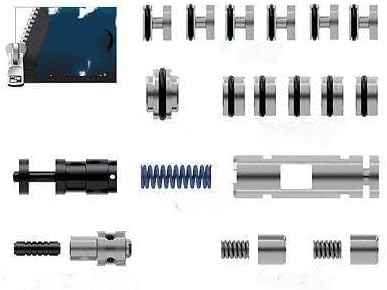
Vacuum test those bores with the valve body on the bench. Worn valves do not show up with a visual check. For a unit that has lived hot, the most complete fix is the Sonnax 6R140 zip kit. It includes the TCC apply boost valve kit, the converter limit valve, sleeve and spring, the O-ringed end plugs, and a bypass blocker valve that eliminates the OE thermal element. Sonnax says the kit is aimed at loss of oil pressure from worn parts in critical circuits, which is the cause of low cooler and lube flow. Our 6R140 valve body wear guide covers the rest of the bores.
Step 5: fluid, level and the pan
MERCON LV is the only fluid for a 6R140, per the Ford spec sheet. Heat is what breaks it down, and GEARS's Golas makes the point that fluid is not lifetime: it loses its additives over time, and worn fluid is a direct cause of converter clutch shudder and slip. A shuddering clutch is a slipping clutch, and a slipping clutch is a heat source. If a 6R140 has run hot, change the fluid after you fix the cause, not before. New fluid on top of a cooling problem just gets cooked again.
Set the level hot and on a scan tool. Our 6R140 fluid type and capacity guide has the full procedure and refill quantities. An overfilled unit churns and foams the fluid, and that alone adds heat.
For trucks that tow for a living, a deep aluminum pan adds fluid volume and surface area. More fluid means the heat from a long grade is spread over more oil. It does not fix a cooling problem, so do it after the steps above, not instead of them.
How I keep a working 6R140 cool
- Check the secondary coolant reservoir every time the oil gets changed.
- Clean the front heat exchangers on trucks that see dirt, mud or bugs.
- Stay on factory programming, or a tune that locks the converter like stock does.
- Watch TFT on long pulls. Downshift a gear on long grades so the converter stays locked and the engine is not lugging.
- Change MERCON LV and the filter on the severe-duty schedule if the truck tows, plows or idles a lot.
- If the unit is apart for any reason, vacuum test the valve body and fix the cooler bypass and TCC bores while you are there.
6R140 deep aluminum pan kit with filter, 2011-2019
More fluid and more surface area for trucks that tow hard, with the filter in the box so the pan and service happen in one job. Sold by our sister store, CoreTransmissionParts.
Shop the part for this fix →Need a different pan? The transmission pans collection has stock and deep 6R140 pans and pan kits.
Need parts for this job?
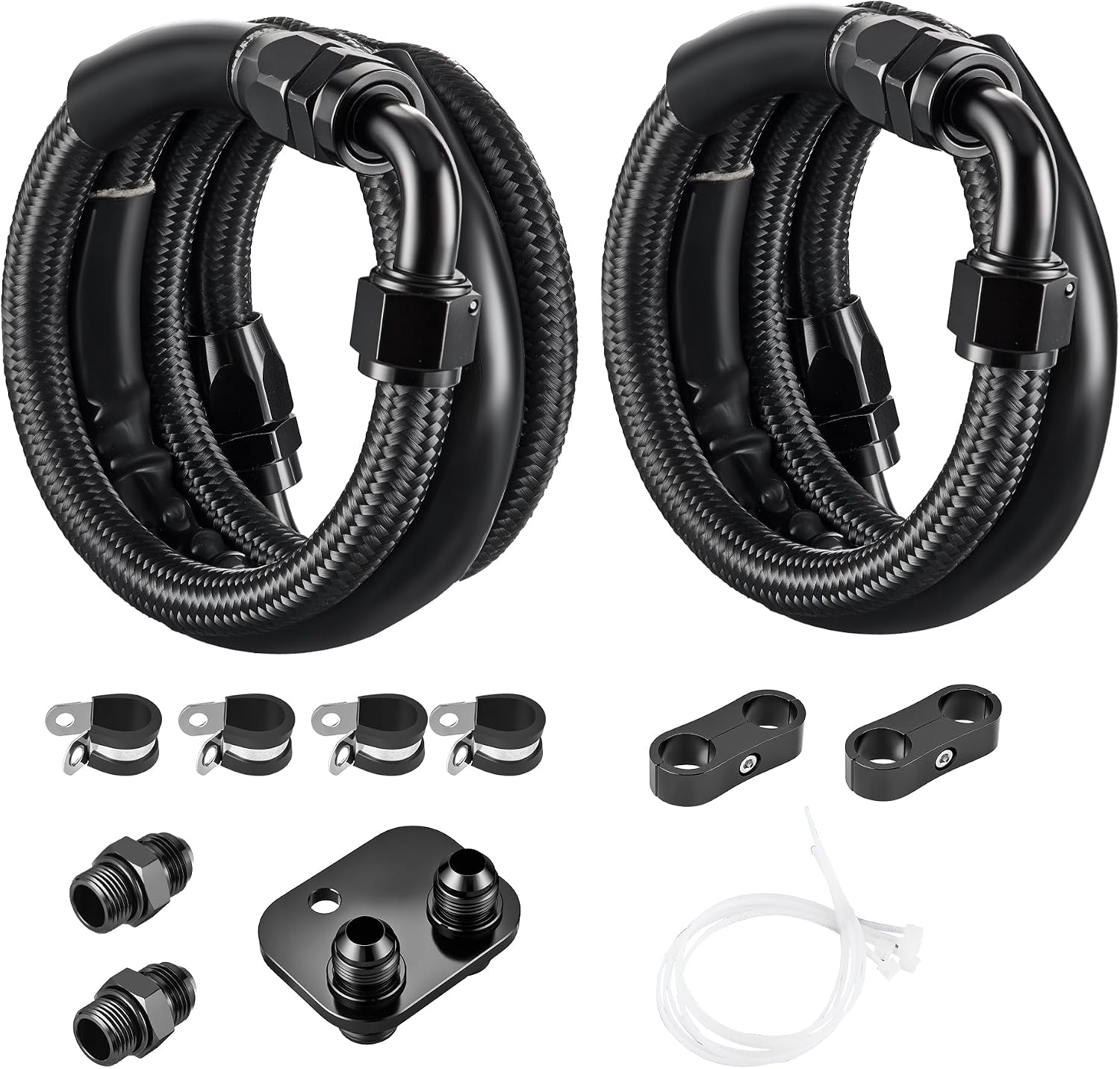
Our 6R140 parts page carries the valve body zip kit, cooler line kits, deep pans, MERCON LV service kits, and the valve bodies and rebuild kits for a unit that already ran too hot. Checkout is on site.
FAQ
What is the normal operating temperature of a 6R140?
GEARS Magazine gives the normal range as 195 to 230F, and says a 6R140 running 210 to 220F in a hot climate with no codes is normal. Ford Component Sales rates the unit for 250F continuous. If the fluid temperature PID sits above 230F in normal driving, something is adding heat or taking away cooling.
Why does my 6.7L Power Stroke transmission overheat when towing?
Start with the secondary cooling loop. On the 6.7L it cools the transmission fluid warmer, the intercooler, the fuel cooler and the EGR cooler, and GEARS notes the transmission puts the most heat into it. A low secondary coolant reservoir alone will overheat the transmission. After that, confirm the converter clutch is locking in 2nd through 6th and not slipping.
Can a tune make a 6R140 overheat?
Yes. GEARS points out that many diesel tunes delay converter lockup to get more torque multiplication, and an unlocked converter turns engine power into fluid heat. Put the truck back on factory programming before you diagnose an overheating complaint, then compare.
What is the 6R140 cooler bypass valve?
It sits in bore 204 of the lower valve body, outboard of the converter limit valve. Sonnax lists it as the cooler bypass valve on 2011-2016 units and the cooler bypass blocker valve on 2017 and later. Wear there sends fluid around the cooler, and Sonnax's zip kit includes a bypass blocker valve that does away with the OE thermal element.
Does converter clutch slip cause 6R140 overheating?
It does. Sonnax lists TCC slip, no lockup and overheated fluid together under wear at the TCC apply regulator and apply boost valves. Most lockup clutches should slip under 60 rpm when applied, per GEARS, so watch commanded against actual slip on the scan tool while the truck is under load.
Related guides
- 6R140 Fluid Type and Capacity
- 6R140 Valve Body Wear and Fix
- 6R140 Slipping Causes and Fix
- Ford 6R140 TorqShift Problems and Service Guide
- 6R80 Overheating Prevention
Sources
- Ford Component Sales, LLC, Ford 6R140 6-Speed Automatic Transmission Technical Specifications. Backs the 250°F continuous rating, 935 lb-ft maximum torque, converter K factor (125K gas, 97K diesel) and MERCON LV fluid. fordcomponentsalesllc.com (PDF)
- GEARS Magazine (ATRA), "Problems and Fixes: Revisiting the 6R140 Transmission" (November 2022). Backs the 195-230°F normal range, 210-220°F as normal in hot climates, the secondary cooling loop components, low secondary coolant causing transmission overheating, tunes that delay lockup, and the turned pump stator sleeve blocking converter charge oil to the cooler. gearsmagazine.com
- Sonnax, Ford 6R140 Vacuum Test Guide. Backs the valve IDs and bore 204 layout (converter limit inboard; cooler bypass outboard 2011-2016, bypass blocker 2017-later), the heat and TCC symptoms listed for each valve, and part numbers 126740-26K, -25K, -15K, -03K and -08K. sonnax.com
- Sonnax, 6R140 Zip Kit (6R140-ZIP). Backs the kit contents, including the bypass blocker valve that eliminates the OE thermal element, and the low cooler and lube flow it addresses. sonnax.com
- Sonnax, "How to Identify Ford 6R140 Torque Converter Features and Avoid Application Pitfalls." Backs lockup as early as 2nd gear at 18 mph, the BorgWarner single-plate captive clutch design, and the 4-stud versus 6/8-stud apply area warning. sonnax.com
- GEARS Magazine (ATRA), Aaron Golas, "Shudder Diagnosis." Backs the under-60-rpm lockup slip figure, the scan tool PID list for a steady-throttle road test, and fluid breakdown as a cause of converter clutch shudder and slip. gearsmagazine.com