Most 6R80s I see with burnt fluid did not fail because a part was weak. They failed because something let the oil get hot and stay hot: a cooler that stopped getting flow, a fluid level nobody checked at temperature, a converter clutch that slipped every time the truck pulled a grade. By the time the frictions are black, the root cause is often still sitting in the truck waiting to cook the replacement unit.
This guide is the diagnostic side of heat. How to prove the transmission is really hot, how to find where the heat is coming from, and the habits and service that keep a 6R80 from getting there in the first place. If your question is specifically about setting a truck up to pull a trailer, the 6R80 towing and cooling upgrades guide goes deeper on that.
The short version: Heat halves fluid and transmission life for roughly every 20°F above 200°F. On a hot 6R80, check in this order: fluid level at temperature (MERCON LV only), cooler flow (a stuck thermostatic bypass or plugged cooler is common), the engine cooling system and fan, then converter clutch slip and internal lube leaks. Before any of that, confirm the reading is real — the 6R80's temperature sensor sits right under the low/reverse clutch and can report local heat the sump never sees.

Why Heat Is the 6R80's Real Enemy
ATF is doing three jobs at once in a 6R80: it is the hydraulic fluid that applies the clutches, the friction modifier package the clutches depend on to apply smoothly, and the coolant for the converter, planets and bushings. Heat attacks all three. The oxidation rate climbs, the friction modifiers wear out, seals harden, and varnish starts forming in the valve body bores that the solenoids depend on.
GEARS Magazine, ATRA's technical magazine, puts a number on it that every builder should remember. Mike Brown writes that the ideal maximum transmission temperature is 200°F, and every 20 degrees above that cuts expected life by a factor of two: half the life at 220°F, a quarter at 240°F, and one eighth at 260°F [2]. A 6R80 that spends summers at 240 under a trailer is aging four times faster than one that lives at 200.
Ford says the same thing in plainer words. The 2014 F-150 owner's manual tells the driver that if transmission fluid temperature exceeds the normal range, stop as soon as it is safe, check that airflow through the grille is not blocked, and that extended driving in the high range may cause internal transmission damage [1].
Step One: Prove It Is Actually Hot
Before you buy a single part, make sure the number is real. Watch the transmission fluid temperature PID (shown as TFT on most scan tools) on a road test, then park and shoot the pan and the cooler lines with an infrared thermometer. The two should track reasonably close once the unit is heat-soaked.
The 6R80 has a trap here. Its ATF temperature sensor is part of the lead frame and sits directly below the low/reverse clutch pack. Transmission Digest's Wayne Colonna wrote up a freshly overhauled 2013 F-150 that lit the trans temp lamp on its first road test. The reading rose and fell with vehicle speed while an IR gun showed the sump at 190°F. The shop replaced the PCM and the valve body and lead frame before finding the real problem: the low/reverse pack had been stacked with .083 in steels, the clearance was too tight, and the frictions were burning right above the sensor. Restacked to the correct .039 to .062 in clearance, the readings went back to normal [4].
So there are three possibilities when TFT reads high:
- TFT and the pan agree, both hot. This is a real overheating problem. Keep reading.
- TFT is high or erratic, the pan is normal. Suspect a local heat source near the sensor (a dragging low/reverse pack, especially after a rebuild) or a lead frame or wiring fault. More cooling will not fix either.
- TFT is flat at one value no matter what. Look for sensor circuit codes and check the lead frame connector before you condemn anything mechanical.
Step Two: Fluid Level, Checked the Right Way
Low fluid overheats a unit because the pump pulls air and the converter and cooler circuits get less oil. Overfull fluid overheats a unit because the rotating parts churn it into foam. Either one is common on 6R80s, because the unit has no long dipstick tube and a lot of people never check it at all.
The 6R80 uses a short dipstick that lives inside the fill cap on the side of the case. CAT Products' technical bulletin 0064 lays out the procedure: connect a scan tool that reads transmission fluid temperature, get the truck level on a lift, warm the unit to 175–185°F (80–85°C), move the selector slowly through the ranges to fill the clutch packs and passages, then put it in Park at idle, pull the fill cap, separate the dipstick, and read it. Add fluid as needed and recheck until the level is stable [6]. Always cross-check the temperature window against the service information for your exact model year, and wear gloves: the fill plug is close to the exhaust.
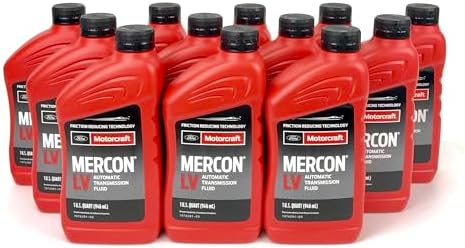
Fluid type matters as much as level. Ford lists Motorcraft MERCON LV and states that transmissions requiring MERCON LV should only use MERCON LV [1]. A "multi-vehicle" fluid with the wrong friction characteristics makes the converter clutch and shift clutches slip a little longer on every apply, and every bit of slip becomes heat. For capacities and the full fluid breakdown, see 6R80 fluid type and capacity.
Step Three: Is the Cooler Getting Flow?
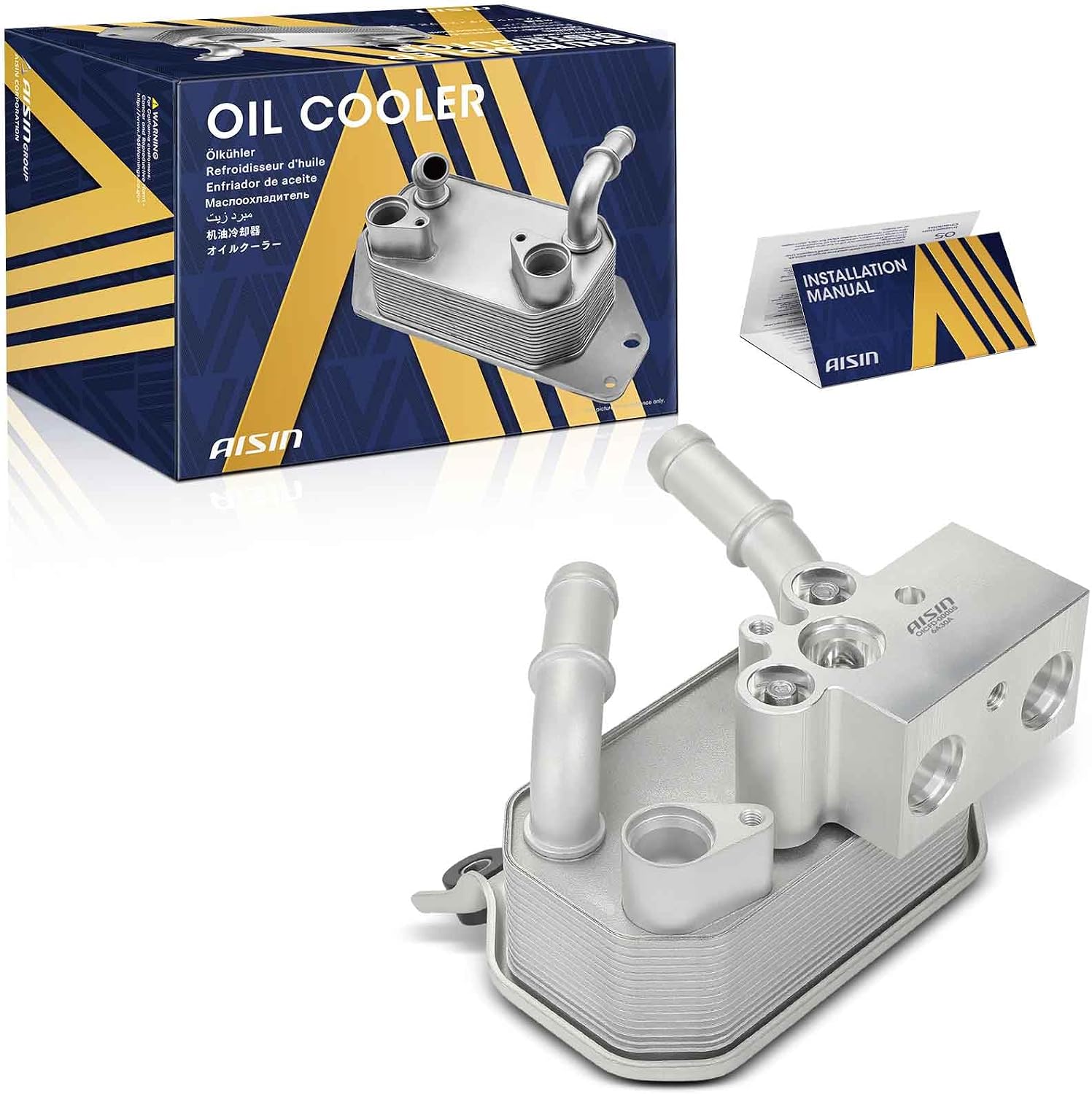
This is the most common cause of a 6R80 that runs normal around town and climbs on the first long pull. Modern units do not send fluid to the cooler when they are cold. A thermostatic bypass valve returns it straight to the case until the oil warms up, which helps shift feel and fuel economy in winter. GEARS Magazine's Steve Garrett describes the common design: a wax element in a valve housing driving a plunger. He names the two ways it fails: debris and wax element failure, either of which can leave the valve stuck in bypass with little or no flow reaching the cooler [3]. The radiator cooler and any auxiliary cooler you bolted on are doing nothing if oil never reaches them.
Test it without special tools: once the unit is fully warm, IR the cooler inlet line and the cooler itself. A hot transmission with a cool cooler inlet means no flow. Garrett recommends exactly this kind of temperature-gun check [3]. Brown's GEARS article adds the more definitive test: measure flow with a flow meter, or disconnect the return and time the flow into a bucket [2].
If there is flow but temperatures still climb, work down Brown's list of the six most common overheating causes: plugged cooler lines, a plugged cooler, a plugged filter, overloading the transmission, engine overheating, and the engine fan [2]. On a 6R80 truck, that means:
- Cooler lines. Look for kinks, crushed sections from jacking, and weeping at the quick-connect fittings. A slow leak at a line is also how a unit ends up low.
- The cooler. After a failure, debris packs into the cooler. Flushing only helps if the bypass lets fluid through the cooler during the flush. After any internal failure, replacing the cooler is cheaper than a second rebuild.
- Engine cooling. Many 6R80 trucks use a coolant-to-ATF heat exchanger, so the transmission can only be as cool as the engine coolant feeding it. A weak radiator, low coolant or a lazy fan hits the transmission too. Clean the bugs and debris out from between the condenser and radiator.
- The filter. A restricted filter starves the pump and every circuit downstream of it, including cooler feed.
6R80 Transmission Cooler Line, 2015-2019 Ford F-150 (OEM FL3Z7B028P)
If your cooler flow test points to a leaking or crushed factory line, this is the OEM-number replacement line for the 2015-2019 F-150 6R80. Available at Core Transmission Parts, our sister store.
Shop the part for this fix →Step Four: Heat Made Inside the Unit
If the fluid is right and the cooler is getting flow, the transmission itself is making more heat than the system can remove. On a 6R80, look at two valve body circuits and the clutches.
Converter clutch slip
An unlocked or slipping converter is a fluid coupling doing work, and nothing heats oil faster. The 6R80 controls converter clutch apply and release through the bypass clutch control valve. Sonnax documents that as this valve's bore wears, the clutch apply rate slows and release pressure does not vent, with complaints including excess TCC slip, cycling RPM and an overheated converter [5]. On the scan tool, log commanded TCC state against actual slip RPM on a steady highway cruise. A converter that is commanded locked but shows persistent slip is making heat on every mile. See 6R80 torque converter shudder for the full TCC workup.
Lube and cooler flow leaking away
Cooler flow and lube flow are the same oil. Sonnax describes wear at the 6R80 lubrication control valve bore letting fluid escape the circuit, and lists overheating, low converter pressure, lube failures, and planetary and bushing failure among the complaints [5]. That is the high-mileage unit that "tested fine" but keeps running hot: the oil is leaking out of the circuit inside the valve body before it ever reaches the cooler. Sonnax offers oversized valve kits for both bores that cover the 6R60, 6R75 and 6R80, and that is where lost flow gets recovered at rebuild time.
Clutches that slip or drag
Any pack that slips on apply or drags when it should be released is a heater. A worn unit slips; a freshly rebuilt unit with clearance set wrong drags. The Transmission Digest case above is the textbook example [4]. If a rebuilt 6R80 runs hot from day one, check pack clearances before you blame the cooler.
Prevention: Keeping a 6R80 Out of the Heat
- Drive it like the manual says. Ford's tow/haul mode delays upshifts to reduce how often the transmission shifts and gives engine braking in all forward gears. It turns off every time the truck is shut down, so press it every trip you tow. In heavy, hot stop-and-go traffic, Ford recommends shifting to Park to help engine and transmission cooling [1]. Sitting in Drive with the brake held and the converter unlocked is pure heat with no airflow.
- Check the level at temperature once a year and after any leak. Use the scan-tool procedure above, not a guess.
- Change the fluid before it is worn out. The 2014 F-150 schedule lists ATF and filter at 150,000 miles under normal use, and the manual points hard-working trucks to the severe duty schedule [1]. My opinion as a rebuilder: a truck that tows, plows or idles for a living should get a pan drop, filter and fresh MERCON LV far sooner, and anything that has seen the gauge in the high range should get it now. The 6R80 filter and pan service guide walks through it.
- Keep the front of the truck clean. Debris between the condenser and radiator costs cooling capacity for both engine and transmission.
- Test the bypass before summer on a working truck. An IR gun on the cooler inlet takes two minutes and catches the most common silent failure.
- Watch a real gauge. If the dash does not show transmission temperature, an OBD monitor that reads TFT lets the driver back off before damage instead of after.
- Add capacity only after flow is confirmed. A stacked-plate auxiliary cooler in front of the condenser, plumbed after the factory cooler, helps a truck that works hard in the heat. It does nothing if the bypass is stuck.
What I skip: tunes that raise line pressure to firm up shifts on a unit that is already slipping. The shift feels better, but a leaking converter or lube circuit is still making heat, and now it is hidden.
6R80 coolers, MERCON LV by the case, filter kits, valve bodies and rebuild kits for units that have seen too much heat. Shipped fast from the USA.
Shop 6R80 parts →FAQ
What causes a 6R80 to overheat?
The usual causes are low or incorrect fluid, a thermostatic cooler bypass stuck in bypass, a restricted cooler, cooler line or filter, a weak engine cooling system or fan, and internal leaks such as a worn lube control or bypass clutch control valve bore that cut cooler flow and let the converter clutch slip. Towing heavy in D without tow/haul adds to all of them.
How hot is too hot for a 6R80?
GEARS Magazine puts the ideal maximum for an automatic at 200 degrees F and says every 20 degrees above that cuts expected life in half, so 240 degrees F leaves about a quarter of the life. If the gauge reaches the high range, Ford's F-150 owner's manual says to stop as soon as it is safe and check that grille airflow is not blocked.
How do you check 6R80 fluid level correctly?
The 6R80 has a short dipstick inside the fill cap on the side of the case. CAT Products' bulletin 0064 has you level the truck, read transmission fluid temperature on a scan tool, warm it to 175 to 185 degrees F, run through the ranges, then read the stick in Park at idle. A unit that is low or overfull runs hotter, so this check comes before any cooler work.
Can a bad temperature reading make a 6R80 look like it is overheating?
Yes. The ATF temperature sensor sits on the lead frame directly below the low/reverse clutch pack. Transmission Digest documented a rebuilt 6R80 whose reading swung with vehicle speed while the sump measured 190 degrees F; the low/reverse pack was set too tight and was burning right above the sensor. Always compare the scan tool reading to an IR gun at the pan.
Sources
- Ford Motor Company — 2014 F-150 Owner's Manual. Backs the transmission temperature gauge warning (stop, check grille airflow, extended high-range operation may cause internal damage), tow/haul operation, shifting to Park in hot congested traffic, MERCON LV only, and the 150,000 mile ATF and filter interval with the severe duty reference. 2014 F-150 Owner's Manual (PDF)
- GEARS Magazine (ATRA) — "48RE/68RFE/AS68RC Transmission Overheating," Mike Brown, September 2019. Backs the 200°F ideal maximum and the life-halving per 20°F rule, the six most common overheating causes, and flow-meter or bucket cooler flow testing. gearsmagazine.com
- GEARS Magazine (ATRA) — "Keep Your Cool: Cooler Bypass Systems," Steve Garrett. Backs the wax-element thermostatic bypass design, debris and wax element failure leaving the valve in bypass, and temperature-gun verification of cooler flow. gearsmagazine.com
- Transmission Digest — "Ford 6R60/6R80 Erratic Temperature Operation," Wayne Colonna. Backs the ATF temperature sensor location on the lead frame below the low/reverse clutch, the 190°F sump reading, and the .039 to .062 in low/reverse clearance correction. transmissiondigest.com
- Sonnax — 6R60/6R75/6R80 Oversized Lubrication Control Valve Kit and Oversized Bypass Clutch Control Valve Kit. Backs lube control bore wear causing overheating, low converter pressure and planetary/bushing failure, and bypass clutch control bore wear causing TCC slip and an overheated converter. Lube control kit · Bypass clutch control kit
- CAT Products, Inc. (The Transmission deTECHtive) — Technical Service Bulletin 0064, "6R80: Transmission Fluid Level Check." Backs the fill-cap dipstick design and the scan-tool level check at 175–185°F with the vehicle level. TSB 0064 (PDF)