A 6R80 that only commutes can go a very long time. The ones that come through the door burnt usually share a story: a camper, a boat or a car trailer, a hot summer, and a truck that "never had a problem" until the trans temp light came on halfway up a grade. The hard parts in this unit are not weak. What kills it under a trailer is heat, and most of that heat comes from things you can check and fix before you ever pull the pan.
This is how I look at a 6R80 that is going to tow: what Ford actually tells the driver, where the heat comes from inside the unit, how the thermostatic cooler bypass fits in, how to prove the temperature reading is real, and which upgrades are worth money. I will be straight about the ones that are not.
The short version: Use tow/haul every time you tow; it delays upshifts and gives engine braking in all forward gears. Stay under 5,000 lb if the truck lacks Ford's Heavy Duty Trailer Towing Package. Run only MERCON LV. Confirm the cooler actually gets flow once the unit is warm, because a stuck wax-element bypass sends fluid around the cooler and the unit cooks. If temps still run high, verify the reading with an IR gun before you chase it, then add a stacked-plate auxiliary cooler. At rebuild time, the lube control and bypass clutch control valve bores are where towing units lose cooler and converter flow.


What Ford Actually Tells a 6R80 Owner About Towing
The 2014 F-150 owner's manual is a good baseline because the 6R80 in that truck is the one most people tow with. A few points in it matter more than they look:
- Tow/haul changes the shift schedule. Ford says tow/haul "delays upshifts to reduce frequency of transmission shifting" and provides engine braking in all forward gears in D. Fewer shifts means fewer clutch apply events under load, and each of those events makes heat. The feature switches off when the truck is powered down, so it has to be pressed again on every restart.
- Do not use tow/haul on ice. The added engine braking can slide the rear wheels. That is the one place Ford says to leave it off.
- Park it in heavy traffic. When stopped in congested traffic in hot weather, Ford recommends shifting to P to aid engine and transmission cooling. Sitting in D with the brake held and the converter unlocked is pure heat with no airflow.
- Know the package limit. Ford says not to exceed a 5,000 lb trailer if the truck is not equipped with the Heavy Duty Trailer Towing Package, and the bumper itself is rated 5,000 lb with a 500 lb tongue. Trucks without the Trailer Tow or Heavy Duty Payload package are limited to 36 sq ft of trailer frontal area; trucks with them, 60 sq ft. A tall enclosed trailer can load the transmission harder than the scale weight suggests.
- Take the gauge seriously. The manual says that if transmission fluid temperature exceeds the normal range, stop as soon as safely possible and check that grille airflow is not blocked, and that running extended periods in the high range "may cause internal transmission damage."
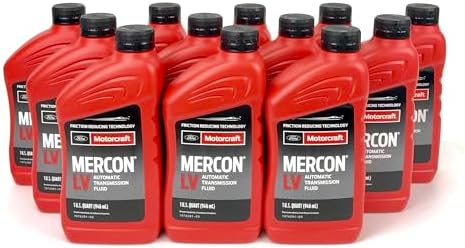
Fluid is not negotiable either. Ford lists Motorcraft MERCON LV and states that transmissions requiring MERCON LV should only use MERCON LV. Approximate dry-fill capacity in the 2014 F-150 is 12.1 qt with the 3.7L and 13.1 qt with the 5.0L, 6.2L and 3.5L EcoBoost, with a note that cooler size changes the number. On a pan drop you will only get a fraction of that out, so set the final level on the dipstick at operating temperature, not by counting quarts.
Where the Heat Comes From Inside a 6R80
Fluid temperature is a symptom. Something is converting horsepower into heat, and in a towing 6R80 there are three usual suspects.
Converter slip
An unlocked converter under load is a fluid coupling doing work, and it heats the oil fast. The 6R80 controls converter clutch apply and release with the bypass clutch control valve. Sonnax documents that as this valve's bore wears, "the apply rate of the clutch slows and the clutch release pressure will not vent." Their listed complaints include TCC codes, excess TCC slip, cycling RPM and an overheated converter. A truck that slips the converter clutch every time it pulls a grade is making heat the cooler was never sized to remove.
Lube and cooler flow loss
This is the one that ends towing units. Sonnax describes excess wear at the lubrication control valve bore letting fluid escape the circuit, and lists planetary failure, bushing failure, lube failures, overheating and low converter pressure among the complaints. Cooler flow and lube flow are the same oil. If it leaks away inside the valve body, the cooler sees less of it and the planets and bushings downstream get starved at the exact moment they are working hardest. That is why a high-mileage tow truck can come in with a burnt planet and a valve body that "tested fine."
Clutch slip and dragging packs
Any clutch that slips on apply, or drags when it should be released, turns into a heater. Transmission Digest ran a case that shows how local that heat can be (more on it below). On a rebuilt unit, wrong clutch clearance is the first thing I suspect when it runs hot from day one.
The Thermostatic Cooler Bypass
Modern units, the 6R80 included, do not send fluid to the cooler when cold. A thermostatic bypass routes it back to the transmission until it warms up, which helps shift quality and fuel economy in winter. GEARS Magazine's Steve Garrett explains the common design across makers: a wax element in a valve housing with a plunger operated by the element. He also names the failure modes: debris and wax element failure, either of which can leave the valve stuck in bypass with little or no cooler flow.
When that happens the symptom is clear: the truck is fine around town, then climbs past normal on the first long pull and never comes back down. The radiator cooler and any auxiliary cooler you added are doing nothing because the oil never reaches them. Owners logging temps on these trucks commonly report cooler flow starting somewhere in the high 170s to mid 180s F; treat that as a field observation, not a spec, and confirm with your service information for the exact application.
How to check it without special tools: once the unit is fully warm, use an infrared thermometer on the cooler inlet line and on the cooler itself. Garrett suggests exactly this kind of temp-gun check to confirm the valve is supplying flow to the cooler. A warm transmission with a cool cooler inlet means no flow. If you have a flow meter, measure it on the return line instead.
The fix options: replace the bypass assembly with a new OE part, or remove the thermostatic function. TransGo sells a cooler bypass delete kit (6R80-CLR-BYPASS) for Gen 1 and Gen 2 6R60 and 6R80 units that it says provides all-time cooler flow regardless of temperature, installs without removing the transmission, and lets you check fluid level right after install instead of waiting through a warm-up cycle. The tradeoff is slower warm-up in cold weather. For a truck that tows in the heat, I take that trade. For a daily driver in a cold climate that never pulls anything, I leave the factory valve in and replace it if it tests bad.
6R80 Transmission Filter with Gasket Kit (replaces FT-188 / BL3Z-7A098-A)
If the unit has been run hot, the first repair is fresh MERCON LV and a new filter and pan gasket, then a flow check. This kit fits F-150, Expedition, Mustang and Navigator 6R80s. Available at Core Transmission Parts, our sister store.
Shop the part for this fix →Browse all transmission filters at CoreTransmissionParts.com
Prove the Temperature Before You Chase It
Before buying coolers, make sure the number on the gauge or scan tool is telling the truth. Watch the transmission fluid temperature PID (usually shown as TFT) on a road test with a scan tool, and compare it to an IR reading at the pan once the truck is parked.
Transmission Digest's Wayne Colonna wrote up a 2013 F-150 with a freshly overhauled 6R80 that lit the trans temp lamp on its first road test. The temperature reading rose and fell in cadence with vehicle speed, while an IR gun showed the sump at 190°F. The shop replaced the PCM and the valve body with lead frame and the problem stayed. The real cause: the low/reverse clutch had been stacked with .083 in steels, making the pack too tight, and the frictions were burning. The ATF temperature sensor is on the lead frame, mounted directly below the low/reverse clutch pack, so it was reading heat from that pack rather than the sump. Rebuilt with four .070 in steels and one .083 in steel for the correct .039 to .062 in clearance, the readings went back to normal.
The lesson for towing: a TFT reading that jumps around, or runs far above what the pan shows, can be a local heat source inside the unit rather than a cooling problem. Adding a cooler to that truck will not fix it.
My road-test routine for a hot 6R80
- Check fluid level hot on the dipstick with MERCON LV only; an overfull or low unit runs hot.
- Scan for codes, especially converter clutch slip and solenoid performance codes.
- Log TFT, commanded versus actual TCC slip, and engine RPM on a steady highway pull and a long grade.
- If TCC slip is high while commanded locked, suspect the converter or the bypass clutch control circuit before cooling.
- Once warm, IR-check the cooler inlet. No heat at the cooler means a bypass or restriction problem.
- Compare TFT to pan temperature. A big mismatch points to the sensor, the lead frame, or a clutch pack cooking near the sensor.
Towing Upgrades Worth the Money, in Order
- Driving habits first. Tow/haul on, speed control off in hilly terrain, P in hot stop-and-go, and a lower gear on long downgrades. These cost nothing and are straight from Ford's towing section.
- Fresh fluid and filter. The 2014 F-150 schedule lists changing the ATF and filter every 150,000 miles, and the manual's snowplowing section points to the severe duty schedule for transmission fluid change intervals. My opinion as a rebuilder: a truck that tows regularly should get a pan drop, filter and MERCON LV far sooner than that, and anything that has seen the temperature gauge in the high range should get it now.
- Confirm cooler flow. Test or replace the thermostatic bypass, or install a bypass delete if the truck works in the heat.
- Auxiliary cooler. A stacked-plate cooler mounted in front of the condenser with clear airflow, plumbed in series after the factory cooler, adds real capacity. It only helps if oil reaches it, which is why step 3 comes first. Use proper transmission cooler hose and clamps rated for ATF temperature.
- A real gauge. If the truck does not show a transmission temperature gauge, a scan-tool gauge or OBD monitor reading TFT lets you back off before damage instead of after.
- Valve body work at rebuild. On a high-mileage tow unit, check the lube control and bypass clutch control bores. Sonnax offers oversized valve kits for both that cover the 6R60, 6R75 and 6R80 (2009-2014 and 2015-later), but they are not for Gen 2 ZF 6HP units. This is where lost cooler and converter flow gets recovered.
What I skip: aftermarket "towing" tunes that just raise line pressure to hide slip. Firm shifts feel strong, but if the converter or lube circuit is leaking, the heat problem is still there.
MERCON LV by the case, 6R80 filter kits, drain-plug pans, valve bodies and rebuild kits for towing trucks. Shipped fast from the USA.
Shop 6R80 parts →FAQ
What is the best way to keep a 6R80 cool when towing?
Use tow/haul every time you tow, because it delays upshifts and adds engine braking so the clutches and converter make less heat. Shift to P in hot stop-and-go traffic, keep the fluid level correct with MERCON LV only, and confirm the cooler is actually getting flow once the unit is warm. If it still runs hot after that, add a stacked-plate auxiliary cooler plumbed after the factory cooler.
Does the 6R80 have a transmission thermostat?
Yes. Like most modern units it uses a thermostatic cooler bypass with a wax element that keeps fluid out of the cooler until it warms up. GEARS Magazine notes debris or wax element failure can leave the valve stuck in bypass with little or no cooler flow, which overheats the transmission on the first long pull.
How much can a 6R80 F-150 tow without the tow package?
Ford's 2014 F-150 owner's manual says not to exceed a 5,000 lb trailer if the truck is not equipped with the Heavy Duty Trailer Towing Package, and the bumper is rated for 5,000 lb with a 500 lb tongue weight. Trucks without the Trailer Tow or Heavy Duty Payload package are also limited to 36 sq ft of trailer frontal area.
Is a 6R80 cooler bypass delete worth it?
For a truck that tows in hot weather, usually yes. TransGo's 6R80-CLR-BYPASS kit provides all-time cooler flow on Gen 1 and Gen 2 6R60 and 6R80 units without pulling the transmission. The tradeoff is slower warm-up in cold weather, so a daily driver in a cold climate that never tows is better off keeping a good factory valve.
Sources
- Ford Motor Company — 2014 F-150 Owner's Manual. Backs the tow/haul description (delays upshifts, engine braking in all forward gears, deactivates at power-down, not for icy roads), shifting to P in hot congested traffic, the 5,000 lb limit without the Heavy Duty Trailer Towing Package and 5,000/500 lb bumper rating, the 36 and 60 sq ft frontal area limits, the transmission temperature gauge warning, MERCON LV only, the 12.1 and 13.1 qt dry-fill capacities, and the 150,000 mile ATF and filter interval. 2014 F-150 Owner's Manual (PDF)
- Sonnax — Oversized Lubrication Control Valve Kit 95740-11K. Backs the lube control valve bore wear cause and the complaints of planetary, bushing and lube failures, overheating and low converter pressure, plus 6R60/6R75/6R80 fitment and the Gen 2 ZF exclusion. sonnax.com/parts/2676
- Sonnax — Oversized Bypass Clutch Control Valve Kit 95740-13K. Backs the bypass clutch control valve's role in TCC apply and release, the slow apply and unvented release as the bore wears, and the TCC slip and overheated converter complaints. sonnax.com/parts/2677
- Transmission Digest — "Ford 6R60/6R80 Erratic Temperature Operation," Wayne Colonna, October 22, 2021. Backs the 2013 F-150 case, the 190°F IR sump reading, the ATF temperature sensor on the lead frame directly below the low/reverse clutch, the .083 in steel stack-up and the corrected .039 to .062 in clearance. transmissiondigest.com
- GEARS Magazine (ATRA) — "Keep Your Cool: Cooler Bypass Systems," Steve Garrett. Backs the wax-element bypass valve design, debris and wax element failure leaving the valve stuck in bypass, and using a temperature gun to confirm the valve is supplying cooler flow. gearsmagazine.com/magazine/keep-your-cool-cooler-bypass-systems
- TransGo — 6R80-CLR-BYPASS Cooler Bypass Delete Kit. Backs the Gen 1 and Gen 2 6R60/6R80 application, all-time cooler flow regardless of temperature, installation without transmission removal, and immediate fluid level checking after install. transgo.com/product-details/6r80-clr-bypass