"Pump failure" gets used loosely on the 6R140, and that loose usage sends a lot of trucks into a full rebuild they didn't need, or sends a tech chasing the pump when the real problem is a $15 filter seal. There are really three distinct failure points in and around the 6R140's pump that produce overlapping symptoms: the converter hub support pump bearing, the impeller hub it rides on, and the filter intake snout seal that can starve the pump without the pump itself being bad at all. A fourth look-alike, a worn line pressure control bore in the valve body, lives downstream of the pump but mimics pump symptoms closely enough to fool a quick diagnosis. Sort out which one you actually have before you order parts. Sources are listed at the bottom.
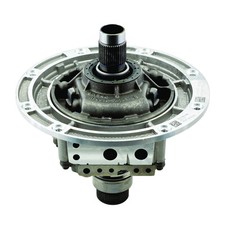
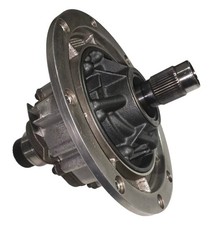

Symptoms that actually point at the pump
- A high-pitched whine that tracks engine RPM, not road speed, and is present even sitting still in Park or Neutral with the engine running. This is the classic converter hub support bearing symptom.
- Weak or inconsistent cooler flow, showing up as a transmission that runs hotter than normal under load even with a good cooler and healthy fluid.
- Soft, delayed, or inconsistent TCC lockup from insufficient converter feed pressure, separate from any solenoid or wiring fault.
- Vibration or noise tied to the pump area that changes with engine speed rather than vehicle speed, consistent with impeller hub or bearing-journal wear.
- Metal contamination in the pan consistent with bearing or hub wear, as opposed to the clutch friction material a clutch-pack failure leaves behind.
Notice what is missing from that list: a sudden drop to zero line pressure on an incline, or a truck that won't move at all when cold. Those are the signature of a different problem entirely, covered below, and lumping it in with "pump failure" is the single most common mix-up on this transmission.
Failure point 1: the converter hub support pump bearing
Sonnax documents the converter hub support pump bearing as a known 6R140 wear point. The bearing has an integral seal, and when that seal fails, the unit loses lubrication pressure at the bearing itself. As wear progresses past the seal failure, the bearing starts producing a high-pitched whine. Sonnax sells the replacement bearing to rebuilders under part number 126202, and the installation note that matters is orientation: the seal side goes toward the converter, not the pump body. Get that backward on reassembly and you've reintroduced the same lube-pressure leak you just fixed.
This is the failure most people mean when they say "6R140 pump is going out," and it's also the cheapest of the three real pump-area failures to catch early, because the whine shows up well before the bearing fully lets go.
Failure point 2: impeller hub wear
The impeller hub is the part that actually connects the torque converter to the pump: its outer splines drive the pump gear, and on PTO-equipped trucks its inner splines drive the power take-off. Sonnax's own technical write-up on this part is blunt about when it fails: "Impeller hub failure is common in 6R140 converters regularly pushed to the limit." That's a direct description of a lot of Super Duty trucks towing heavy trailers or running aftermarket tuning that removes factory torque management.
The hub rides on a drawn cup needle bearing at its outer diameter, which is a thin-wall interface, and Sonnax notes that a lot of virgin cores coming in for rebuild already show wear or damage right where that bearing contacts the hub. That wear is why hub replacement, not just bearing replacement, is often necessary once you're inside a converter that's seen hard use. Sonnax's replacement, part FD-90-140G, is a chromoly flanged hub with hardened splines on both ends and a 2.800" height spec'd to maintain the tight pilot-to-impeller runout the OE design requires. If you're welding one of these during converter rebuild, the part matters as much as the technique: Sonnax specifically warns the chromoly alloy will crack if you quench it right after welding, where other hub alloys tolerate that. Let it air-cool, full stop.
The two look-alikes that aren't actually pump failures
These matter because they produce symptoms that read like a dying pump but have nothing wrong with the pump itself.
A loose filter seal starving the pump (not a pump failure)
Transmission Digest documented a 2015 F-250 with no engagement at all when cold. The line pressure gauge read zero, and when the tech pulled the pan, the filter's round intake snout seal offered "no resistance whatsoever" and the filter dropped straight into the drain pan when the retaining bolt came out. An undersized O-ring on that seal let the pump cavitate on startup, pulling air instead of fluid, which is functionally identical to a weak pump from the driver's seat but has nothing to do with wear inside the pump assembly. The fix was a filter with a properly sized O-ring, not a pump.
A related and more dramatic version of this same root cause is the intermittent no-movement condition Sonnax documented on a 2016 F-550: line pressure held fine on level ground but dropped to 0 psi climbing an inclined driveway, then came back the moment the truck rolled back down. We cover that specific diagnosis, including the fill procedure Sonnax used to verify the fix, in our 6R140 no-movement diagnosis guide. The short version for this article: if the complaint is intermittent and incline-related rather than a steady whine or hot-running transmission, check the filter seal before you pull the pump.
A worn line pressure control bore (valve body, not pump)
Sonnax also documents wear in the valve body's line pressure control bore as a separate source of line-pressure complaints on the 6R140. Wear at the balance spool end of that bore lets pressure escape where it shouldn't, which raises line pressure and causes harsh shifts and overheating. Wear at the opposite, outboard end of the same bore instead robs converter feed pressure and lowers line pressure, producing soft shifts and burnt clutches, which can look a lot like weak pump output. Sonnax's fix is to recondition the bore and install their oversized line pressure control valve kit, part 126740-08K. The giveaway that it's the bore and not the pump: pressure symptoms that come and go with bore wear direction (too high in one failure mode, too low in the other) rather than a steady decline, and no whine from the pump area.
| Item | 6R140 detail | Source |
|---|---|---|
| Converter hub support pump bearing | Integral seal failure drops lube pressure; worn bearing produces a high-pitched whine; Sonnax replacement part 126202, seal side toward converter | Sonnax |
| Impeller hub | Common failure in converters "regularly pushed to the limit"; rides a drawn-cup needle bearing; Sonnax chromoly replacement FD-90-140G | Sonnax |
| Line pressure spec | 90-260 psi (619-1790 kPa) | Sonnax |
| Filter intake snout seal (look-alike) | Undersized O-ring causes pump cavitation and zero line pressure when cold, not a true pump failure | Transmission Digest |
| Line pressure control bore (look-alike) | Balance-spool wear raises pressure/causes harsh shifts; outboard-spool wear lowers pressure/causes soft shifts and burnt clutches; fix is kit 126740-08K | Sonnax |
| Fluid | Motorcraft MERCON LV only; MERCON ULV is for the later 10R140 | Sonnax / Ford |
How to diagnose it before you order a pump
- Listen with the truck in Park, engine running, before road testing. A whine present at idle that climbs with RPM and is unaffected by vehicle speed points at the bearing or impeller hub, not the valve body or filter.
- Hook up a line pressure gauge and check against the 90-260 psi spec at idle and under load. A steady low reading across the board leans pump or cavitation; a reading that is too high with harsh shifts, or that drops specifically under load with soft shifts, leans toward the line pressure control bore instead.
- Reproduce the complaint's conditions exactly. If the no-movement or pressure-loss complaint only shows up cold, climbing an incline, or shortly after a fluid service, that pattern matches the filter seal issue, not a worn pump bearing that would be consistent regardless of temperature or grade.
- Pull the pan and check the magnet. Fine metal or bearing-type wear material supports a pump-side mechanical failure. A clean pan with a pressure complaint points you back at the filter seal or the valve body bore.
- If you're pulling the pump, inspect the bearing and impeller hub together. They wear from the same root cause (converter side-load and heat), so replacing one without checking the other is how a "fixed" pump whines again a few months later.
Fluid and fill after a pump repair
The 6R140 takes Motorcraft MERCON LV, not MERCON ULV, which Ford reserves for the 10R140 that replaced this unit in 2020-and-up Super Duty trucks. After a pump or converter repair, fill in stages rather than to a fixed quart number: bring the fluid to operating temperature (196-216°F per Sonnax's documented procedure), add in 0.5-pint increments only after a couple of extended road tests, and verify the final level on a 20-30° incline, front end first. Typical fill quantities run roughly 8.2 qt if only the pan and filter were serviced, up through about 16.2 qt if the unit was fully disassembled, though your exact number depends on how much fluid stayed in the converter and cooler lines. Ford's standing warning on these 6-through-10-speed units applies directly here: do not overfill under any circumstance, since excess fluid aerates and causes its own pressure problems that can mimic the symptoms you were just chasing.
Repair path by what you found
- Whine at idle, climbs with RPM, present regardless of temperature: converter hub support pump bearing. Replace with seal side toward the converter.
- Whine plus visible wear at the bearing journal on the impeller hub itself: replace the hub, not just the bearing, or you'll be back under the truck in short order.
- No movement or zero line pressure that's intermittent, cold, or incline-specific: check the filter intake snout seal before assuming the pump is bad. See our no-movement diagnosis guide for the full case.
- Harsh shifts and overheating, or soft shifts with a burnt clutch and no pump noise: suspect the line pressure control bore in the valve body, not the pump.
- Any of the above after extended towing or tuning: expect to find more than one of these worn at once, since heat and converter side-load drive the bearing, hub, and bore wear through the same mechanism.
Need parts for this job?
Our 6R140 parts page carries the pump, filter and pan gasket kits, valve bodies, and master rebuild kits for the Super Duty TorqShift 6. Checkout is on site.
6R140 rebuild kits
If a worn pump bearing or impeller hub has been starving the unit long enough to carry metal into the clutch packs, a full rebuild kit covers the rest of the repair in one order. Sold by our sister store, CoreTransmissionParts.
Shop the part for this fix →FAQ
What are the first signs of a failing 6R140 pump?
A high-pitched whine that tracks engine RPM, not road speed, is the earliest sign of a worn converter hub support pump bearing, since Sonnax documents that a failed bearing seal lets lube pressure drop and the bearing itself start to sing before it fails outright. A pump that is further gone shows up as weak cooler flow, a hot-running transmission, or TCC lockup and converter apply problems from insufficient feed pressure.
Is a 6R140 pump whine always the pump bearing, or could it be something else?
Not always. The converter hub support pump bearing is the most common whine source Sonnax documents on this unit, but worn impeller hub splines where the hub rides the bearing journal can produce similar noise and vibration. Both point to the same repair area, the pump-to-converter interface, so a pump teardown that inspects the bearing bore and impeller hub together is the right move rather than guessing at one part.
Does a 6R140 pump failure always mean a full transmission rebuild?
No. A converter hub support pump bearing or an impeller hub can often be addressed with the pump assembly out and the case split, without touching the clutch packs or valve body, if caught before metal contamination spreads. Once a failed pump has starved the unit of lube and cooler flow for any length of time, though, clutch and bushing damage downstream becomes likely, and that turns a pump job into a full rebuild.
What is the difference between a 6R140 pump failure and the no-movement neutral condition?
They can look alike at the gauge but the root cause differs. A true pump failure is wear or seal failure inside the pump assembly itself, at the converter hub bearing or impeller hub. The intermittent no-movement condition Sonnax documented on a 2016 F-550 traced instead to a loose filter intake snout seal that let the pump cavitate, dropping line pressure to 0 psi on an incline while the pump itself was fine. See our 6R140 no-movement diagnosis guide for that specific case.
What fluid does the 6R140 pump system need and how is it filled after a repair?
The 6R140 runs Motorcraft MERCON LV, not MERCON ULV, which Ford reserves for the later 10R140. Sonnax documents a specified-level fill procedure: bring the fluid to 196-216 degrees F, add in 0.5-pint increments after extended road tests, and verify level on a 20-30 degree incline. Ford's warning on these 6-through-10-speed units is not to overfill under any circumstance, since excess fluid causes its own aeration and pressure problems that can mimic a pump issue.
Can towing or heavy use cause a 6R140 pump to fail?
Indirectly, yes. Sonnax notes that impeller hub failure is common in 6R140 converters that are regularly pushed to their limit, which describes a lot of Super Duty trucks running heavy trailers or aftermarket tuning. The repeated heat and torque load accelerates wear at the hub-to-bearing journal and the hub splines that drive the pump gear, which is the same wear path that leads to bearing seal failure and pump whine.
Related guides
- 6R140 No Movement in Any Gear: Diagnosis
- 6R140 TCC Lockup Explained and Diagnosis
- 6R140 Overheating Prevention
- 6R140 Valve Body Wear and Fix
- 6R140 Fluid Type and Capacity
Sources
- Sonnax, "There's a New Hub In Town" (tech resource, 6R140 impeller hub). Backs the impeller hub failure cause ("common in 6R140 converters regularly pushed to the limit"), the drawn-cup needle bearing journal wear pattern, the FD-90-140G chromoly replacement hub specs, and the quench/weld warning. sonnax.com
- Sonnax, Impeller Hub product page (FD-90-140G, Ford 6R140). Backs the hub's spline function (pump drive outer splines, PTO inner splines), hardness and height specs, and the companion converter hub support pump bearing part number 126202. sonnax.com
- Sonnax, Oversized Line Pressure Control Valve Kit 126740-08K product page. Backs the line pressure control bore wear mechanism at both the balance spool and outboard spool ends, the resulting high/low pressure symptom split, and the reconditioning fix. sonnax.com
- Transmission Digest, "Ford 6R140: No Engagement Cold." Backs the 2015 F-250 case, the zero-psi line pressure reading, the undersized filter intake snout O-ring as the cause, and the fix of replacing the seal rather than the pump. transmissiondigest.com
- Sonnax, "Ford 6R140: Repairing the Elusive Intermittent Neutral Condition," Jim Mobley, Sonnax TASC Force. Backs the 90-260 psi line pressure spec, the 2016 F-550 incline-specific zero-pressure case, and the specified-level fill procedure (196-216°F, 0.5-pint increments, 20-30° incline check) referenced in the fluid section. sonnax.com